Month: March 2026

The Women’s Edition of the Scarlet & Black

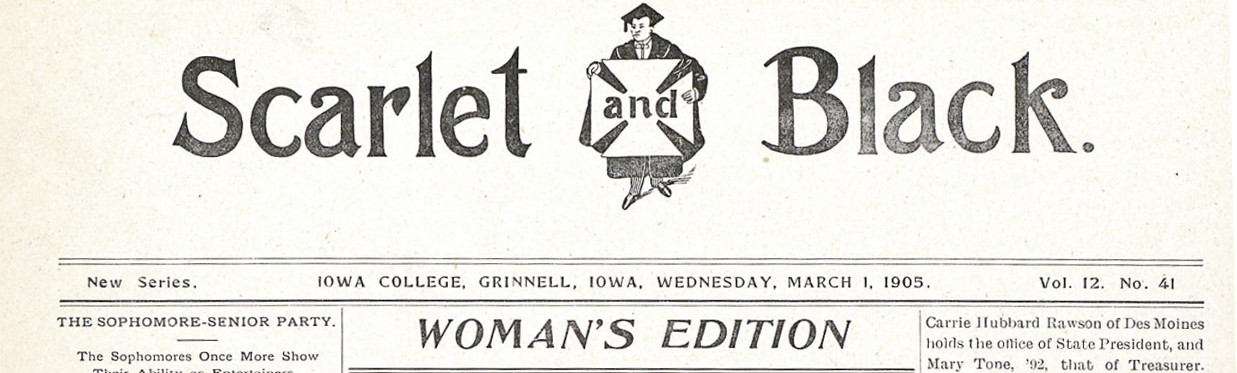
In the spring of 1905, the editorial board of the Scarlet and Black turned over their paper to a special editorial team that would create the paper’s first “Woman’s Edition,” which appeared on March 1st. The all-female team—led by Adah Hopkins ’05 (who would go on to teach Sociology at the college before carving out a trailblazing career in the newly professionalized field of social work)—noted the surprising lack of women in shaping the college’s newspaper. At a time when women outnumbered men at Grinnell (267 to 195), and had such “a prominent share” in the literary clubs and cultural life of the institution, the lack of female input and leadership in the school paper was striking: “for several years the Scarlet and Black has been entirely in the hands of the men of the institution.”
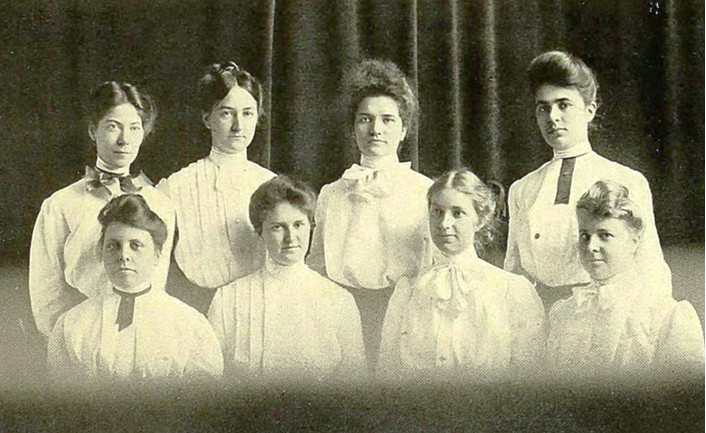
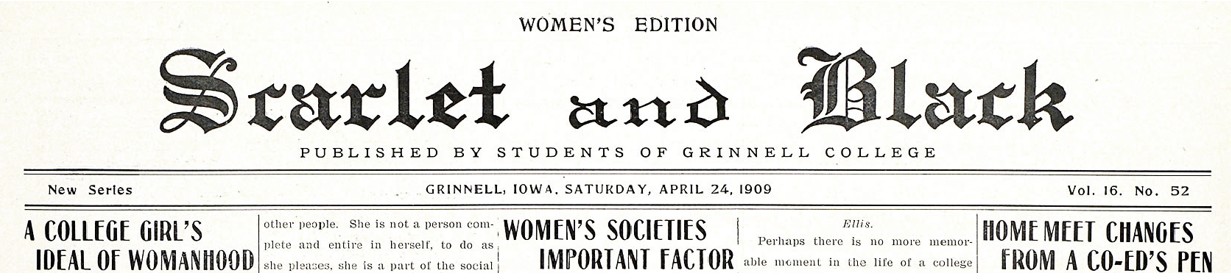
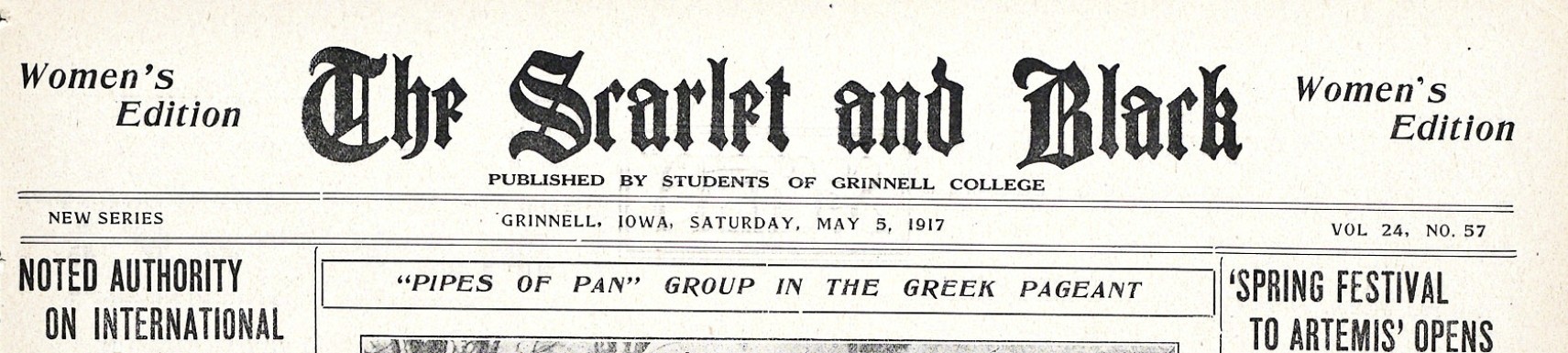
While the first woman’s edition would aim to reflect the interests, perspectives, and voice of women on campus, they also conveyed their hopes “of future appearances some years hence, of Woman’s Editions of forty pages, properly illustrated” that would serve “as a record of the history and conditions of co-ed life at Grinnell.” For a dozen years or so, the S&B carried on this tradition of creating a special women’s edition each year, produced by an all-female team (the spelling changed to women’s, instead of woman’s, and they dropped the title of “editresses”). Over time, these special editions would start to include a growing numbers of letters, sent in by alumnae, expressing their appreciation for these annual issues. But like so many other elements of the Progressive era, this tradition ended in 1917, disrupted by the First World War never to really resume. Still, these editions continue to offer a unique “record of the history and conditions of co-ed life at Grinnell” and are fascinating to explore.
1905 Editorial Statement: 1905 editorial

Alumnae Letters: Alumnae Letter Section
 

Documenting the Glee Club’s “Western Tour” (1909)

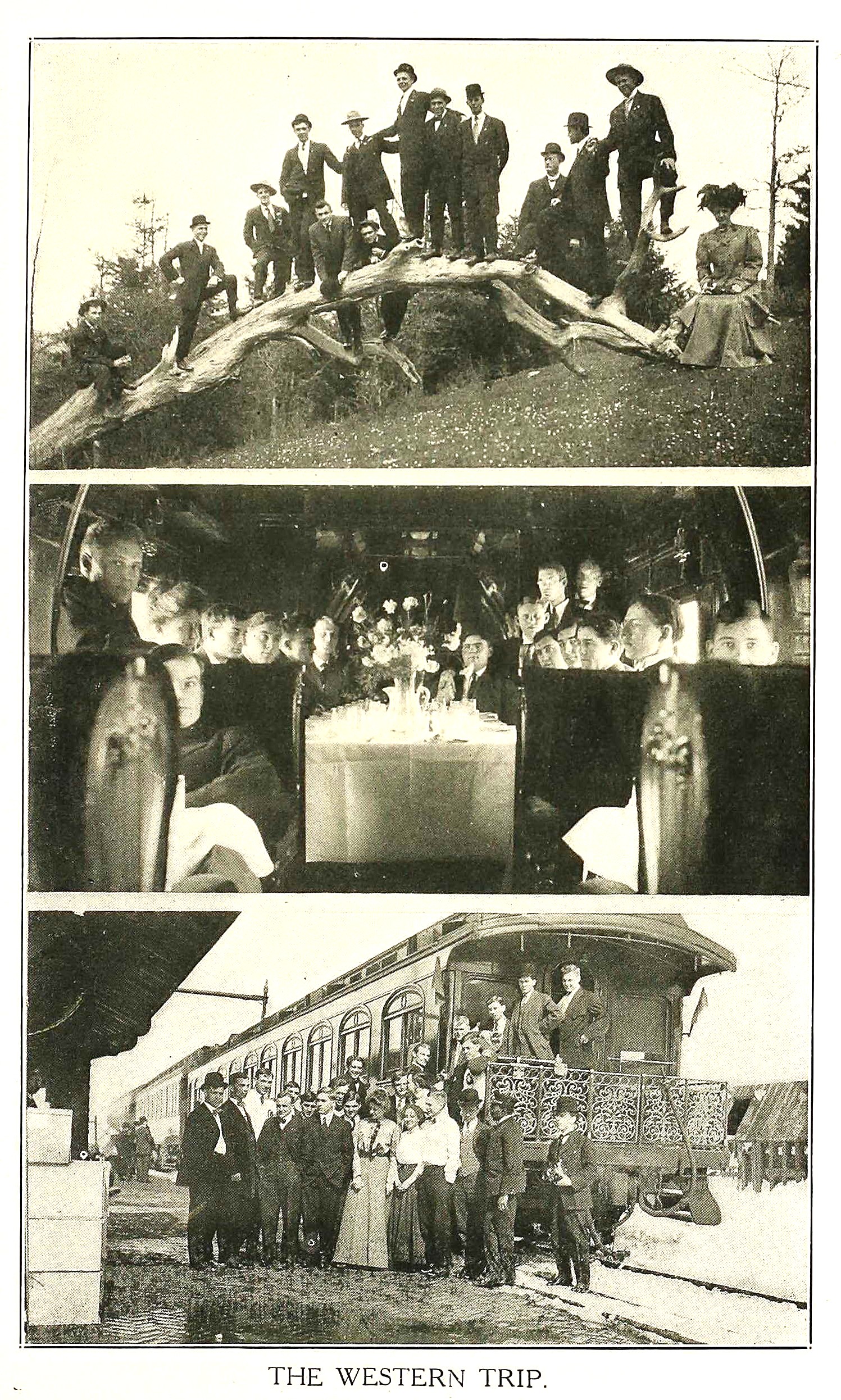
In the spring of 1909, the Men’s glee club spent an entire month touring the Great Plains and Pacific Northwest. It was estimated that they travelled about 5,000 miles, through 11 states; performing 26 “secular” concerts, 6 “sacred” concerts, and a number of informal events at high schools and Y.M.C.A.s, to “an aggregate audience of some fifteen thousand people”—all at a grand cost of five thousand dollars.

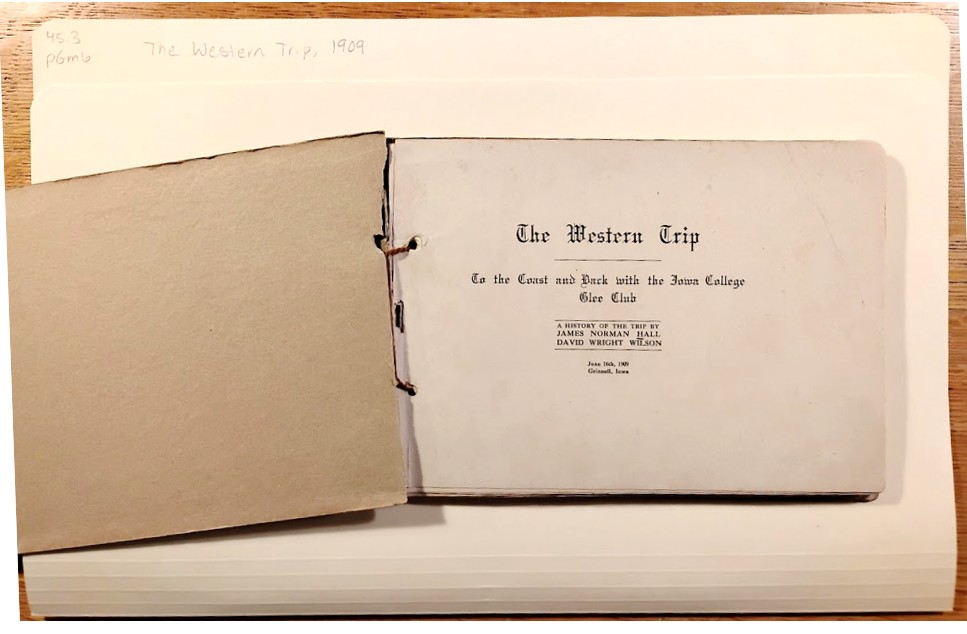
To commemorate this momentous tour, members of the Glee club created a scrap book that recorded each day of the trip, along with pictures and commentary. A local printer published a small run of this work as The Western Trip: To the Coast and Back with the Iowa College Glee Club: A History of the Trip by James Normal Hall and David Wright Wilson (a copy of which is in special collections in Burling Library, for anyone who wants to read about their adventures).


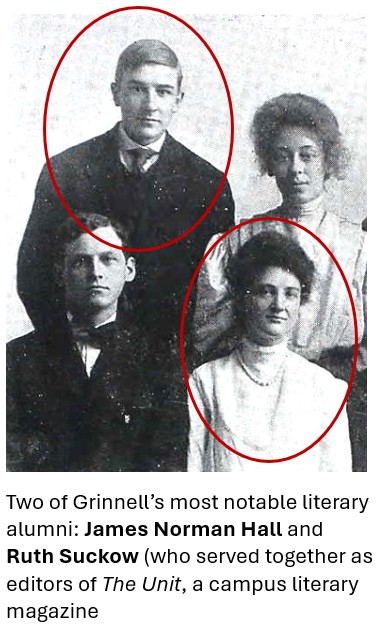
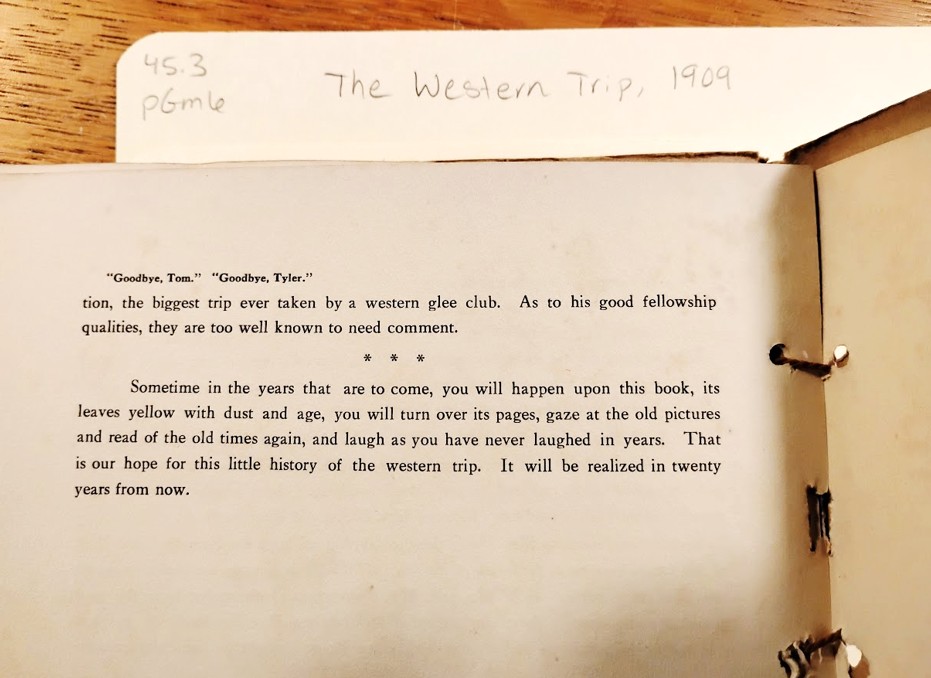
One noteworthy feature of the book is that it represents the first publication of James Norman Hall (class of ’10), who would go on to become a prolific writer and novelist (most known for his Bounty trilogy that began with Mutiny on the Bounty in 1932). It is also interesting to see how the book ends, with a note to future readers who will encounter it’s yellowing pages in decades to come…

Spring Break Travels (1909)

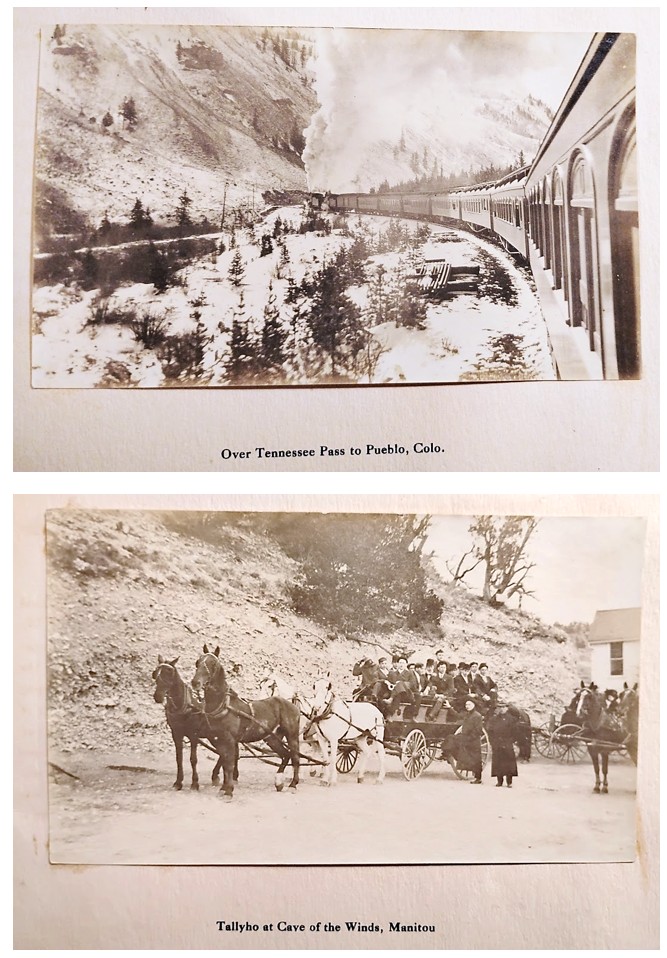
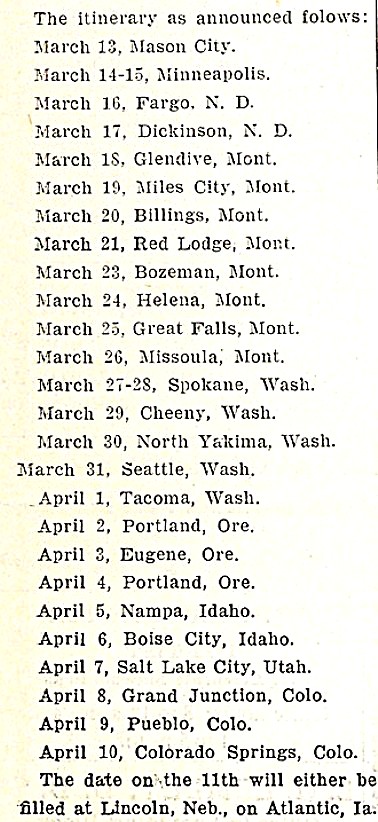
While college Glee Club had a tradition of utilizing the breaks to perform throughout Iowa, or nearby states, the spring of 1909 witnessed something much more ambitious in scope, as the Men’s Glee Club lined up a month’s long, performing tour of the American West.  The club departed from Grinnell in their own “private Pullman car especially fitted for the trip, with all the modern conveniences and comforts.”  At first, the Iowa Central line pulled their private car to Minneapolis, where it joined a larger train on the Great Northern Railroad line, that took them across the Great Plains, and ultimately to Seattle, where they joined the Oregon Line, then the Denver & Rio Grande Line, as they made their way through Idaho, Utah, Colorado, and Nebraska (see the schedule below). From March 13th to April 12th, the Glee Club toured in style.  There was some controversy when they returned, however, since they decided to finance the trip by charging $1 admission to future concerts in Grinnell, generating push-back from local students and townspeople who were not used to paying admission to hear them perform.

The Ballad of the Squirrels

In the past few years, squirrels seem to be everywhere on campus. From the giant inflatable squirrel that welcomed new students in August, to the gleaming squirrel statute carved out of a block of ice in January, these charming rodents have become the unofficial mascot of Grinnell College.

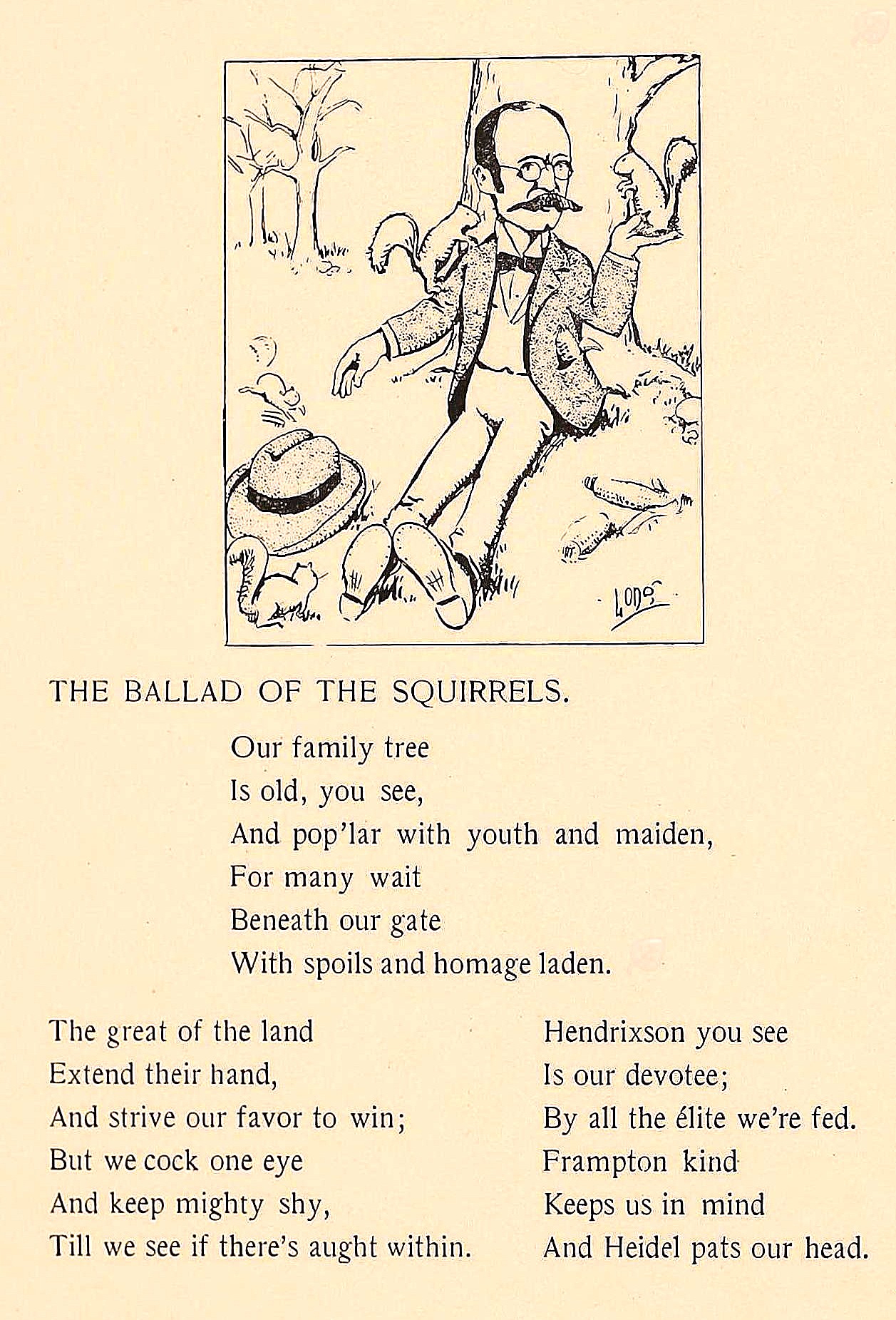
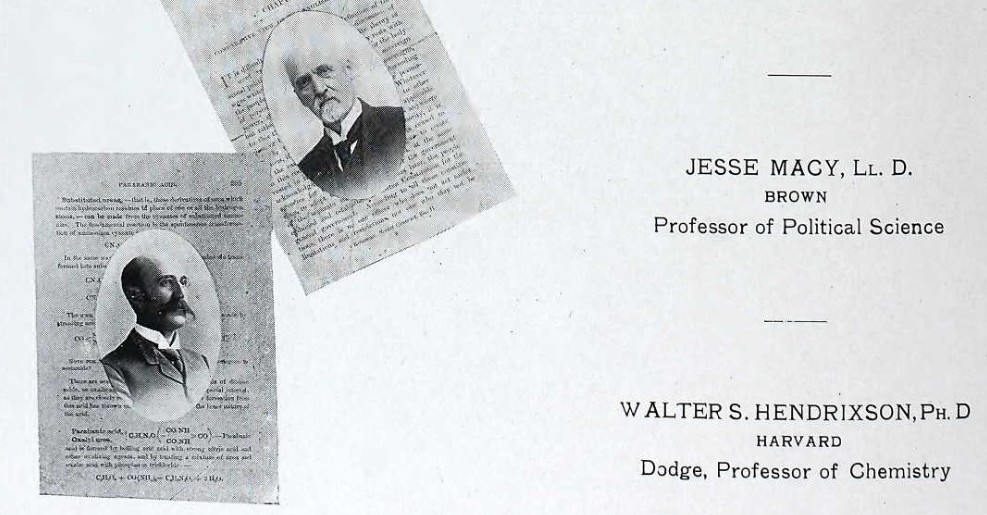
This 1894 cartoon and poem, “The Ballad of the Squirrels,” shows that our love affair with these furry denizens goes back a long way.  The cartoon shows Walter Scott Hendrixson—the Dodge Professor of Chemistry, long-time Grinnell faculty member, and apparently squirrel “devotee”—spending some quality time with campus squirrels. Hendrixson was known to feed them regularly, along with other faculty members (the poem mentions the college organist, John Ross Frampton, and the classics professor, William Arthur Heidel).

This yearbook image shows that the student artist did a good job of capturing Hendrixson’s likeness (particularly his impressive, walrus-like, mustache).

Grinnell’s love affair with squirrels was part of a larger trend in the early 20th century, as college campuses across the country sought to transform their grounds into more park-like environments, and actively encouraged birds and squirrels to become residents, helping mitigate some of the feelings of being isolated from nature that were affecting a generation experiencing rampant urbanization (as well as the disappearance of wildlife & wilderness in rural communities).

Powered by WordPress & Theme by Anders Norén