Month: November 2025

Poignant Thanksgiving Letters

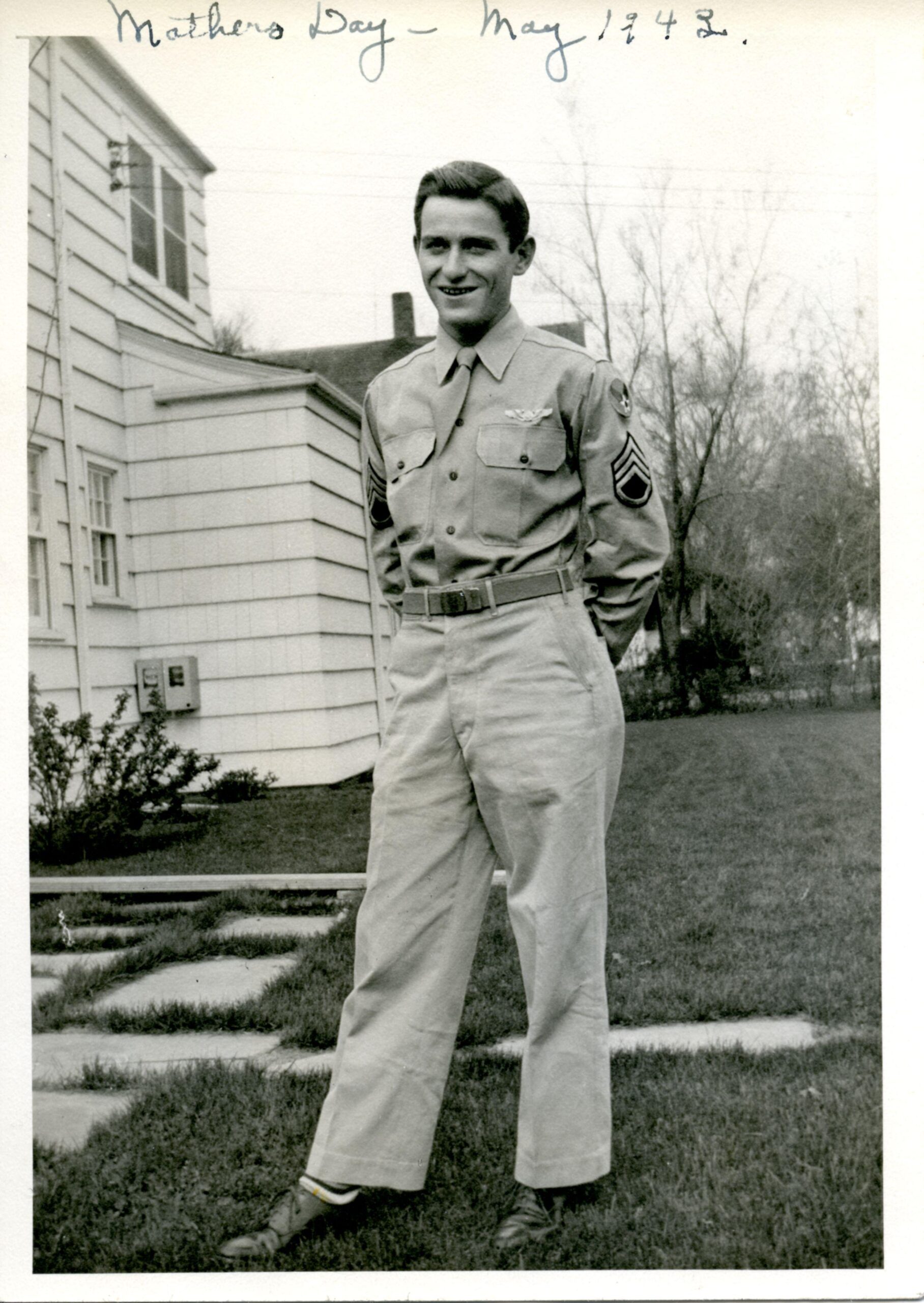
One of the memorable collections housed in the college archives is the Jimmy Ley Collection, which contains a number of letters, photographs, and personal items belonging to Staff Sergeant James J. Ley (ex-’44). Ley decided to leave Grinnell College in 1942 to join the Army Air Corps, eventually becoming a gunner/engineer on B-26 bombers, flying 25 combat missions over occupied Europe. One of the letters to his parents, written November 25, 1942, thanks them for the “Thanksgiving box” they had sent to his training base in Texas: “Of course it was all gone in about fifteen minutes, but my memory still rests with that fine box of goodies.” He went on to explain that Thanksgiving day, itself, would be their last day of training school, and they would ship out the next morning. Reflecting on the holiday, James wrote:

We’re all going to have so much to be thankful for this year. Our health, happiness, the way the war is going, and ever so many other things…I wonder where I’ll be a week from now?

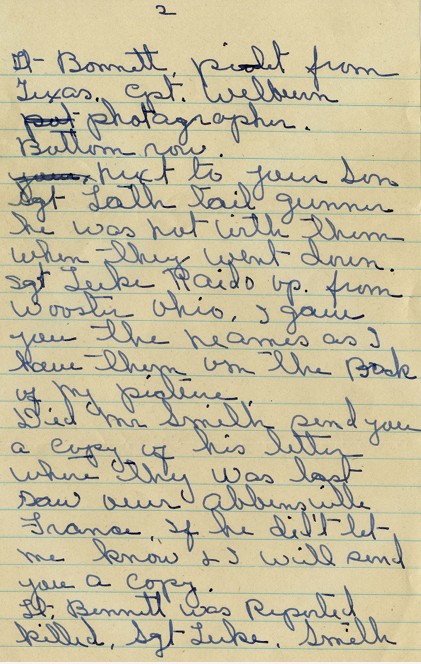
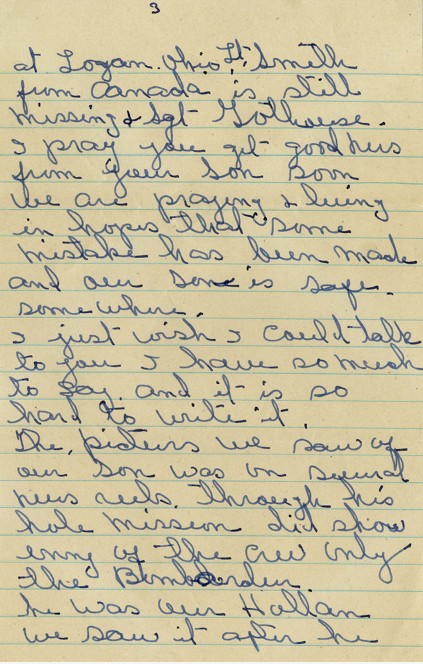
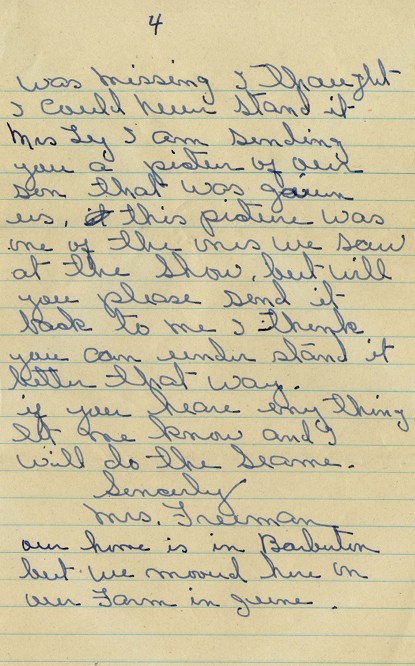
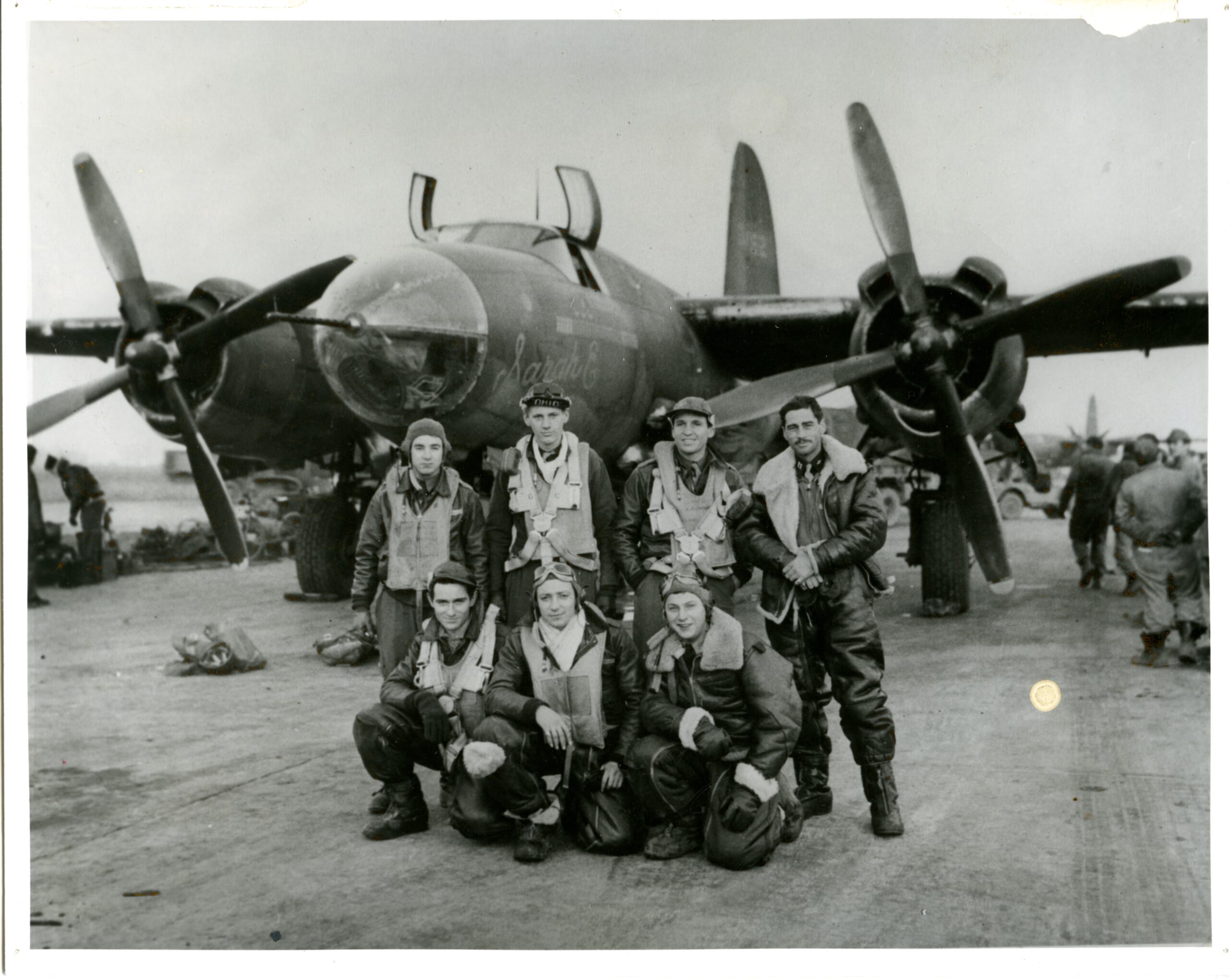
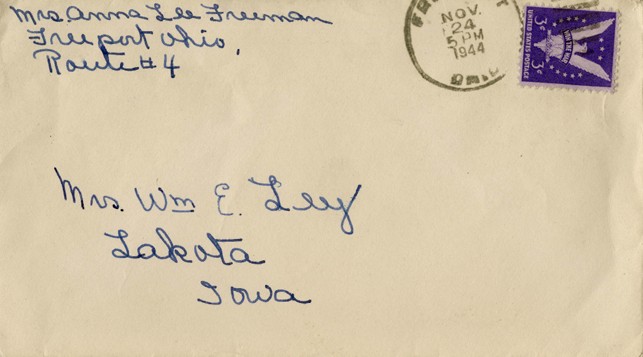
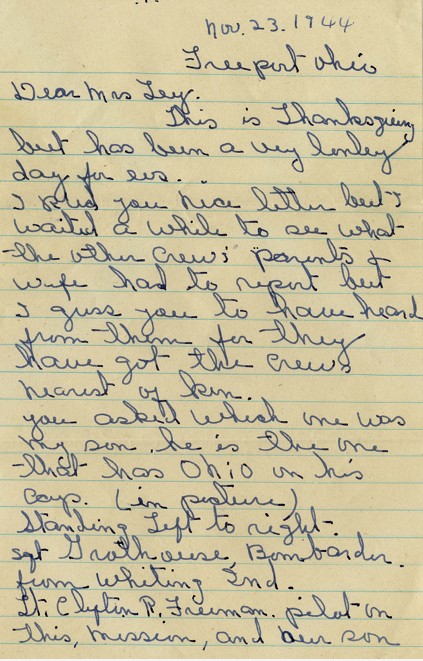
Jimmy ended up in England, assigned to the 451st bombardment Squadron, flying missions across the channel until his plane was shot down on the 29th of February, 1944, over France. The fate of the crew remained unknown for months, but one of the most poignant letters in the collection is a Thanksgiving missive (dated Nov. 23, 1944) from the mother of the plane’s pilot, Mrs. Anna Freeman, to Jimmy’s mother (below). Having learned that her son, Lt. Clifton Freeman, and three other crew members from the plane had been recently confirmed as killed-in-action, she acknowledged the pain of the moment: “This is Thanksgiving, but it has been a very lonely day for us.” She pointed out, however, that 3 of the crew (including Jimmy) were still considered missing-in-action. “I pray you get good news from your Son soon,” and she confessed that “we are praying and living in hopes that some mistake has been made and our son is safe, somewhere.” In her letter, she included a photograph of the B-26 crew, listing each member, their role, and their home town (that original picture, now preserved in the Ley collection, is reproduced below). S/Sgt Jimmy Ley was in the front row, on the left, while Lt. Freeman, was in the back row, second from the left, proudly wearing an Ohio hat (as his mother pointed out). Eleven months later, the War Department declared Jimmy Ley (and the other missing crew members) dead, and posthumously awarded S/Sgt Ley the Distinguished Flying Cross and the Air Medal with Oak Leaf clusters, presented to his family at a funeral service held in his hometown of Lakota, Iowa.


Carrie Adeline Barbour: Artist, Paleontologist, & Professor


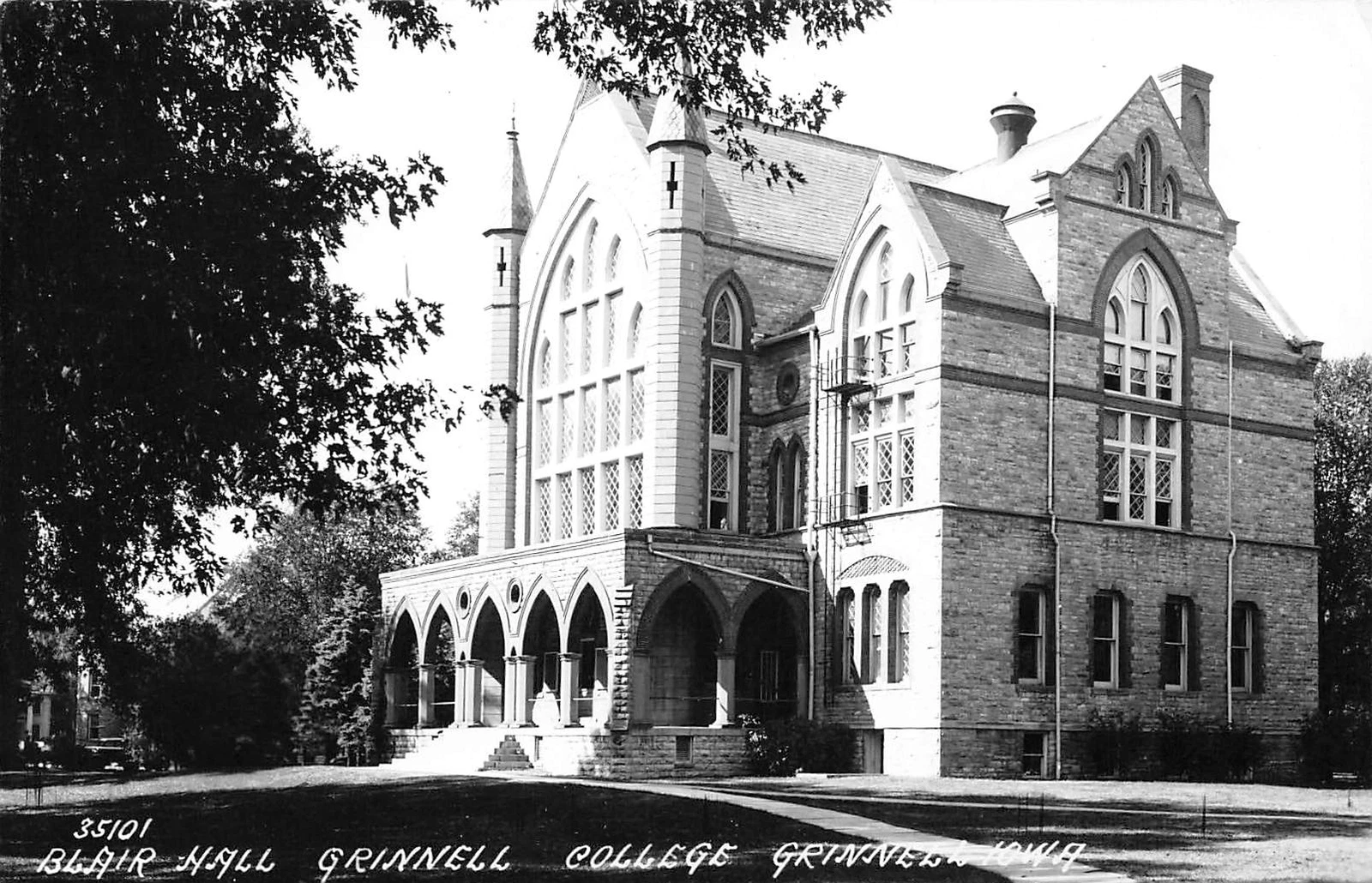
Last week’s post focused on the college’s museum of natural history; or more precisely, the third iteration of this museum, that was assembled after the devastating cyclone of 1882. As the new collection began to come together in Blair Hall, the college hired its first geologist and paleontologist, Erwin H. Barbour, who became the Stone Professor of Natural History, charged with overseeing the museum and related coursework. In addition to his academic training, Erwin had spent several years doing field work out west, serving as assistant paleontologist for the U.S. Geological Survey.

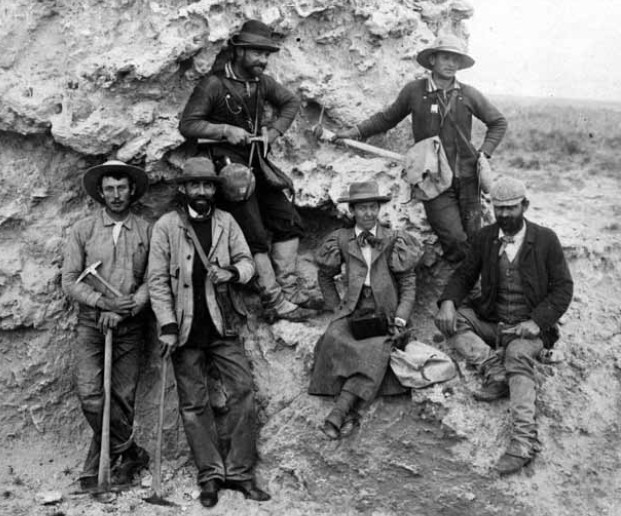
But Erwin Barbour did not come to Grinnell alone. His sister, Carrie Adeline Barbour, also joined the faculty at this time, teaching studio art courses in carving, ceramics, and porcelain painting (which she had studied at Oxford Female College, later absorbed into Miami of Ohio, and at a fine arts school in Cincinnati). Given the close links between art and science that existed in the world of natural history, as well as the tendency for family members to participate in the collective work of science, in an era before paid staff and technicians, it is not surprising to discover that Carrie Barbour became involved in the geological and paleontological work of her brother. Carrie was also personally drawn to the subject, revealing that her mother, Adeline Barbour, had instilled in both of her children a deep love of natural history and collecting specimens.

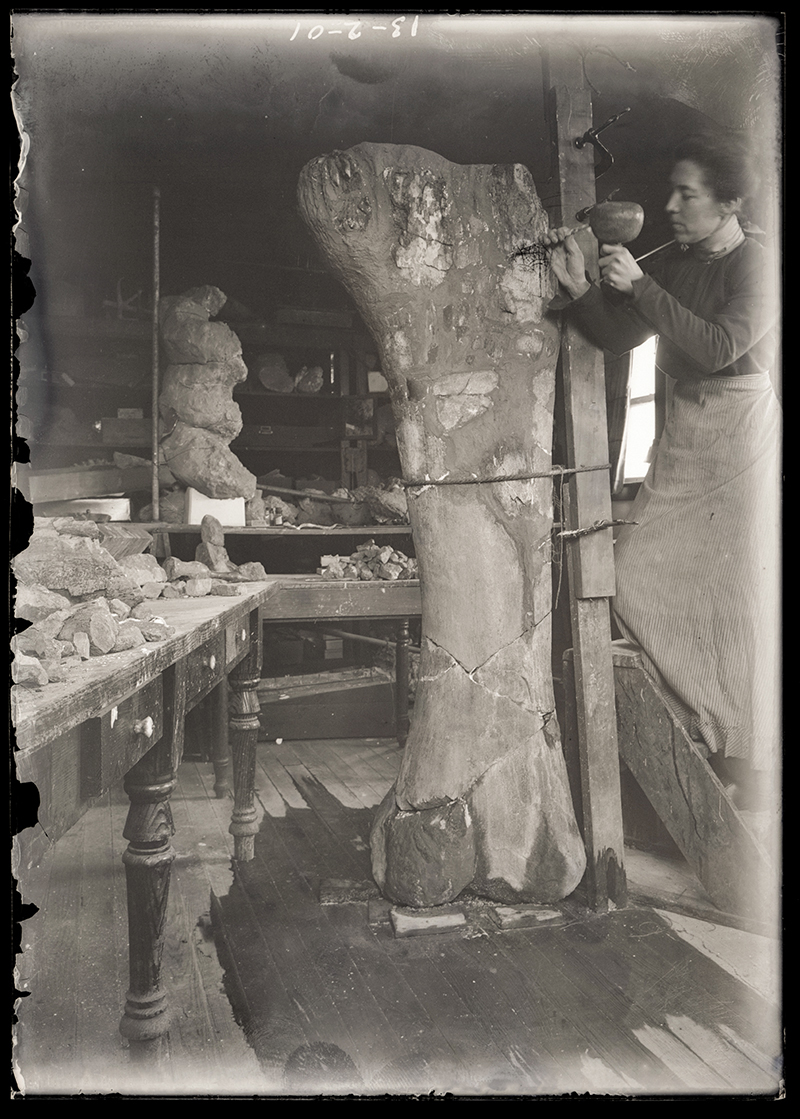
On the right of the image, Carrie Barbour stands on a short ladder and uses a chisel to work on the dinosaur femur. The femur is fastened to wooden boards, which hold it vertically. In the background are tables and shelves with other artifacts and equipment. Digitized from glass-plate negative.

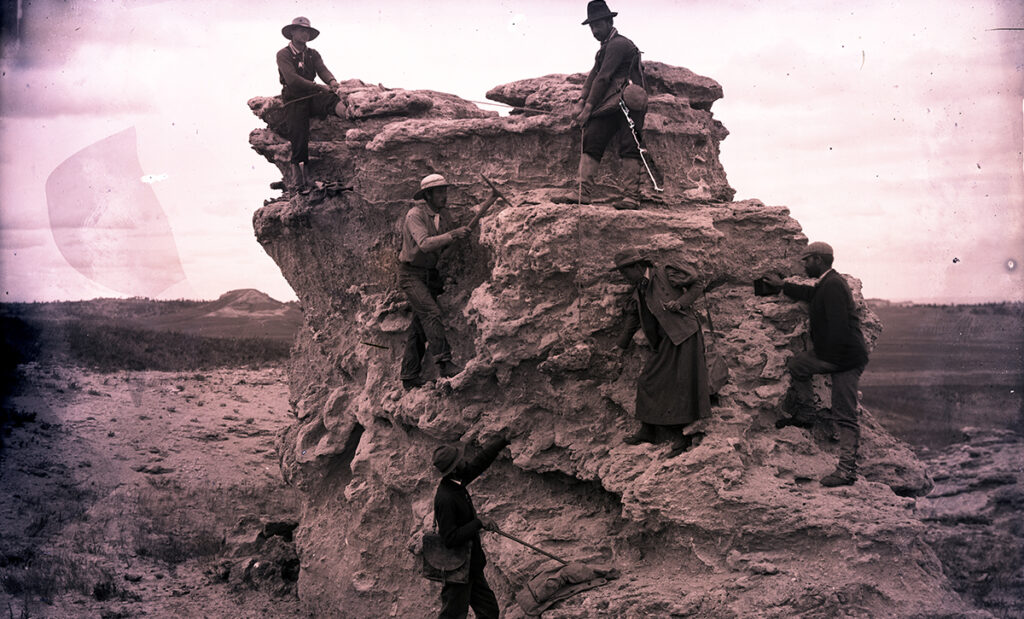
Eventually, Erwin left Grinnell College in 1891 to establish a geology department and museum at the University of Nebraska. Carrie was torn between continuing her career as an art professor, and taking up a position at Nebraska, working with her brother as a full-time paleontologist. “I realized I couldn’t divide my time between the two jobs and accomplish much in either,” she later recalled, “Fossils fascinated me so much I decided to continue a thorough work with them.” Over the next 40 years, Carrie Barbour carved out a remarkable career in paleontology, becoming an assistant curator of the museum, a professor of paleontology, an author of noted scientific papers, and perhaps most unusual for a female scientist at this time, a leader of field expeditions and excavations.

Although Carrie Barbour eventually received recognition, and an academic position of her own, her experience is also part of a larger story about the often-hidden role that wives, sisters, and daughters played in an age when academic work was often a shared, family endeavor while academic publication and credit was limited to the (mostly male) professoriate.


The Giants of the Natural History Museum

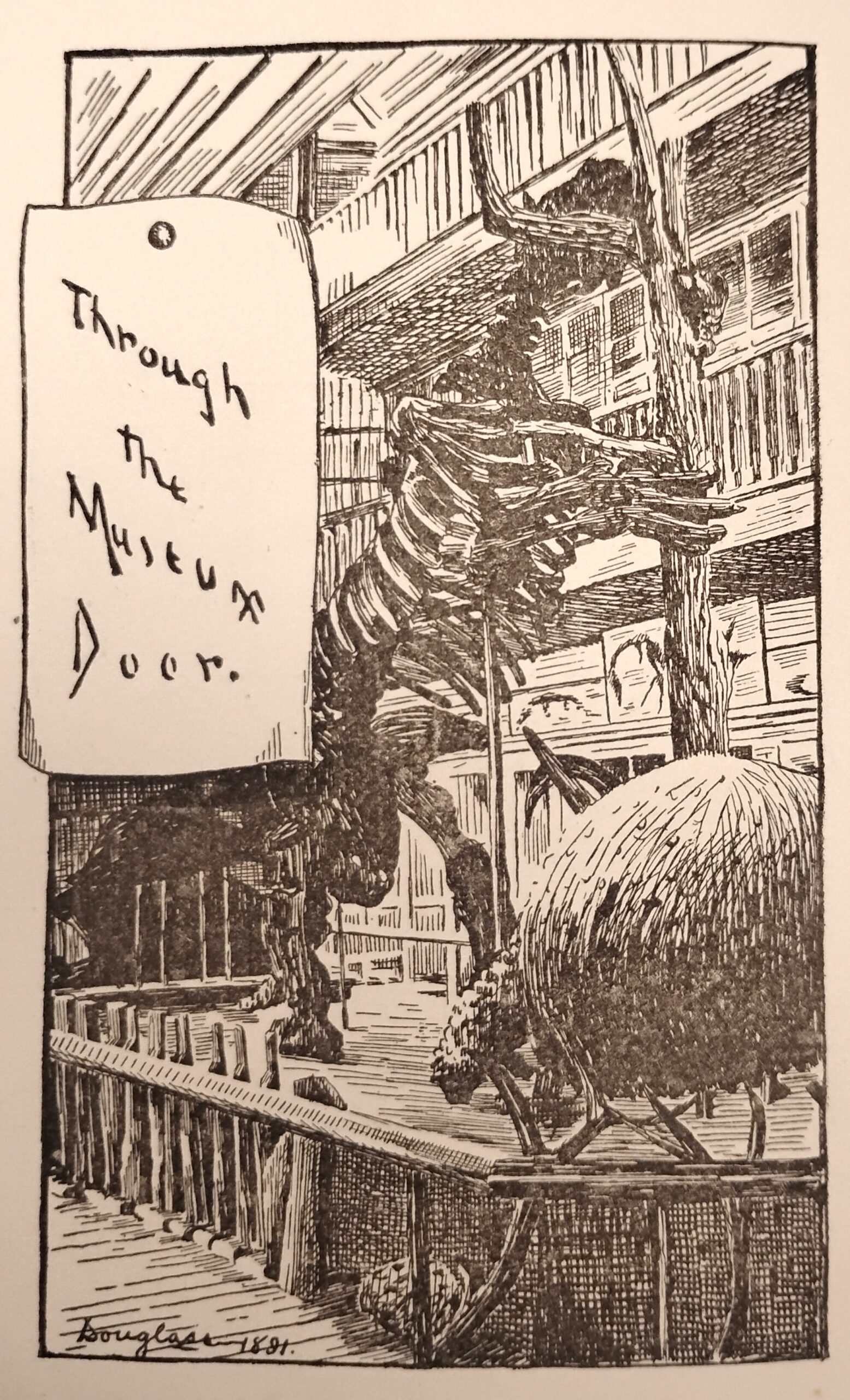
One of the casualties of the 1882 tornado was the college’s natural history museum, which had been housed in the “Central” building, destroyed by a combination of wind and fire. This was not the first time disaster had struck the museum. In 1870, a previous museum had been lost in a fire that consumed the East Building. But like a phoenix rising from the ashes, the college was undeterred by these previous losses, and sent its resident naturalist, Prof. H.W. Parker, on a tour of the east coast to raise funds for a new museum. Paker exceeded all expectations, returning to campus “as a conquering hero” (the Grinnell Herald reported) with donor pledges totaling in the thousands of dollars–enough to equip the museum with the finest natural history collection west of the Mississippi.

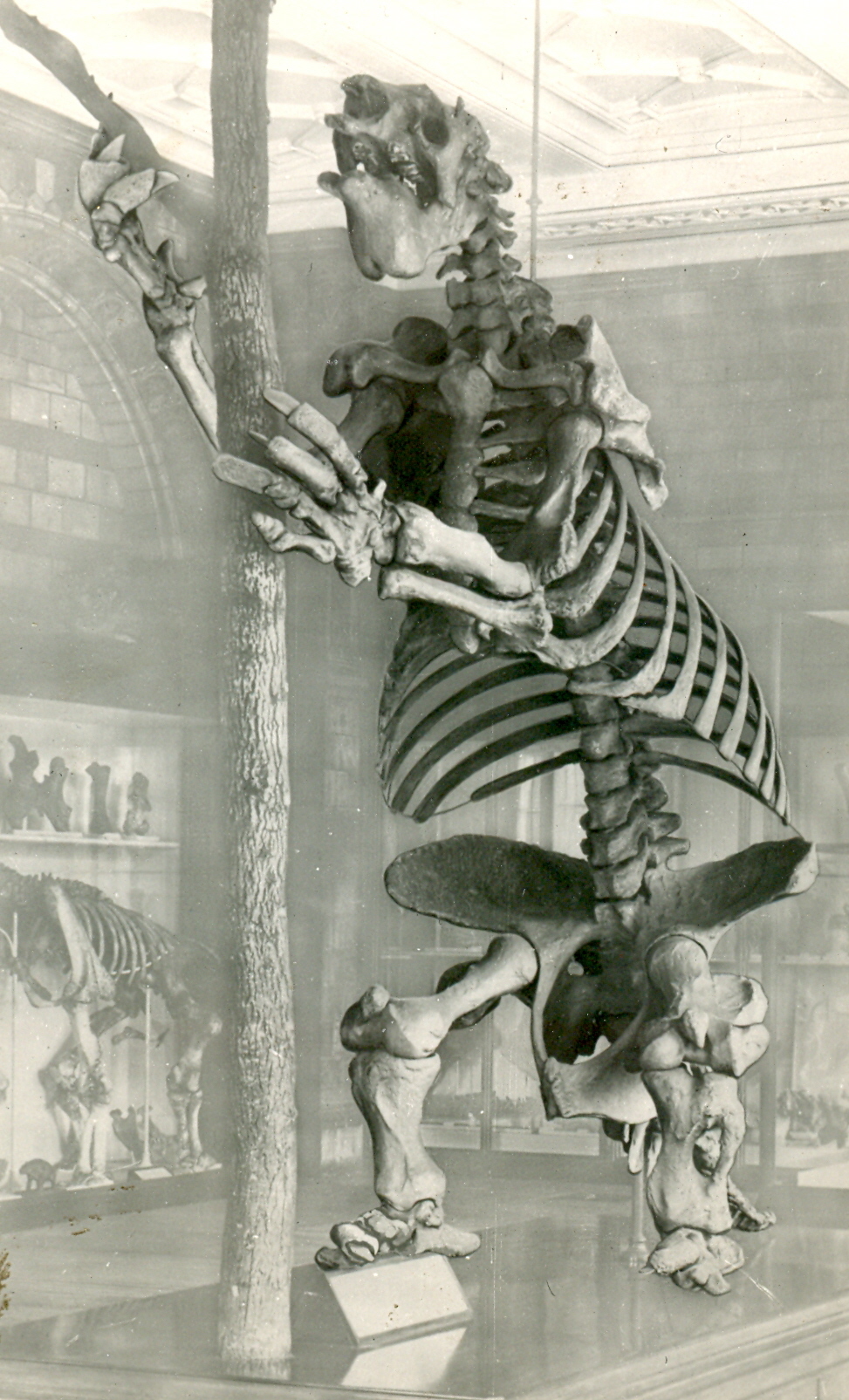
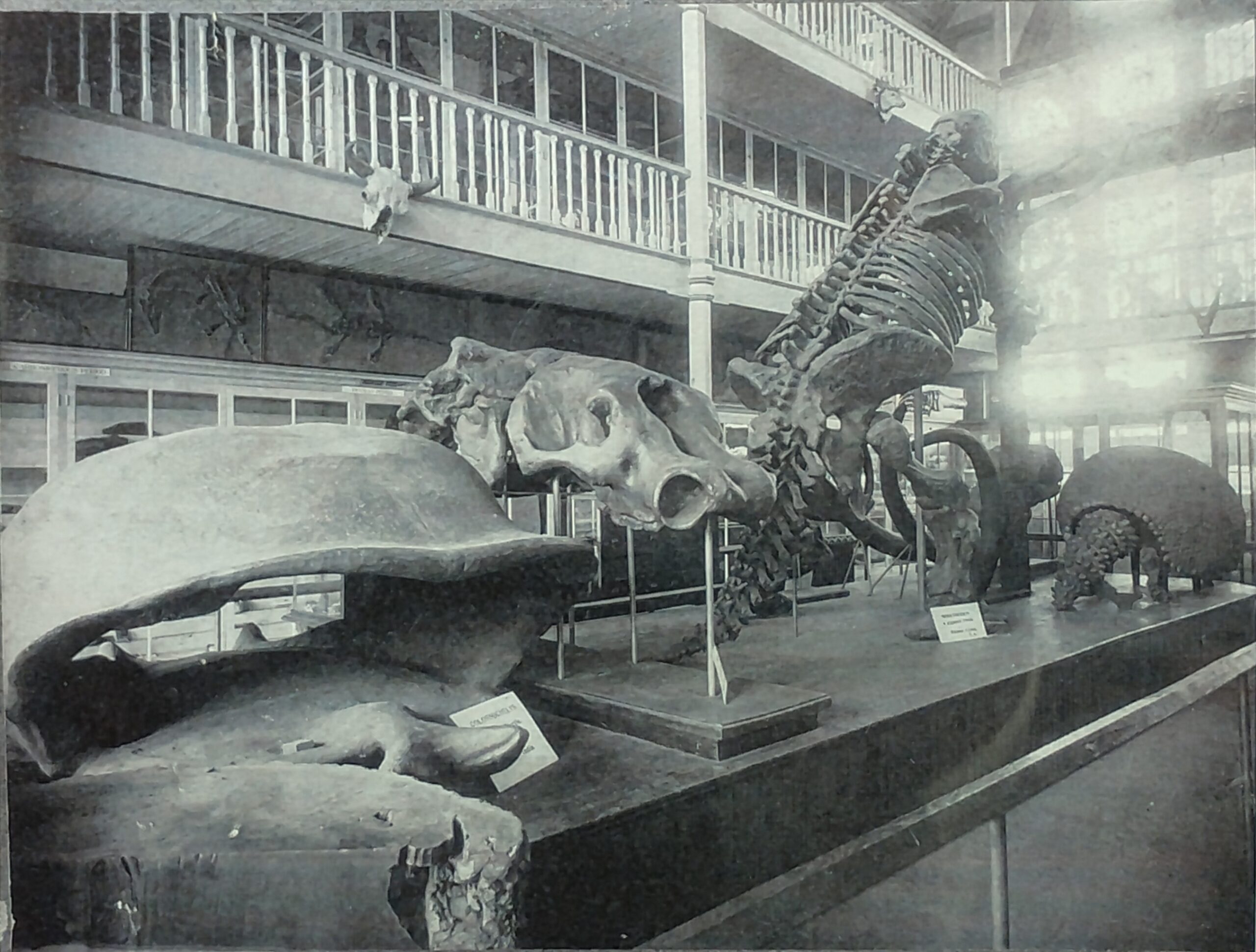
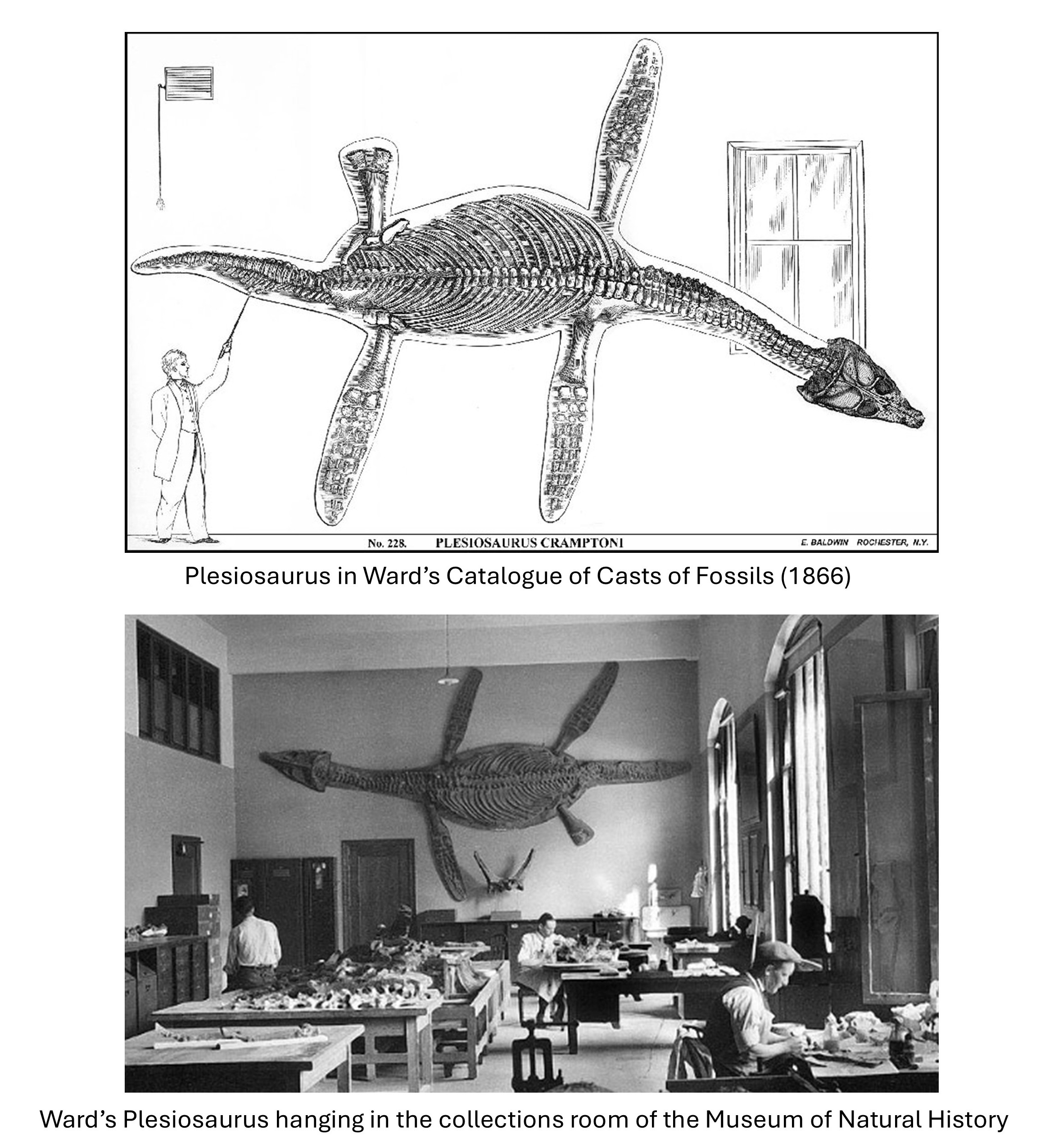
The college chose to spend much of these funds buying the “complete” line of exhibit specimens from Henry A. Ward, a charismatic naturalist and entrepreneur, who ran a series of elaborate workshops at the University of Rochester that churned out taxidermic specimens, reproduction casts of fossils, and many other exhibit collections used by museums around the country. Grinnell spent roughly $7,000 to acquire a complete set of taxidermic and fossil specimens from Ward, including three large, pre-historic items that attracted considerable attention (all three are captured in this picture, below, from Dartmouth’s museum): the Megatherium (i.e. Giant Sloth), the Glyptodont (a kind of giant armadillos), and the Plesiosaurus (hanging on the wall on the left).

The museum remained in Blair Hall, until the 1950s, when it was dismantled as the surrounding science departments moved from Blair Hall into the new “Hall of Science” that would become the nucleus of the Noyce Science Center.

A Forgotten Chapter in the History of the New Hannah Alumni House

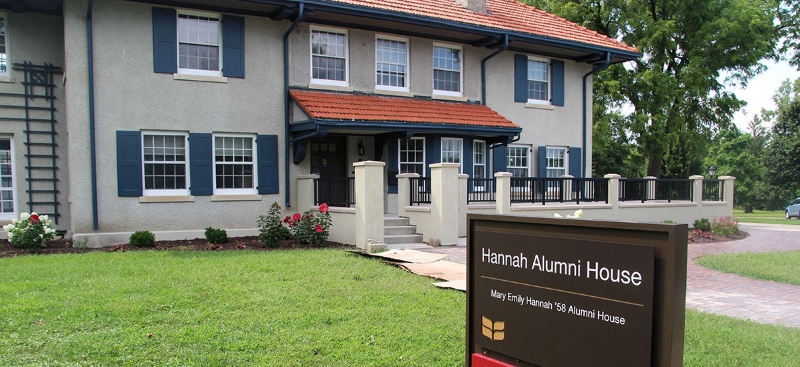
Last week, the college celebrated the opening of its new Hannah Alumni House, at 1527 Broad Street, made possible by a generous donation from Mary Emily Hannah ’58.  The project involved extensive renovations to a historic home long known as the “Fellows House”—built more than a century ago by Jesse and Maude Fellows , both graduates of the college class of 1901, and prominent leaders in the community.

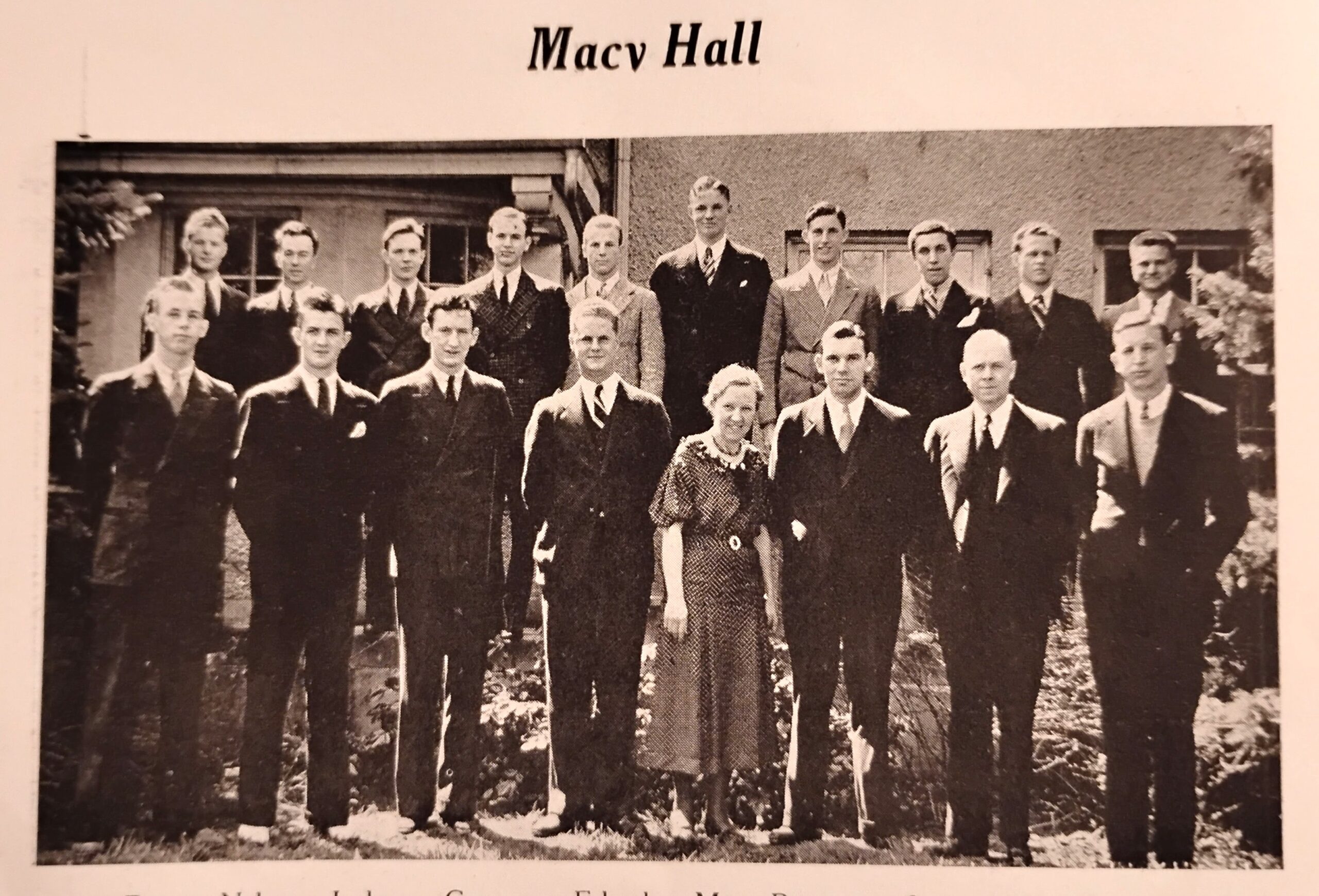
In the 1930s, the Fellows sold their Broad Street home to the college, which decided to turn the building into a special residential hall focused on issues of civic and community engagement.  Named “Macy Hall”— in honor of Jesse Macy, the longtime professor of political science at the college—this “experiment in group living for students interested in public affairs” was actually intended to be the first step in the creation of a larger program. Reflecting the spirit of the 1930s, when so many Grinnell alumni were prominently involved in the New Deal, and in public service, President Nollen hoped to create a new “school of public affairs” that would garner the college national attention as it prepared to celebrate its centenary.

In 1935, the college hired a new professor of Sociology, W. Ryland Boorman, who became the residential director of Macy Hall (which housed 17-20 male students), and took charge of plans to develop the proposed school of public affairs.  Initial programming revolved around a community series each Thursday evening, in which an invited speaker had dinner (in the Macy Hall dining room) with invited students and faculty ,followed by a talk, and more informal conversation.  The line up of speakers focused on a broad range of topics related to civic life, municipal administration, and social reform—one semester, for example, featured speakers from the Red Cross, the Social Service League, the WPA, the office of school superintendent, City Hall, the Women’s International League for Peace and Freedom, and an agricultural organization. In addition to the talks and events, students could also use Macy Hall’s special “statesmanship library” that contained key works addressing civic reform.

Despite a lot of activity in the 1930s, the school of public affairs never came to fruition, and Macy Hall was sold to private owners during World War II.  But its recent return to the college fold means that it will be embarking on yet another chapter in its interesting history.


Local Election Attracts National Attention (1913)

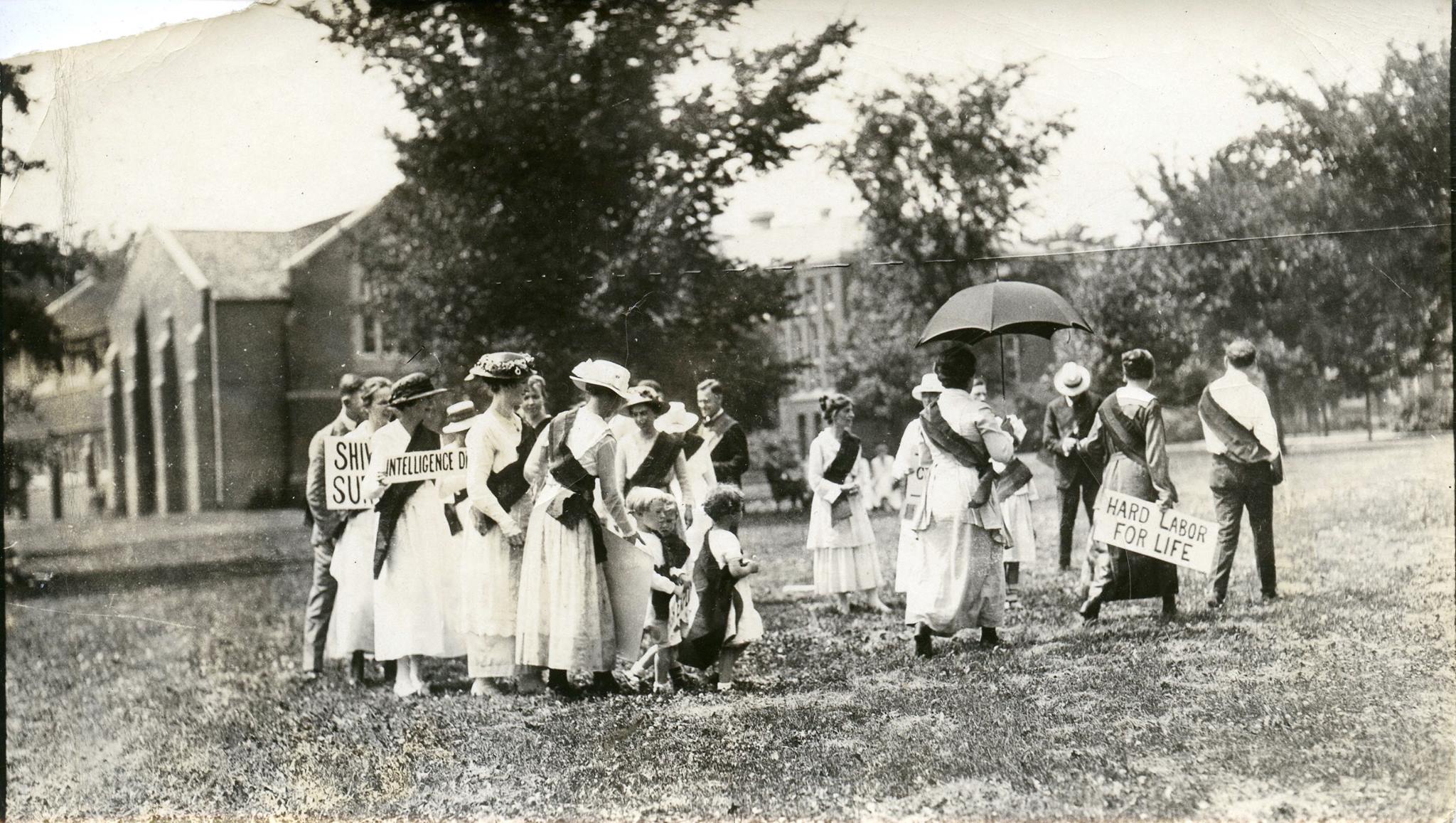
Suffragettes at Grinnell campus (date unknown)


On Tuesday, Grinnellians will go to the polls to vote on candidates for mayor, city council, and school board, as well as the fate of the Local Options Sales Tax. Local elections rarely receive much coverage, but in 1913, Grinnell attracted national, and even international attention, for a special primary it held regarding women’s suffrage.

The issue had been reinvigorated by the presidential election of 1912. Theodore Roosevelt embraced women’s suffrage that year, and made it a plank in the  platform of his new “Bull Moose” Party. Suffragettes also staged some of their largest and most publicized events that year, such as when 15,000 supporters paraded in New York City in May, followed by an even more dramatic nighttime march in November, in which a half-a-million New Yorkers turned out to see thousands of suffragettes marching with Japanese lanterns to illuminate their procession.

Responding to this atmosphere, a group of Grinnell’s civic leaders decided to organize a vote that would reveal where the women of the town stood on the issue of suffrage. All women over the age of 18 were invited to this special election—which was held in the Superior Court room from 8am till 8pm, on Friday, January 31st. The voting procedure mirrored a standard, local election—using the same ballot system, held in the chambers of the superior court, overseen by a panel of election monitors—but, this time, women (and only women) were invited to cast their vote. The situation was so novel that the Scarlett and Black was unsure whether to use the term “voters,” when talking about the election, or to create a new feminine version, “votettes.”

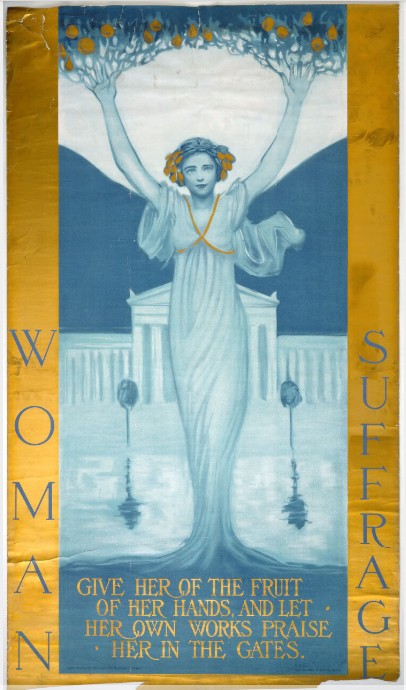
The night before the special election, suffragettes staged a rally at the Colonial Theatre (downtown) that included several important speakers; a screening of the new silent film, Votes for Women, showcasing the dramatic parades in New York; and ending with a musical performance by the Women’s Glee Club of the  college as well as the distribution of various pamphlets, posters and material supporting the suffrage cause (all handed out by suffragettes “in uniform,” as the Grinnell Herald described them)

The next day, despite snow and ice, 738 women made their way to the polling place to cast their vote: 663 voted in favor of women’s suffrage, and 75 voted against. Contemporaries estimated that about 80% of eligible women, including college students, voted in this election; and many were surprised by the lopsided victory.

The Associated Press latched onto this story, running several press bulletins that drummed up national interest before, during, and after the election. From Los Angeles to London, newspapers covered the spectacle of a small Iowa town holding a special election for women voters to express their position on women’s suffrage. The town eventually sent the results to the Iowa legislature—certified by a team of election judges that, for the first time, were half men, half women—so that it could inform the legislature’s debate on amending the Iowa Constitution.

Powered by WordPress & Theme by Anders Norén