Tag: 1930s

The Spring Ritual of Mowing

In April, grass grows at a prodigious rate in Iowa.  On his visit to Grinnell, the famed agriculturalist, Wes Jackson, once expressed his astonishment at how quickly, and completely, Iowa goes from a sea of brown to a “riot of green”, in just a couple of weeks.

All of that grass, of course, requires mowing, and modern day Grinnellians are used to hearing the hum of lawnmowers around campus and town whenever the rain pauses and the sun comes out. Last week, in fact, City officials reminded residents, businesses, and institutions that they would be taking their rulers around town to measure grass height (anyone with grass over 8 inches will receive a citation and be  fined).

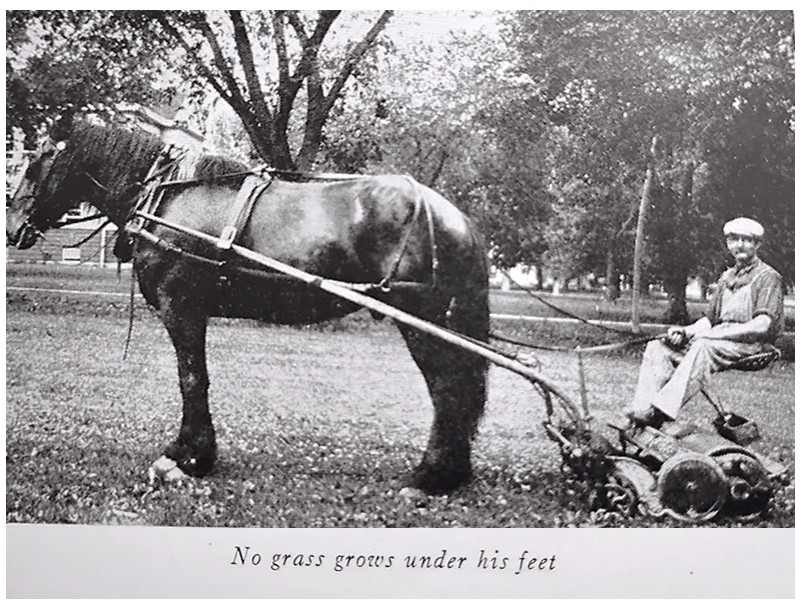
A century ago, one groundskeeper (captured in this 1916 photograph) was responsible for mowing all 22 acres of campus with a horse-drawn mechanical mower.  In 1930, students published calculations about how much mowing this entailed. Estimating that he mowed the campus 20 times a year, and calculating how many miles that would translate into if he and the college horse travelled in a straight line, they determined (with a good dose of comic hyperbole) that:

They have traveled far enough to go from New York to San Francisco and back to the railroad crossing just this side of Kellogg, where they would undoubtedly block the Rock Island trains until next spring, when there will be more grass to cut and they could again move on.

This process of endless mowing is the kind of prosaic routine that typically fades into the background of college life. Although there are times when it surfaces. In the 1970s, for example, the staff of Buildings and Grounds went on strike for 19 weeks, forcing administrators to do much of the mowing (there are iconic photos of Dean Wally Walker mowing the campus lawn). And there were a number of debates in the 1980s about whether mowing should take place during class time, when open windows made it difficult to hear.

Still, the symphisian task of mowing continues on.
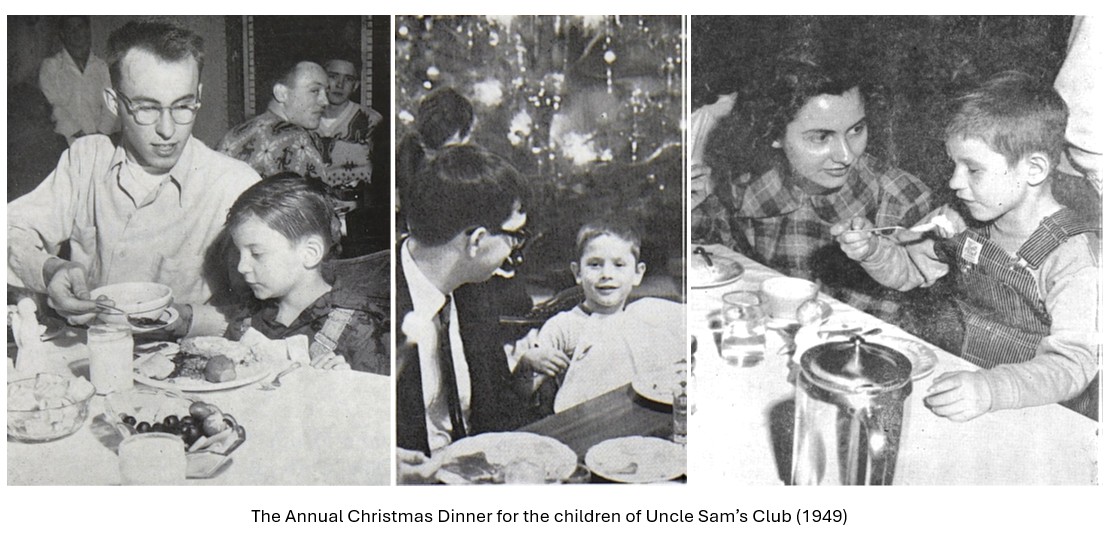
 

The Uncle Sam’s Club Holiday Dinner

One hundred years ago (on December 16, 1925), the students of Grinnell College started a new holiday tradition by hosting a special Christmas dinner for local children from the Uncle Sam’s Club. The Uncle Sam’s Club was a local organization that had been created by Grinnell students at the turn of the century to provide programming, education and recreation to local kids at time when there were very few such programs or services. It proved so successful that, within a few years, they had raised enough funds to build a large clubhouse on the south side of town, where more than 50 students a year volunteered to work with hundreds of local kids on everything from art classes to Sunday school to sports leagues.

The holiday dinners became an annual tradition that grew in size, so that by the 1950s, there were as many as a 150 children attending these Christmas feasts, held in the Cowles Dinning Hall (pictured here). The meal consisted of roast meats, served with almost a dozen different side dishes, and capped off with special ice cream for dessert. These meals took on added importance during the 1930s and 1940s, when the Great Depression, and then the rationing of the war years, made this kind of holiday feast more extraordinary and appreciated. The tradition also grew to include after dinner entertainment—ranging from variety shows to magician acts to movies—as well as distributing Christmas toys.


It may be hard to believe, today, but the holiday calendar used to be even more packed with events, parties, festivals and fetes that Grinnellians somehow managed to squeeze into the last week of the semester. And among these, the Uncle Sam’s Club Dinner always proved to be a favorite.

A Forgotten Chapter in the History of the New Hannah Alumni House

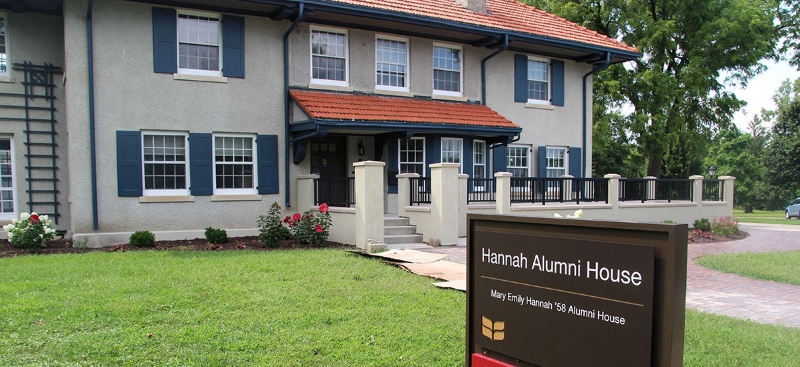
Last week, the college celebrated the opening of its new Hannah Alumni House, at 1527 Broad Street, made possible by a generous donation from Mary Emily Hannah ’58.  The project involved extensive renovations to a historic home long known as the “Fellows House”—built more than a century ago by Jesse and Maude Fellows , both graduates of the college class of 1901, and prominent leaders in the community.

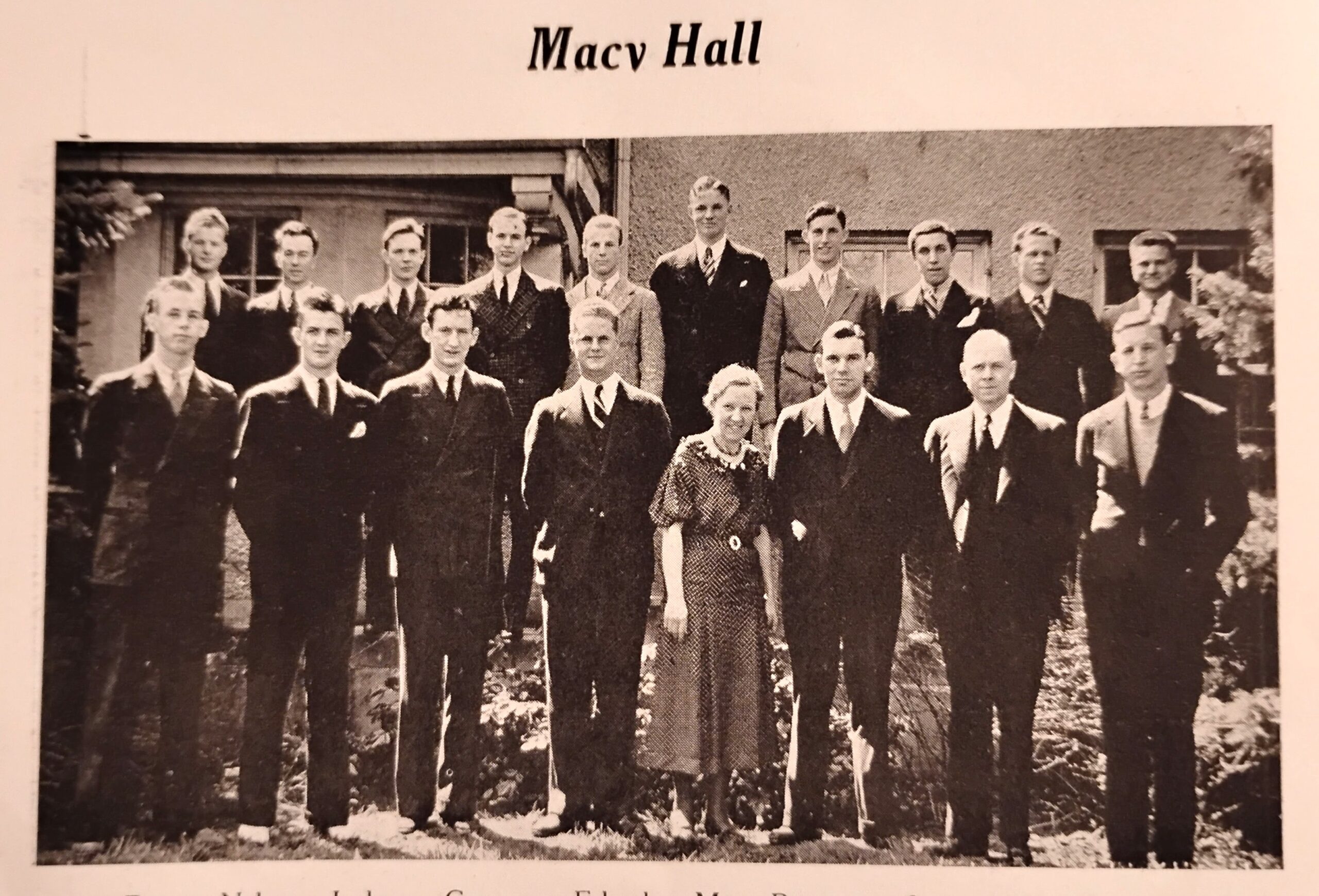
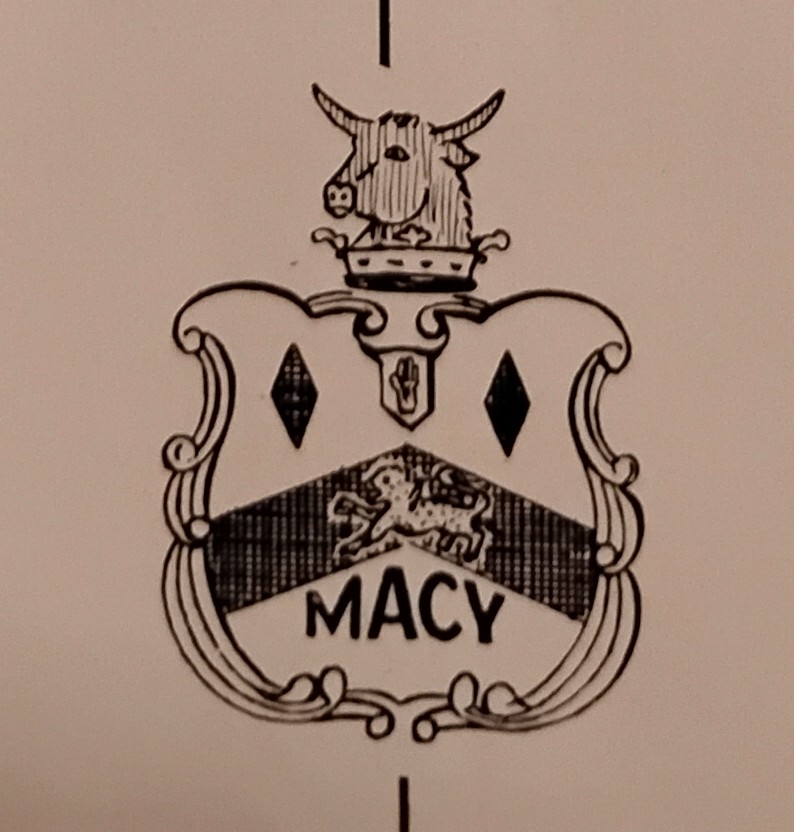
In the 1930s, the Fellows sold their Broad Street home to the college, which decided to turn the building into a special residential hall focused on issues of civic and community engagement.  Named “Macy Hall”— in honor of Jesse Macy, the longtime professor of political science at the college—this “experiment in group living for students interested in public affairs” was actually intended to be the first step in the creation of a larger program. Reflecting the spirit of the 1930s, when so many Grinnell alumni were prominently involved in the New Deal, and in public service, President Nollen hoped to create a new “school of public affairs” that would garner the college national attention as it prepared to celebrate its centenary.

In 1935, the college hired a new professor of Sociology, W. Ryland Boorman, who became the residential director of Macy Hall (which housed 17-20 male students), and took charge of plans to develop the proposed school of public affairs.  Initial programming revolved around a community series each Thursday evening, in which an invited speaker had dinner (in the Macy Hall dining room) with invited students and faculty ,followed by a talk, and more informal conversation.  The line up of speakers focused on a broad range of topics related to civic life, municipal administration, and social reform—one semester, for example, featured speakers from the Red Cross, the Social Service League, the WPA, the office of school superintendent, City Hall, the Women’s International League for Peace and Freedom, and an agricultural organization. In addition to the talks and events, students could also use Macy Hall’s special “statesmanship library” that contained key works addressing civic reform.

Despite a lot of activity in the 1930s, the school of public affairs never came to fruition, and Macy Hall was sold to private owners during World War II.  But its recent return to the college fold means that it will be embarking on yet another chapter in its interesting history.


The Visual Showmanship of J.B.L. Noel

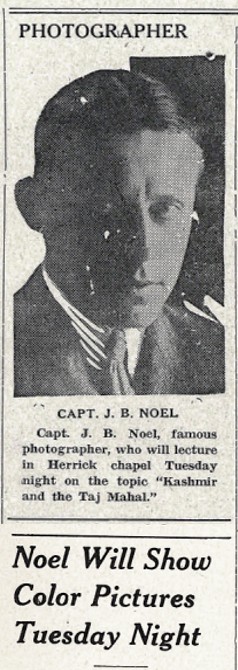
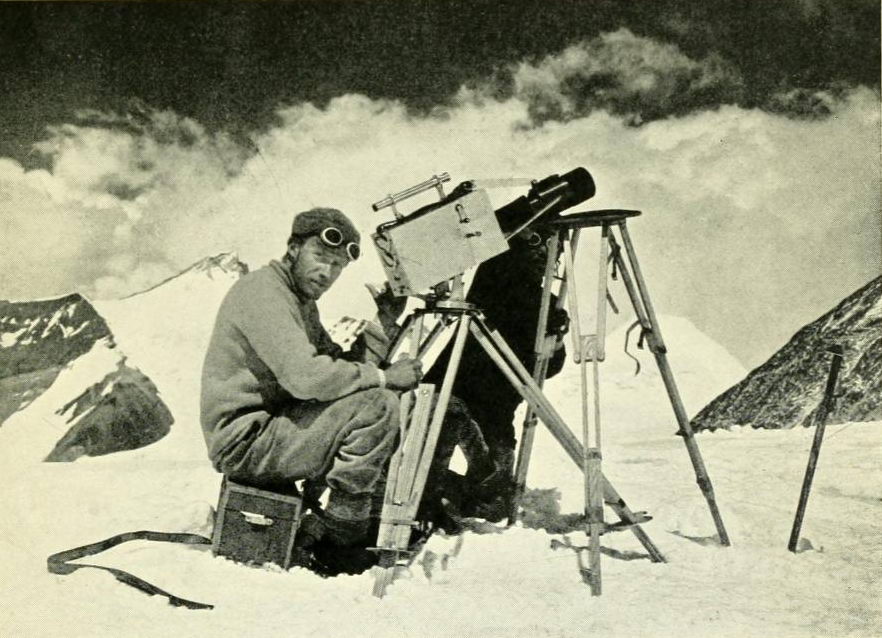
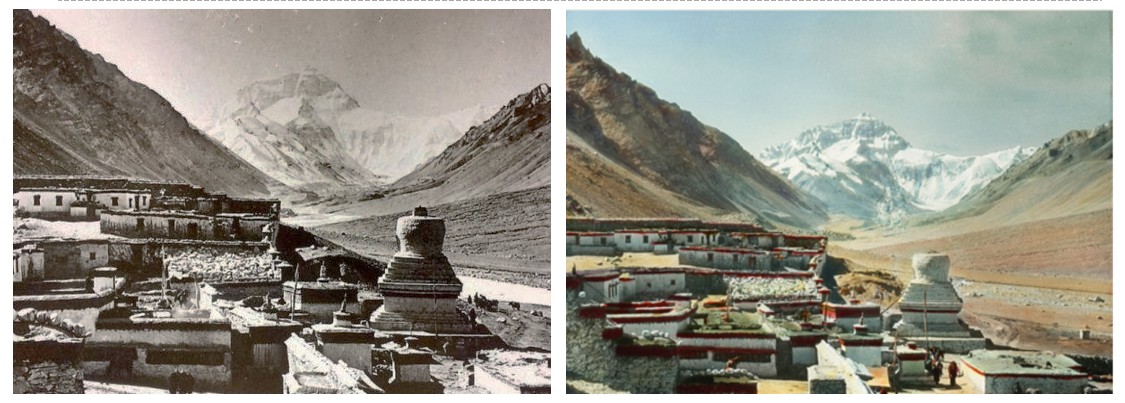
The use of visual images in talks and lectures became more popular by the 1910s and 1920s, when one encounters increasing references to slides, film, or large illustrations appearing in advertisements for campus events. But Grinnellenians got to see the cutting edge of this technology in 1936, when the famed photographer and cinematographer, Capt. John Baptist Lucius Noel came to Herrick Chapel to present colored slides and films from his travels in South Asia.  Noel had been the official photographer on the 1924 British Mount Everest expedition, which ended in tragedy, and a subsequent failed expedition two years later.  His work was developed into two films, Climbing Mount Everest (1922) and The Epic of Everest (1924).  In the early 1930s, he convinced Harvard University to fund an expedition through portions of Kashmir, Tibet, and Northern India–a trip that was captured in a short film, The Land of Shalimar and a series of photographic slides–both of which formed the basis for his Grinnell lecture, part of a larger North American lecture tour.

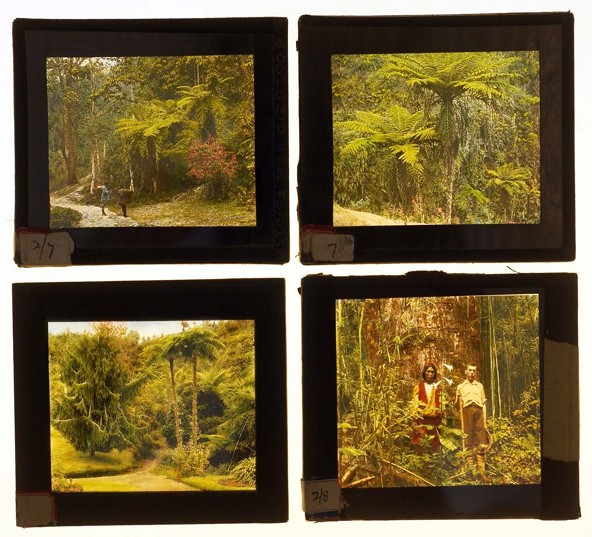
Contemporaries, as well as later scholars, consider Noel an important innovator in the development of new techniques for coloring slides and film. In particular, he developed a “Colour Dissolvograph” which allowed him to enhance the projection of hand tinted glass slides.  One reviewer exclaimed: “The method of projection which is special to this particular process merges scene into scene with all the Kaleidoscopic attraction that may rightly be called transformation.” Below is one example of a carefully colored slide that Noel used (the larger collection is preserved at the Royal Geographic Society, although no surviving version of his Dissolvograph exists, sadly).

Amelia Earhart’s Visit to Grinnell

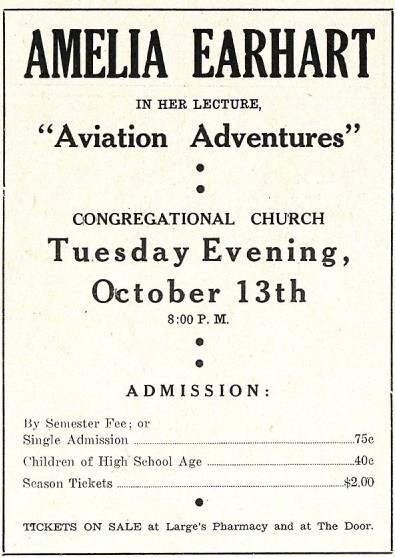
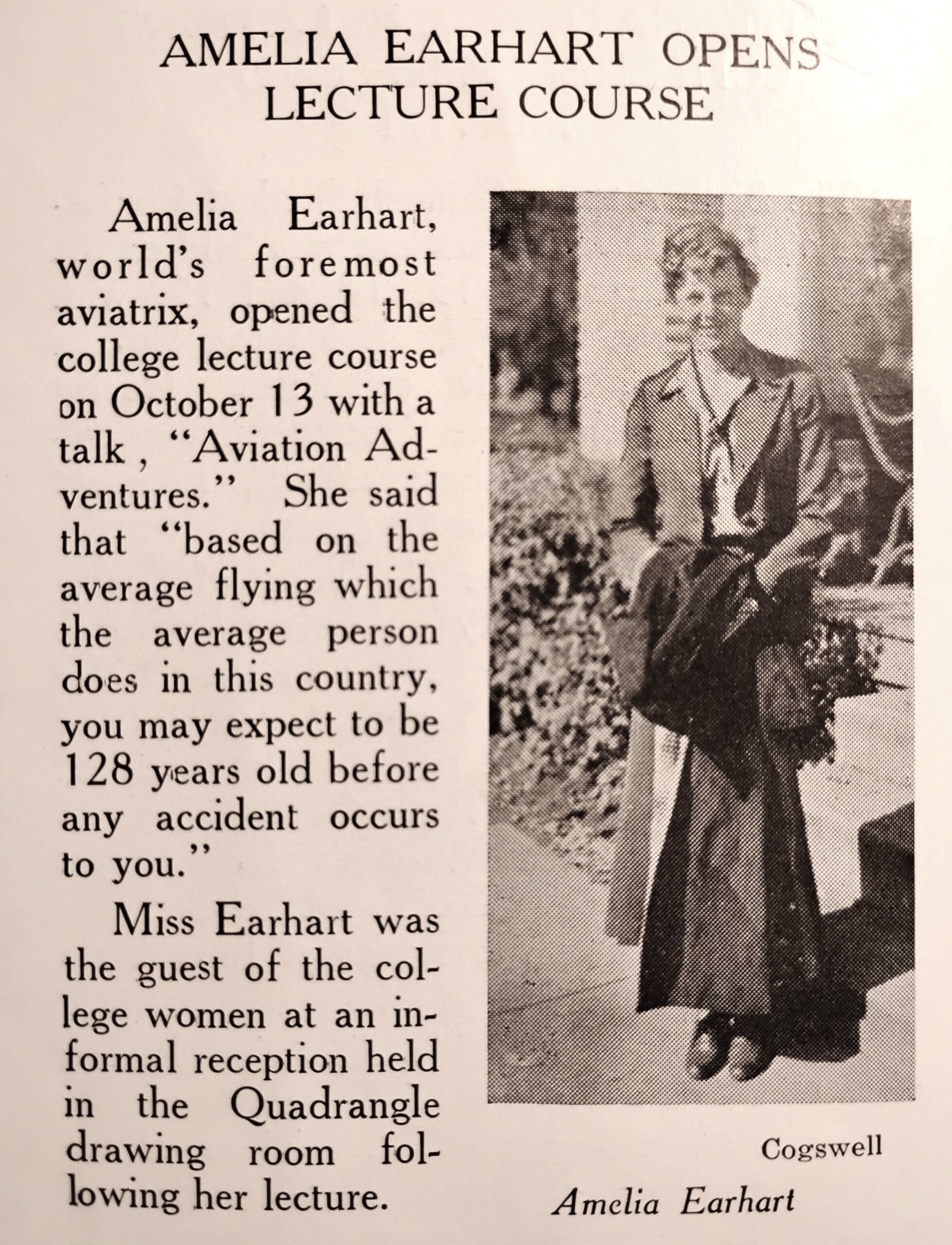
On a crisp October evening in 1936, an unusually large crowd gathered in the Congregational Church in Grinnell to hear Amelia Earhart deliver a lecture on “Aviation Adventures.” Originally scheduled for Herrick Chapel, the college event was moved to the Congregational Church since it could seat many more people and was used for such keynote gatherings (including graduation).

Billed as “the world’s premier aviatrix,” Earhart was touring the country in the wake of two unprecedented flights the year before: one was as the first person to fly solo across the Pacific from Hawaii to California (in January) while the other entailed the first solo (non-stop) flight from Mexico City to Newark, NJ (in May). Just a few years’ earlier, she had gained international fame as the first woman pilot to fly solo across the Atlantic Ocean.

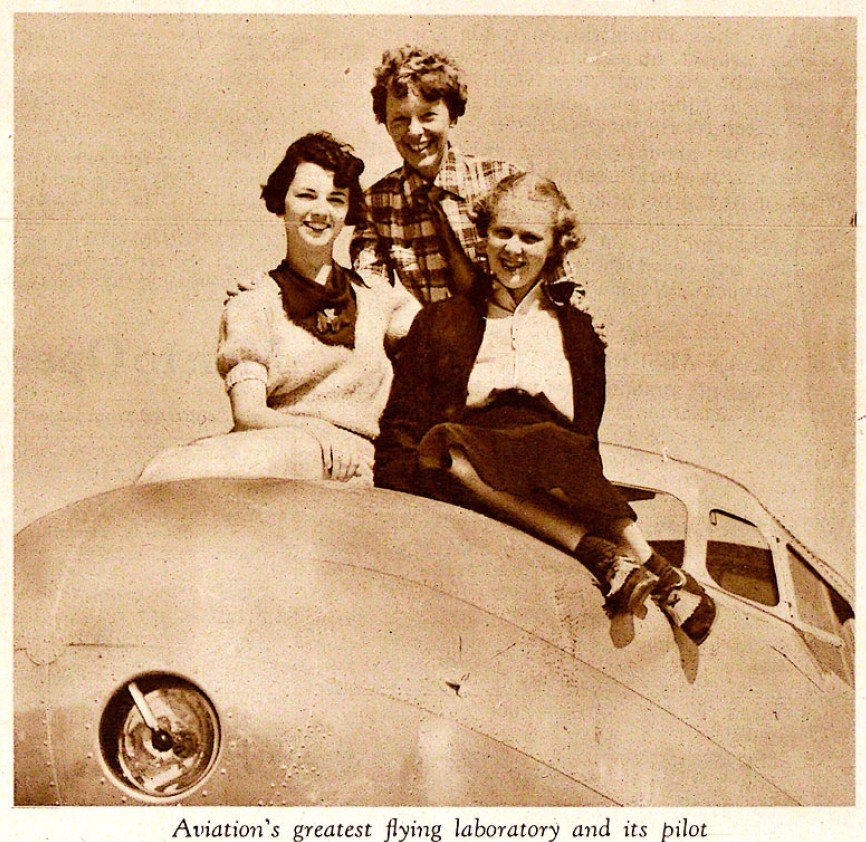
In the Fall of 1936, Earhart was making preparations for her most ambitious project yet: to become the first female pilot to circumnavigate the globe (flying solo, with just one companion, a navigator). To fly that distance, Earhart needed a different kind of plane, and was spending the Fall modifying a newly acquired Lockeed 10-E Electra (pictured here) that would be used to make the voyage the following summer.

Grinnellians were eager to make the most of this visit. The college library, in Carnegie, dedicated a “corner stall [that] will feature literature by and concerning the famous flyer.” And a special reception was held, after the talk, in the women’s Quandrangle drawing room–an event that was for “Grinnell co-eds and faculty women only.” Recently appointed a faculty member, herself, Earhart had joined Purdue University in 1935 to help them develop a new program in aviation (that she hoped would spread to other schools, opening up new opportunities for a rising generation of women and men).

Amelia Earhart’s plane disappeared the following July, n route from New Guinea to Howland Island.  Since it was during the summer, we don’t know much about how the campus reacted to the news of her disappearance.

Holiday Travel in the 30s

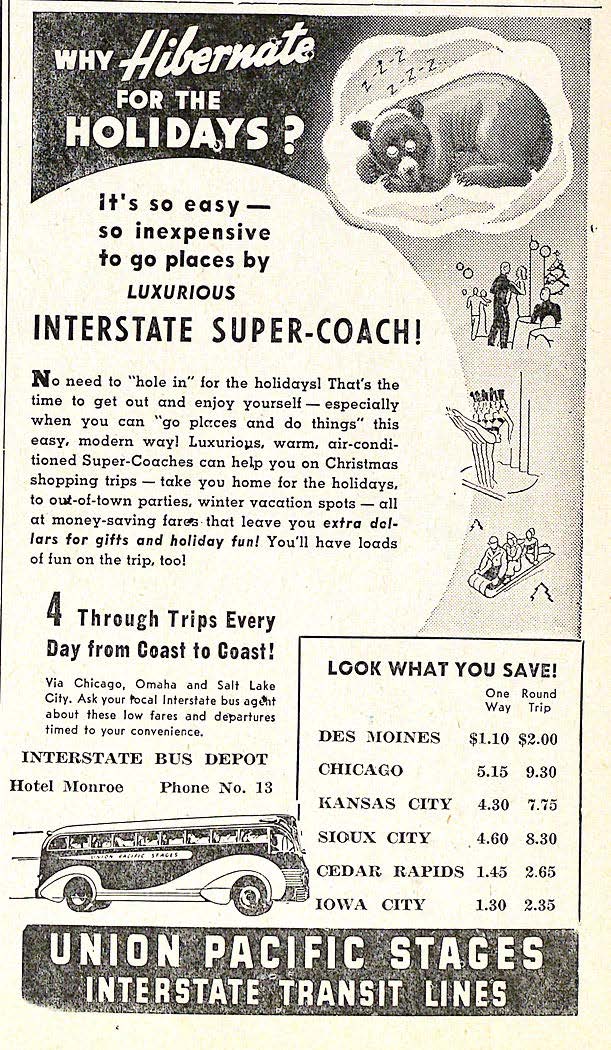
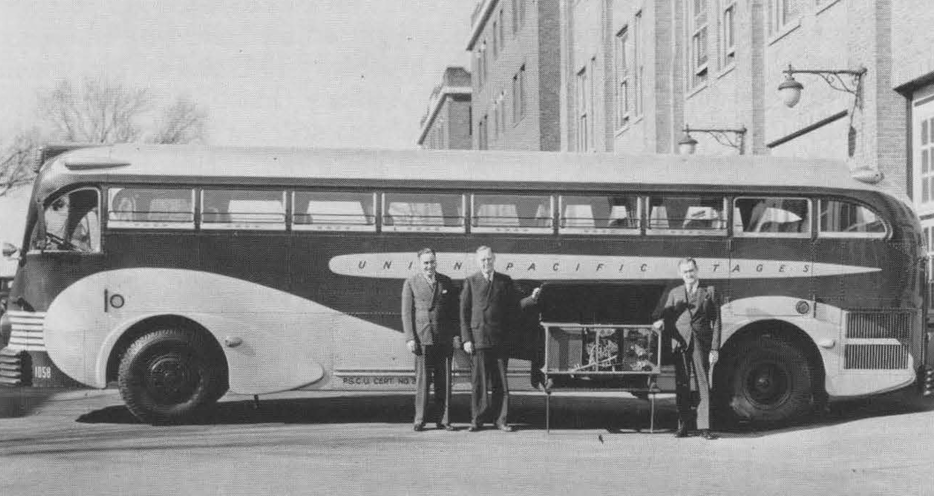
Many Grinnellians may recall that (before 1970) many people often travelled to and from Grinnell via the train, using the Union Depot train station that was located across from Central Park and the Monroe Hotel. Less well known is the fact that several bus lines also served Grinnell over the years, such as the Union Pacific’s “Stages” line, that the railroad giant had created in the 1920s to compete with Greyhound and other emerging bus lines.  This advertisement appeared on campus in November of 1939, touting their luxurious new “super” coaches that would whisk travelers to these midwestern destinations as well as dozens of other cities (by changing buses a their hubs in Chicago, Kansas City, and Omaha).  The picture below shows engineers proudly installing an air-conditioner into one of the new super-coaches that would service towns like Grinnell.

Forest Bathing in the Conservation Era

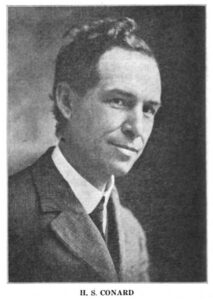
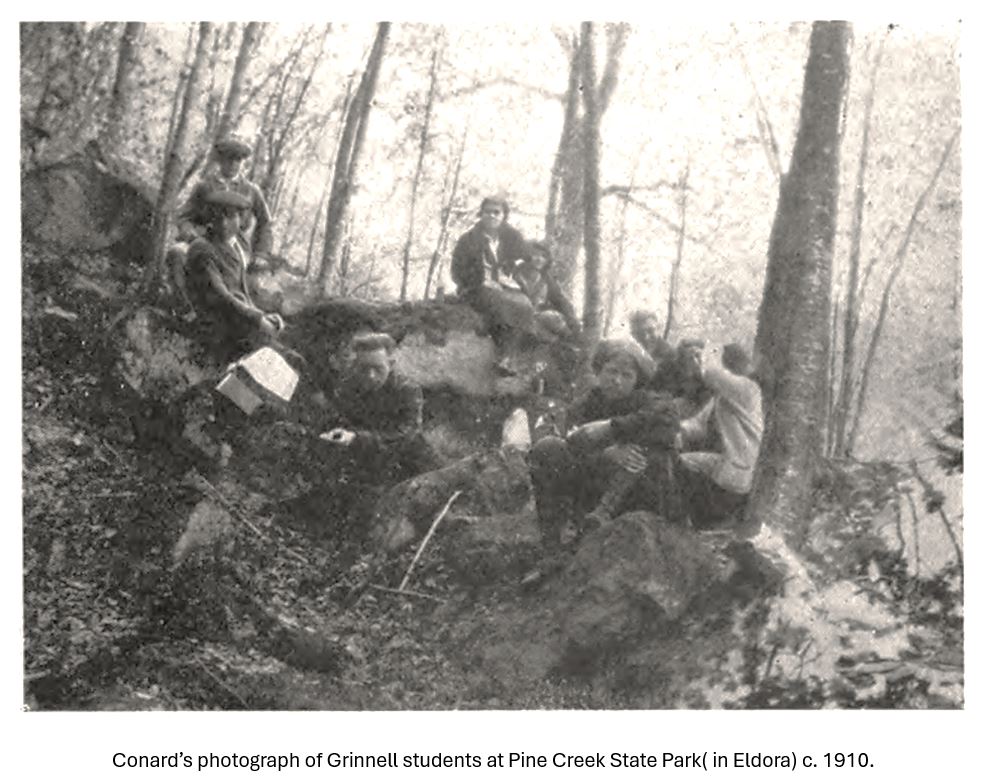
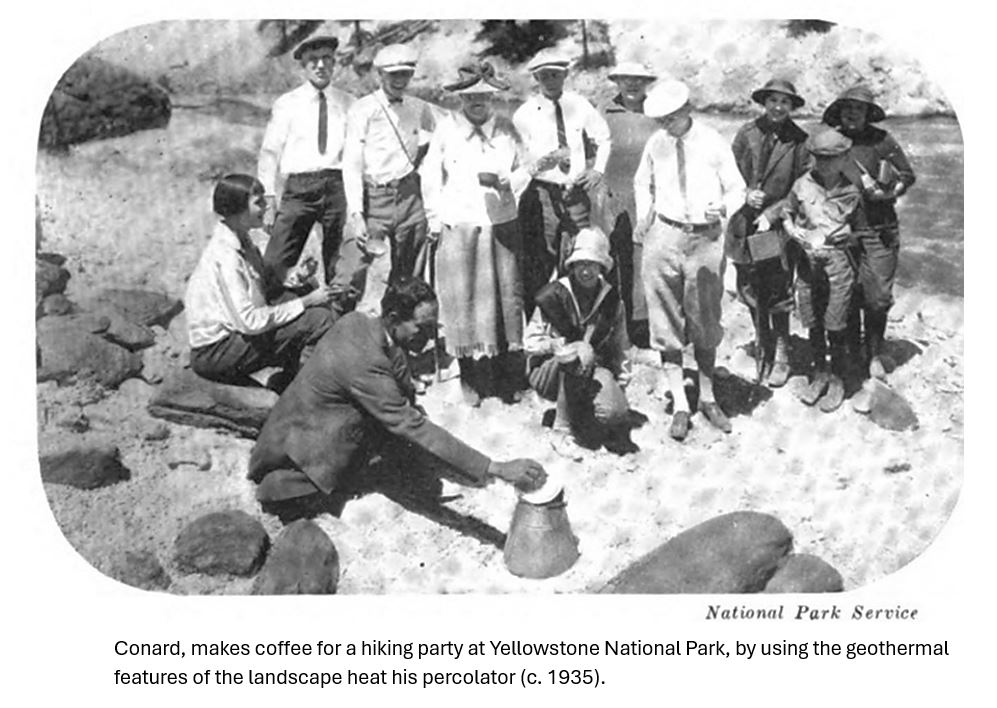
This week marks the end of the Fall program of “forest bathing” at Grinnell, in which students can sign up to spend part of a Tuesday afternoon walking through woodlands and immersing themselves in nature. Although billed as a modern wellness practice—and a form of environmental health or environmental medicine—the essential goal of these trips would have been quite familiar to Henry Shoemaker Conard, who taught Biology at Grinnell College one hundred years ago. Conard, who also served as president of the Iowa Conservation Association, advocated for a system of state parks in Iowa that would provide wilderness preserves for study, recreation, and immersion. He regularly took students on extended camping and hiking trips through Pine Creek State Park (in Eldora) as pictured here. Conard also helped organize similar, albeit shorter, trips for local school children to state parks and preserves. And in the 1930s, Conard was hired as a “Ranger-Naturalist” to lead extensive hiking parties through Yellowstone National Park in the summers, blending science, recreation, and wellness that were seen as inter-connected elements of the conservation movement in the Progressive era.

Powered by WordPress & Theme by Anders Norén