Tag: politics

A Forgotten Chapter in the History of the New Hannah Alumni House

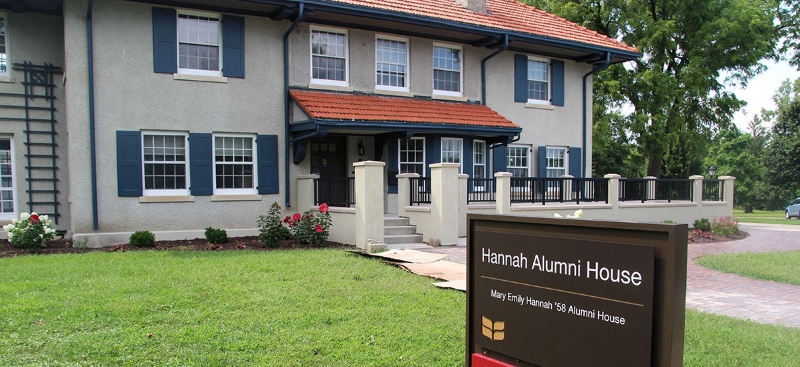
Last week, the college celebrated the opening of its new Hannah Alumni House, at 1527 Broad Street, made possible by a generous donation from Mary Emily Hannah ’58.  The project involved extensive renovations to a historic home long known as the “Fellows House”—built more than a century ago by Jesse and Maude Fellows , both graduates of the college class of 1901, and prominent leaders in the community.

In the 1930s, the Fellows sold their Broad Street home to the college, which decided to turn the building into a special residential hall focused on issues of civic and community engagement.  Named “Macy Hall”— in honor of Jesse Macy, the longtime professor of political science at the college—this “experiment in group living for students interested in public affairs” was actually intended to be the first step in the creation of a larger program. Reflecting the spirit of the 1930s, when so many Grinnell alumni were prominently involved in the New Deal, and in public service, President Nollen hoped to create a new “school of public affairs” that would garner the college national attention as it prepared to celebrate its centenary.
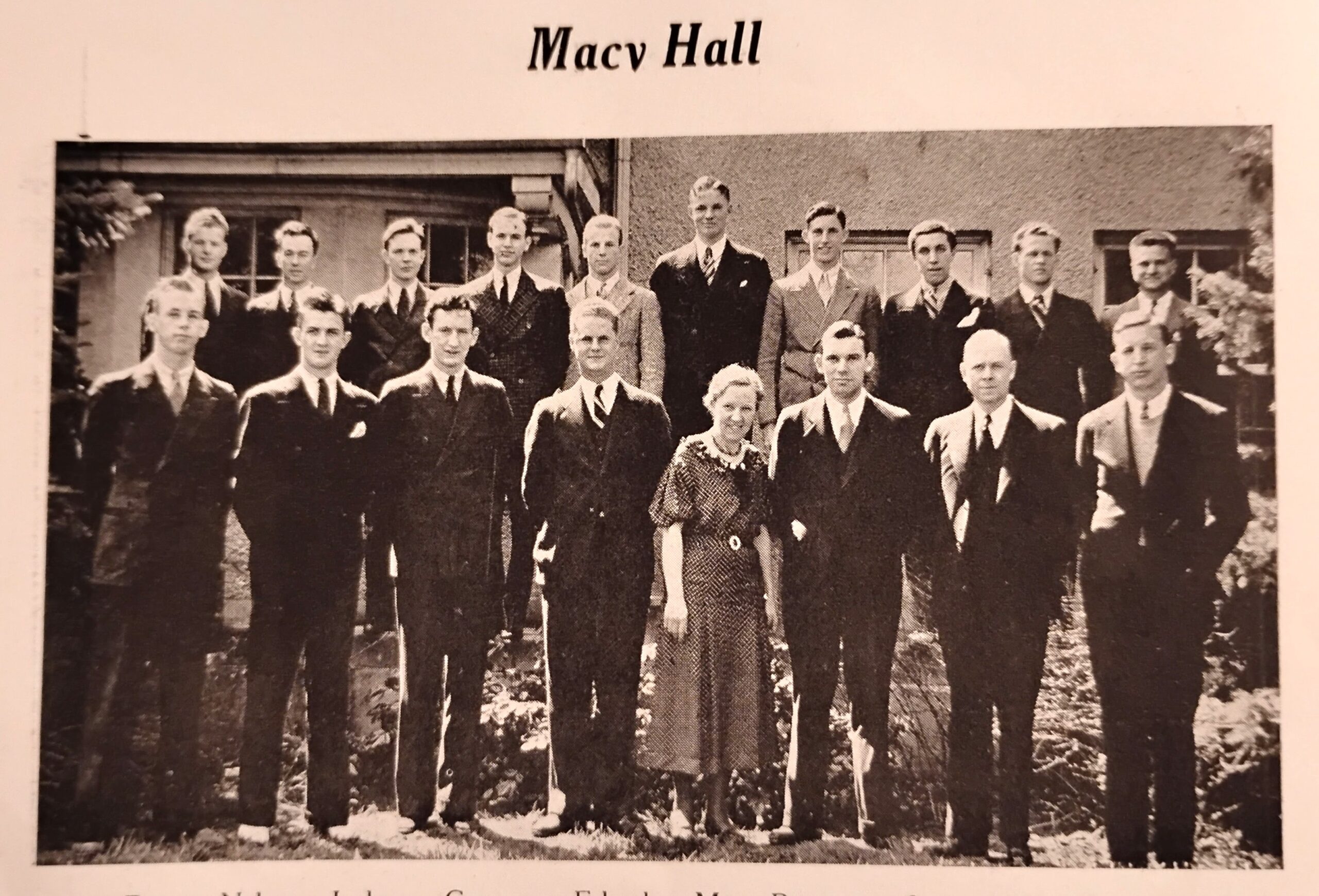
In 1935, the college hired a new professor of Sociology, W. Ryland Boorman, who became the residential director of Macy Hall (which housed 17-20 male students), and took charge of plans to develop the proposed school of public affairs.  Initial programming revolved around a community series each Thursday evening, in which an invited speaker had dinner (in the Macy Hall dining room) with invited students and faculty ,followed by a talk, and more informal conversation.  The line up of speakers focused on a broad range of topics related to civic life, municipal administration, and social reform—one semester, for example, featured speakers from the Red Cross, the Social Service League, the WPA, the office of school superintendent, City Hall, the Women’s International League for Peace and Freedom, and an agricultural organization. In addition to the talks and events, students could also use Macy Hall’s special “statesmanship library” that contained key works addressing civic reform.

Despite a lot of activity in the 1930s, the school of public affairs never came to fruition, and Macy Hall was sold to private owners during World War II.  But its recent return to the college fold means that it will be embarking on yet another chapter in its interesting history.
 

Local Election Attracts National Attention (1913)

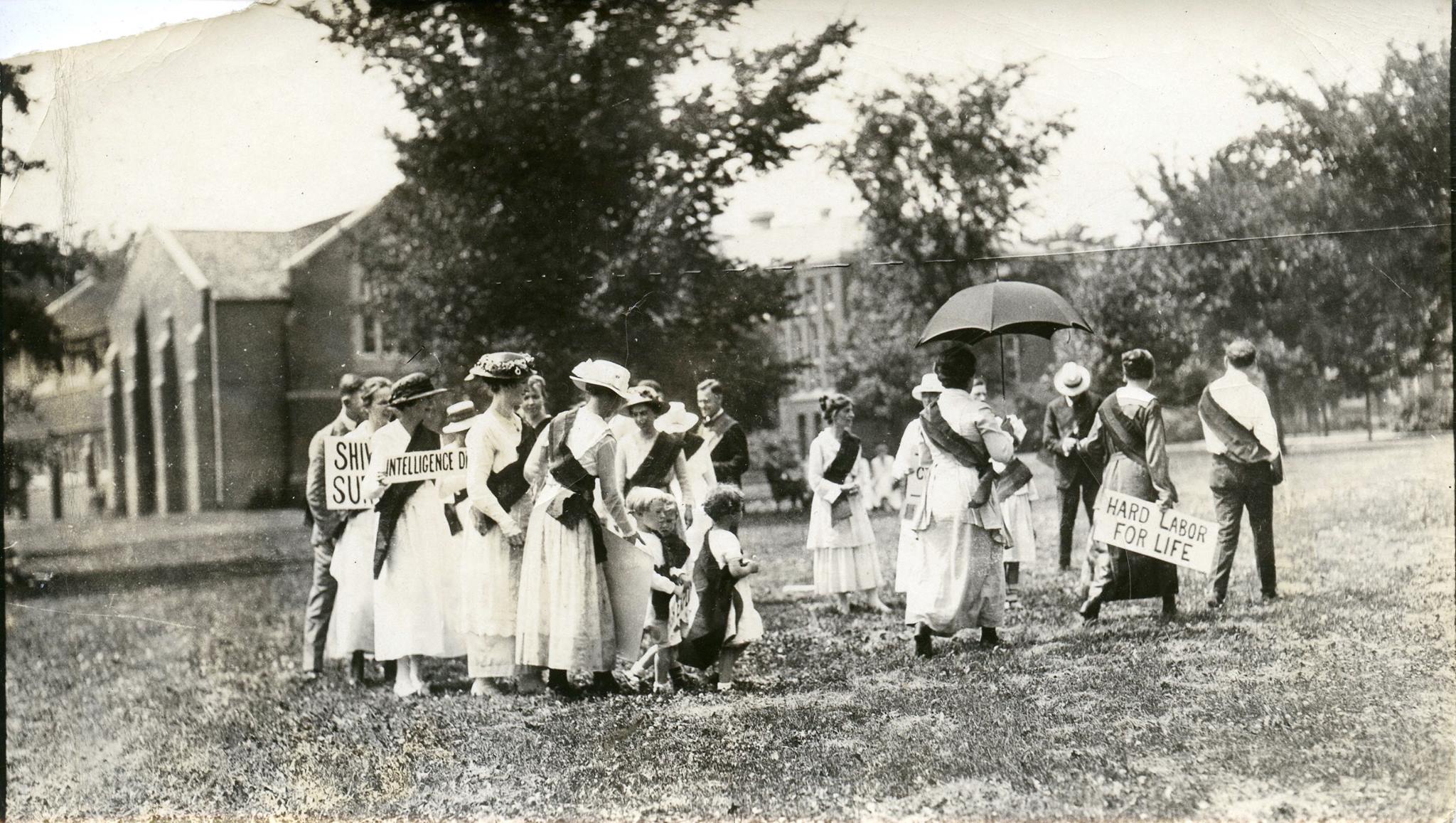
Suffragettes at Grinnell campus (date unknown)


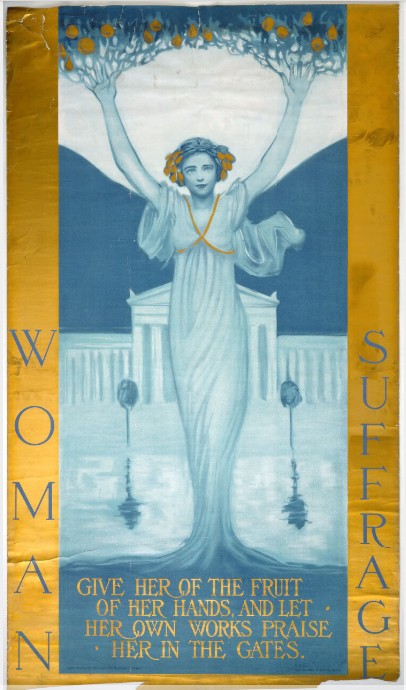
On Tuesday, Grinnellians will go to the polls to vote on candidates for mayor, city council, and school board, as well as the fate of the Local Options Sales Tax. Local elections rarely receive much coverage, but in 1913, Grinnell attracted national, and even international attention, for a special primary it held regarding women’s suffrage.

The issue had been reinvigorated by the presidential election of 1912. Theodore Roosevelt embraced women’s suffrage that year, and made it a plank in the  platform of his new “Bull Moose” Party. Suffragettes also staged some of their largest and most publicized events that year, such as when 15,000 supporters paraded in New York City in May, followed by an even more dramatic nighttime march in November, in which a half-a-million New Yorkers turned out to see thousands of suffragettes marching with Japanese lanterns to illuminate their procession.

Responding to this atmosphere, a group of Grinnell’s civic leaders decided to organize a vote that would reveal where the women of the town stood on the issue of suffrage. All women over the age of 18 were invited to this special election—which was held in the Superior Court room from 8am till 8pm, on Friday, January 31st. The voting procedure mirrored a standard, local election—using the same ballot system, held in the chambers of the superior court, overseen by a panel of election monitors—but, this time, women (and only women) were invited to cast their vote. The situation was so novel that the Scarlett and Black was unsure whether to use the term “voters,” when talking about the election, or to create a new feminine version, “votettes.”

The night before the special election, suffragettes staged a rally at the Colonial Theatre (downtown) that included several important speakers; a screening of the new silent film, Votes for Women, showcasing the dramatic parades in New York; and ending with a musical performance by the Women’s Glee Club of the  college as well as the distribution of various pamphlets, posters and material supporting the suffrage cause (all handed out by suffragettes “in uniform,” as the Grinnell Herald described them)

The next day, despite snow and ice, 738 women made their way to the polling place to cast their vote: 663 voted in favor of women’s suffrage, and 75 voted against. Contemporaries estimated that about 80% of eligible women, including college students, voted in this election; and many were surprised by the lopsided victory.

The Associated Press latched onto this story, running several press bulletins that drummed up national interest before, during, and after the election. From Los Angeles to London, newspapers covered the spectacle of a small Iowa town holding a special election for women voters to express their position on women’s suffrage. The town eventually sent the results to the Iowa legislature—certified by a team of election judges that, for the first time, were half men, half women—so that it could inform the legislature’s debate on amending the Iowa Constitution.

The “Red Special” Comes to Grinnell (1908)

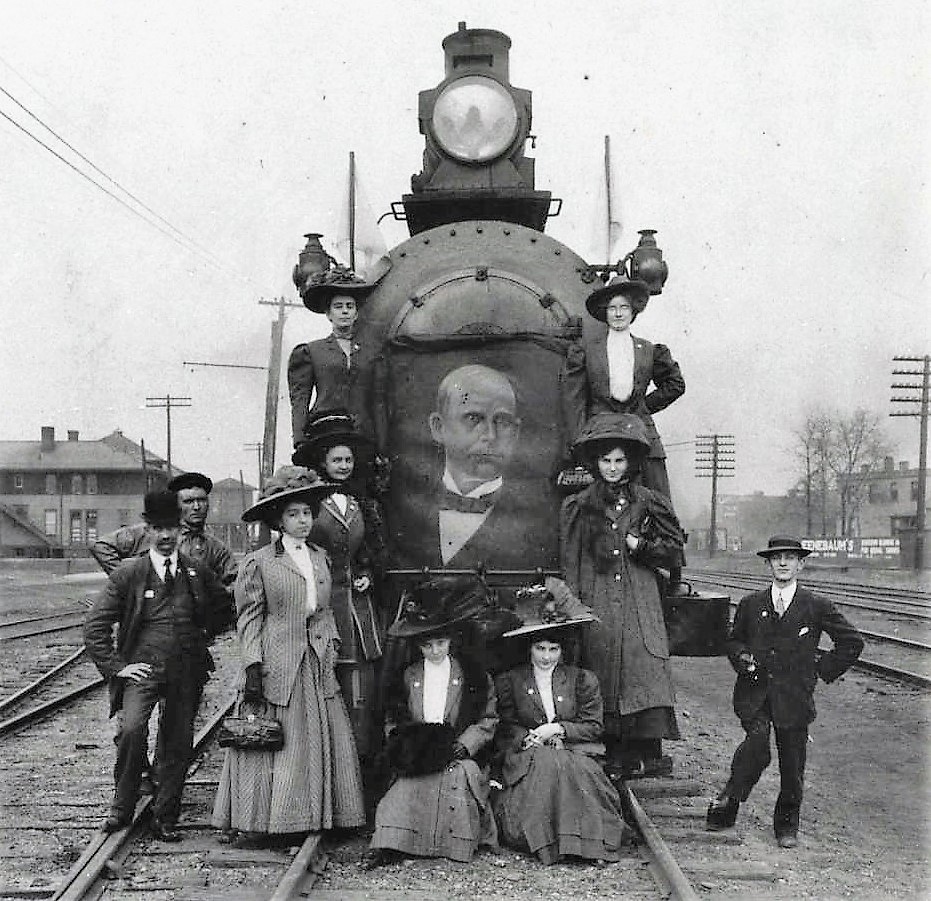
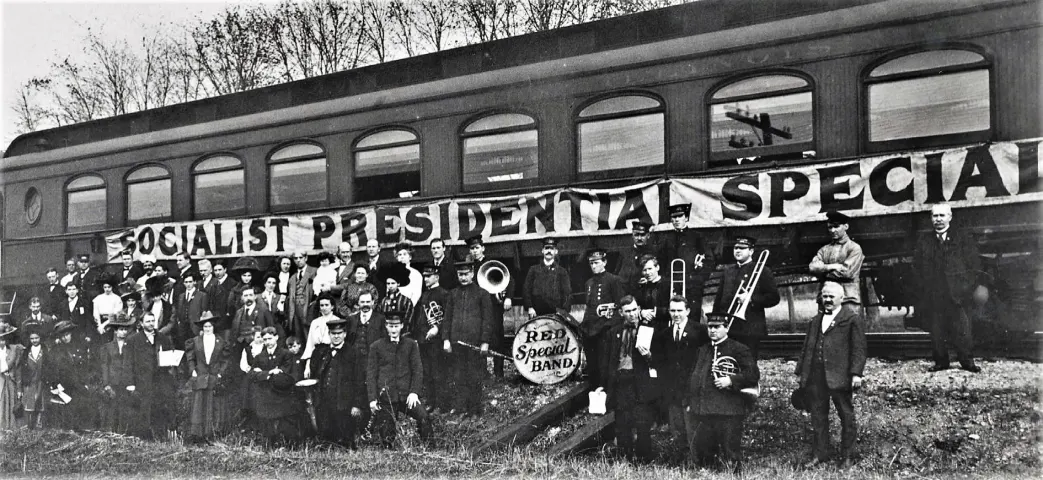
Just after 2pm on the afternoon of September 1st, Eugene Debs’s special train pulled into Grinnell’s Union Station. Debs was running for president on the Socialist party ticket that Fall (1908), and had organized a cross-country campaign in which he and a party of about a hundred supporters, campaign workers, officials, and a musical band, would stop at various cities as their privately rented train made its way from New York to California. Dubbed, the “red special,” Debs’s train (see above and below) stopped at Grinnell for about two hours, giving the band time to play in central park; giving his associates time to distribute campaign flyers, sell party tracts, and solicit donations; and giving Debs time to deliver a speech to students and townspeople who had gathered around the gazebo in the park.

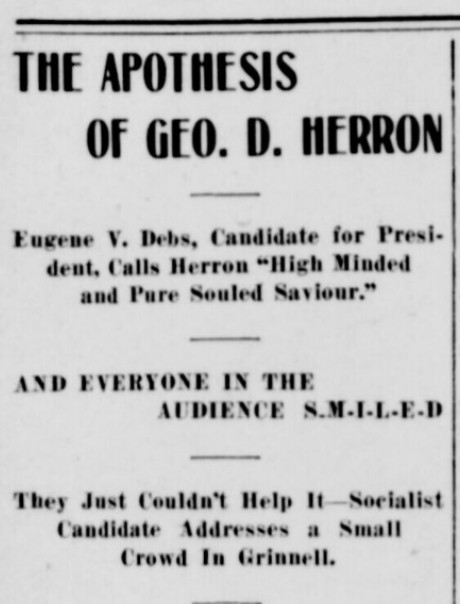
The Grinnell Herald, which was no fan of Debs, noted sarcastically that “Grinnell’s ‘down-trodden’ laboring class was so busy working at from $2 to $5 a day, that they didn’t have time to stop to hear from Mr. Debs how miserable was their condition.” In fact, the paper was less interested in reporting Debs’ political message than in discussing his controversial remarks about ex-Grinnellian, George D. Herron, who had been forced out of his endowed chair in Applied Christianity at the college when he eloped with Carrie Rand, the Dean of Women at the college (and daughter of Elizabeth Rand who had endowed the chair and larger program).  Herron was one of the most prominent spokesmen for the Social Gospel and Christian Socialism, and Debs took this opportunity to chastise Grinnell over its treatment of Herron, saying:

Grinnell had crucified its saviour; that because George D. Herron had been a high-minded, pure-souled man, Grinnell had driven him out and that when all the rest of us are forgotten Mr. Herron will be remembered

In fact, Herron received top-billing in the headline framing the story of Debs’ visit in the Herald:

One person who would have agreed with Debs, however, was Laetitia Moon Conard, who was a personal friend and follower of George Herron; who taught sociology at Grinnell College; and who would eventually run for governor of Iowa on the Socialist party ticket, a few decades later. Sadly, Laetitia never got her own “red special” when she campaigned for the governorship in 1932.


Elections Past & Grinnell’s Program in Practical Political Education (PPPE)

Elections Past & Grinnell’s Program in Practical Political Education (PPPE)

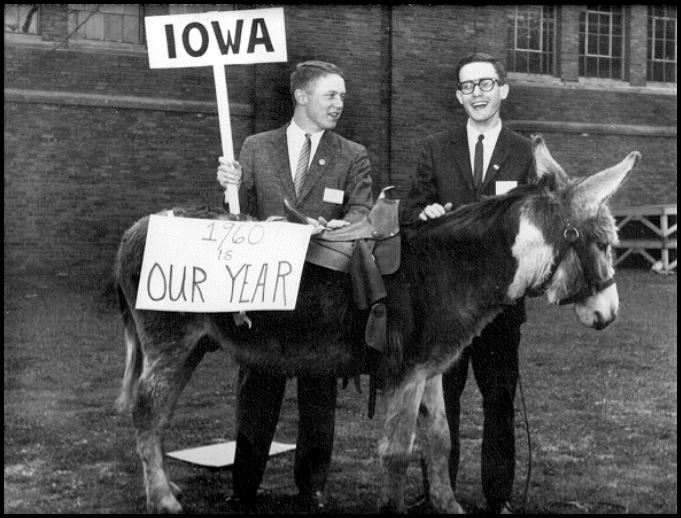
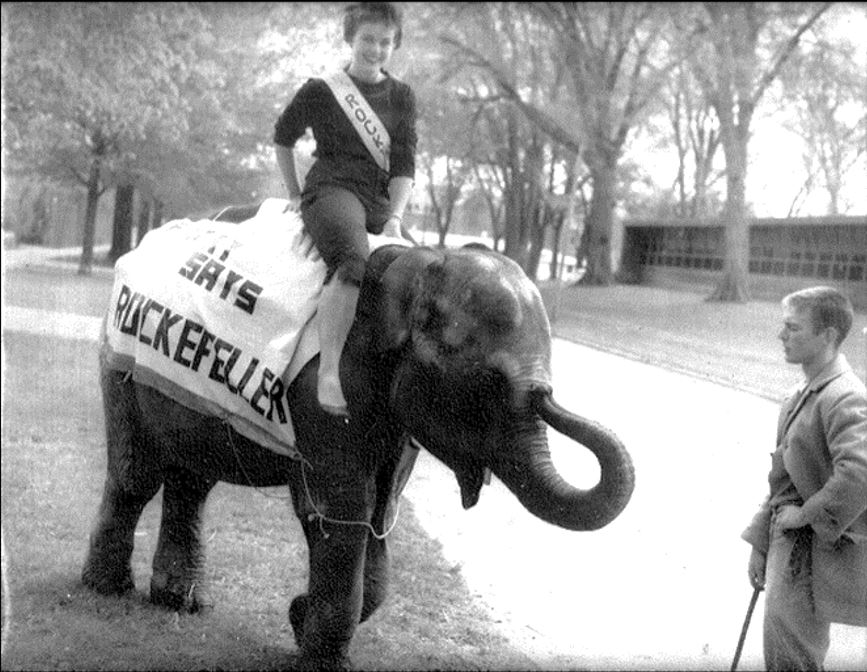
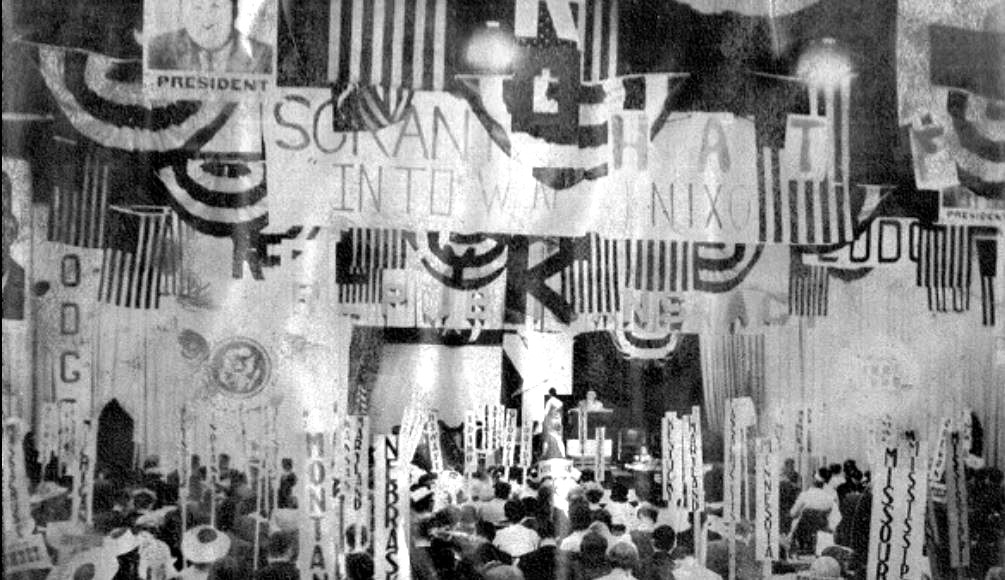
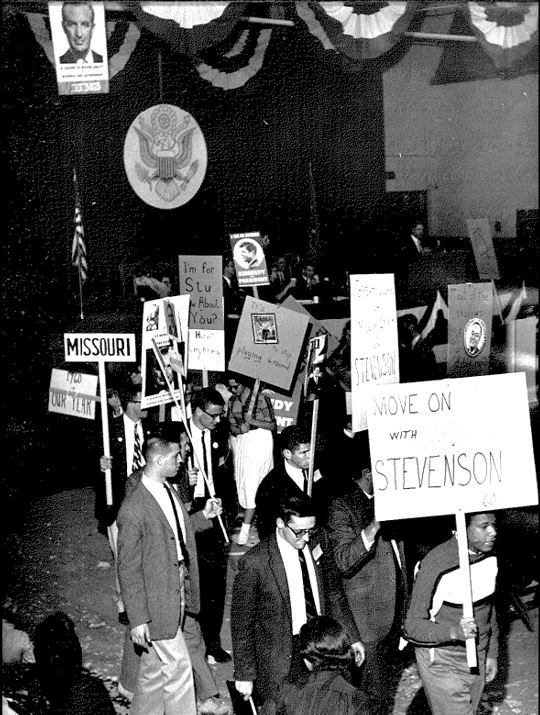
These images, from 1960, show students participating in full-blown, mock conventions for the Democratic party and the Republican party, as part of Grinnell College’s “Program in Practical Political Education” (PPPE) that ran from 1959 to 1970. Under the leadership of Prof. C. Edwin Gilmour, and funded largely by outside grants, the PPPE aimed to encourage students to become involved in day-to-day politics, even partisan politics, through a mixture of training, summer internships, funded fieldwork, political science “labs” that involved campaigns, election, or administrative experience, and a steady stream of state, local, and national politicians who came to Grinnell to give talks, teach short courses, or to work with students for a more extended period of time as “politicians-in-residence.” On election nights, the PPPE “caucus room” became the place on campus to watch coverage of the incoming election results.

Powered by WordPress & Theme by Anders Norén