We have certainly experienced a lot of turbulent weather in the past week or two—with temperatures varying wildly from day-to-day, and severe cold fronts bringing thunderstorms (with the accompanying threat of high winds, hail, or tornados). How did prior generations of Grinnellians deal with this kind of volatile and dangerous weather?
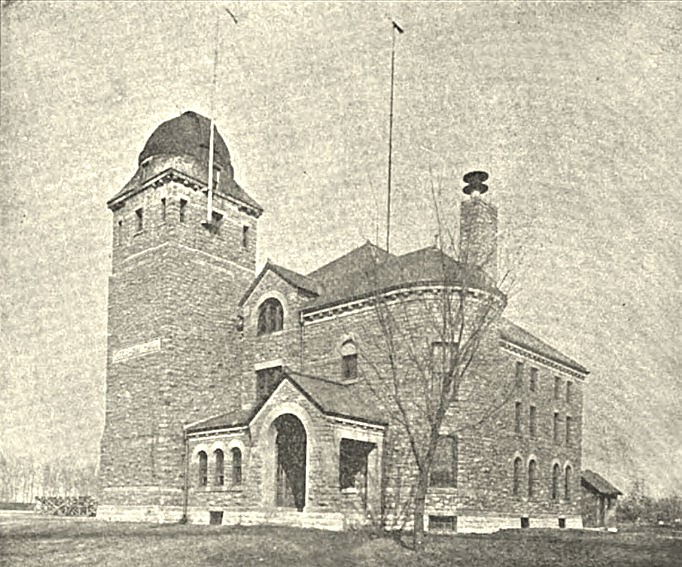 One of the first notable steps towards a public warning system appears to have developed in the spring of 1888, when the college joined the federal government’s network of voluntary weather observatories. Run by the Signal Service, in the Department of War, this program created a network of volunteer observatories throughout the country, which would record a series of meteorological measurements each day, using calibrated instruments provided by the government, and in turn, would receive daily forecasts and weather charts (via telegraph), which would be communicated to the public by flying large, specialized weather flags, atop their buildings. Goodnow Hall served as the first weather observatory, when the college joined this system in the spring of 1888, with Prof Samuel Buck (Mathematics and Astronomy) overseeing this project.
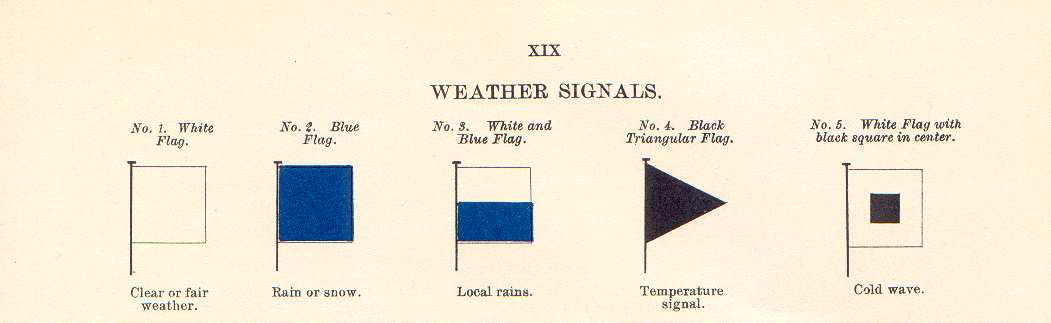
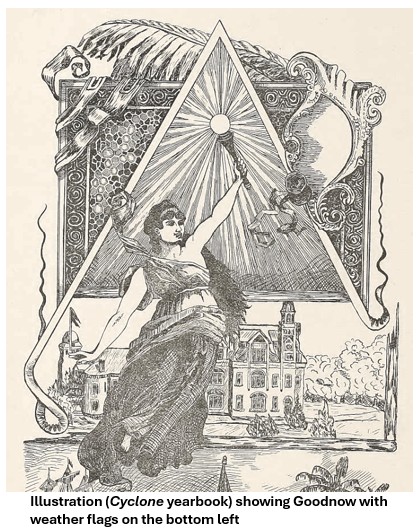
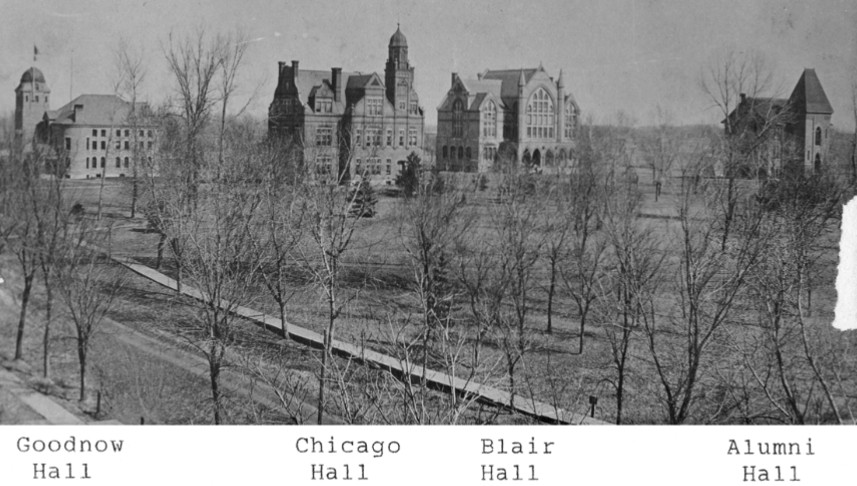
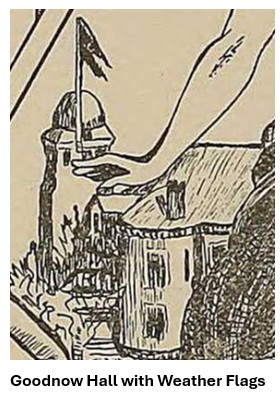 Goodnow, which was built only a few years earlier, in the wake of the devastating tornado of 1882, was designed to serve as the college’s new library and astronomical observatory. To serve as a weather station, two large poles were added to the building—one, was attached to the observatory tower, and served as the flagpole used to fly the 6 large weather flags that an inland station would use (coastal sites, carried a larger number of storm flags particular to maritime conditions), while the second pole was erected in the center of the building’s roofline to carry the sensitive anemometer, which sent electrical signals to a self-recording device (a chronograph) that captured a constant record of wind direction and speed. Pictures & drawings of Goodnow from this period usually include these two features of the building, which disappeared later. And the fluttering weather flags would have been a prominent feature of the local skyline (each flag was more than 6 feet in length, so that they could be seen from far away.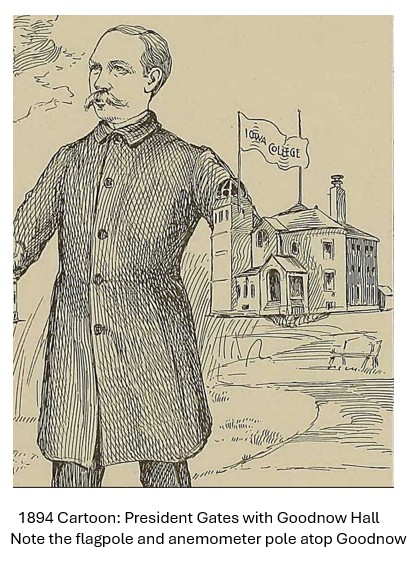
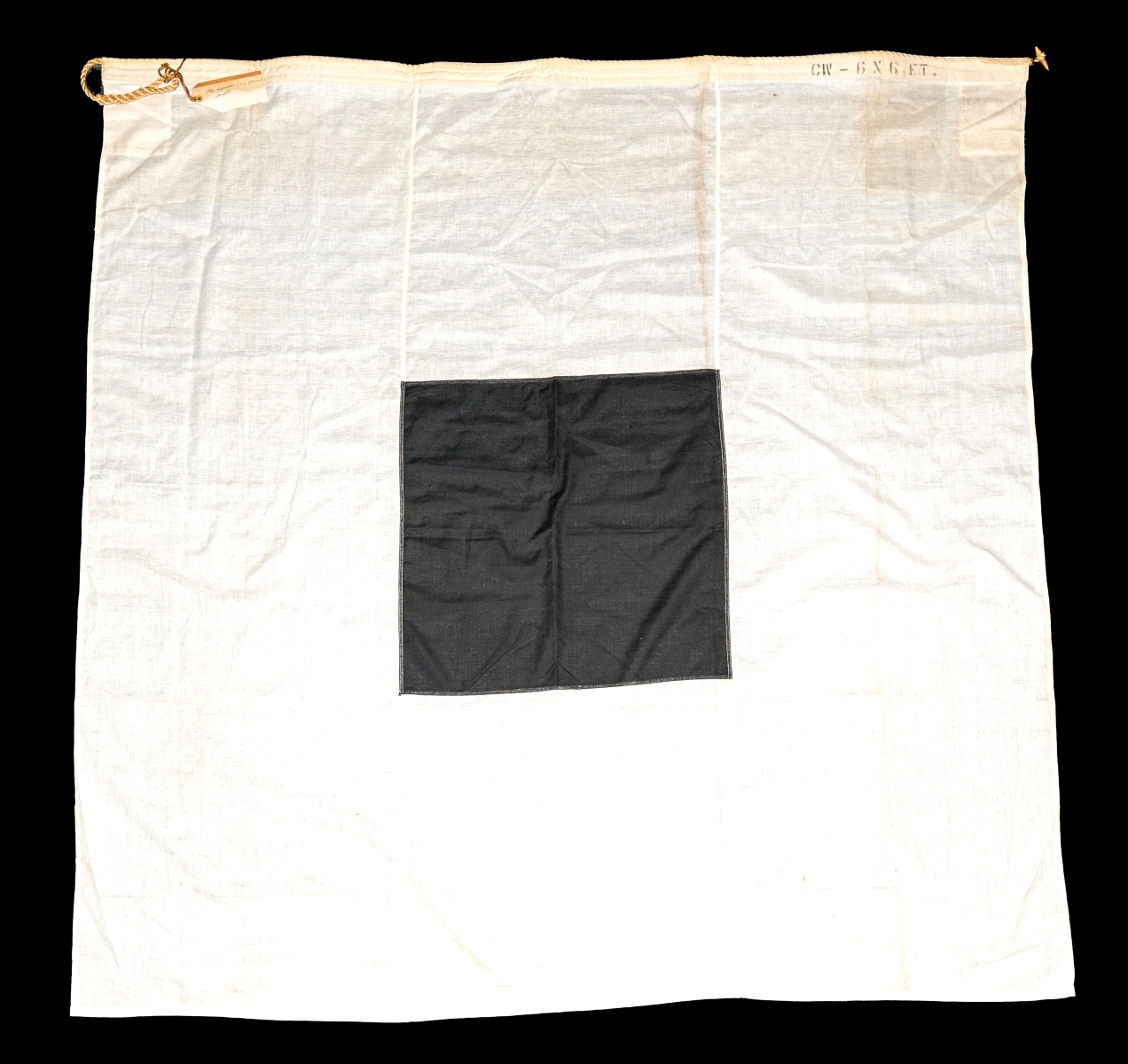 The most prominent and important of the flags was the “Cold Wave” flag (pictured here), that warned of a coming cold front that could lead to dramatic storms throughout the year. The danger that such cold fronts posed were particularly on the mind of Americans in the spring of 1888, when Grinnell joined this forecasting network, because of two, recent, traumatic events. On January 12, 1888, what started out as a very warm and mild day turned into one of the fiercest blizzards in the upper Midwest that struck unexpectedly that afternoon, trapping many school children who were trying to walk home from their rural schoolhouses. It is estimated that nearly 300 people died from exposure in what became known as the “Children’s Blizzard”; and in March, an equally sudden and ferocious blizzard descended on the Northeast (again leading to a staggering loss of life, and paralyzing much of the region). It seems likely, then, that the timing of Grinnell’s entry into the Signal Service network was driven by these recent events. Throughout the nation, people clamored for better ways to communicate forecasts and warn about impending weather dangers. The flags that flew each day over Goodnow were a visible attempt to address those concerns, and would continue to alert the public until radio broadcasts rendered this system obsolete.