Tag: campus

The Spring Ritual of Mowing

In April, grass grows at a prodigious rate in Iowa.  On his visit to Grinnell, the famed agriculturalist, Wes Jackson, once expressed his astonishment at how quickly, and completely, Iowa goes from a sea of brown to a “riot of green”, in just a couple of weeks.

All of that grass, of course, requires mowing, and modern day Grinnellians are used to hearing the hum of lawnmowers around campus and town whenever the rain pauses and the sun comes out. Last week, in fact, City officials reminded residents, businesses, and institutions that they would be taking their rulers around town to measure grass height (anyone with grass over 8 inches will receive a citation and be  fined).

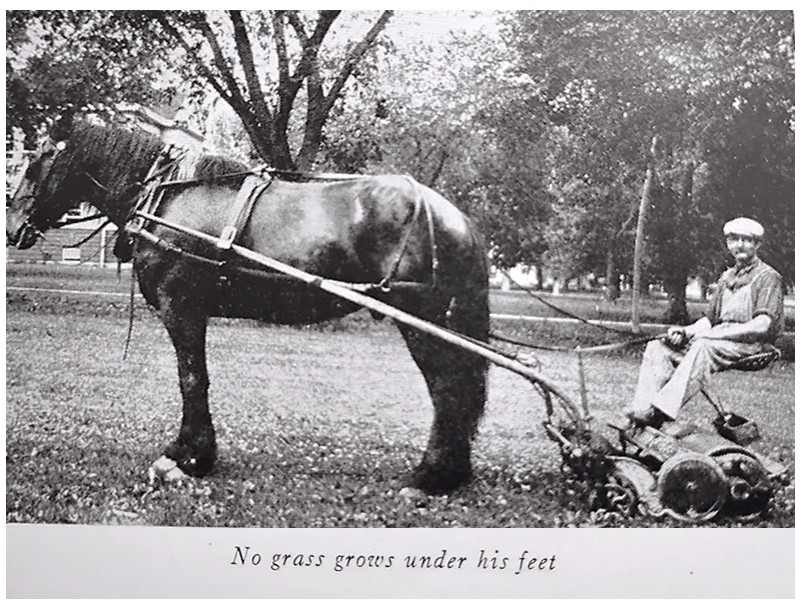
A century ago, one groundskeeper (captured in this 1916 photograph) was responsible for mowing all 22 acres of campus with a horse-drawn mechanical mower.  In 1930, students published calculations about how much mowing this entailed. Estimating that he mowed the campus 20 times a year, and calculating how many miles that would translate into if he and the college horse travelled in a straight line, they determined (with a good dose of comic hyperbole) that:

They have traveled far enough to go from New York to San Francisco and back to the railroad crossing just this side of Kellogg, where they would undoubtedly block the Rock Island trains until next spring, when there will be more grass to cut and they could again move on.

This process of endless mowing is the kind of prosaic routine that typically fades into the background of college life. Although there are times when it surfaces. In the 1970s, for example, the staff of Buildings and Grounds went on strike for 19 weeks, forcing administrators to do much of the mowing (there are iconic photos of Dean Wally Walker mowing the campus lawn). And there were a number of debates in the 1980s about whether mowing should take place during class time, when open windows made it difficult to hear.

Still, the symphisian task of mowing continues on.

 

The Ballad of the Squirrels

In the past few years, squirrels seem to be everywhere on campus. From the giant inflatable squirrel that welcomed new students in August, to the gleaming squirrel statute carved out of a block of ice in January, these charming rodents have become the unofficial mascot of Grinnell College.

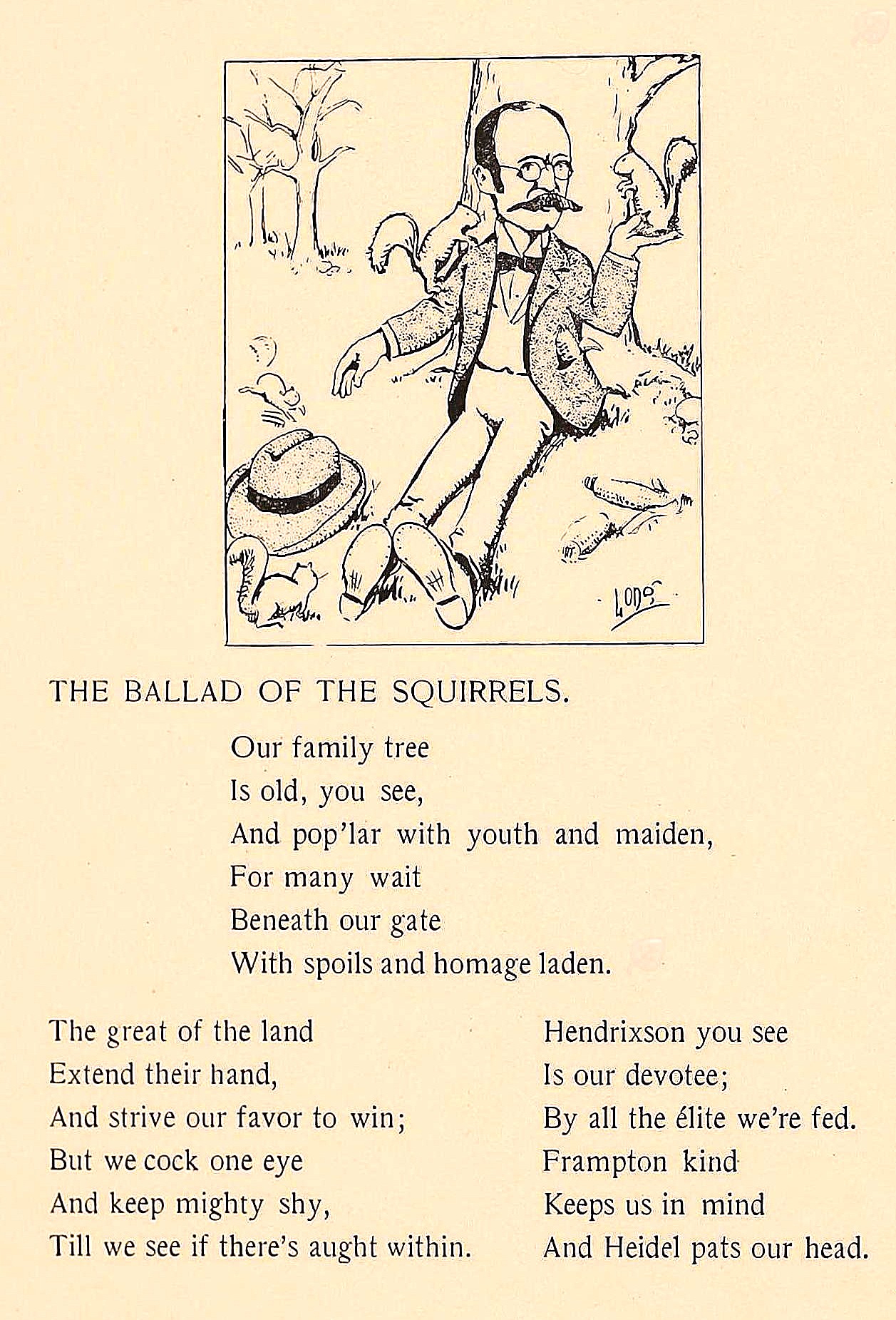
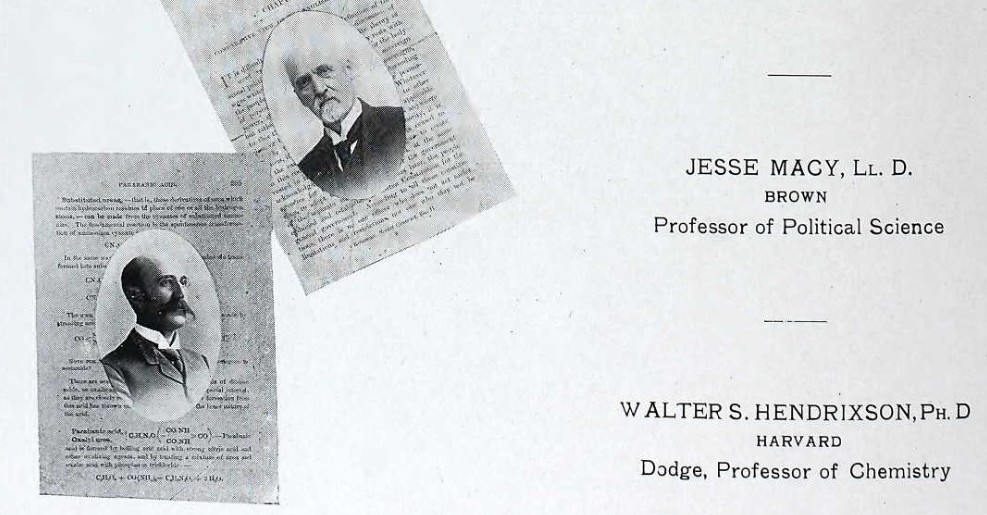
This 1894 cartoon and poem, “The Ballad of the Squirrels,” shows that our love affair with these furry denizens goes back a long way.  The cartoon shows Walter Scott Hendrixson—the Dodge Professor of Chemistry, long-time Grinnell faculty member, and apparently squirrel “devotee”—spending some quality time with campus squirrels. Hendrixson was known to feed them regularly, along with other faculty members (the poem mentions the college organist, John Ross Frampton, and the classics professor, William Arthur Heidel).

This yearbook image shows that the student artist did a good job of capturing Hendrixson’s likeness (particularly his impressive, walrus-like, mustache).

Grinnell’s love affair with squirrels was part of a larger trend in the early 20th century, as college campuses across the country sought to transform their grounds into more park-like environments, and actively encouraged birds and squirrels to become residents, helping mitigate some of the feelings of being isolated from nature that were affecting a generation experiencing rampant urbanization (as well as the disappearance of wildlife & wilderness in rural communities).

Viewing the Cyclone of 1882

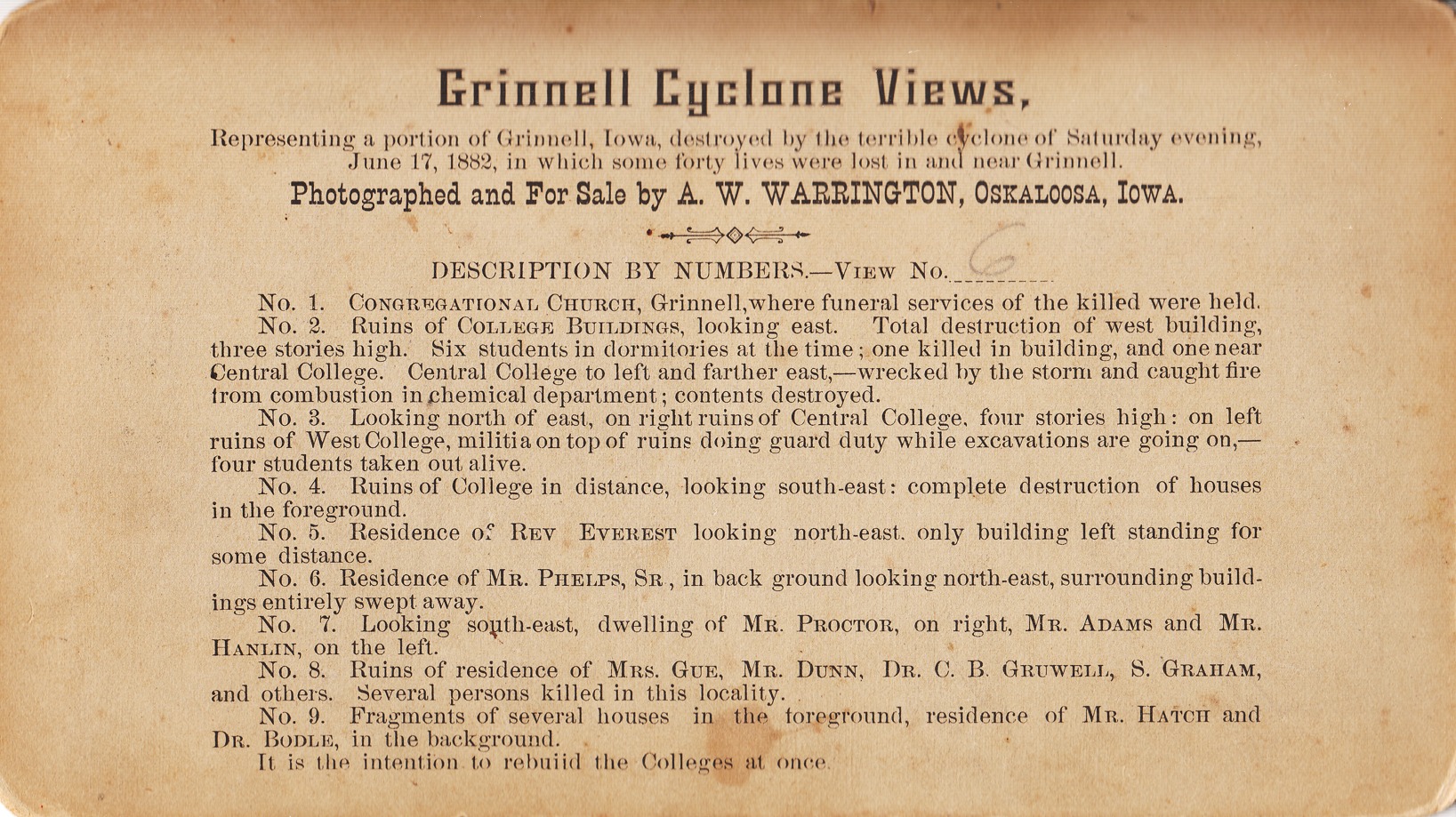
On the evening of June 17, 1882, two tornadoes joined together (near 8th Ave and Broad St.) to form one devastating “cyclone” that destroyed many buildings on campus and in town, killing nearly 40 people (2 of whom were students at the college). This local tragedy received national attention, as various newspapers and magazines reported on the devastation.

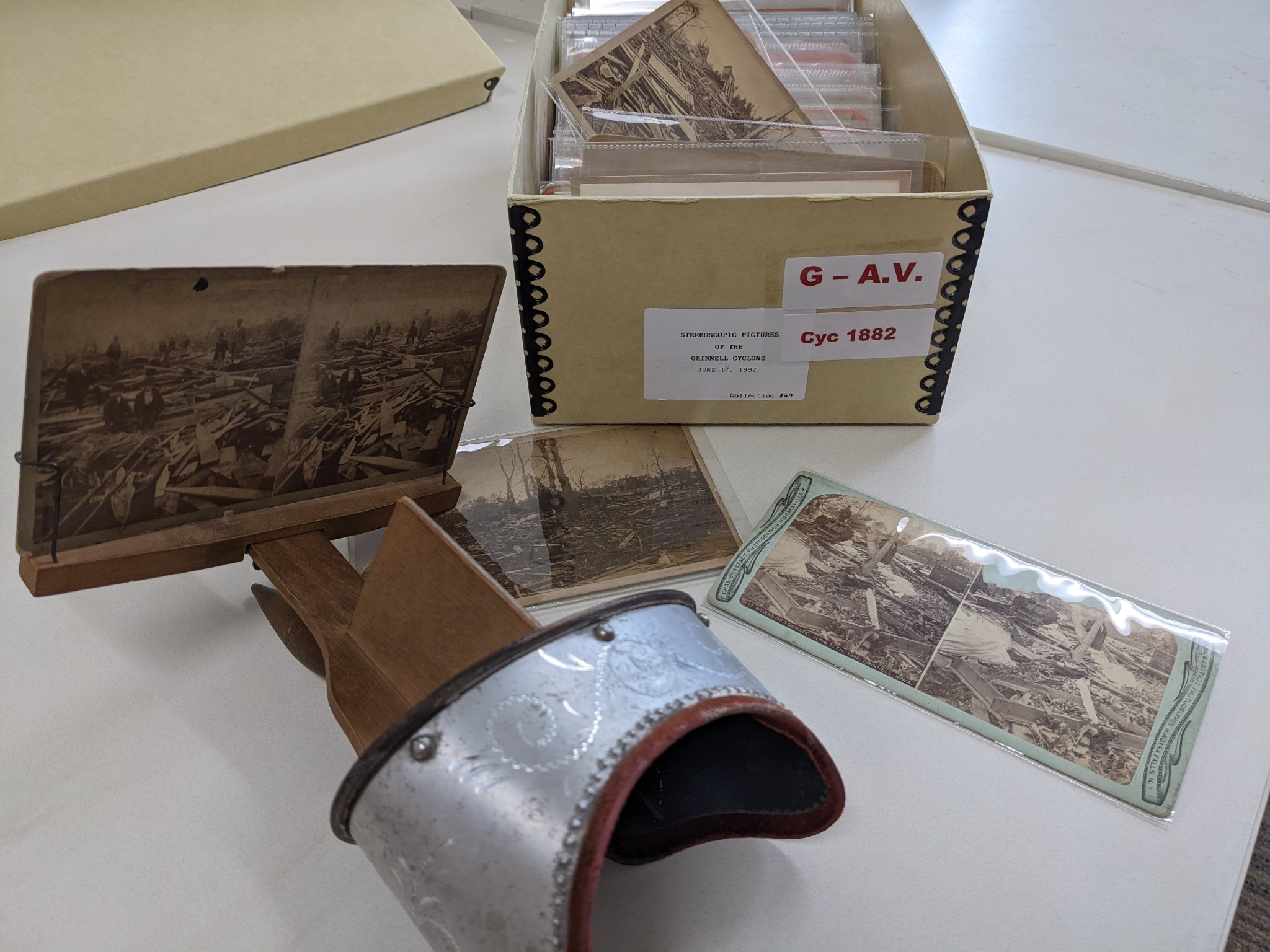
Images of the aftermath were highly sought after, and some companies began to create stereoscopic cards, known as “stereoviews” that allowed for a kind of immersive, 3-D, experience of the scene. Pictured above is one of the popular Holmes stereoscopes, along with a set of stereoviews showing the destruction wrought by the cyclone in Grinnell.

Autumnal Landscapes of the Past

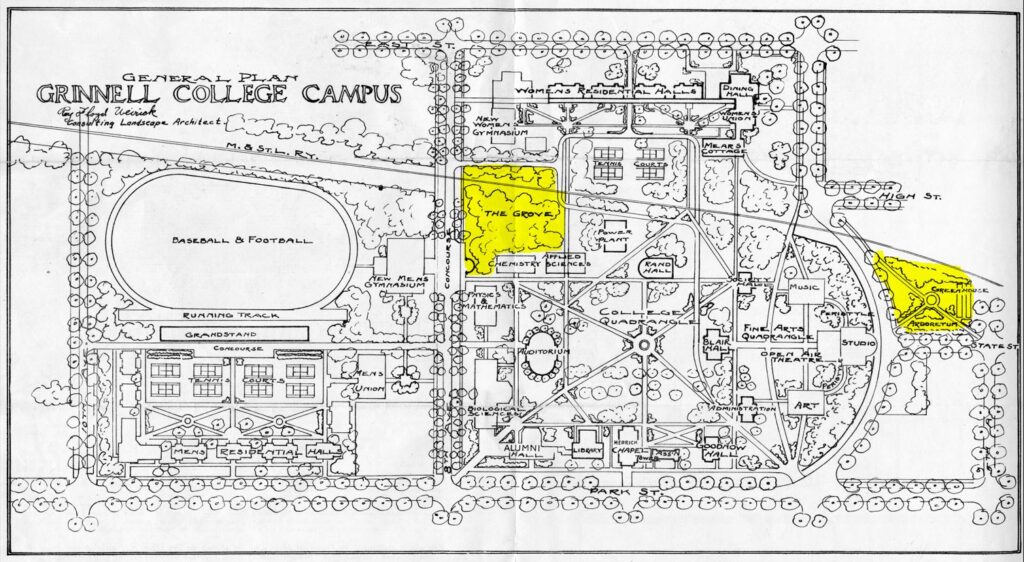
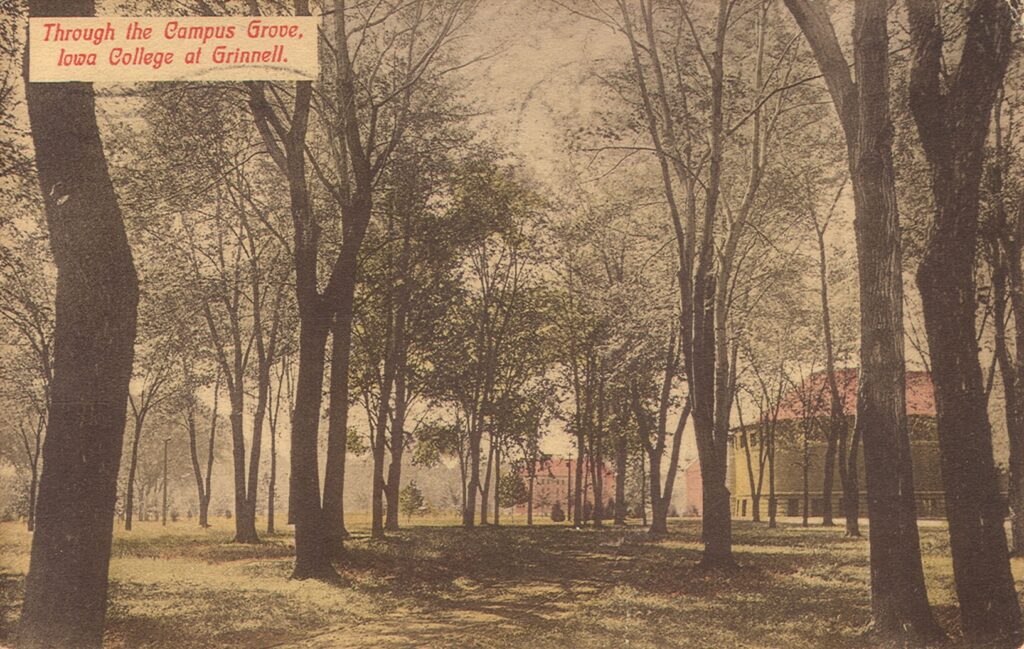
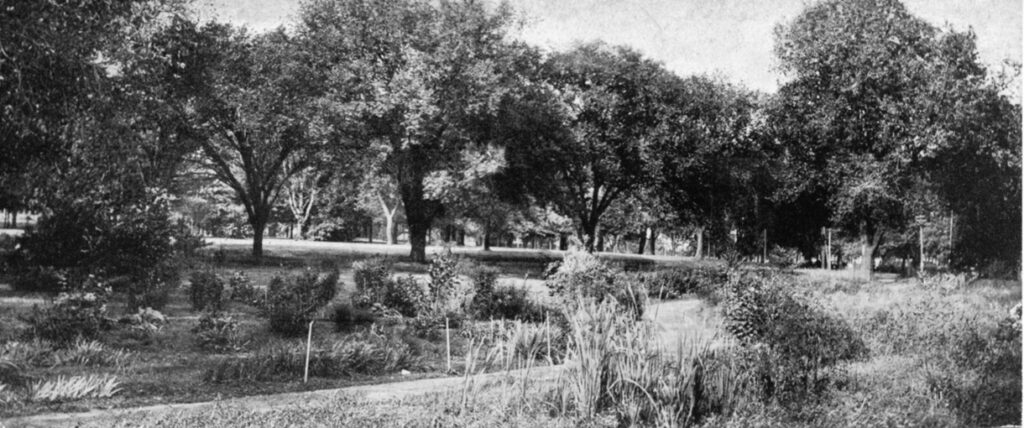
As Fall arrives, and leaves start to change color throughout the Midwest, it’s worth remembering some of the distinctive autumnal features of our campus landscape that have disappeared. One of those was “the Grove”— a parcel of the campus planted with trees that turned gold, crimson, and auburn each Fall (and is now home to the eastern half of the Noyes Science Center and its parking lot). The other space was the college’s arboretum and botanical gardens, located across Sixth Avenue, on the large plot of land that eventually became the home of St. Paul’s Episcopal church. In their heyday, both locations provided a calm retreat where members of the campus community could enjoy a bit of nature, particularly during the seasonal changes of Fall and Spring.

The Campus Grove (postcard)

Photograph of Grinnell Arboretum & Botanic Garden

Powered by WordPress & Theme by Anders Norén