Tag: Alumni

Commencement at Grinnell: Then and Now

Grinnell’s approach to celebrating commencement is a mixture of old and new. Some traditions span the history of the college, while others have changed considerably over the years. It’s illuminating, in fact, to compare this weekend’s commencement festivities (for the class of 2026) with what Grinnell graduates, family, and alumni experienced a hundred years ago, in 1926.
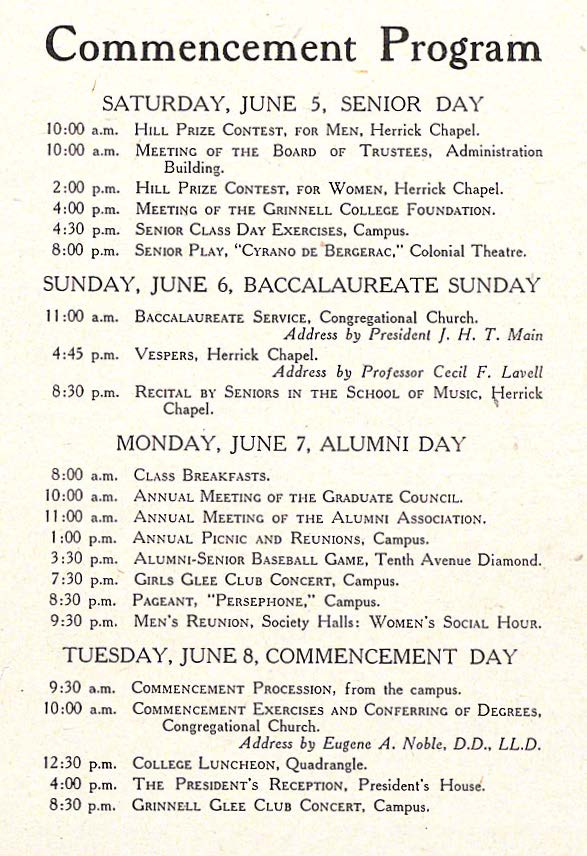
One of the first things you might notice in glancing at the commencement program from 1926 is that graduation was a June affair back then. While Grinnell classes ended by mid-May, exams were followed by an extended “pre-commencement season” devoted to pageants, performances, outings, and events. In 1926, that period included the “All College Revue,” the outdoor pageant Ceres and Persephone, various recitals, and culminated in “Pioneer Day,” replete with sporting events, picnic, band concert, parade, and an evening dance. The Senior class (comprised of 103 graduating students) also held their own special events, such as the senior picnic day at Arbor Lake.
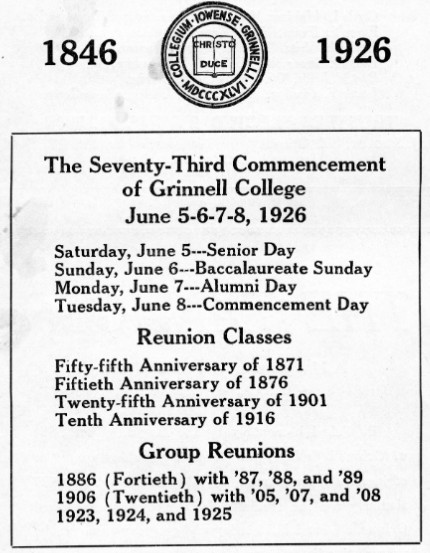
While the graduations ceremonies were the culmination of the four-day festivities in 1926, it’s important to note that alumni reunion was an integral part of the commencement celebrations in this period of Grinnell’s history.Returning alumni attended all of the ceremonies, concerts, recitals, and events (including Baccalaureate and Commencement), while the graduating seniors took an active part in the “Alumni Day” festivities held the day before graduation. Much like today, the alumni reunion was a mix of anniversary classes and clusters (which you can see in this advertisement).

Some other noticeable differences include the larger array of concerts, performances, and competitions that filled the commencement calendar back in 1926. Graduation also took place off-campus, because the Congregational Church (on 4th and Broad St.) was the only space large enough to hold all the students, faculty, family and alumni. This gave rise to a Grinnell tradition that is no longer with us—i.e. the commencement “procession” in which all of the graduates, the faculty, and the trustees processed from Herrick Chapel to the Congregational church, led by honorary Marshalls.
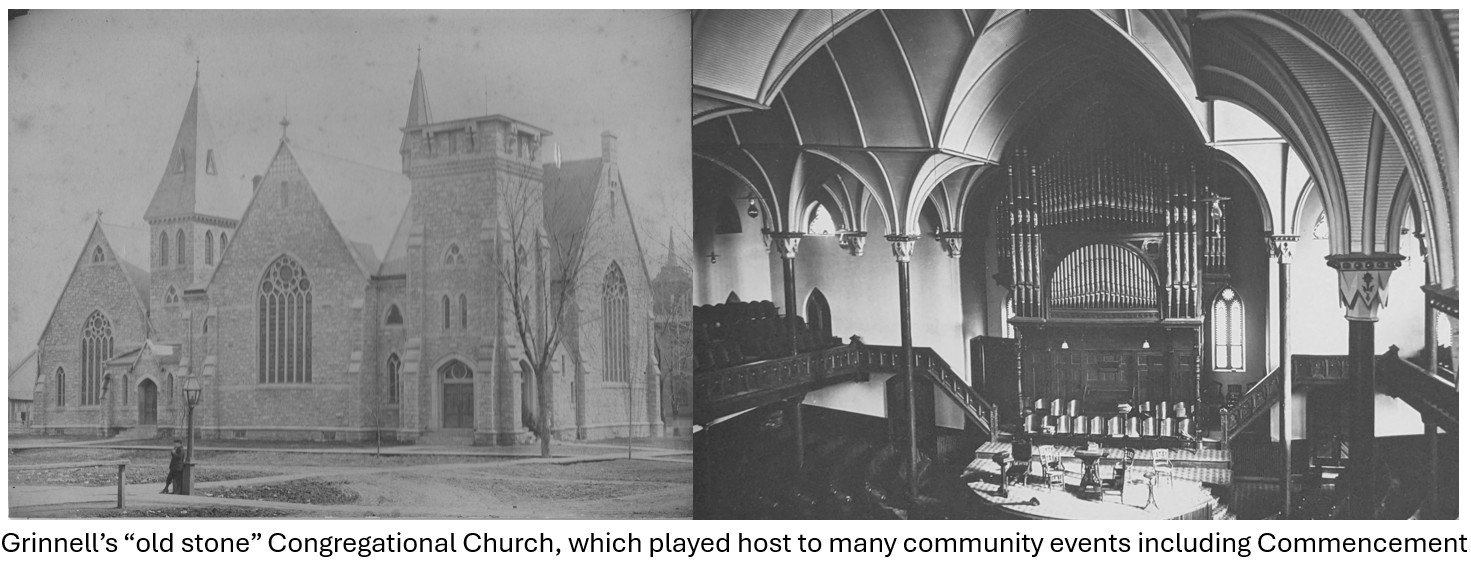
Looking back, it’s hard to imagine how people had the stamina to make it through this jam-packed calendar of events. At the same time, it also seems like a charming idea to combine graduation and alumni reunion this way, and to create so many meaningful events and performances for the senior class.

Then as now, weather was also an important factor shaping commencement weekend. It was a mixed affair in 1926:  good weather for most of the evening events, and for commencement itself, but the alumni picnic had to be moved indoors due to an unexpected dust-storm, which surprised everyone. Never a dull moment in Iowa. 
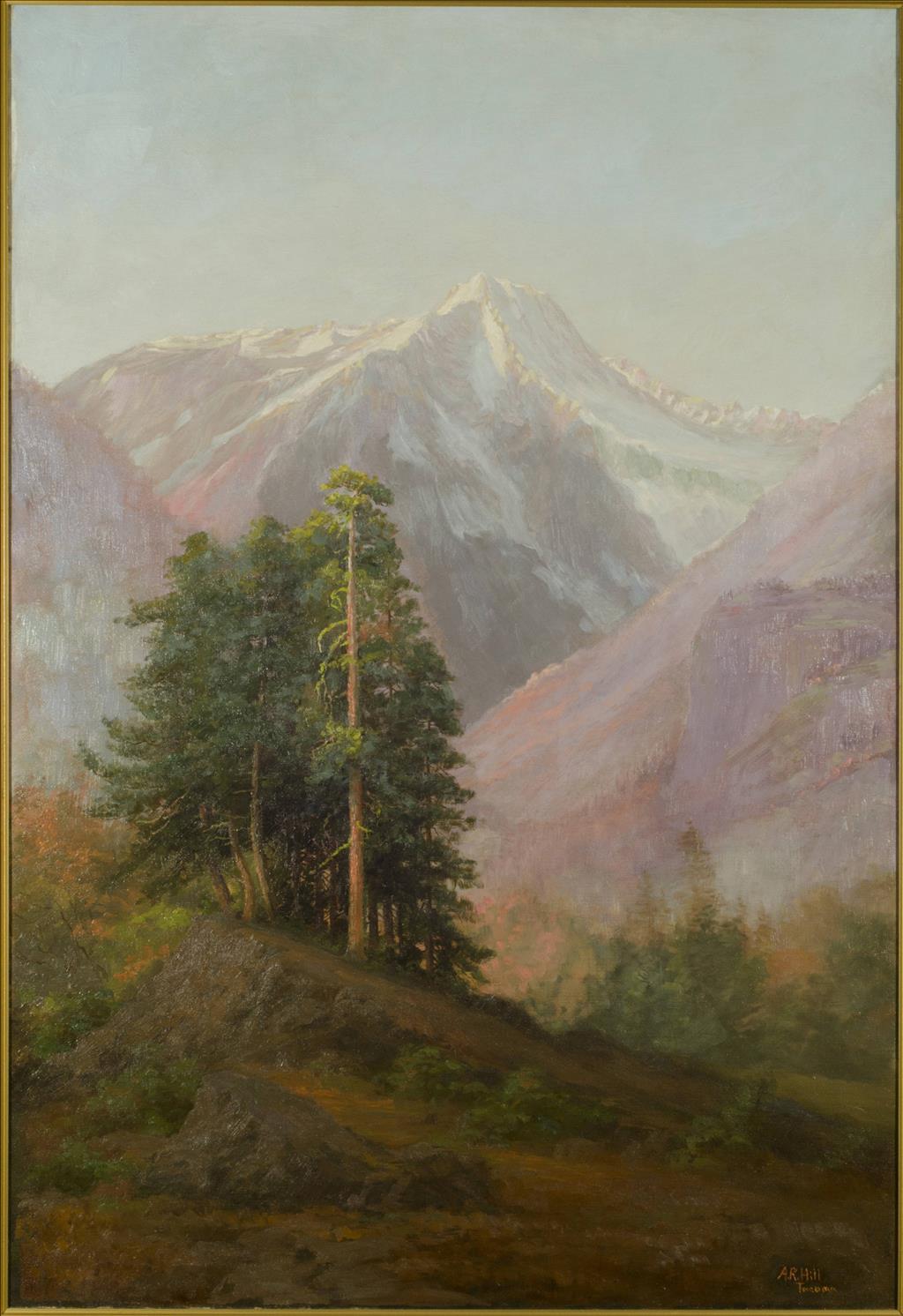
What’s in a Name?: A Grinnell Artist Names a Mountain

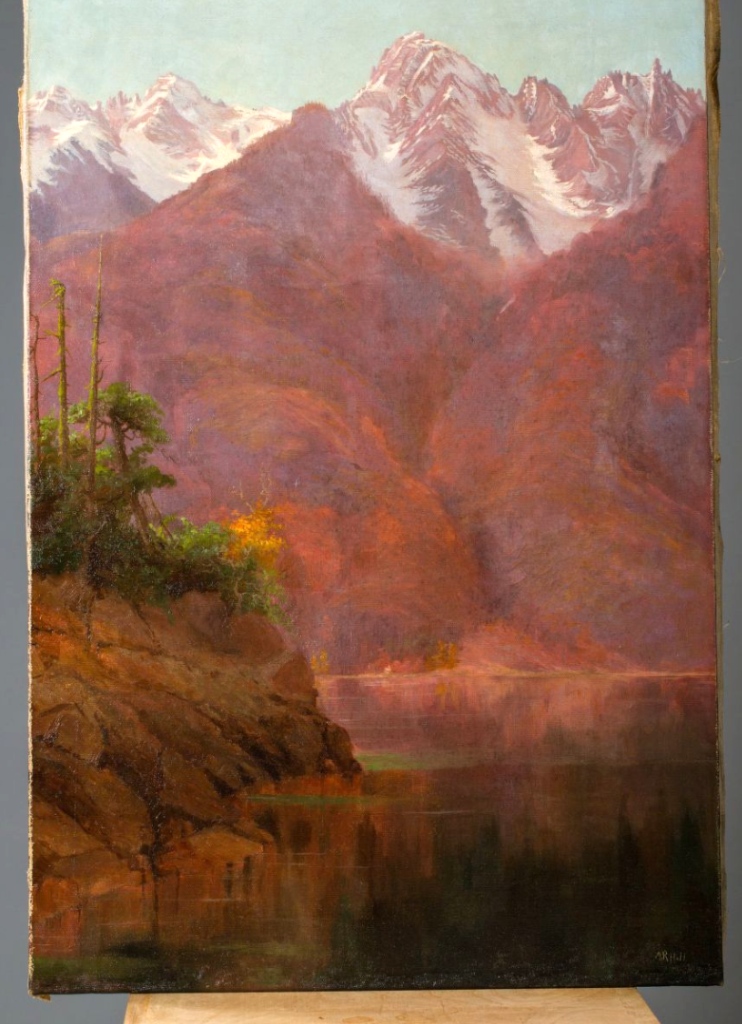
Mount Booker near Lake Chelan (1903) 29″ x 42″ (Collins Memorial Library, U. Puget Sound)

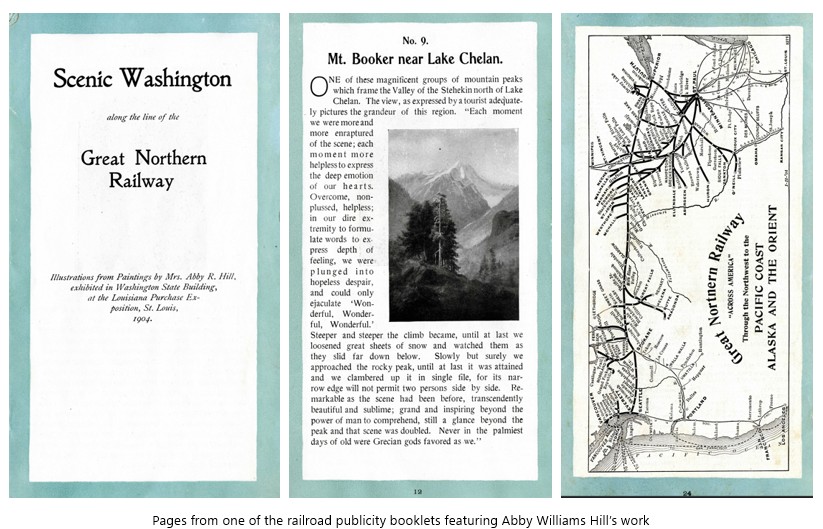
Abby Williams Hill ’07, who has been featured before, was one of the most prominent artists to come out Grinnell. Her collection of landscape paintings, from the early 1900s, portrayed the national parks and western landscapes to a wide public audience, being exhibited at the World’s Fair in St. Louis in 1904, and then published in serial form (subsidized by railroad companies eager to promote western tourism).

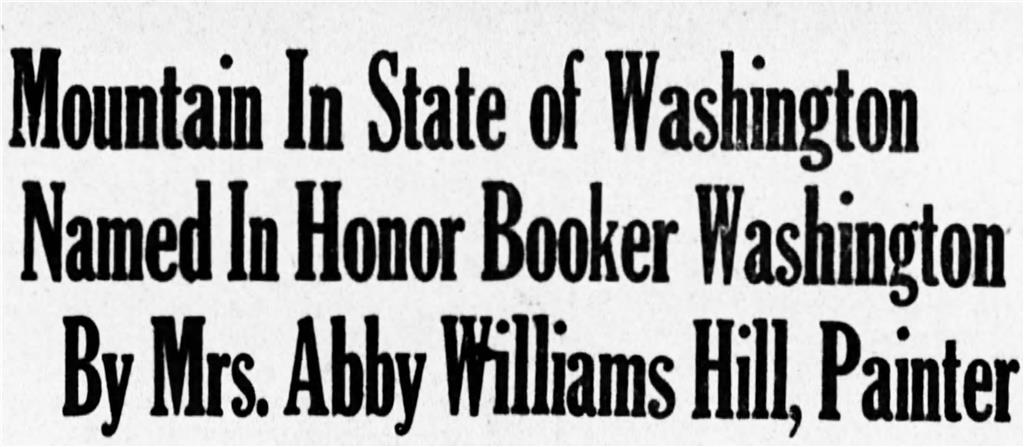
Hill was painting one particularly arresting peak, in the Cascades in 1903, when she was surprised to learn that no one knew of a name for that specific mountain.  She wrote to the U.S. Geological Survey, which reported back (to their own surprise) that it was one of the few peaks that had not been assigned an official place name, a toponym, in their records. So they gave Hill the opportunity to choose its official name. She wrote back saying that she would like it to be named after Booker T. Washington, someone she admired deeply. Only a few years earlier, Hill had taken her four children on a whistle stop tour of Progressive America, visiting prominent reform sites such as Jane Addams’ Hull House, in Chicago, and Booker T. Washington’s Tuskegee Institute, in Alabama, where she spent a considerable amount of time in the company of both Booker and Margaret Murray Washington.

When interviewed by a New York newspaper about the name choice, Hill explained:

Here was a glorious monument not made by the hand of man but carved by the Almighty. What could be more fitting than to name it for one of the most truly great men of our times… When we look at Mt. Booker let us be thankful for Booker Washington’s life, for what he did to solve seemingly impossible problems… His influence like the stream from the mountain will go on through the ages to bless and help mankind.

Naming a mountain after an African American stirred some controversy in the press, , as Grinnell’s local newspaper, the Herald, explained:

This aroused negro-phobia into activity. The name became a red rage for anti-negro venom. Choice epithets easily imagined, fell in a shower of mud around her [Abby Hill]; an effort was made to change the name. The Government at Washington was consulted but only to learn that the name was given by authority, was a matter of record, and could not be changed.

In Grinnell, Booker T. Washington was a widely admired figure, invited twice to speak to the Grinnell community, and the subject of many talks and papers on campus during this period.


The Red Cross and the White Lion

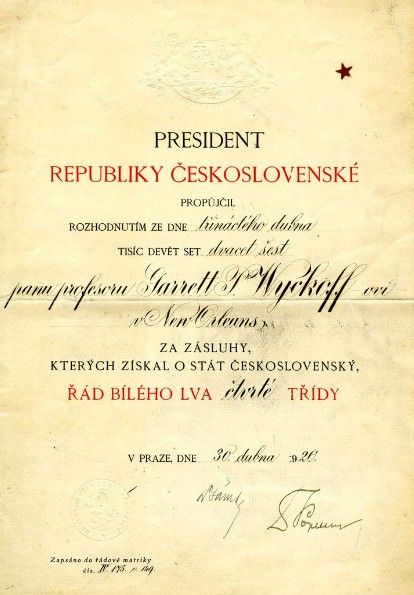
In 1926, Professor Garrett P. Wyckoff (’94) was awarded the Order of the White Lion (čtvrtý třídy, or 4th degree, meaning he was made an “officer” in that order).  The order, which represented Czechoslovakia’s highest civilian honor, was created after World War I to recognize those civilians, particularly foreigners, who had performed extraordinary service to the country. Professor Wyckoff, who taught at Grinnell for a number of years in various departments (including Applied Christianity, Political Science, Economics, and finally, Sociology), had taken leave of teaching duties during World War I to become a field director of the American Red Cross. Wyckoff directed the Gulf division, then moved on to the mid-Atlantic office (not before giving Harry Hopkins, 12′, his first big break by having him appointed as his successor in New Orleans), and then became a commissioner of organization for the League of Red Cross Societies in Geneva, Switzerland. After the war ended, Wyckoff worked for 2 years to establish a branch of the Red Cross in Czechoslovakia, for which he received this honorific award, Řád Bílého lva.


Abby Williams Hill (’07)

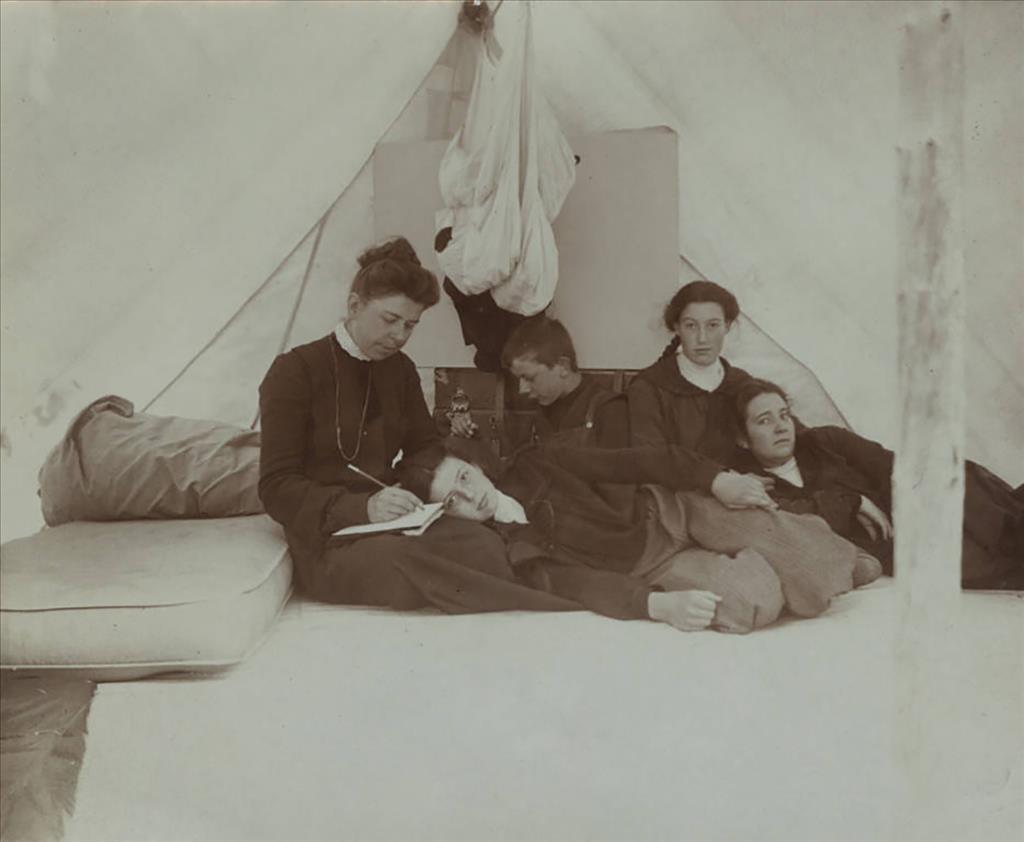
Abby Rhoda Williams Hill (1861-1943) grew up in the town of Grinnell (her parents being some of the first settlers who arrived with J.B. Grinnell in 1854). Hill loved drawing and painting from an early age: she taught local art classes, studied art at the college, and then travelled to Chicago, New York, and Hamburg (Germany) for more formal training. She returned to Grinnell to teach briefly at the college; but then moved to the Seattle area where she gained a national reputation for painting western landscapes after being commissioned by the Great Northern Railway to do a series of plein air landscape paintings of national parks and scenic areas served by the railroad. These paintings were displayed at the Word’s Fair, to much acclaim, and were made available to a wider public in the form of a popular booklet. Hill went on to paint hundreds of landscapes throughout the West, and always brought her children camping with her for these extended en plen air sessions (pictured below). Her journals describe many family adventures: evading forest fires, negotiating with bears, avoiding rattlesnakes, and one particularly harrowing encounter with a mountain lion that chased them. Despite making a home in the West, Hill returned frequently to Grinnell to visit family, friends, and members of the college community. She donated several works to the college (see below) and to the Stewart Library, in town.

Painting by Abby Williams Hill (’07) that was donated to the College. It used to hang prominently in the Old Library, Carnegie Hall, along with another of her landscapes.

Abby Williams Hill, with her four children, on a plein air excursion to Yellowstone National Park (c. 1906)


Edith Renfrow Smith’s Graduation Photographs

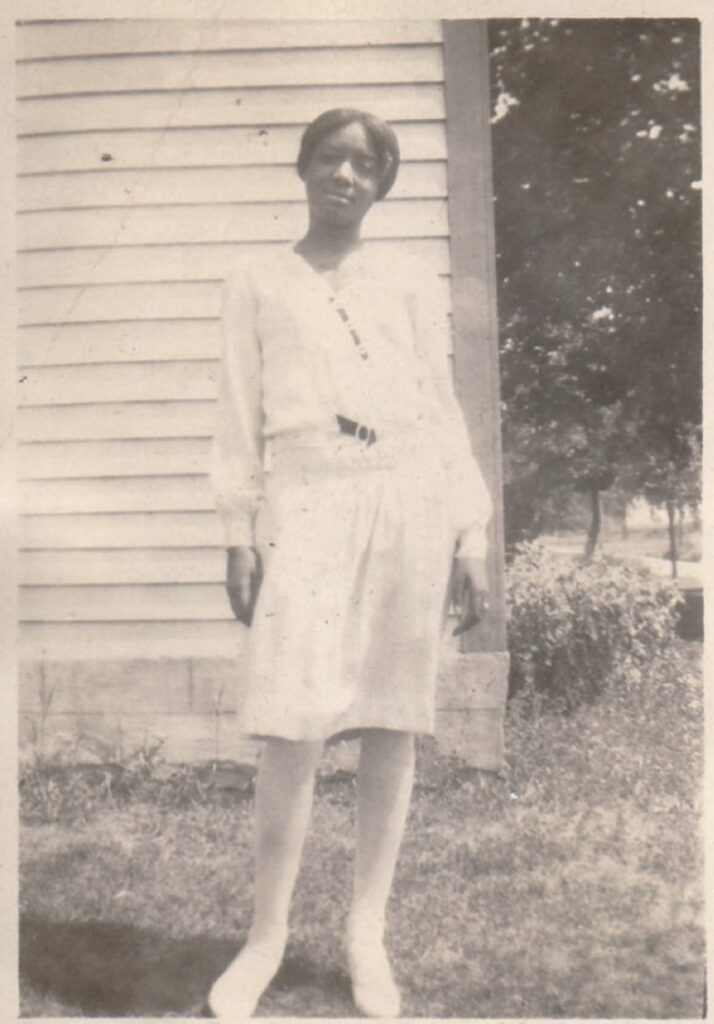
Davis Middle School Graduation

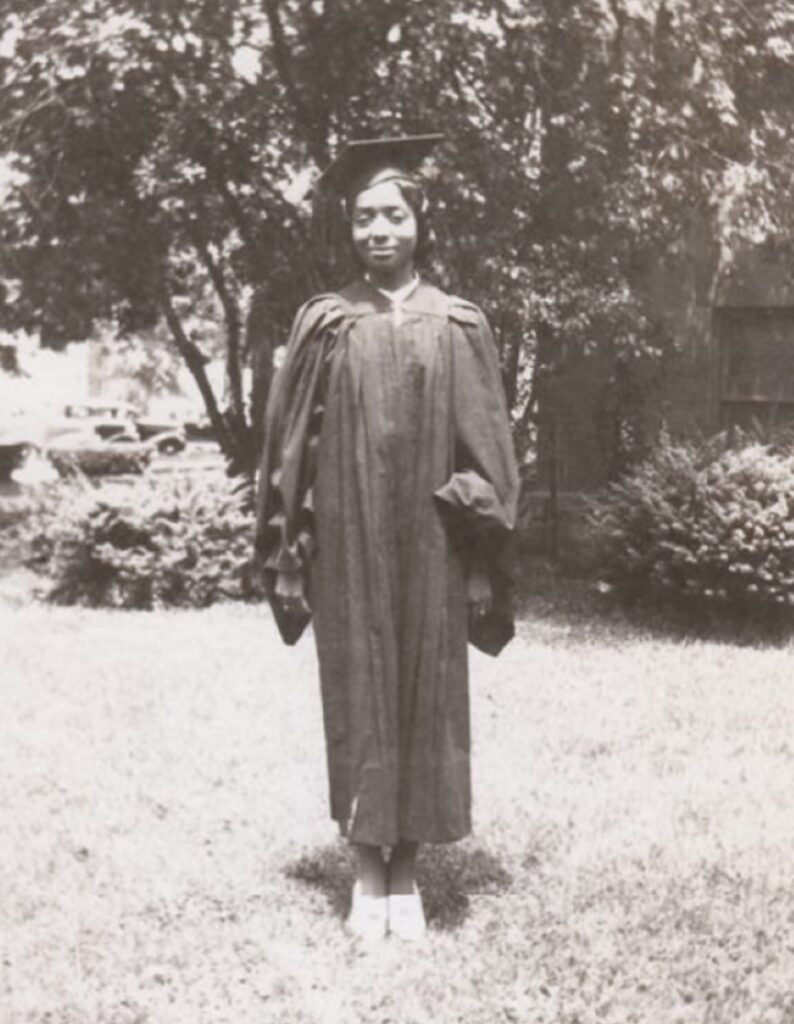
Edith Renfrow college graduation

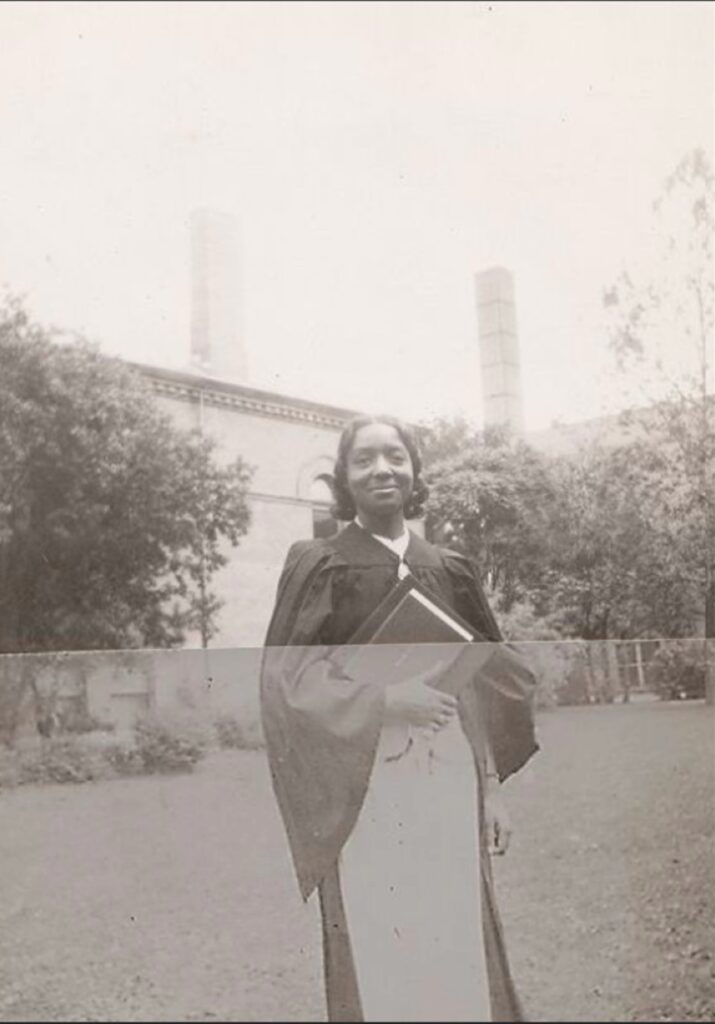
graduation from Chicago Teacher's College

Honorary Doctorate

Edith Renfrow Smith’s Graduation Photographs

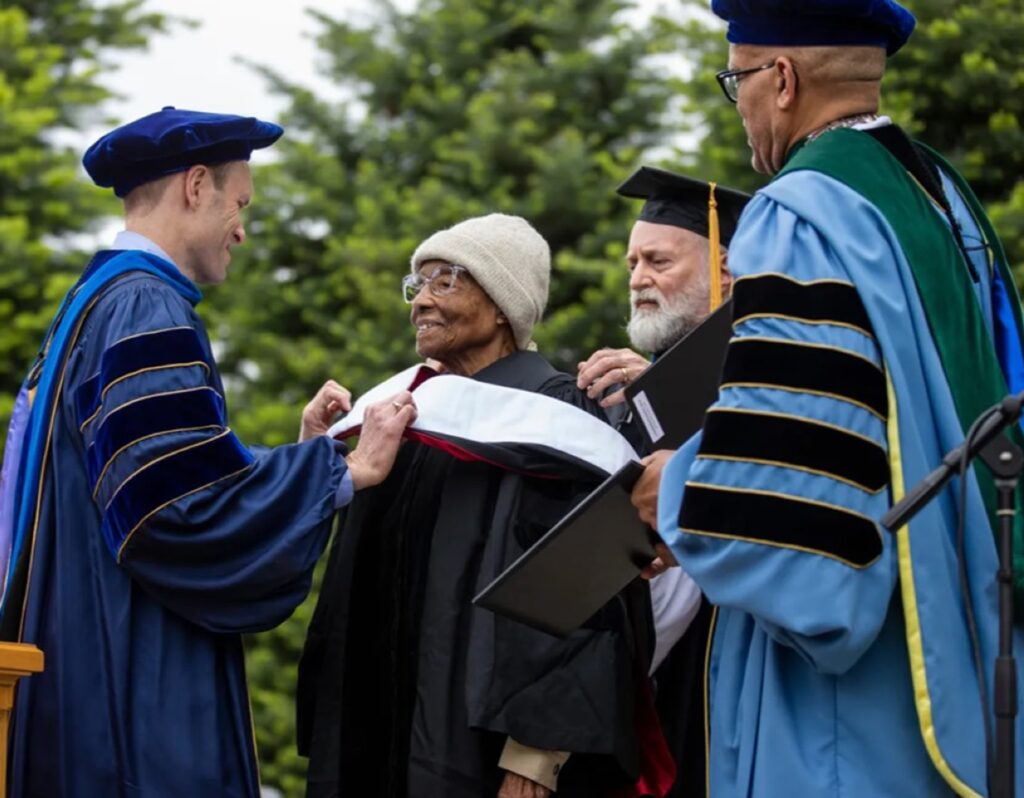
As we come together to celebrate the dedication of Renfrow Hall, and to celebrate the amazing life and accomplishments of Edith Renfrow Smith ’37, Grinnell College is fortunate enough to have (in its archives) four graduation photographs of Edith, ranging over 90 years, from her eighth-grade graduation in town (in 1929), through to her honorary doctorate at Grinnell in 2019. The other two photographs include her 1937 Grinnell College graduation and her 1954 graduation from Chicago Teacher’s College.

Powered by WordPress & Theme by Anders Norén