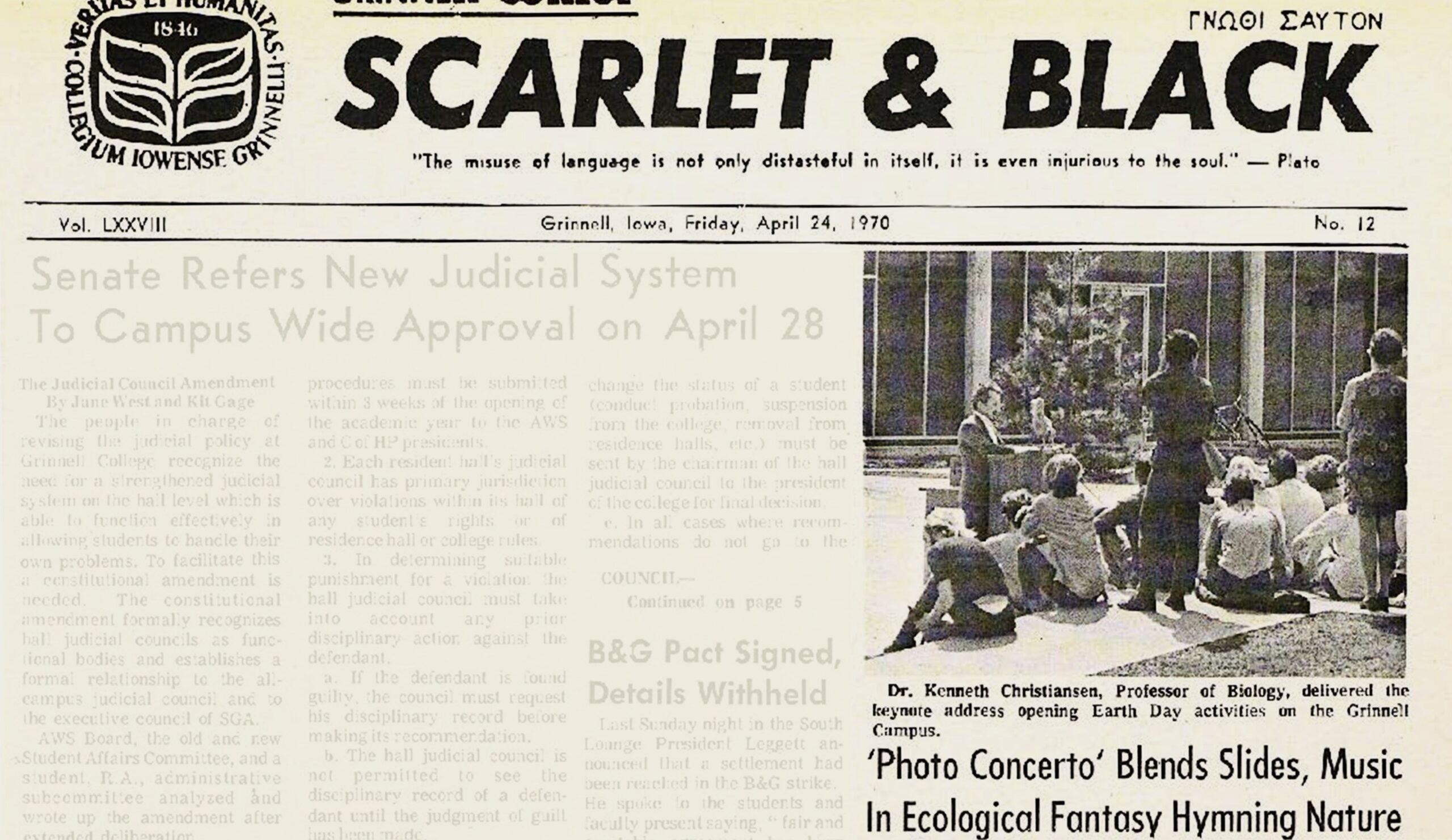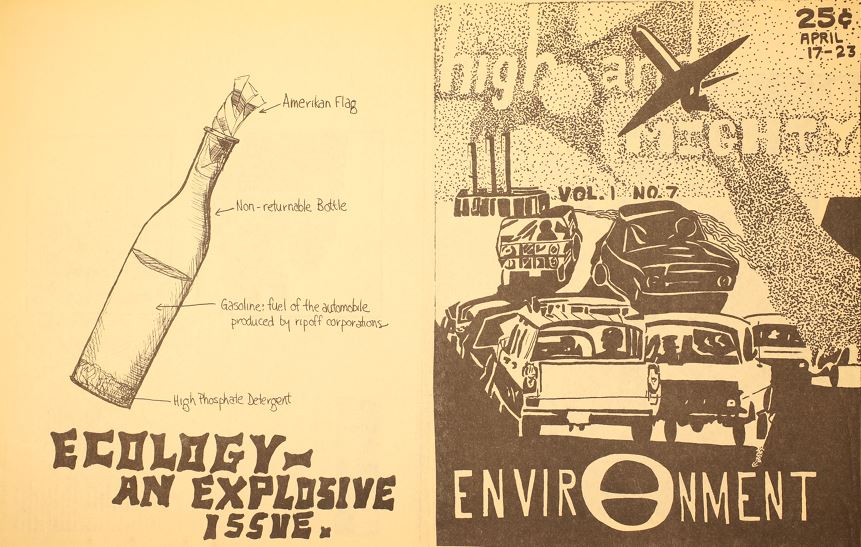
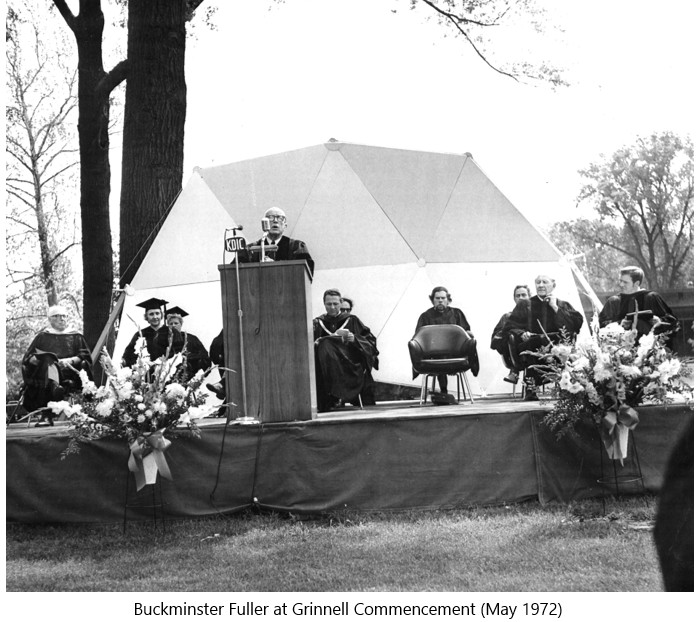
As we celebrate Earth week, it’s interesting to look back at some of the early response on campus to the growing environmental movement of the 1960s and 1970s. An earlier post showcased some archival items from the first Earth Day at Grinnell, on April 22, 1970. Two years later, in April of 1972, much of the attention was focused on the construction of a futuristic structure, a geodesic dome, and the upcoming commencement speaker who had inspired this design: Buckminster Fuller. The choice of commencement speaker, in fact, had been determined by student ballot, and Fuller was the clear choice of the class of 1972.
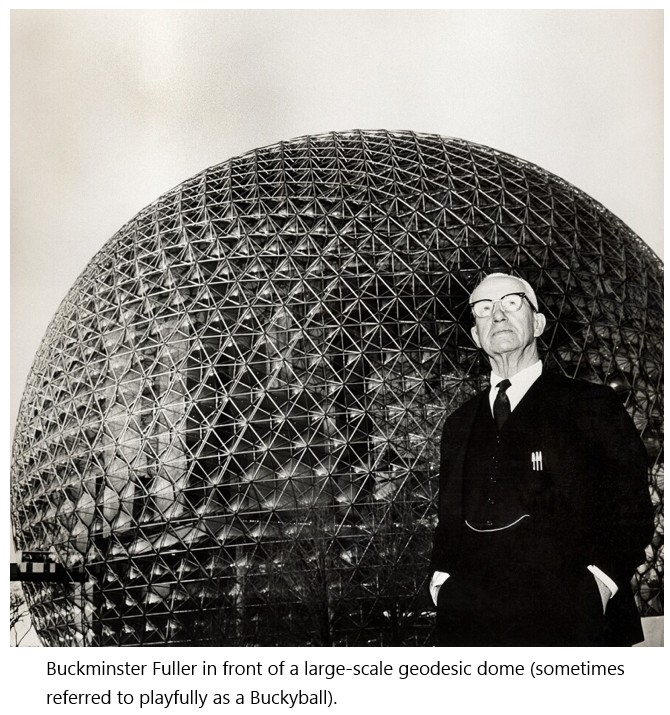
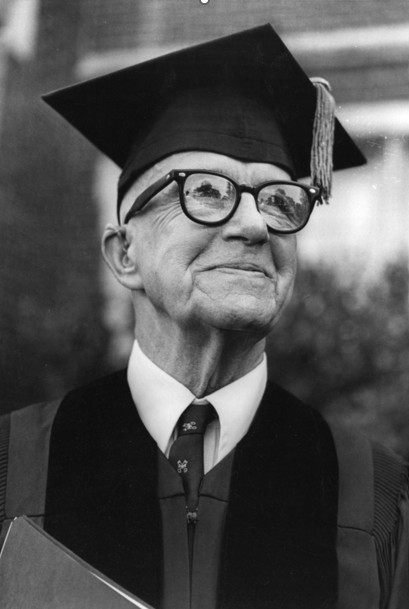
While few may have heard of that name today, Fuller was one of the most charismatic and beloved figures in the environmental movement of this era. An architect and engineer—known for his futuristic designs that emphasized sustainability—Fuller inspired many with the hope that better design and technological improvement could solve the environmental crisis brought on by industrial capitalism. Whereas some environmentalists chose to join the “back-to-the land” movement, embracing a return to pre-industrial ways of life, Fuller encouraged his followers to design a new technological future, living in his iconic geodesic domes that would save energy and resources, modeling the ideal of a “spaceship earth.” One of Fuller’s most energetic followers would be Stewart Brand, creator of the Whole Earth Catalog, which promoted this vision of technology as a liberating force, and the key to sustainability. “Fuller said…you can’t change human nature,” Brand recalled, “but you can change tools, you can change techniques, you can change civilization.”
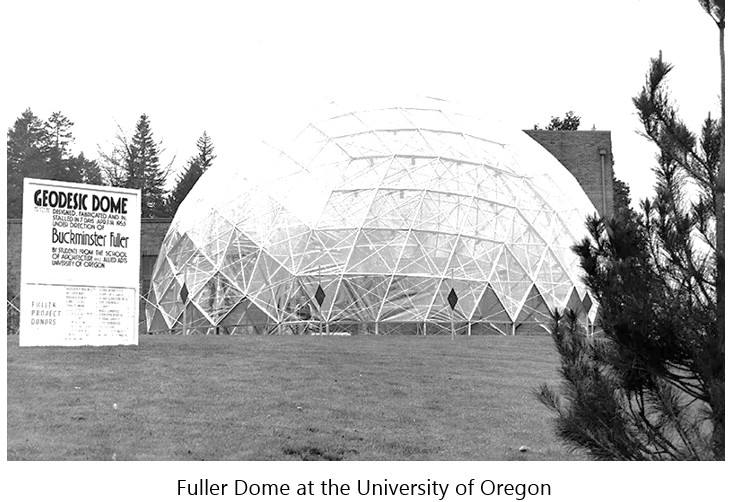
 In April of 1972, as the graduating class awaited Fuller’s commencement address, another group of Grinnell students were busy constructing two geodesic domes of their own that were based on Fuller’s design. These students, in fact, were part of a special topics course that spring, ART 295: Geodesic Domes, that was created to channel the campus interest in Fuller’s work. Taught by William Trotter, in the art department, the course “included lectures on spherical trigonometry and structural engineering” and focused on the construction of two domes. One would be a larger model that would appear behind the commencement stage, and be used for outdoor events in the future, while a much smaller version was created to serve as a kind of jungle gym for the nearby pre-school. These domes were an iconic symbol of one strand of environmentalism that embraced technology as a potential solution to the ecological crisis unfolding.