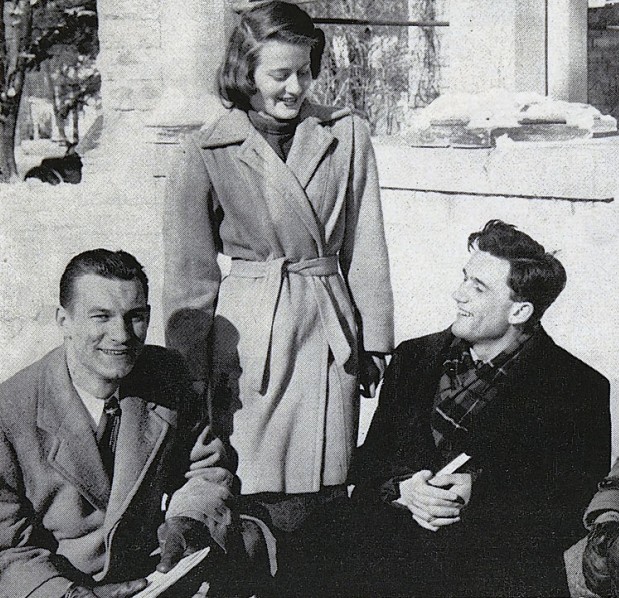
In 1949, the Student Council at Grinnell decided to participate in a new program aimed at finding collegiate homes for young international students displaced by war, or fleeing repressive regimes behind the rapidly descending iron curtain. This idea had been created by the National Student Association, and the whole initiative appears to have been largely student driven (including raising scholarship funds to pay for tuition for these “displaced persons,” a term used to describe the participants and the program). Pictured here are 2 of the first participants to join Grinnell College: Leon Bildusas, from Lithuania, on the left, and Serafim Romberg, from Czechoslovakia, on the right (along with a student guide showing them the campus). Between the two of them, these new arrivals spoke 7 languages: German, Lithuanian, Russian, Latvian, Ukrainian, Polish, and English.
Tag: student governance
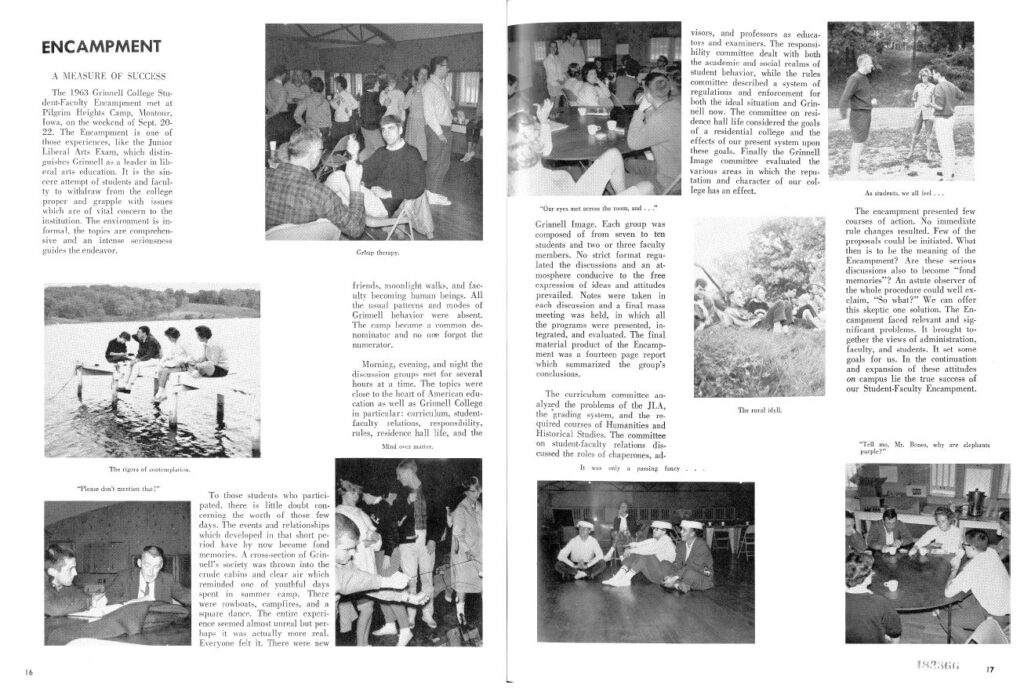
In 1960, the Student Government Association and President Howard Bowen agreed to hold a multi-day retreat, off-campus, that would bring together a select group of students, faculty, and administrators to discuss the “Purposes and Values of a Liberal Arts Education” at Grinnell. This retreat, or “Encampment,” as they called it, became a recurring tradition, in which about 100 members of the campus community would gather at some retreat site in October, each year, to spend a few days informally discussing broader issues of campus culture and curriculum as well as tackling concrete issues, needs, or policies (on a more practical level). The tradition of encampments was seen as one of the more distinctive aspects of campus life and shared governance at Grinnell.
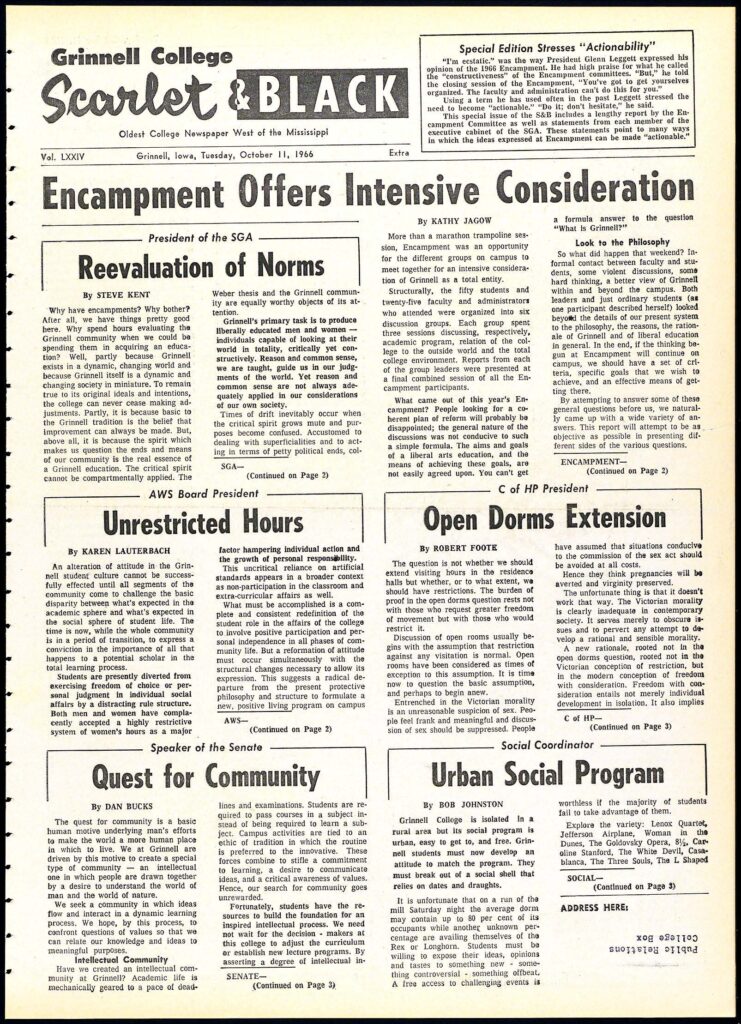
Images: Cyclone Yearbook 1964 and Scarlett & Black special edition, 10/11/66.

encampment in 1964 cyclone yearbook (click here for full sized pdf)

S&B 1966 coverage of encampments at Grinnell (click here for full sized pdf)