Tag: Holidays

The Uncle Sam’s Club Holiday Dinner

One hundred years ago (on December 16, 1925), the students of Grinnell College started a new holiday tradition by hosting a special Christmas dinner for local children from the Uncle Sam’s Club. The Uncle Sam’s Club was a local organization that had been created by Grinnell students at the turn of the century to provide programming, education and recreation to local kids at time when there were very few such programs or services. It proved so successful that, within a few years, they had raised enough funds to build a large clubhouse on the south side of town, where more than 50 students a year volunteered to work with hundreds of local kids on everything from art classes to Sunday school to sports leagues.
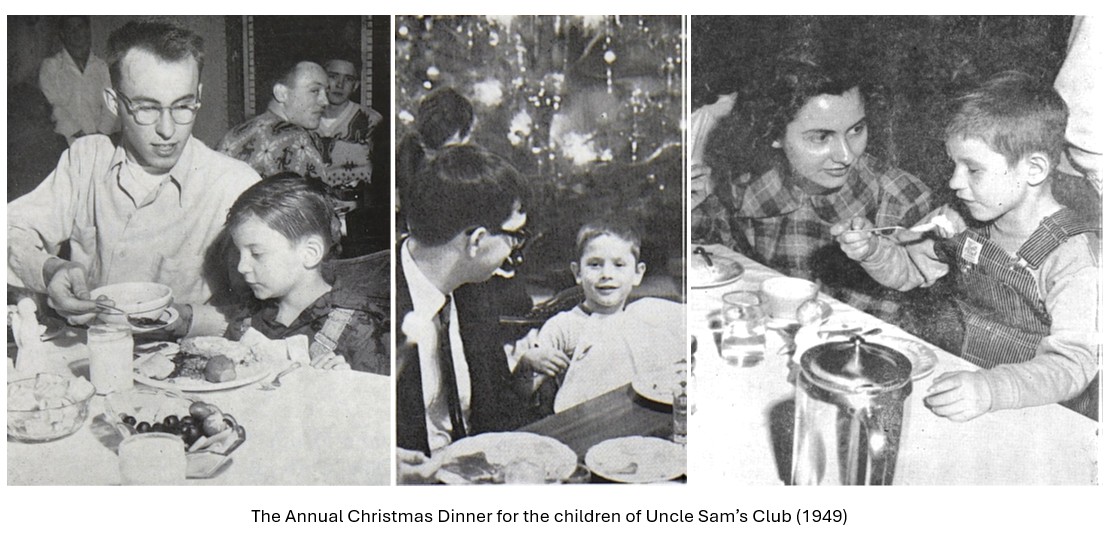
The holiday dinners became an annual tradition that grew in size, so that by the 1950s, there were as many as a 150 children attending these Christmas feasts, held in the Cowles Dinning Hall (pictured here). The meal consisted of roast meats, served with almost a dozen different side dishes, and capped off with special ice cream for dessert. These meals took on added importance during the 1930s and 1940s, when the Great Depression, and then the rationing of the war years, made this kind of holiday feast more extraordinary and appreciated. The tradition also grew to include after dinner entertainment—ranging from variety shows to magician acts to movies—as well as distributing Christmas toys.


It may be hard to believe, today, but the holiday calendar used to be even more packed with events, parties, festivals and fetes that Grinnellians somehow managed to squeeze into the last week of the semester. And among these, the Uncle Sam’s Club Dinner always proved to be a favorite.
Poignant Thanksgiving Letters

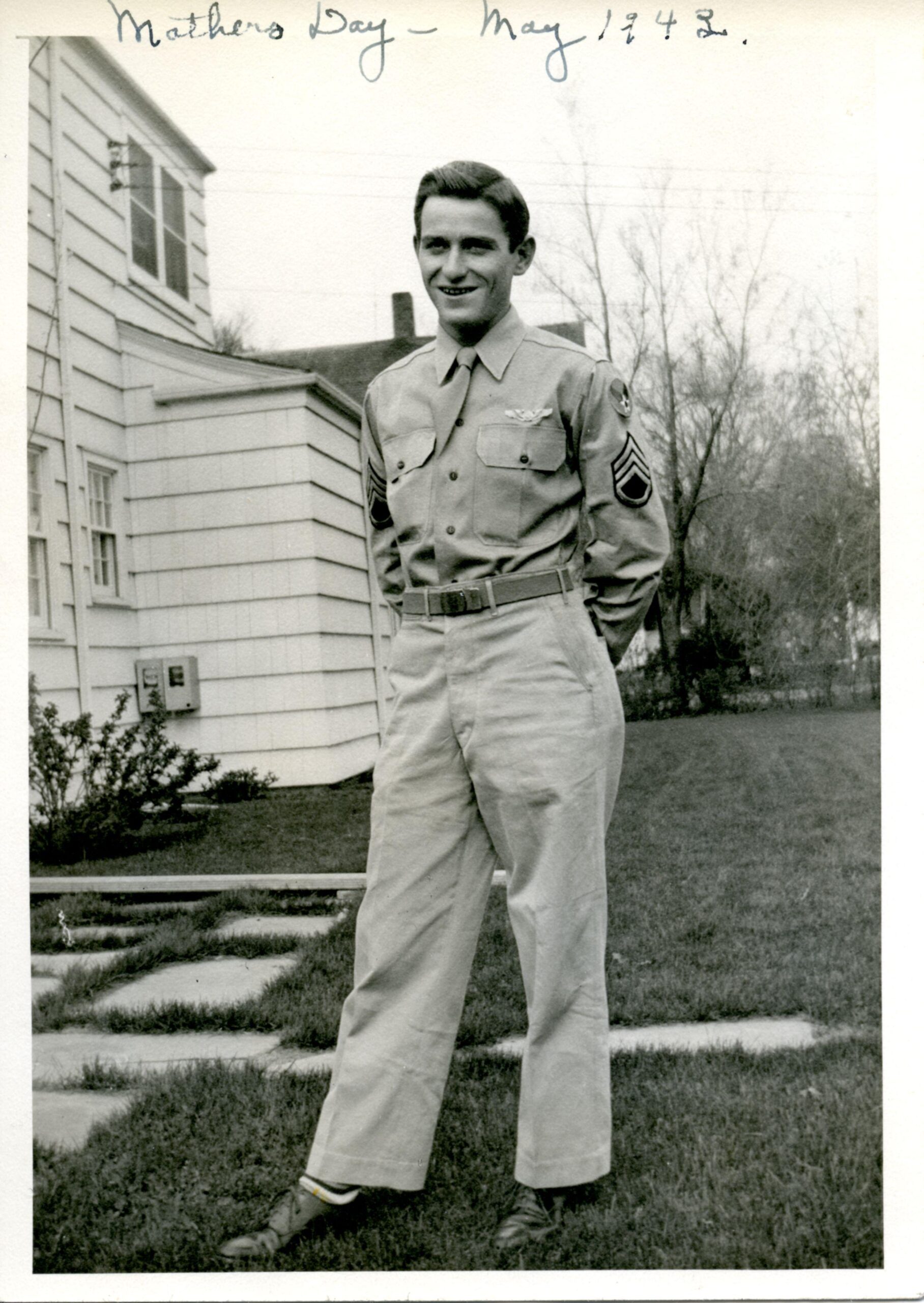
One of the memorable collections housed in the college archives is the Jimmy Ley Collection, which contains a number of letters, photographs, and personal items belonging to Staff Sergeant James J. Ley (ex-’44). Ley decided to leave Grinnell College in 1942 to join the Army Air Corps, eventually becoming a gunner/engineer on B-26 bombers, flying 25 combat missions over occupied Europe. One of the letters to his parents, written November 25, 1942, thanks them for the “Thanksgiving box” they had sent to his training base in Texas: “Of course it was all gone in about fifteen minutes, but my memory still rests with that fine box of goodies.” He went on to explain that Thanksgiving day, itself, would be their last day of training school, and they would ship out the next morning. Reflecting on the holiday, James wrote:

We’re all going to have so much to be thankful for this year. Our health, happiness, the way the war is going, and ever so many other things…I wonder where I’ll be a week from now?

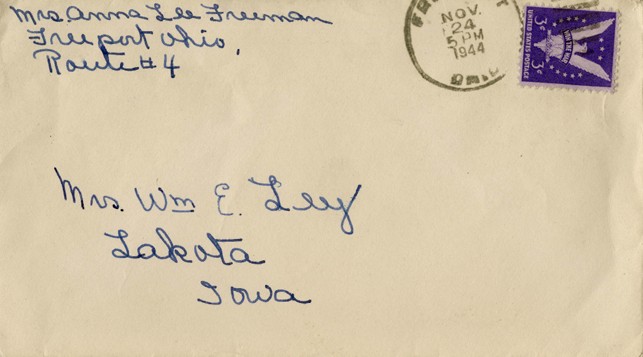
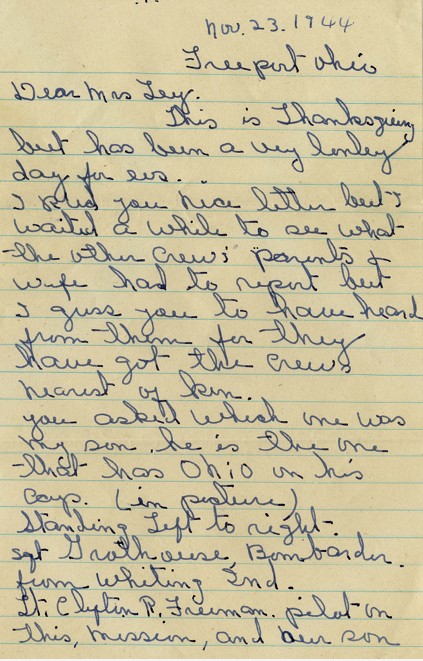
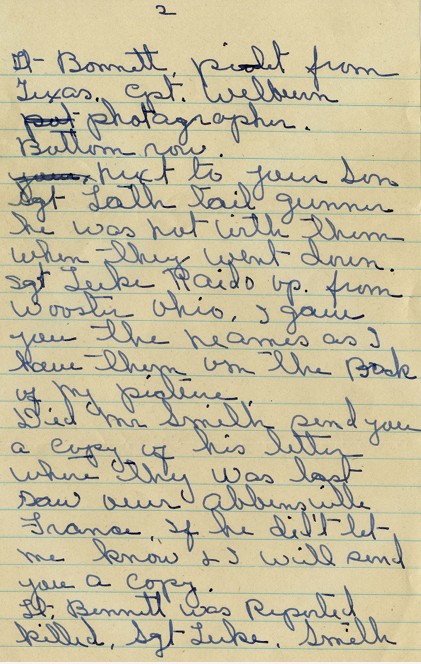
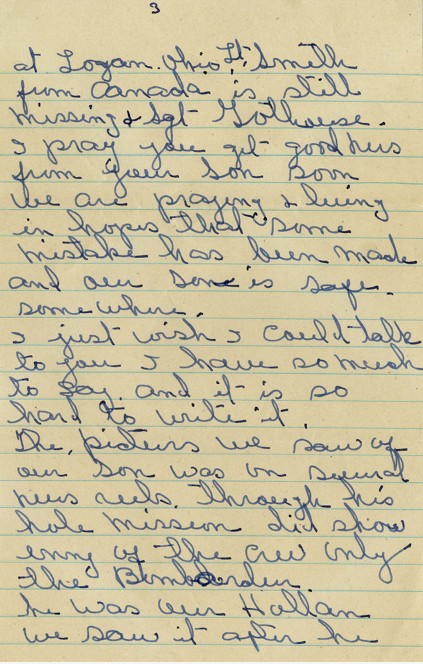
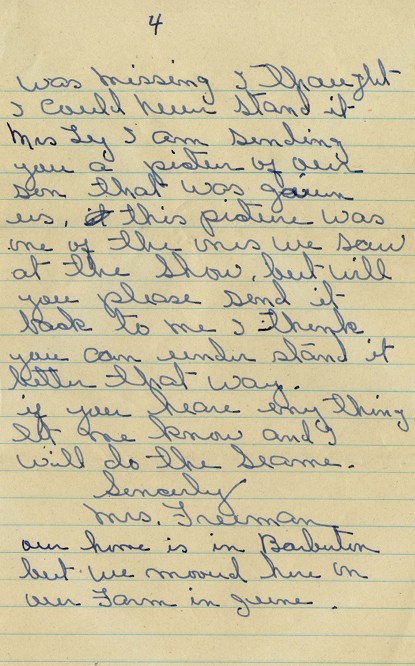
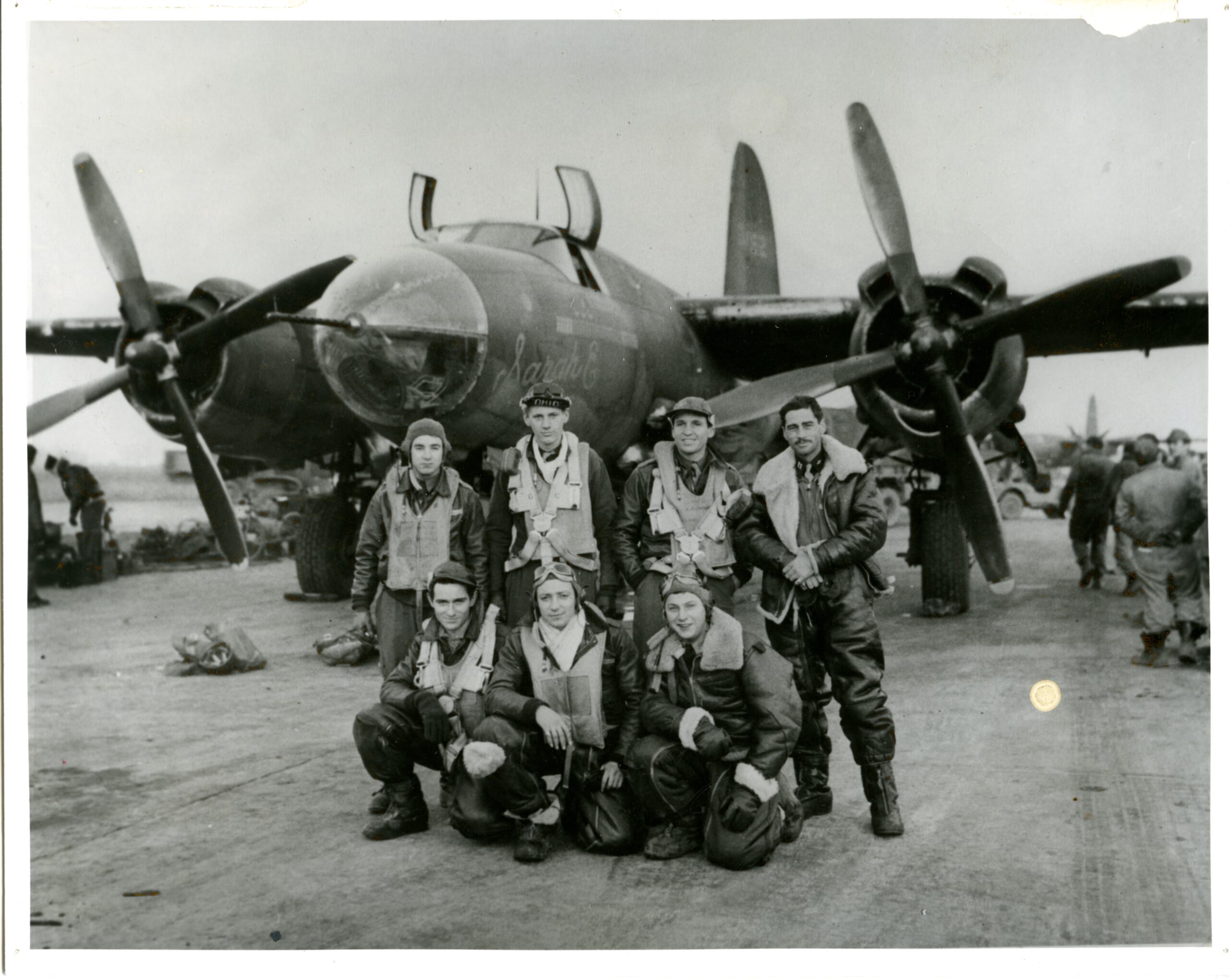
Jimmy ended up in England, assigned to the 451st bombardment Squadron, flying missions across the channel until his plane was shot down on the 29th of February, 1944, over France. The fate of the crew remained unknown for months, but one of the most poignant letters in the collection is a Thanksgiving missive (dated Nov. 23, 1944) from the mother of the plane’s pilot, Mrs. Anna Freeman, to Jimmy’s mother (below). Having learned that her son, Lt. Clifton Freeman, and three other crew members from the plane had been recently confirmed as killed-in-action, she acknowledged the pain of the moment: “This is Thanksgiving, but it has been a very lonely day for us.” She pointed out, however, that 3 of the crew (including Jimmy) were still considered missing-in-action. “I pray you get good news from your Son soon,” and she confessed that “we are praying and living in hopes that some mistake has been made and our son is safe, somewhere.” In her letter, she included a photograph of the B-26 crew, listing each member, their role, and their home town (that original picture, now preserved in the Ley collection, is reproduced below). S/Sgt Jimmy Ley was in the front row, on the left, while Lt. Freeman, was in the back row, second from the left, proudly wearing an Ohio hat (as his mother pointed out). Eleven months later, the War Department declared Jimmy Ley (and the other missing crew members) dead, and posthumously awarded S/Sgt Ley the Distinguished Flying Cross and the Air Medal with Oak Leaf clusters, presented to his family at a funeral service held in his hometown of Lakota, Iowa.


Happy Halloween

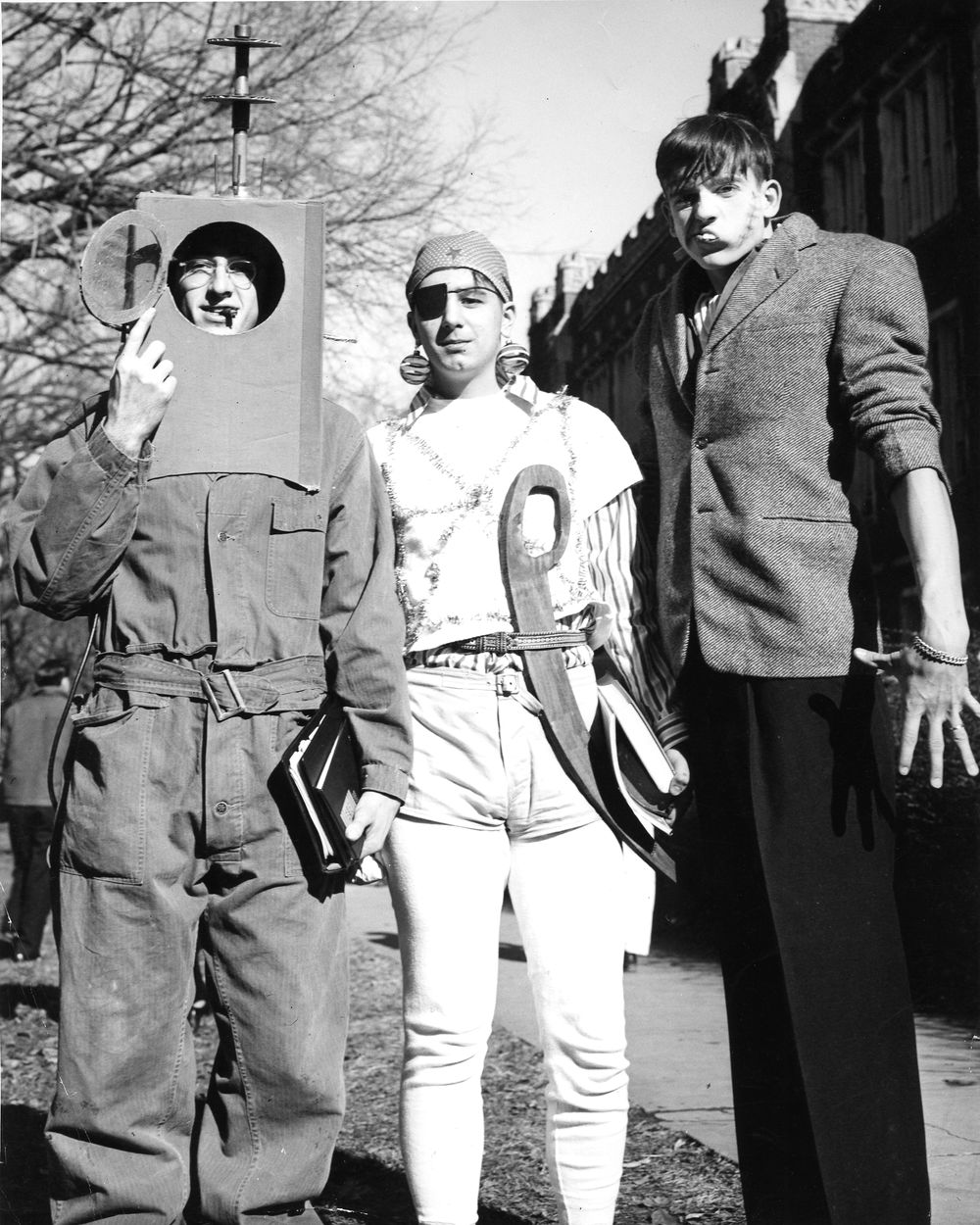
Grinnell first-year students, James Wallrich, Charles Burdick, and George Turner, dress up for a Halloween party in 1948.

Holiday Travel in the 30s

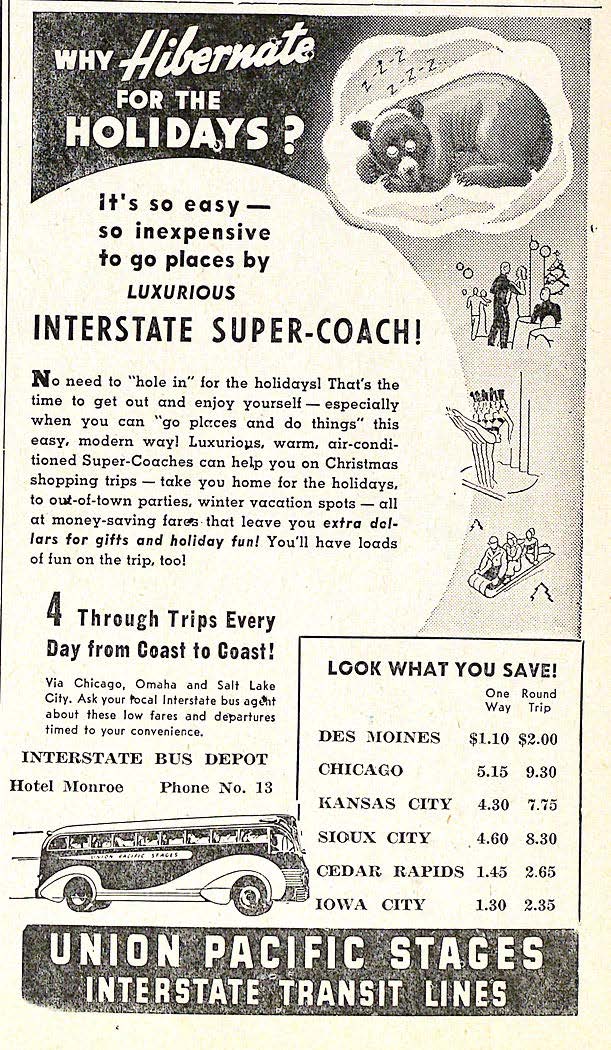
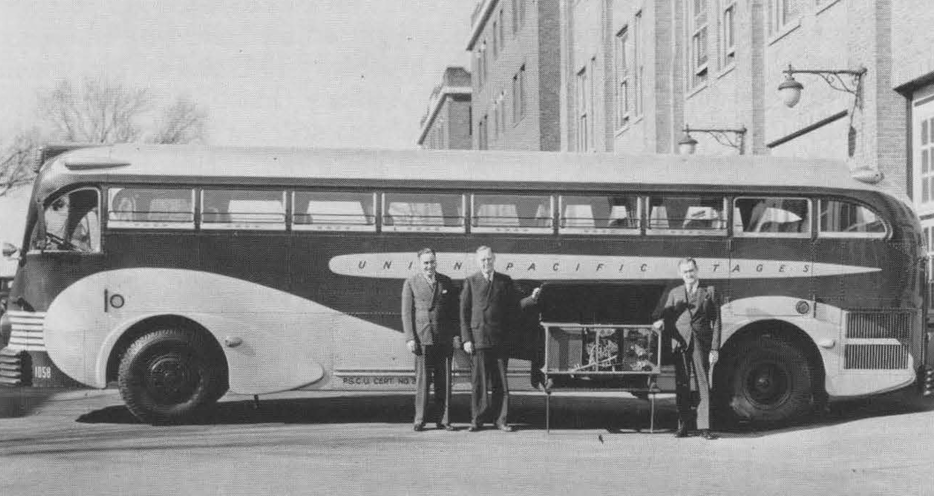
Many Grinnellians may recall that (before 1970) many people often travelled to and from Grinnell via the train, using the Union Depot train station that was located across from Central Park and the Monroe Hotel. Less well known is the fact that several bus lines also served Grinnell over the years, such as the Union Pacific’s “Stages” line, that the railroad giant had created in the 1920s to compete with Greyhound and other emerging bus lines.  This advertisement appeared on campus in November of 1939, touting their luxurious new “super” coaches that would whisk travelers to these midwestern destinations as well as dozens of other cities (by changing buses a their hubs in Chicago, Kansas City, and Omaha).  The picture below shows engineers proudly installing an air-conditioner into one of the new super-coaches that would service towns like Grinnell.

The Christmas Season 70 Years Ago

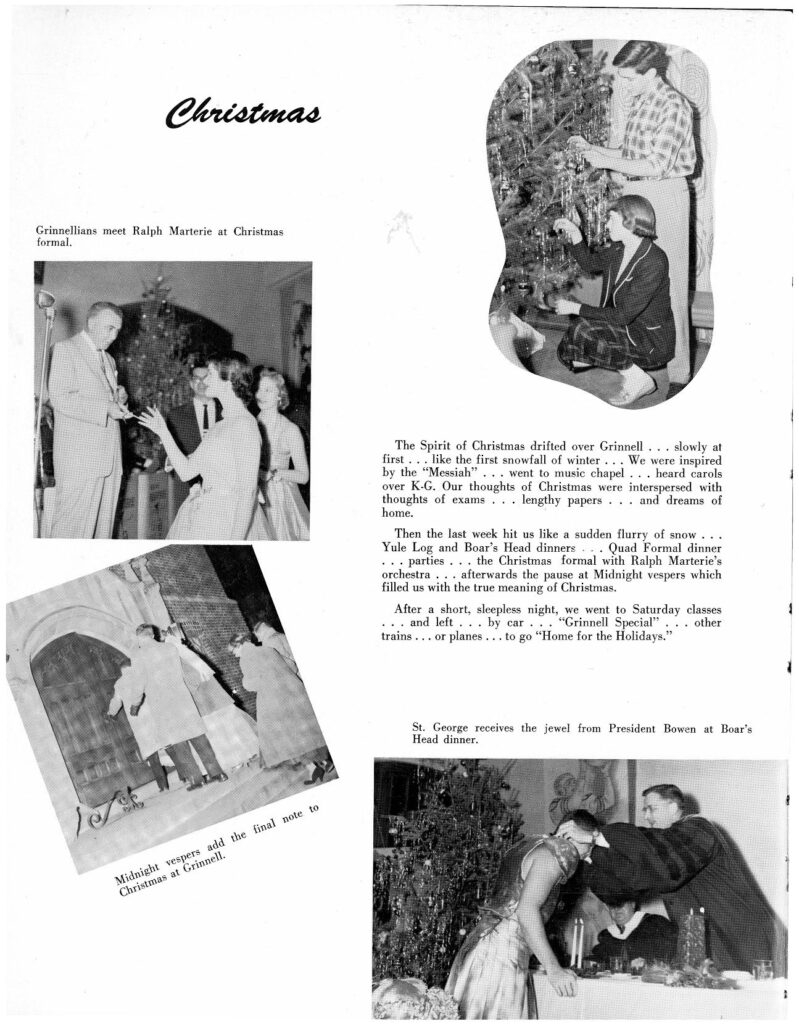
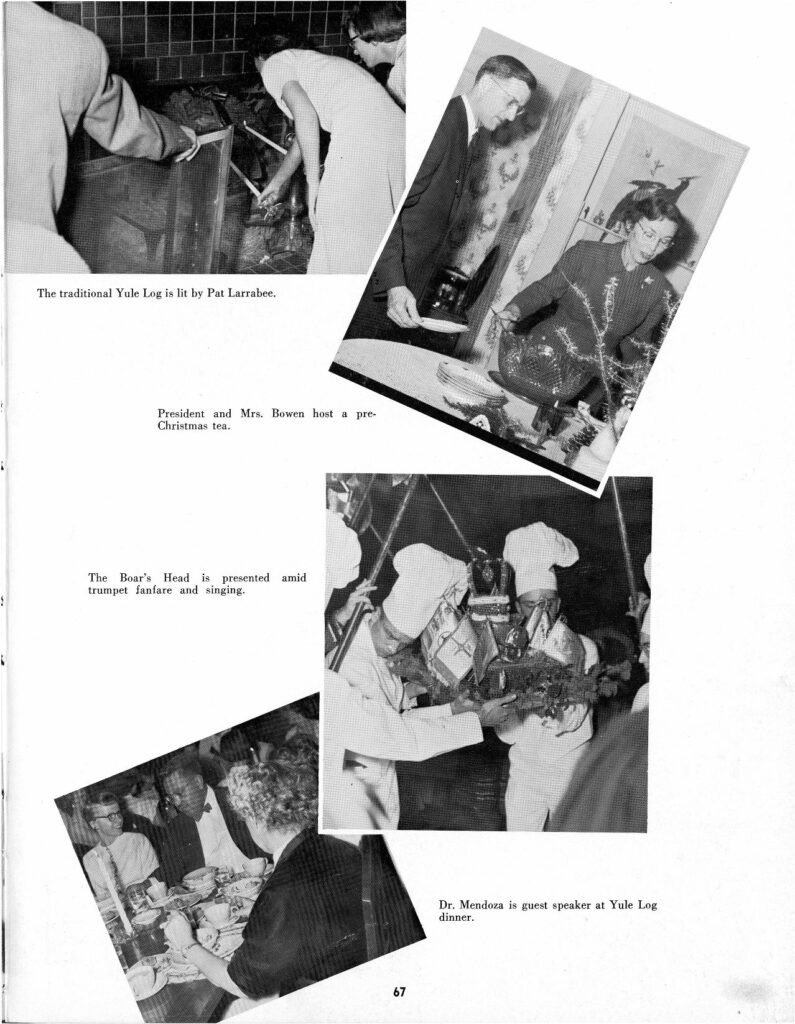
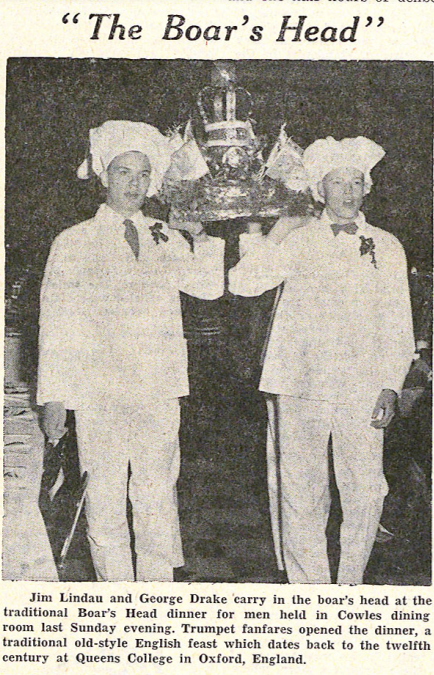
As you can see from these pages in the Cyclone yearbook, the Christmas season used to be packed with even more social events in year’s past: including several festive dinners (the Yule Tide dinner, the Boar’s Head dinner, the Uncle Sam’s Club dinner); several balls & concerts; all leading up to a dramatic, candle-lit vespers service in Herrick Chapel at midnight to mark the end of the semester.  We’ve also included an image from the 1954 Boar’s Head dinner (from the S&B) that features our friend and colleague, George Drake ’55.

Thanksgiving 1924: The “Electric Gridiron” Comes to Grinnell

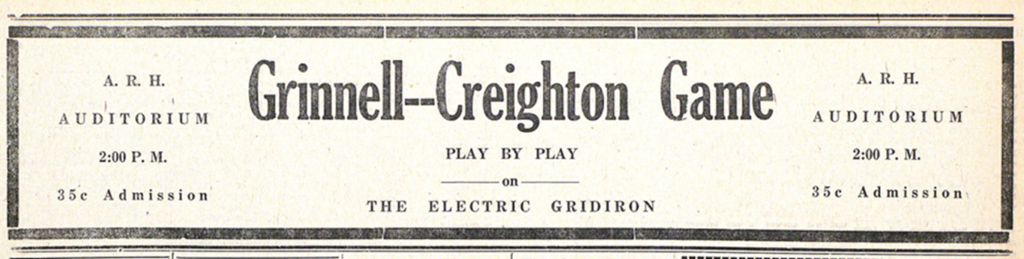
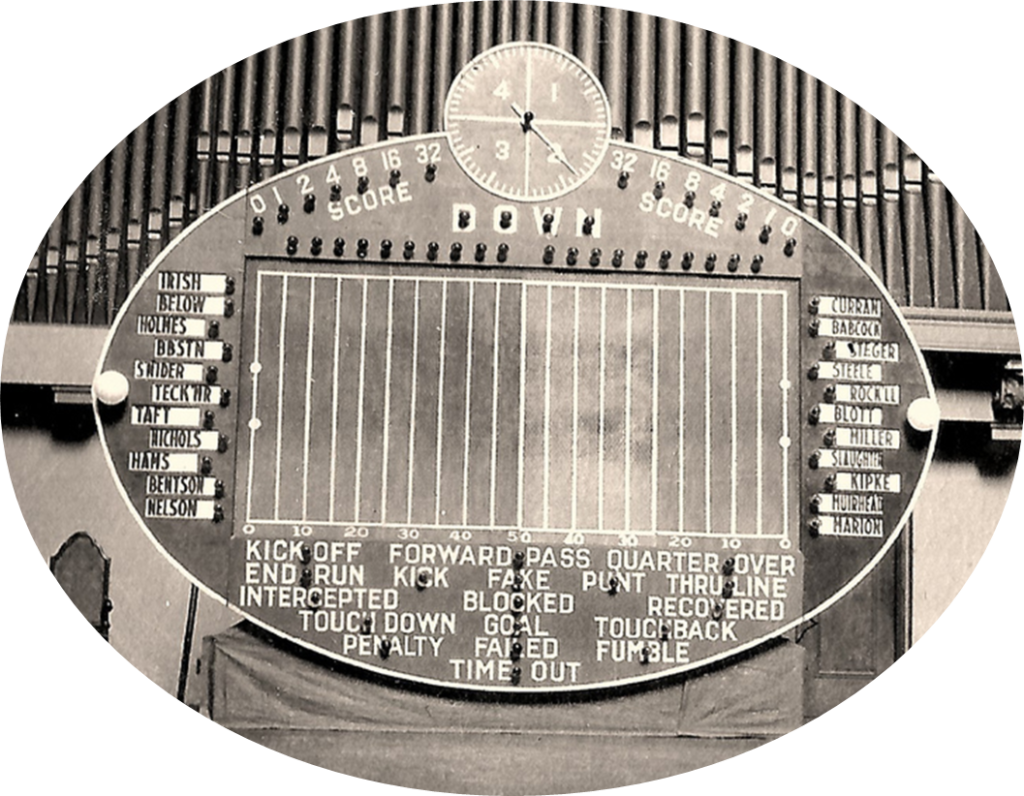
On Thanksgiving Day—100 years ago—many of the Grinnell students who remained on campus gathered in the auditorium of A.R.H to “watch” their football team play the last game of the season against their rival, Creighton, in Omaha. The college marching band assembled in the auditorium, along with Grinnell’s cheerleading squad, but all eyes were on the new “Grid-Graph” machine, which weighed nearly 1,000 pounds, and was designed to visualize remote football matches via instant telegraphy, electrical switches, and lights, so that fans could follow the action in real time, play-by-play (in an era before television coverage, and when even radio broadcasting of games was limited to a few nationally chosen matches). In the 1920s, Grid-Graph became all the rage in college sports, and Grinnell was excited to sign its own contract in 1924 to bring the marvels of modern technology (the “electric gridiron”) to campus.

Photograph of a Grid-Graph “in action” in the 1920s

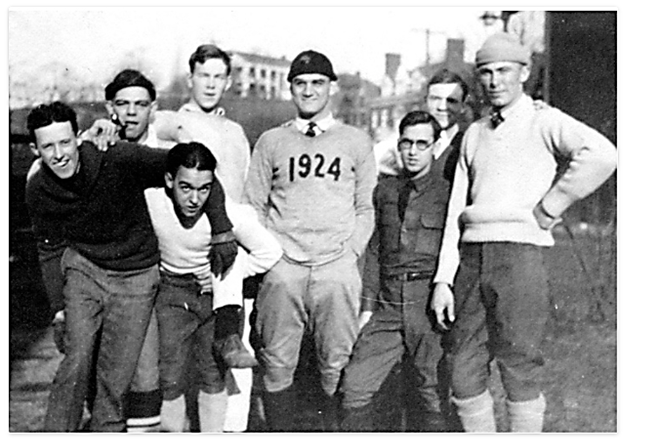
Grinnellians posing before the Thanksgiving match in 1924 (note: the player on the far right is Hap Moran, who went on to a successful career as a starter in the NFL for more than a decade)

May Day at Grinnell

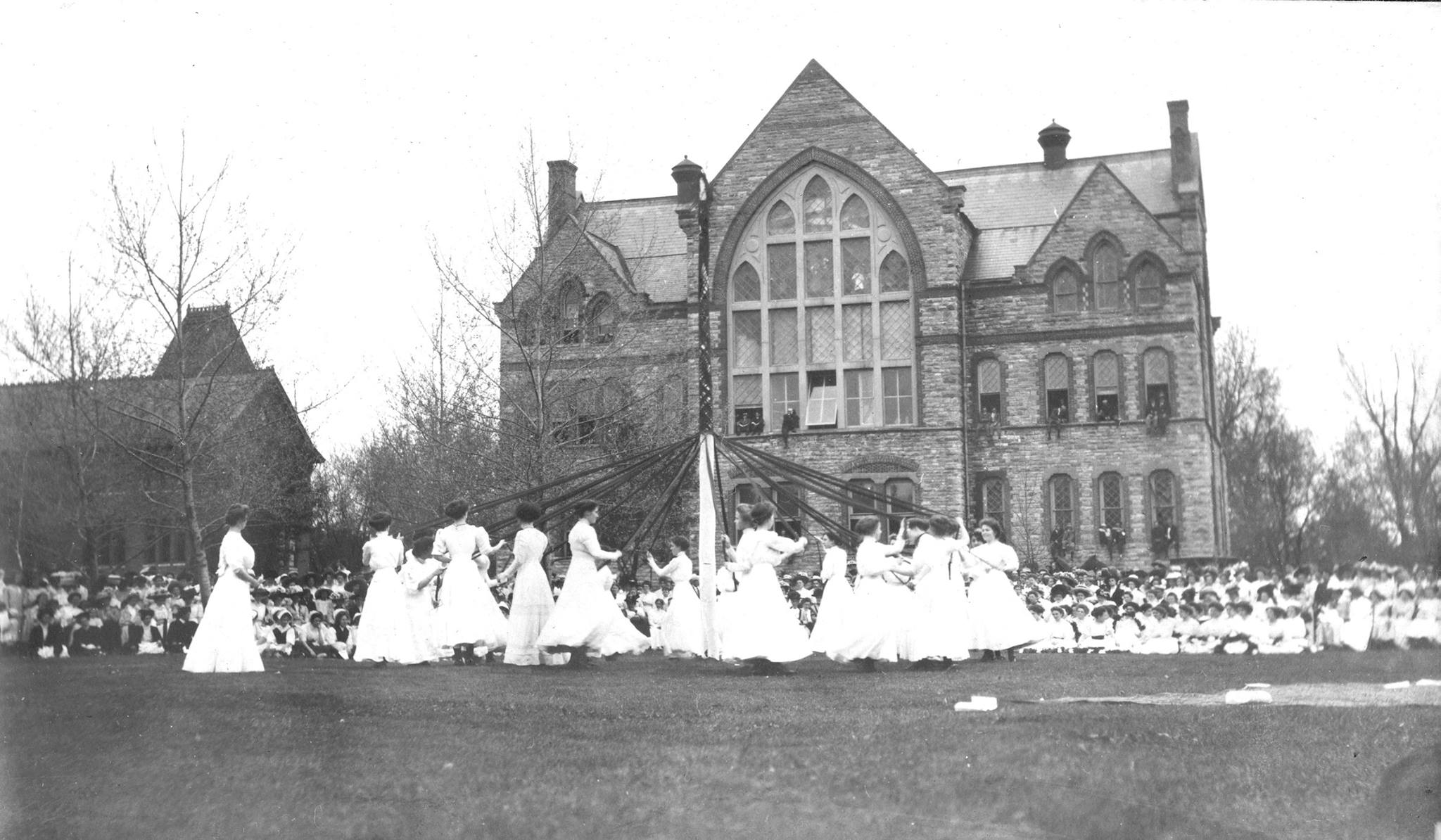
May Day Festivities, 1913

In 1909, the college began hosting an annual “May Fete” or “May Day” celebration, organized by the Women’s Athletic Association. The event would begin with a procession around the campus, led by a trumpeter (dressed in medieval livery), then the College marching band, followed by all seniors wearing their caps & gowns, followed by the elected “May Queen” and her court, then the juniors, followed by the sophomores, followed by the freshman (students from each class were dressed in a different types of folk costumes or gowns), all carrying elaborate flower garlands. A Maypole was erected in central campus, in front of Blair Hall (as seen in this picture from 1913), and different classes took turns “winding” the red & black streamers around the pole, dancing to particular songs played by the college band, accompanied by the glee club. There were also a series of elaborately choreographed “flower drills,” that are frankly mysterious to the 21st-century observer, but which contemporaries found captivating. The May Day festivities of 1913, pictured here, also included groups of local school children who dressed as butterflies, violets, the four winds, and autumn leaves, each of whom danced with a specific class to represent a particular season of the year. It was one of the defining moments of the spring semester, during this era.

Powered by WordPress & Theme by Anders Norén