Tag: 1910s

Emmeline Pankhurst comes to Grinnell (1916)

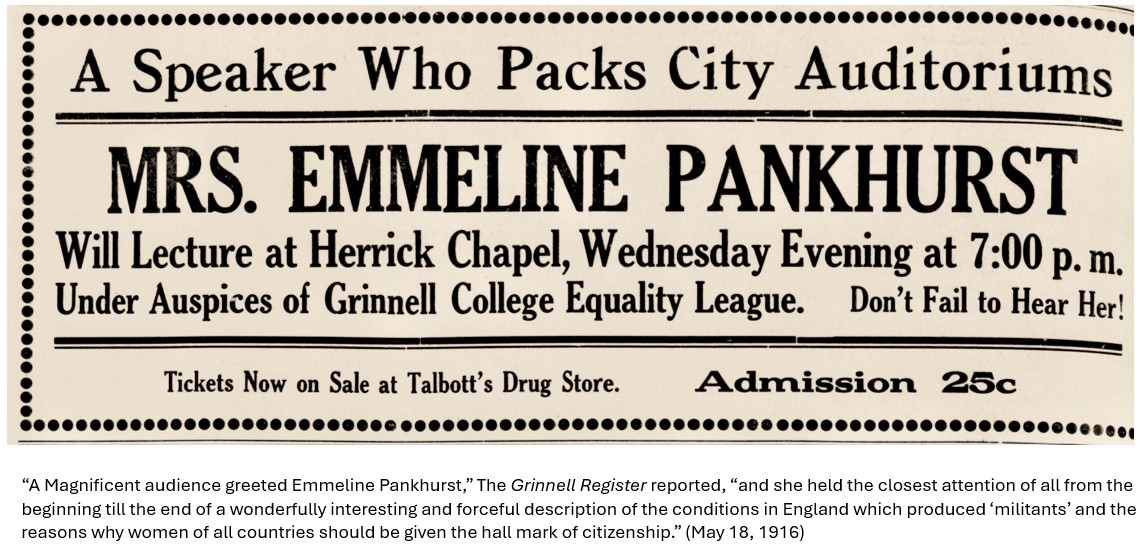
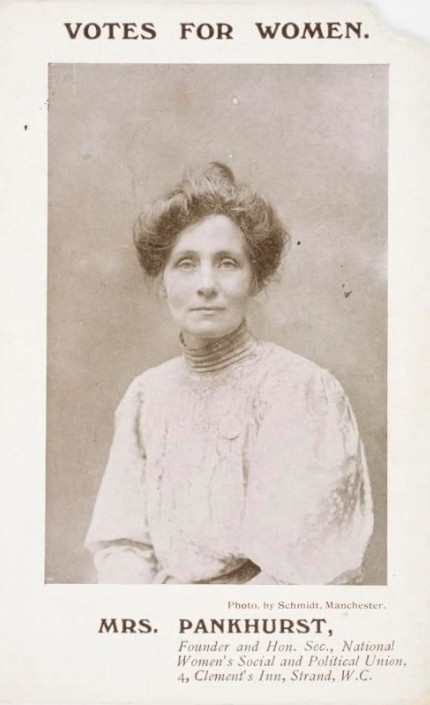
In May of 1916, a group of Grinnell students managed to persuade Emmeline Pankhurst, the famed leader of the radical suffrage movement in Britain, to give a public lecture in Herrick Chapel. Pankhurst had founded the Women’s Social and Political Union in 1903, which organized more confrontational forms of protest and civil disobedience—ranging from blocking roads to disrupting sessions of Parliament to smashing windows and setting fires. Draped in their colors of purple, white, and green, and often brandishing their trademarks signs & badges declaring “votes for women” or “deeds not words,” the members of the WSPU became the iconic face of the suffragette movement (both then and now). Like many of her colleagues, Pankhurst spent considerable time in prison where she engaged in rounds of hunger strikes that attracted even more attention to the cause.
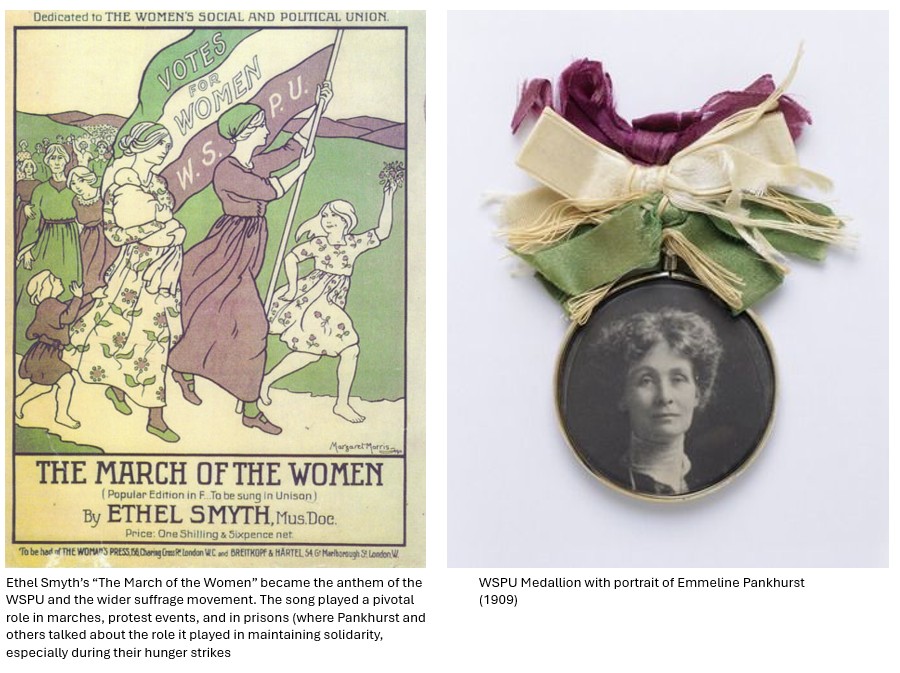
Yet, the beginnings of the First World War brought a temporary truce to these battles, as Pankhurst and the majority of the WSPU agreed to suspend their political protests and support the British government’s war effort. In this spirit, Pankhurst agreed to tour the United States in 1916, giving lectures on the war to raise funds for Britain and its allies.


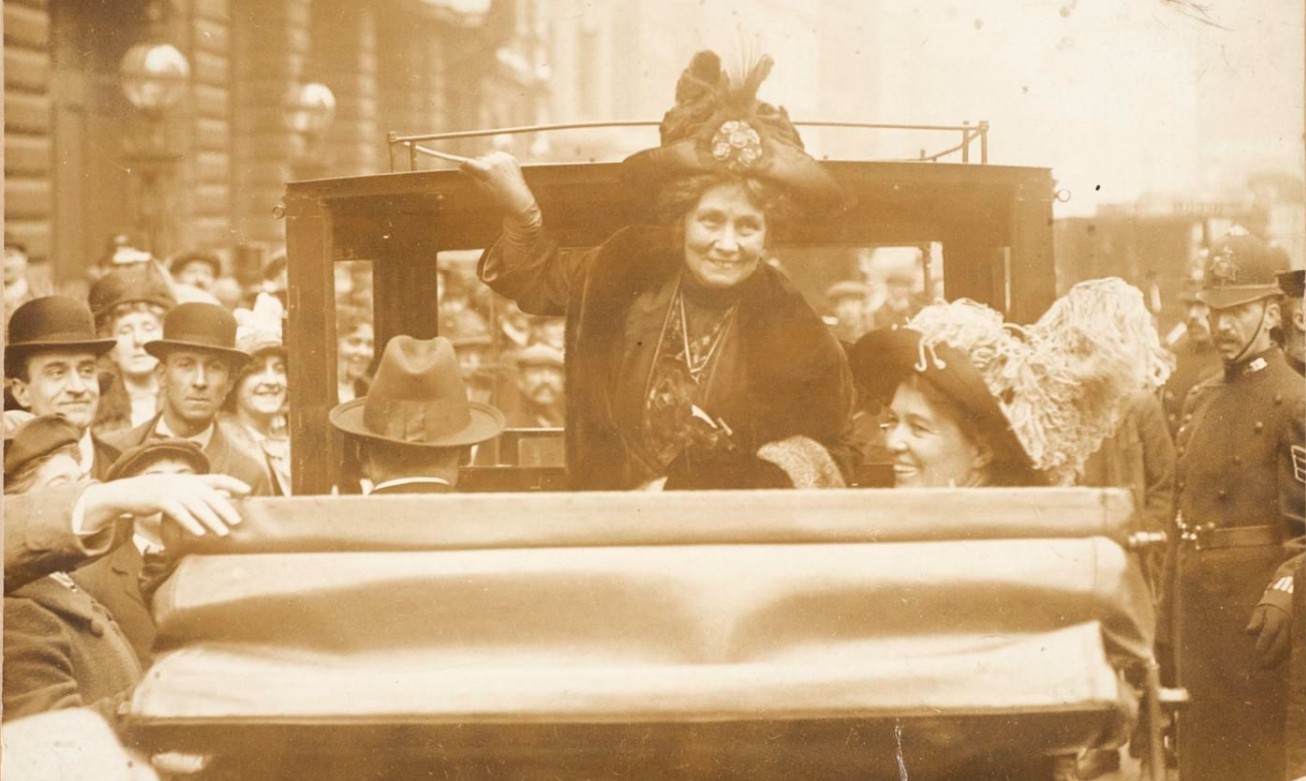
Given the goals of Pankhurst’s American tour, and her pact with the British government, it is surprising that she agreed to come to Grinnell College to lecture specifically on the suffrage issue. She had been invited to come to Grinnell by the newly formed “Political Equality League,” comprised of female students at the college who were eager to mobilize support for the upcoming vote (in July) on an amendment to the Iowa constitution that would grant equal voting rights to women. That Grinnell would become the main speaking stop between Chicago and Denver on her American tour, and that she would speak explicitly about suffrage here (while avoiding the topic elsewhere), makes her Grinnell lecture all the more intriguing.  Pankhurst might have been swayed by the personal appeal of the Grinnell college students, whose organizing efforts mirrored her own work (in fact, Pankhurst stayed another day in town, so as to attend several meetings and events with college women in their new Quadrangle facilities). Pankhurst might have been equally tempted to speak in Iowa at that particular moment, given the upcoming constitutional referendum that was emerging as a bellwether of the suffrage cause in America. Whatever the precise reasoning, Pankhurst delivered a rousing speech to a packed audience in Herrick Chapel that evening of May 17, 1916.
The Spring Ritual of Mowing

In April, grass grows at a prodigious rate in Iowa.  On his visit to Grinnell, the famed agriculturalist, Wes Jackson, once expressed his astonishment at how quickly, and completely, Iowa goes from a sea of brown to a “riot of green”, in just a couple of weeks.

All of that grass, of course, requires mowing, and modern day Grinnellians are used to hearing the hum of lawnmowers around campus and town whenever the rain pauses and the sun comes out. Last week, in fact, City officials reminded residents, businesses, and institutions that they would be taking their rulers around town to measure grass height (anyone with grass over 8 inches will receive a citation and be  fined).

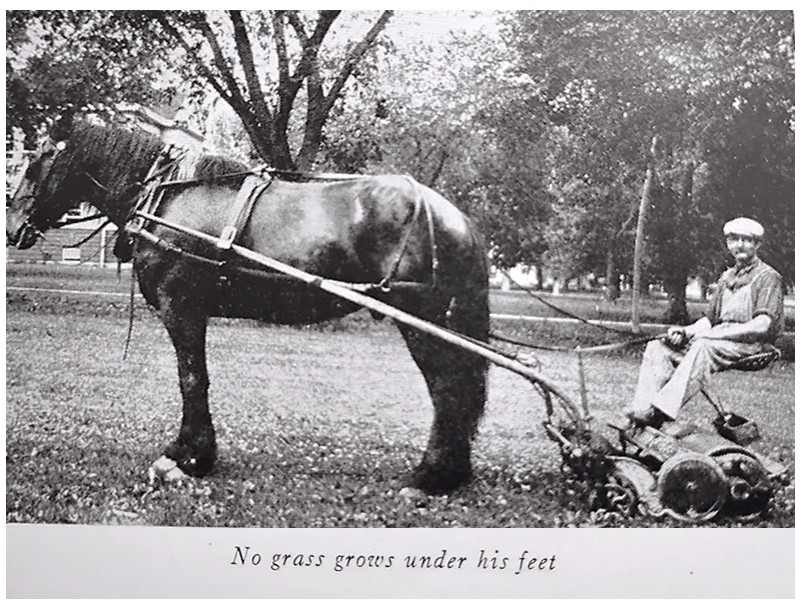
A century ago, one groundskeeper (captured in this 1916 photograph) was responsible for mowing all 22 acres of campus with a horse-drawn mechanical mower.  In 1930, students published calculations about how much mowing this entailed. Estimating that he mowed the campus 20 times a year, and calculating how many miles that would translate into if he and the college horse travelled in a straight line, they determined (with a good dose of comic hyperbole) that:

They have traveled far enough to go from New York to San Francisco and back to the railroad crossing just this side of Kellogg, where they would undoubtedly block the Rock Island trains until next spring, when there will be more grass to cut and they could again move on.

This process of endless mowing is the kind of prosaic routine that typically fades into the background of college life. Although there are times when it surfaces. In the 1970s, for example, the staff of Buildings and Grounds went on strike for 19 weeks, forcing administrators to do much of the mowing (there are iconic photos of Dean Wally Walker mowing the campus lawn). And there were a number of debates in the 1980s about whether mowing should take place during class time, when open windows made it difficult to hear.

Still, the symphisian task of mowing continues on.


The Liberal Arts at Grinnell: The Birth of the Major (1895-1930s)

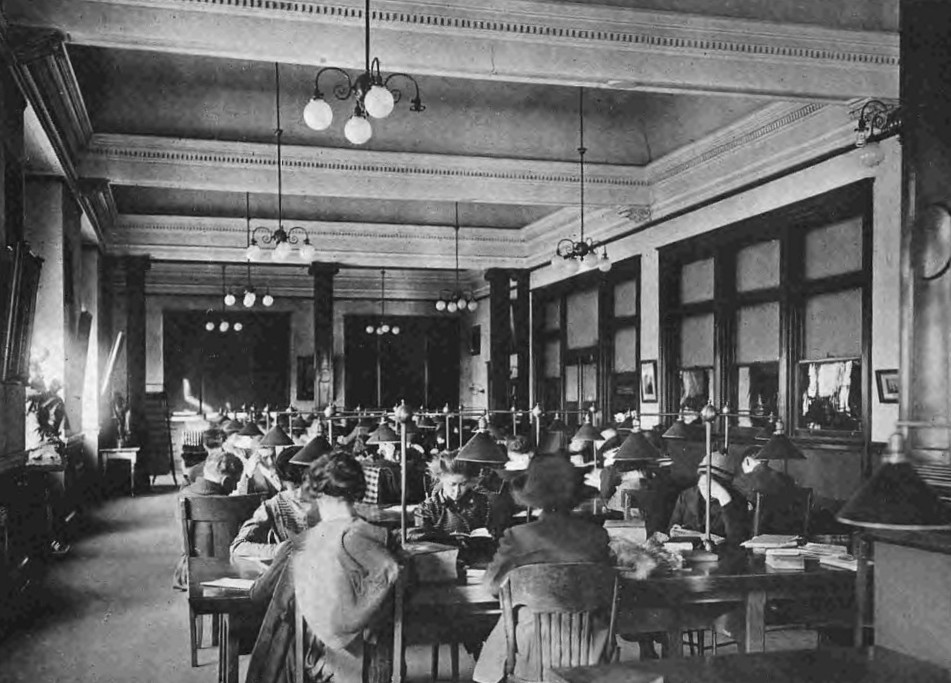
The Reading Room in Carnegie Library (1913)Carnegie Reading Room 1913
In the 1890s, there was heated debate within higher education about the appropriate way to structure the curriculum, with one camp of traditionalists favoring the established path of a carefully defined sequence of courses to be taken at each stage, while new reformers promoted a far more open curriculum that would be almost entirely elective (a trend popularized by many of the new colleges and state universities emerging in the West). Grinnell originally tried to accommodate both philosophies by having a degree track, with a well-defined sequence of courses students had to fulfill each year on their way to a bachelor’s degree, while also having an “Optional Studies” track where students could choose any array of courses they wanted, but would not lead to an actual degree.

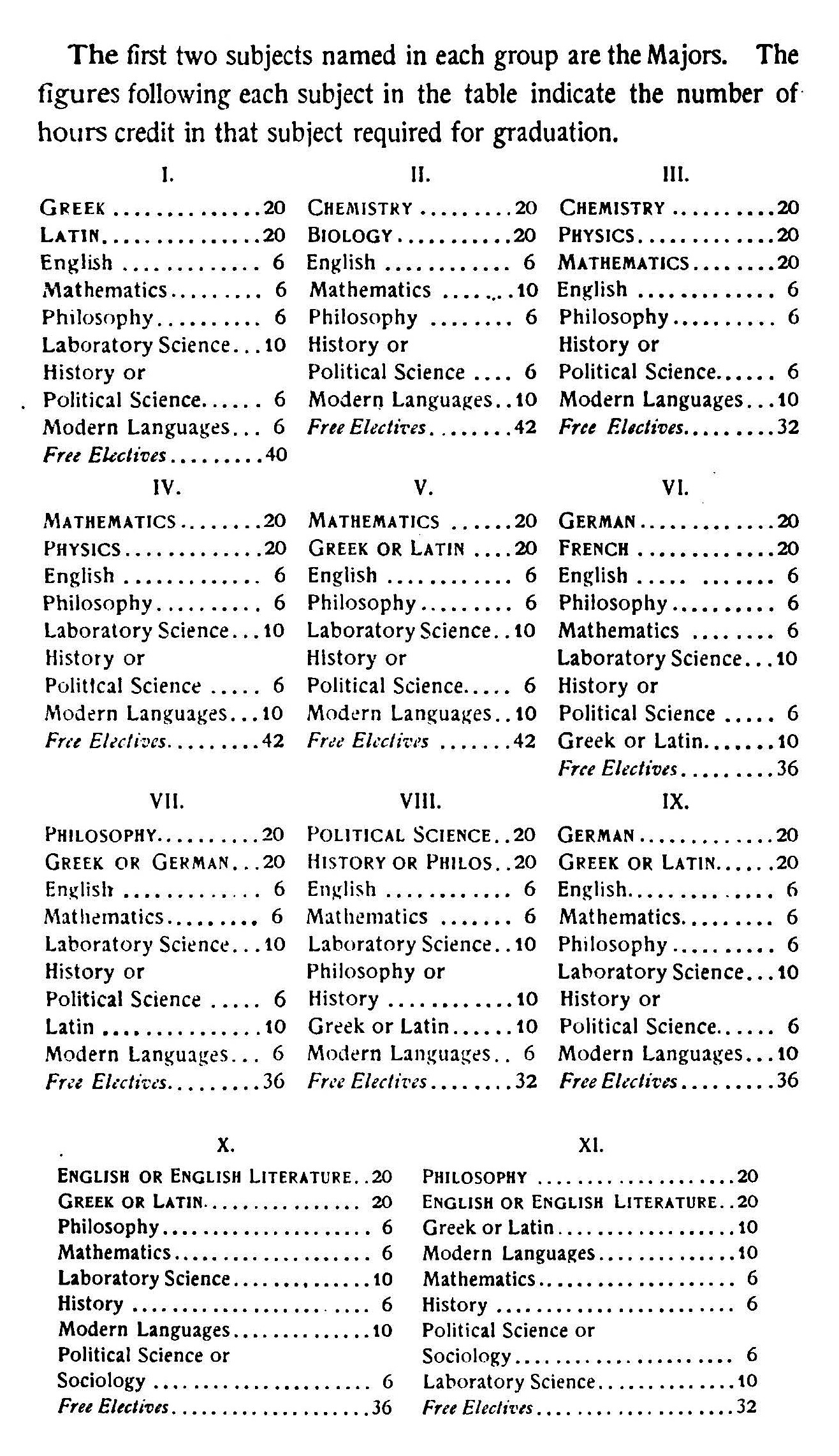
When George Gates became president of the college, in 1887, he began a series of important administrative and curricular reforms that would lead to Grinnell’s adoption of the “Group System” curriculum in 1895. This system, pioneered by the newly created Johns Hopkins’ University, tried to balance the demands of structure and choice, while addressing the mounting problem of how to incorporate new subjects into a fast-changing collegiate environment. For the first time, this system required students to choose a “major”—actually, two complimentary majors—each of which would consist of 20 credits of sequenced course work in those departments. At Grinnell, students could pair these complimentary majors in 9 combinations (increased to 11 in the catalog below), although students could also petition the newly created curriculum committee (yes, we can thank George Gates for creating the first standing committees of the faculty) to approve a new combination. In addition to their two majors (40 credits), students would also choose courses from a variety of required subjects, as specified in the catalog. But note that students could select what course to take in History, for example, or what modern language they would study (as opposed to the older curriculum which spelled out the specific classes a student would take each year).  The end result was a curriculum of roughly thirds (one third of the credits in their major fields, one third in required fields, and one third as open electives).

The college touted the virtues of this compromise, explaining that:

The Group system aims to combine the advantages of the rigid course system with those of the free elective system, while avoiding the dangers of each to maintain a proper balance between educational control on the one side and individual freedom of choice and self-direction on the other…the aim has been to organize each Group that it may afford the opportunity for a well-rounded liberal education, while preventing the waste and dissipation of energy incident to absolutely unlimited election.

To guide students in these choices, the college (for the first time ever) mandated that a faculty member should serve as an individual advisor for students who were majoring in their department.

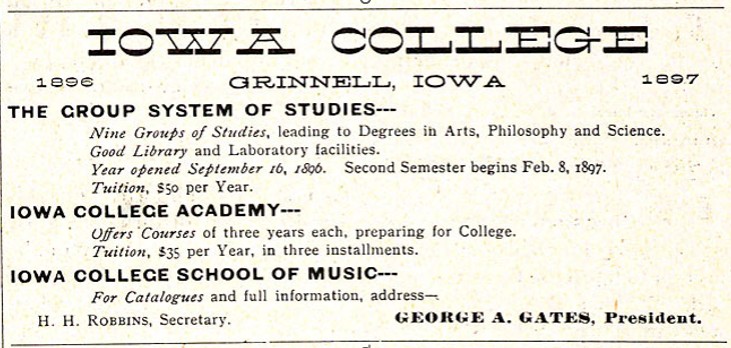
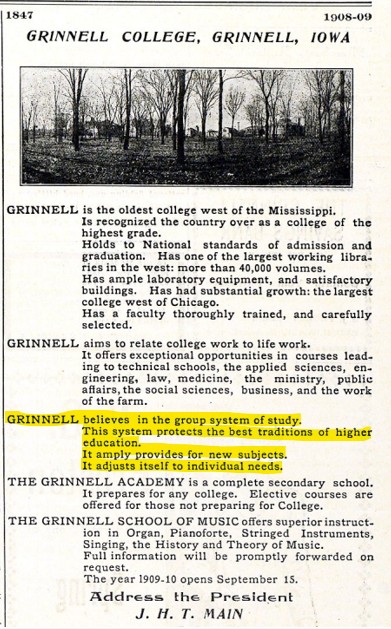
The College’s advertisements from this period (as you can see here), highlighted the group system as a defining feature of Grinnell.  While certain elements would evolve over time—the two majors, for example, became one “major” and one “minor”—the essential framework would remain in place for decades, shaping the institution.


Local Election Attracts National Attention (1913)

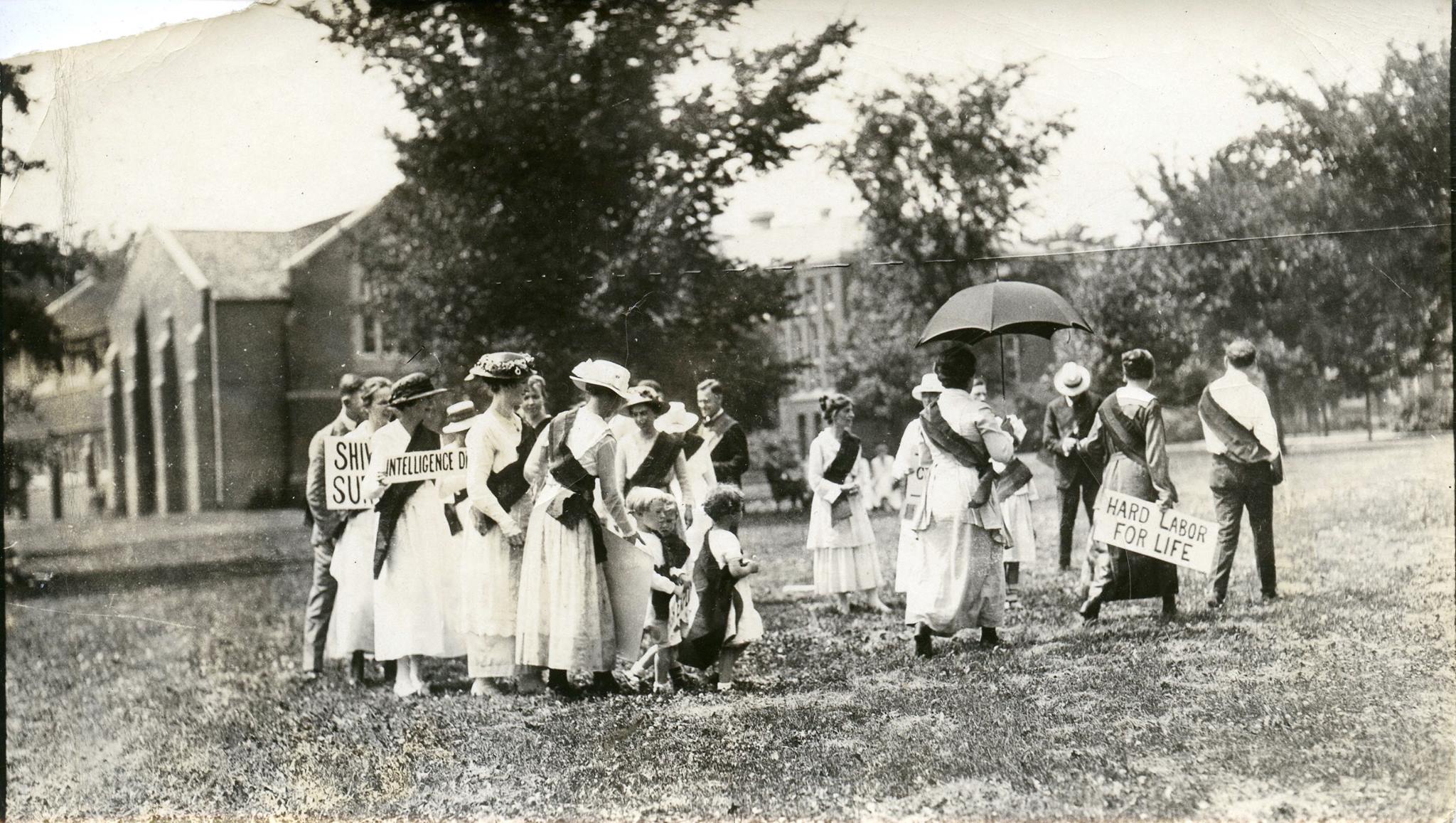
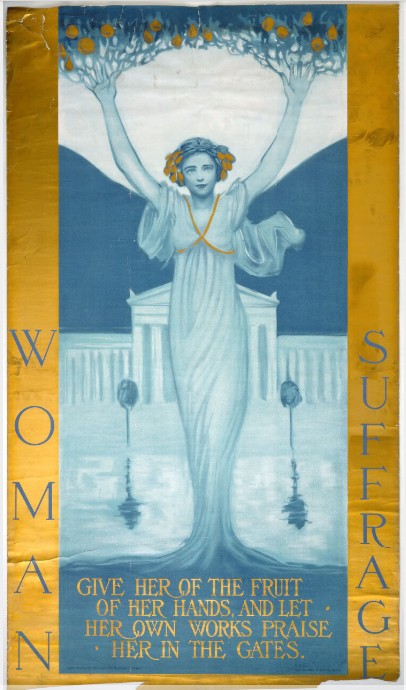
Suffragettes at Grinnell campus (date unknown)


On Tuesday, Grinnellians will go to the polls to vote on candidates for mayor, city council, and school board, as well as the fate of the Local Options Sales Tax. Local elections rarely receive much coverage, but in 1913, Grinnell attracted national, and even international attention, for a special primary it held regarding women’s suffrage.

The issue had been reinvigorated by the presidential election of 1912. Theodore Roosevelt embraced women’s suffrage that year, and made it a plank in the  platform of his new “Bull Moose” Party. Suffragettes also staged some of their largest and most publicized events that year, such as when 15,000 supporters paraded in New York City in May, followed by an even more dramatic nighttime march in November, in which a half-a-million New Yorkers turned out to see thousands of suffragettes marching with Japanese lanterns to illuminate their procession.

Responding to this atmosphere, a group of Grinnell’s civic leaders decided to organize a vote that would reveal where the women of the town stood on the issue of suffrage. All women over the age of 18 were invited to this special election—which was held in the Superior Court room from 8am till 8pm, on Friday, January 31st. The voting procedure mirrored a standard, local election—using the same ballot system, held in the chambers of the superior court, overseen by a panel of election monitors—but, this time, women (and only women) were invited to cast their vote. The situation was so novel that the Scarlett and Black was unsure whether to use the term “voters,” when talking about the election, or to create a new feminine version, “votettes.”

The night before the special election, suffragettes staged a rally at the Colonial Theatre (downtown) that included several important speakers; a screening of the new silent film, Votes for Women, showcasing the dramatic parades in New York; and ending with a musical performance by the Women’s Glee Club of the  college as well as the distribution of various pamphlets, posters and material supporting the suffrage cause (all handed out by suffragettes “in uniform,” as the Grinnell Herald described them)

The next day, despite snow and ice, 738 women made their way to the polling place to cast their vote: 663 voted in favor of women’s suffrage, and 75 voted against. Contemporaries estimated that about 80% of eligible women, including college students, voted in this election; and many were surprised by the lopsided victory.

The Associated Press latched onto this story, running several press bulletins that drummed up national interest before, during, and after the election. From Los Angeles to London, newspapers covered the spectacle of a small Iowa town holding a special election for women voters to express their position on women’s suffrage. The town eventually sent the results to the Iowa legislature—certified by a team of election judges that, for the first time, were half men, half women—so that it could inform the legislature’s debate on amending the Iowa Constitution.

The Red Cross and the White Lion

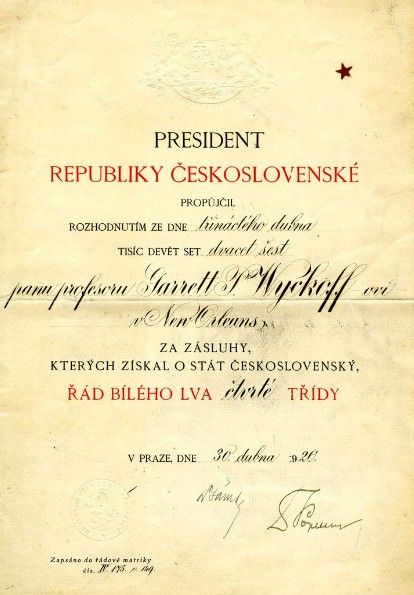
In 1926, Professor Garrett P. Wyckoff (’94) was awarded the Order of the White Lion (čtvrtý třídy, or 4th degree, meaning he was made an “officer” in that order).  The order, which represented Czechoslovakia’s highest civilian honor, was created after World War I to recognize those civilians, particularly foreigners, who had performed extraordinary service to the country. Professor Wyckoff, who taught at Grinnell for a number of years in various departments (including Applied Christianity, Political Science, Economics, and finally, Sociology), had taken leave of teaching duties during World War I to become a field director of the American Red Cross. Wyckoff directed the Gulf division, then moved on to the mid-Atlantic office (not before giving Harry Hopkins, 12′, his first big break by having him appointed as his successor in New Orleans), and then became a commissioner of organization for the League of Red Cross Societies in Geneva, Switzerland. After the war ended, Wyckoff worked for 2 years to establish a branch of the Red Cross in Czechoslovakia, for which he received this honorific award, Řád Bílého lva.


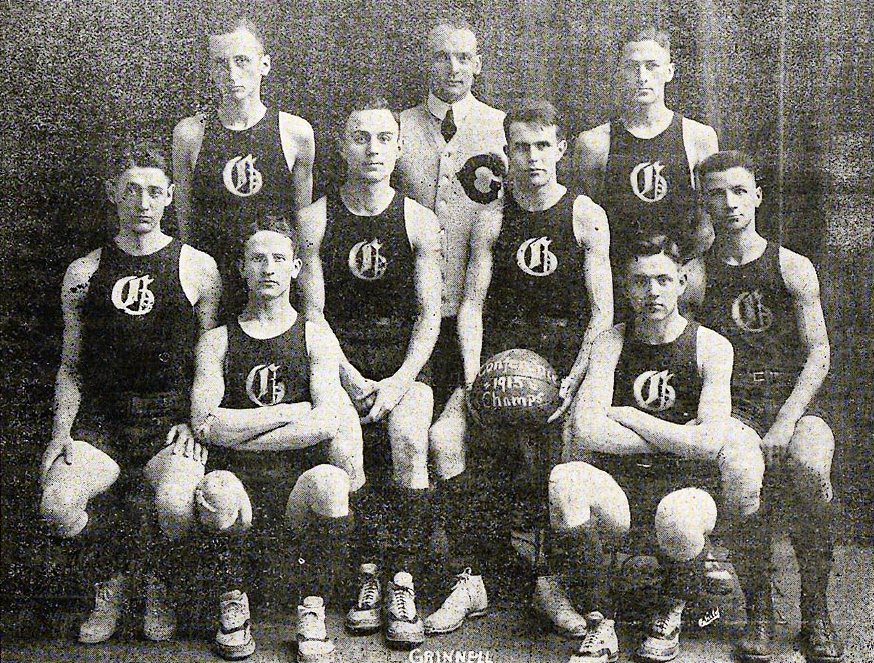
The Men’s Squad, 1915

Back row, from left to right: Meacham, Fisher (Coach), Swan | second row-Tharp, Jones, Lynch, Loper (Captain), Targgart, Norris.

Last week, we saw the women’s basketball squad, that won the interclass league in 1915.  This image shows the men’s team, which had just captured its sixth consecutive conference championship, having edged out the University of Iowa for the title, once again. From 1908 to 1915, Grinnell was on an epic winning streak, loosing only 12 (out of a 100) games, scoring 3,147 points (to their opponent’s 1,594 points), with two undefeated seasons, and 6 championship titles (besting Kansas, Illinois, Iowa State and the University of Iowa).

Note the gothic G that the basketball team wore as their emblem until the 1930s, when it was changed because students complained it was too difficult to decipher (fans could not tell if it was meant to be a G a C a B, or something else).

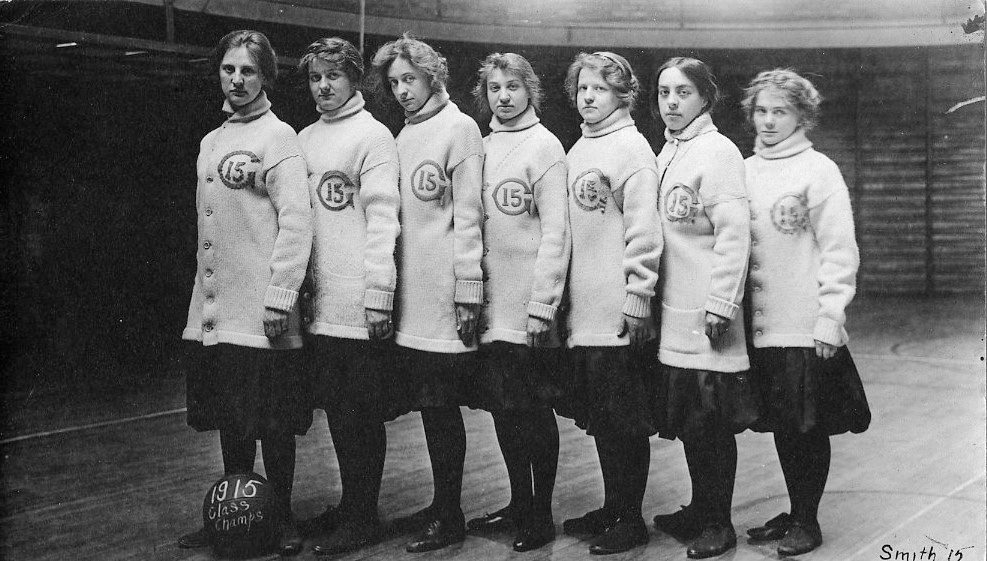
The 1915 Women’s Basketball Champions

This picture captures the victorious senior women’s basketball team after they won the 1915 inter-class series (hence the “class champs” written on the basketball). While men’s athletics revolved around intercollegiate competition, women’s sports were organized along intramural lines, and at Grinnell, that meant that each academic class would field a team that competed against other years. In 1915, the “senior women” went undefeated, winning the title and the coveted Silver Loving Cup (which had been donated by H.W. Somers that year to promote a “keen spirit of rivalry” among the teams, and add even more drama to the series). The senior team was comprised of E. Hoesley, H. MacEachron, H. Whitney, E. Dunham, I. Barhite, I. Pyle, and R. Coy.  This same team won the previous year’s championship as the junior squad in 1914.


Abby Williams Hill (’07)

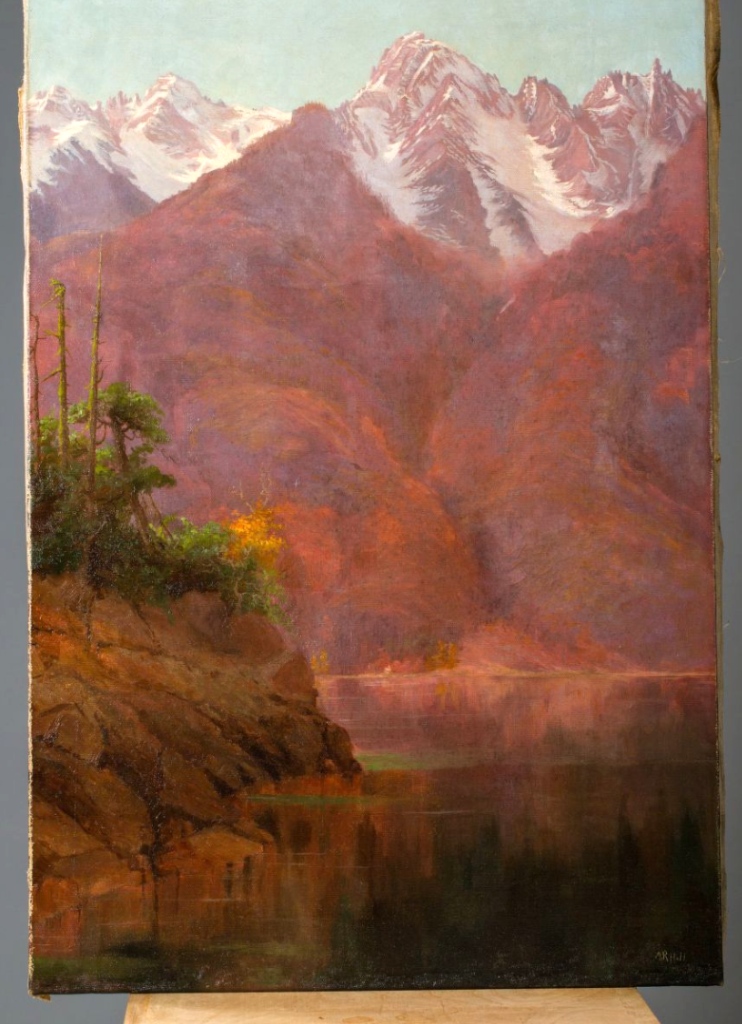
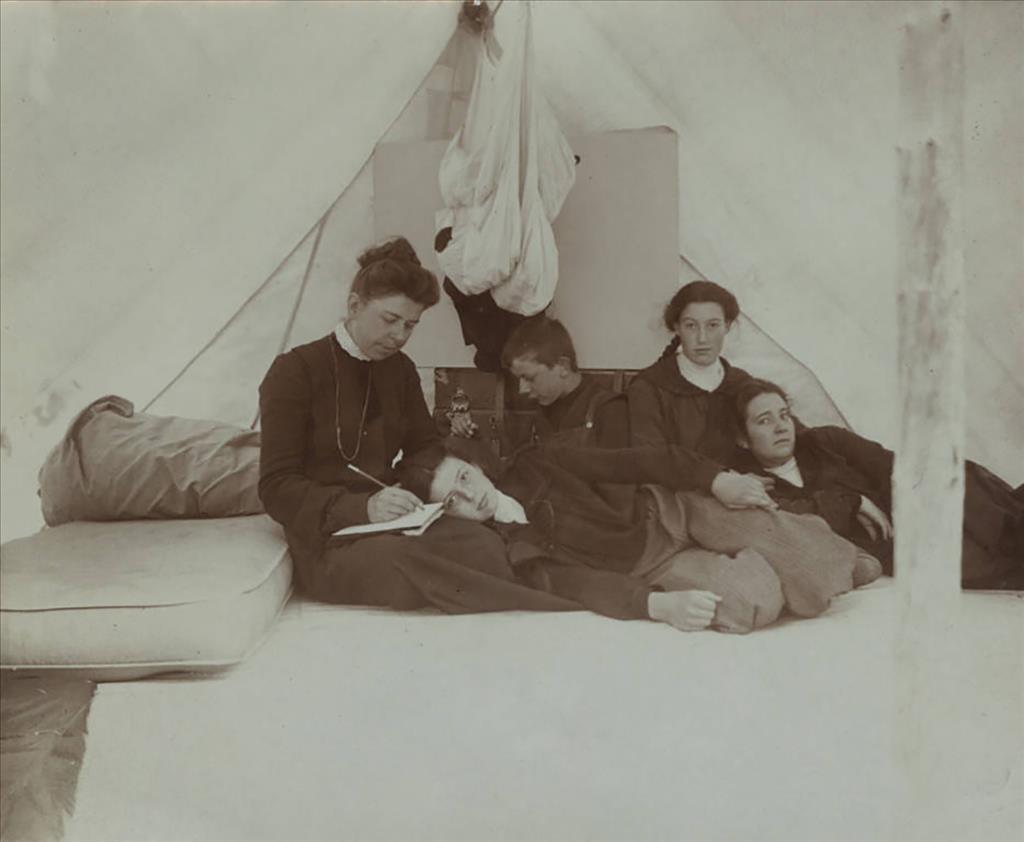
Abby Rhoda Williams Hill (1861-1943) grew up in the town of Grinnell (her parents being some of the first settlers who arrived with J.B. Grinnell in 1854). Hill loved drawing and painting from an early age: she taught local art classes, studied art at the college, and then travelled to Chicago, New York, and Hamburg (Germany) for more formal training. She returned to Grinnell to teach briefly at the college; but then moved to the Seattle area where she gained a national reputation for painting western landscapes after being commissioned by the Great Northern Railway to do a series of plein air landscape paintings of national parks and scenic areas served by the railroad. These paintings were displayed at the Word’s Fair, to much acclaim, and were made available to a wider public in the form of a popular booklet. Hill went on to paint hundreds of landscapes throughout the West, and always brought her children camping with her for these extended en plen air sessions (pictured below). Her journals describe many family adventures: evading forest fires, negotiating with bears, avoiding rattlesnakes, and one particularly harrowing encounter with a mountain lion that chased them. Despite making a home in the West, Hill returned frequently to Grinnell to visit family, friends, and members of the college community. She donated several works to the college (see below) and to the Stewart Library, in town.

Painting by Abby Williams Hill (’07) that was donated to the College. It used to hang prominently in the Old Library, Carnegie Hall, along with another of her landscapes.

Abby Williams Hill, with her four children, on a plein air excursion to Yellowstone National Park (c. 1906)


Forest Bathing in the Conservation Era

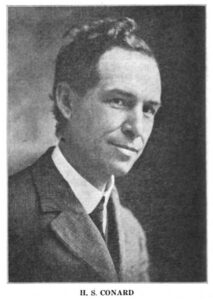
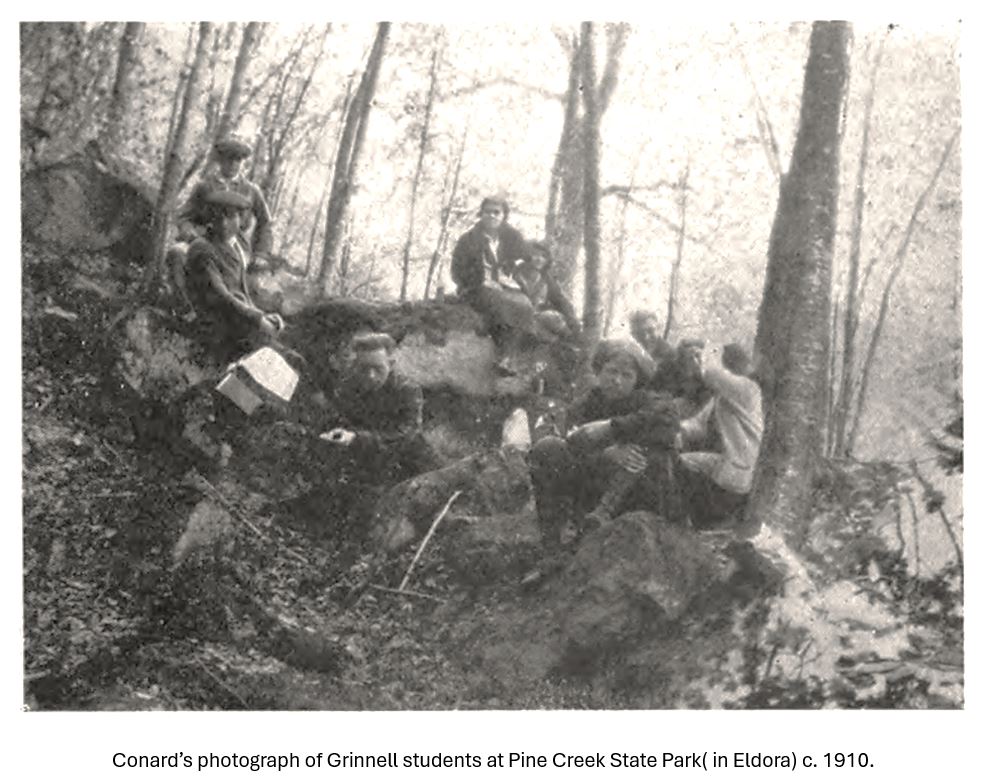
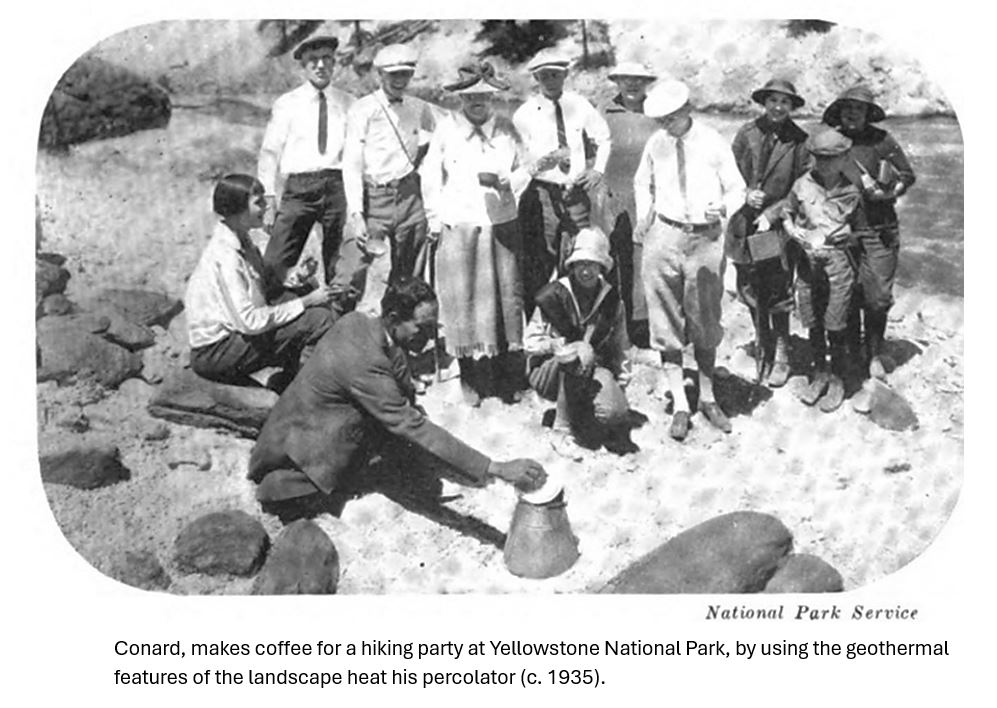
This week marks the end of the Fall program of “forest bathing” at Grinnell, in which students can sign up to spend part of a Tuesday afternoon walking through woodlands and immersing themselves in nature. Although billed as a modern wellness practice—and a form of environmental health or environmental medicine—the essential goal of these trips would have been quite familiar to Henry Shoemaker Conard, who taught Biology at Grinnell College one hundred years ago. Conard, who also served as president of the Iowa Conservation Association, advocated for a system of state parks in Iowa that would provide wilderness preserves for study, recreation, and immersion. He regularly took students on extended camping and hiking trips through Pine Creek State Park (in Eldora) as pictured here. Conard also helped organize similar, albeit shorter, trips for local school children to state parks and preserves. And in the 1930s, Conard was hired as a “Ranger-Naturalist” to lead extensive hiking parties through Yellowstone National Park in the summers, blending science, recreation, and wellness that were seen as inter-connected elements of the conservation movement in the Progressive era.

May Day at Grinnell

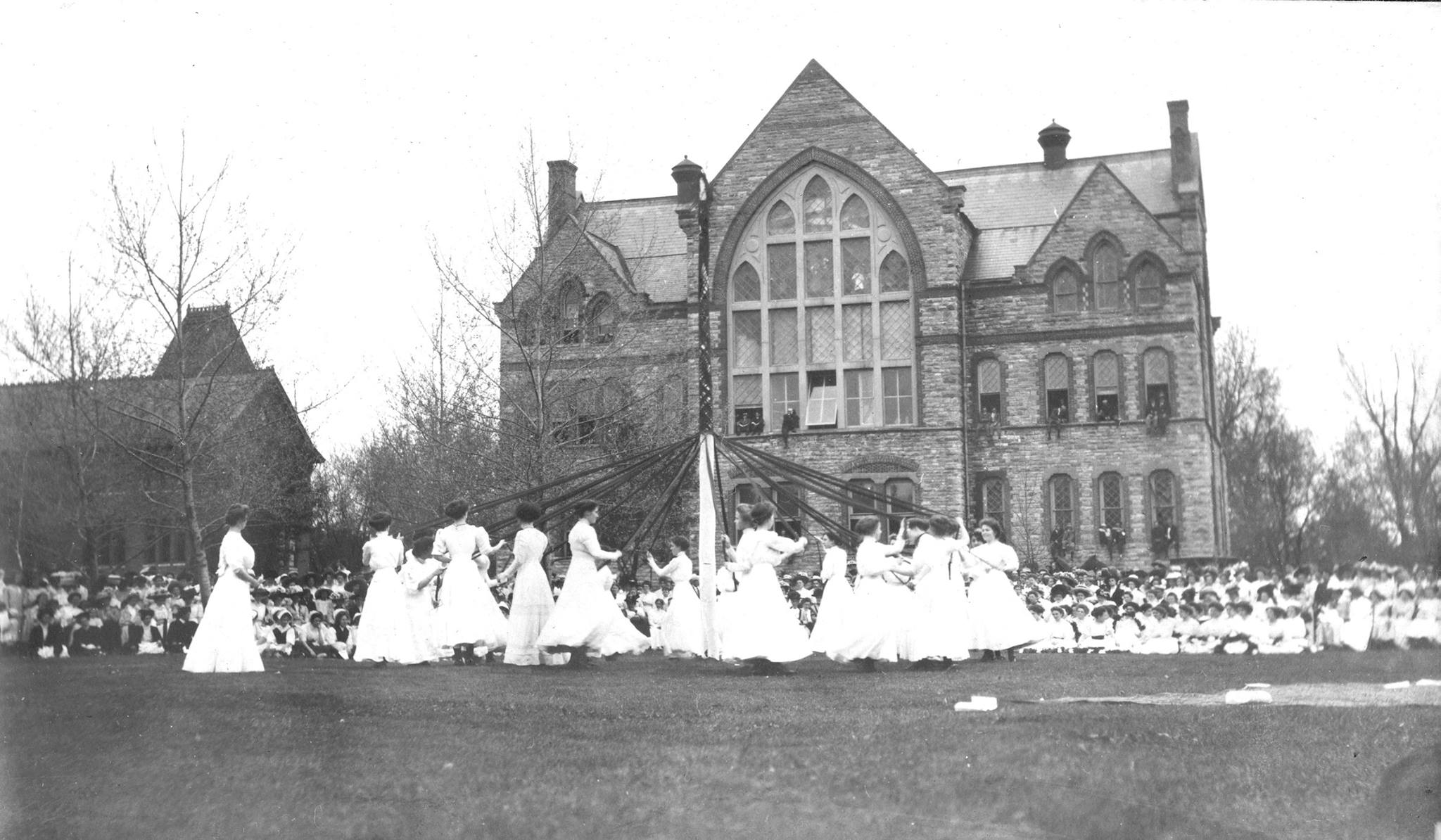
May Day Festivities, 1913

In 1909, the college began hosting an annual “May Fete” or “May Day” celebration, organized by the Women’s Athletic Association. The event would begin with a procession around the campus, led by a trumpeter (dressed in medieval livery), then the College marching band, followed by all seniors wearing their caps & gowns, followed by the elected “May Queen” and her court, then the juniors, followed by the sophomores, followed by the freshman (students from each class were dressed in a different types of folk costumes or gowns), all carrying elaborate flower garlands. A Maypole was erected in central campus, in front of Blair Hall (as seen in this picture from 1913), and different classes took turns “winding” the red & black streamers around the pole, dancing to particular songs played by the college band, accompanied by the glee club. There were also a series of elaborately choreographed “flower drills,” that are frankly mysterious to the 21st-century observer, but which contemporaries found captivating. The May Day festivities of 1913, pictured here, also included groups of local school children who dressed as butterflies, violets, the four winds, and autumn leaves, each of whom danced with a specific class to represent a particular season of the year. It was one of the defining moments of the spring semester, during this era.

Powered by WordPress & Theme by Anders Norén