Tag: 1920s

Commencement at Grinnell: Then and Now

Grinnell’s approach to celebrating commencement is a mixture of old and new. Some traditions span the history of the college, while others have changed considerably over the years. It’s illuminating, in fact, to compare this weekend’s commencement festivities (for the class of 2026) with what Grinnell graduates, family, and alumni experienced a hundred years ago, in 1926.
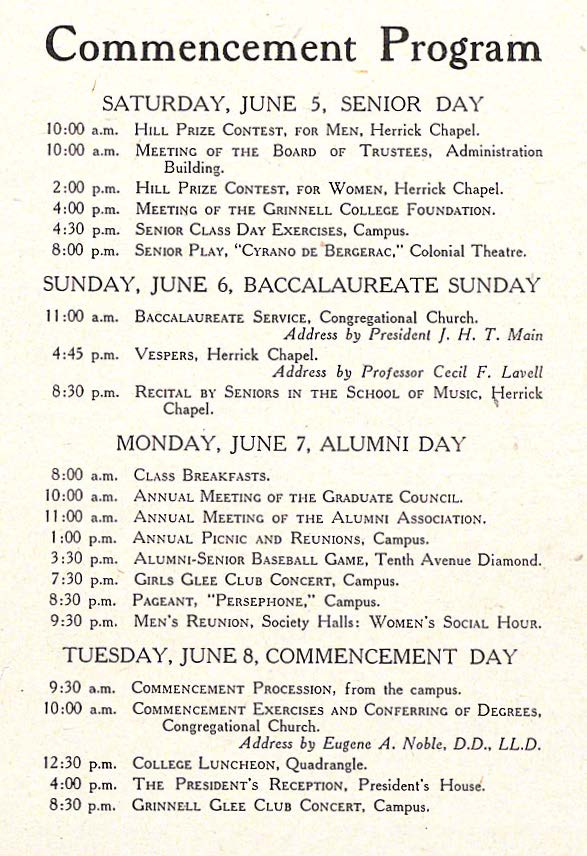
One of the first things you might notice in glancing at the commencement program from 1926 is that graduation was a June affair back then. While Grinnell classes ended by mid-May, exams were followed by an extended “pre-commencement season” devoted to pageants, performances, outings, and events. In 1926, that period included the “All College Revue,” the outdoor pageant Ceres and Persephone, various recitals, and culminated in “Pioneer Day,” replete with sporting events, picnic, band concert, parade, and an evening dance. The Senior class (comprised of 103 graduating students) also held their own special events, such as the senior picnic day at Arbor Lake.
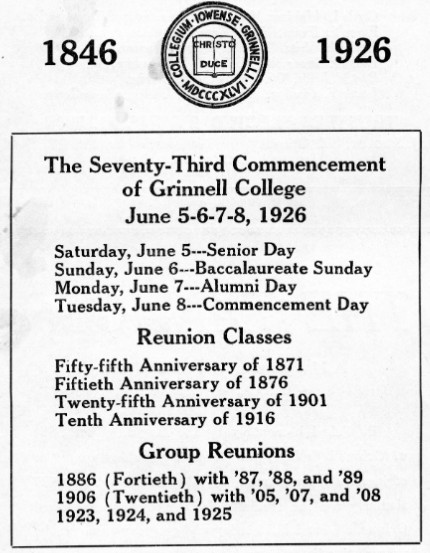
While the graduations ceremonies were the culmination of the four-day festivities in 1926, it’s important to note that alumni reunion was an integral part of the commencement celebrations in this period of Grinnell’s history.Returning alumni attended all of the ceremonies, concerts, recitals, and events (including Baccalaureate and Commencement), while the graduating seniors took an active part in the “Alumni Day” festivities held the day before graduation. Much like today, the alumni reunion was a mix of anniversary classes and clusters (which you can see in this advertisement).

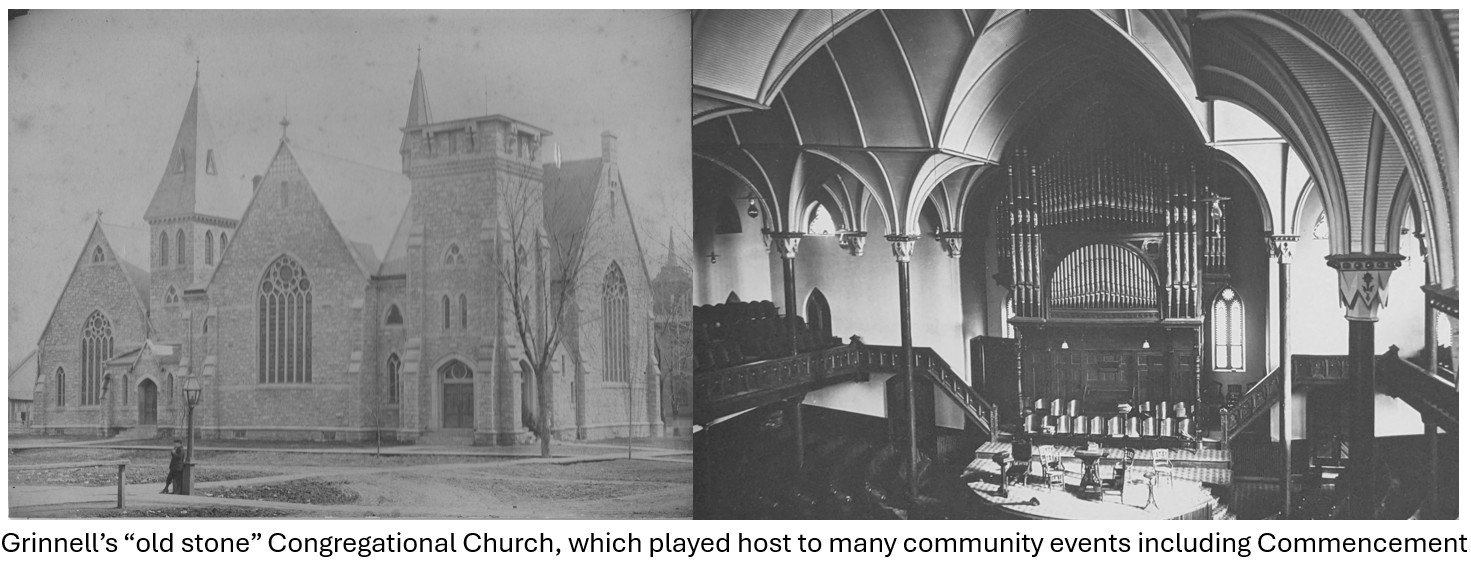
Some other noticeable differences include the larger array of concerts, performances, and competitions that filled the commencement calendar back in 1926. Graduation also took place off-campus, because the Congregational Church (on 4th and Broad St.) was the only space large enough to hold all the students, faculty, family and alumni. This gave rise to a Grinnell tradition that is no longer with us—i.e. the commencement “procession” in which all of the graduates, the faculty, and the trustees processed from Herrick Chapel to the Congregational church, led by honorary Marshalls.
Looking back, it’s hard to imagine how people had the stamina to make it through this jam-packed calendar of events. At the same time, it also seems like a charming idea to combine graduation and alumni reunion this way, and to create so many meaningful events and performances for the senior class.

Then as now, weather was also an important factor shaping commencement weekend. It was a mixed affair in 1926:  good weather for most of the evening events, and for commencement itself, but the alumni picnic had to be moved indoors due to an unexpected dust-storm, which surprised everyone. Never a dull moment in Iowa. 
The Liberal Arts at Grinnell: The Birth of the Major (1895-1930s)

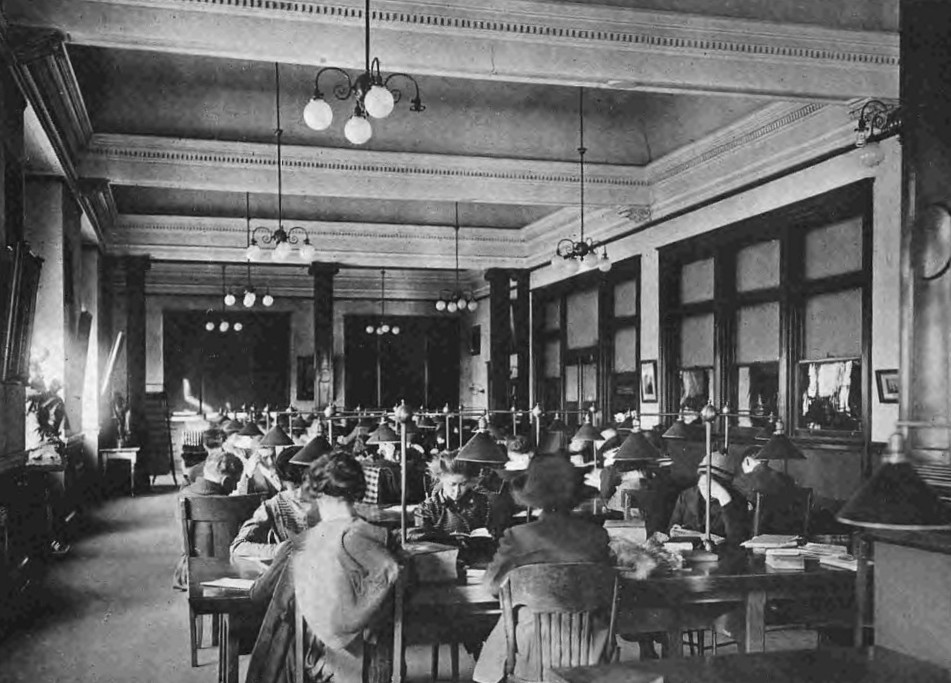
The Reading Room in Carnegie Library (1913)Carnegie Reading Room 1913
In the 1890s, there was heated debate within higher education about the appropriate way to structure the curriculum, with one camp of traditionalists favoring the established path of a carefully defined sequence of courses to be taken at each stage, while new reformers promoted a far more open curriculum that would be almost entirely elective (a trend popularized by many of the new colleges and state universities emerging in the West). Grinnell originally tried to accommodate both philosophies by having a degree track, with a well-defined sequence of courses students had to fulfill each year on their way to a bachelor’s degree, while also having an “Optional Studies” track where students could choose any array of courses they wanted, but would not lead to an actual degree.

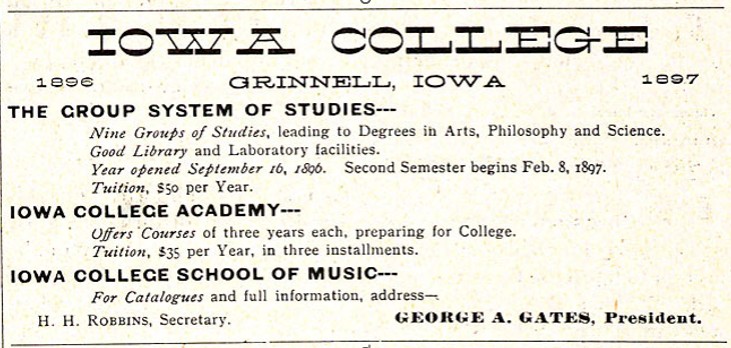
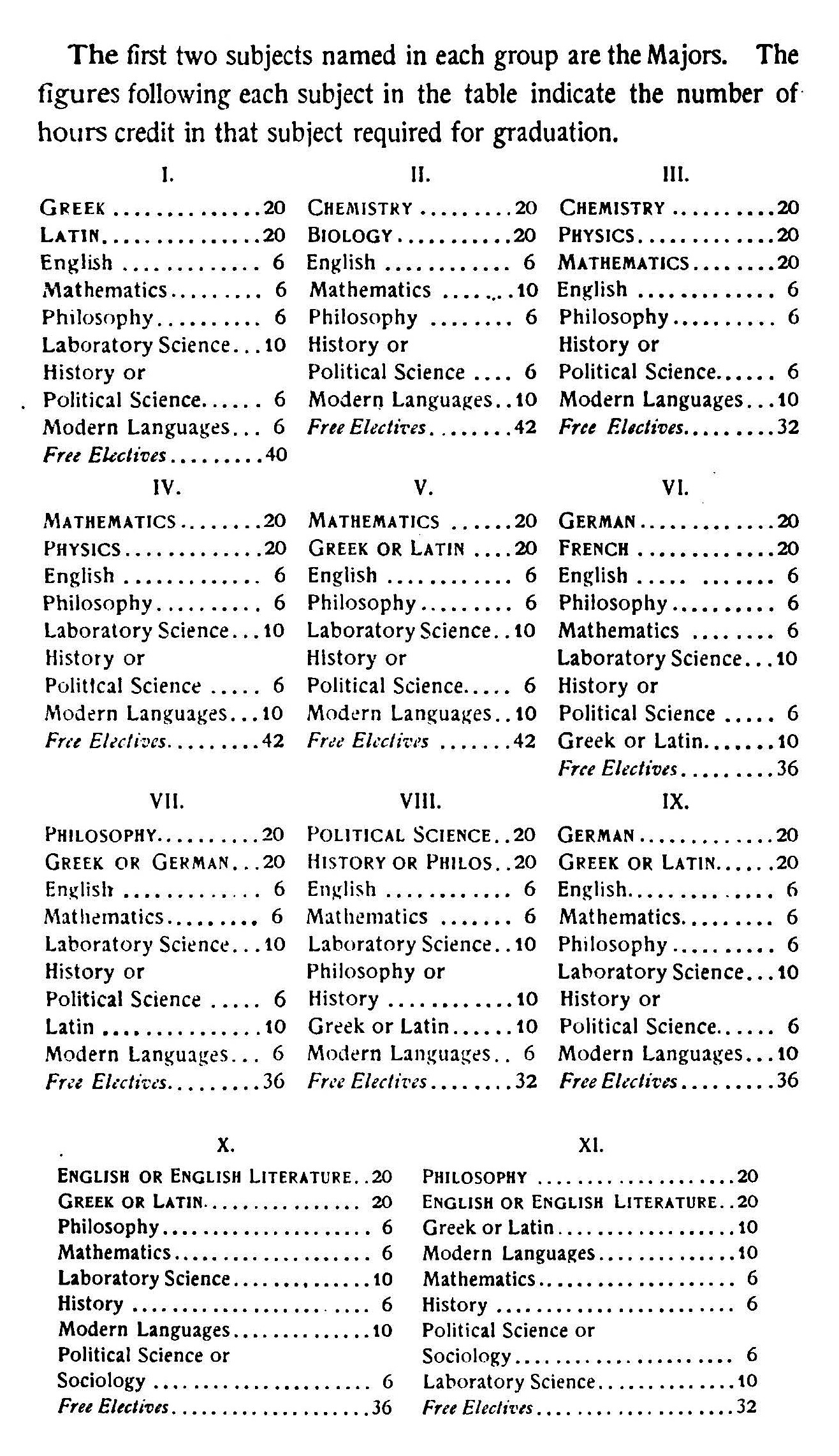
When George Gates became president of the college, in 1887, he began a series of important administrative and curricular reforms that would lead to Grinnell’s adoption of the “Group System” curriculum in 1895. This system, pioneered by the newly created Johns Hopkins’ University, tried to balance the demands of structure and choice, while addressing the mounting problem of how to incorporate new subjects into a fast-changing collegiate environment. For the first time, this system required students to choose a “major”—actually, two complimentary majors—each of which would consist of 20 credits of sequenced course work in those departments. At Grinnell, students could pair these complimentary majors in 9 combinations (increased to 11 in the catalog below), although students could also petition the newly created curriculum committee (yes, we can thank George Gates for creating the first standing committees of the faculty) to approve a new combination. In addition to their two majors (40 credits), students would also choose courses from a variety of required subjects, as specified in the catalog. But note that students could select what course to take in History, for example, or what modern language they would study (as opposed to the older curriculum which spelled out the specific classes a student would take each year).  The end result was a curriculum of roughly thirds (one third of the credits in their major fields, one third in required fields, and one third as open electives).

The college touted the virtues of this compromise, explaining that:

The Group system aims to combine the advantages of the rigid course system with those of the free elective system, while avoiding the dangers of each to maintain a proper balance between educational control on the one side and individual freedom of choice and self-direction on the other…the aim has been to organize each Group that it may afford the opportunity for a well-rounded liberal education, while preventing the waste and dissipation of energy incident to absolutely unlimited election.

To guide students in these choices, the college (for the first time ever) mandated that a faculty member should serve as an individual advisor for students who were majoring in their department.

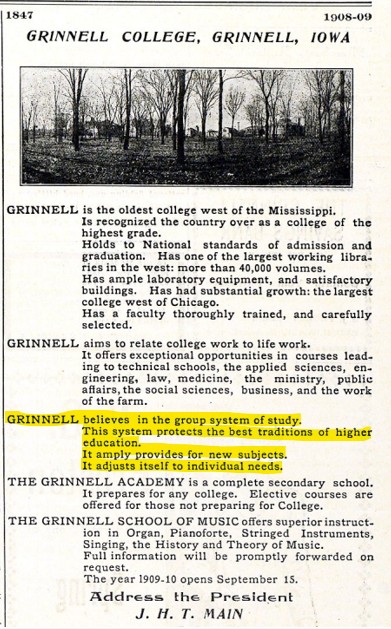
The College’s advertisements from this period (as you can see here), highlighted the group system as a defining feature of Grinnell.  While certain elements would evolve over time—the two majors, for example, became one “major” and one “minor”—the essential framework would remain in place for decades, shaping the institution.


The Uncle Sam’s Club Holiday Dinner

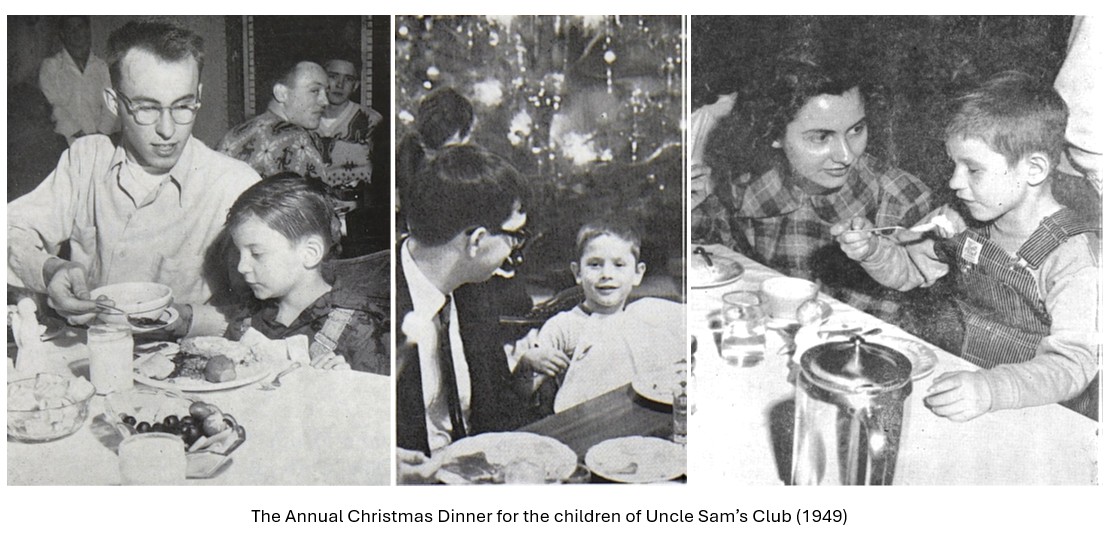
One hundred years ago (on December 16, 1925), the students of Grinnell College started a new holiday tradition by hosting a special Christmas dinner for local children from the Uncle Sam’s Club. The Uncle Sam’s Club was a local organization that had been created by Grinnell students at the turn of the century to provide programming, education and recreation to local kids at time when there were very few such programs or services. It proved so successful that, within a few years, they had raised enough funds to build a large clubhouse on the south side of town, where more than 50 students a year volunteered to work with hundreds of local kids on everything from art classes to Sunday school to sports leagues.

The holiday dinners became an annual tradition that grew in size, so that by the 1950s, there were as many as a 150 children attending these Christmas feasts, held in the Cowles Dinning Hall (pictured here). The meal consisted of roast meats, served with almost a dozen different side dishes, and capped off with special ice cream for dessert. These meals took on added importance during the 1930s and 1940s, when the Great Depression, and then the rationing of the war years, made this kind of holiday feast more extraordinary and appreciated. The tradition also grew to include after dinner entertainment—ranging from variety shows to magician acts to movies—as well as distributing Christmas toys.


It may be hard to believe, today, but the holiday calendar used to be even more packed with events, parties, festivals and fetes that Grinnellians somehow managed to squeeze into the last week of the semester. And among these, the Uncle Sam’s Club Dinner always proved to be a favorite.

Grinnell’s Swim Test

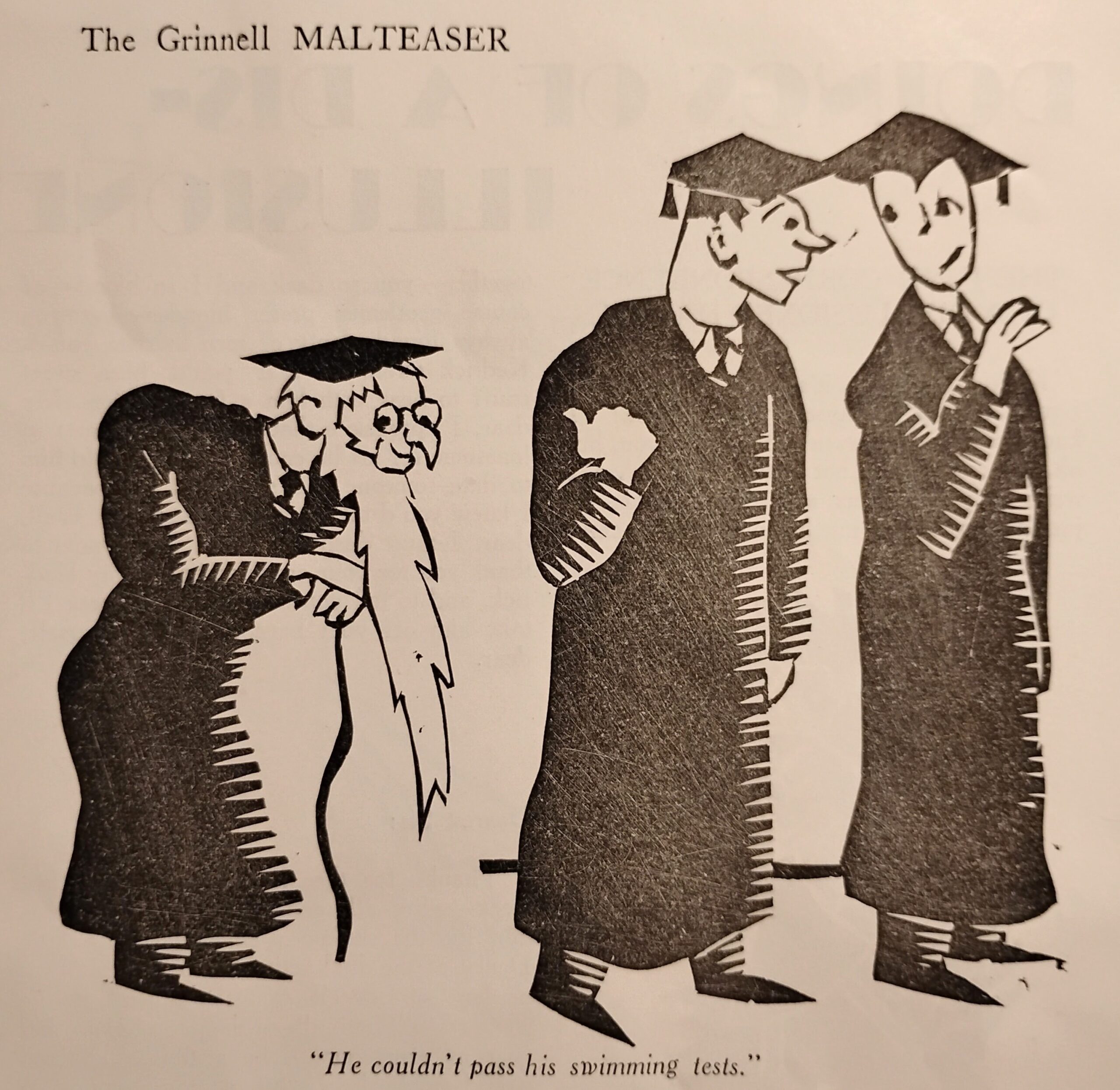
This 1930s cartoon, from a student-run magazine, The Malteaser, pokes fun at one of the relatively new requirements for graduation: passing a swim test. When the college built its first swimming pool, in 1927, it changed its physical education requirements to include a series of mandatory swimming classes, which could be circumvented by passing a swim test, administered at the start of each school year.

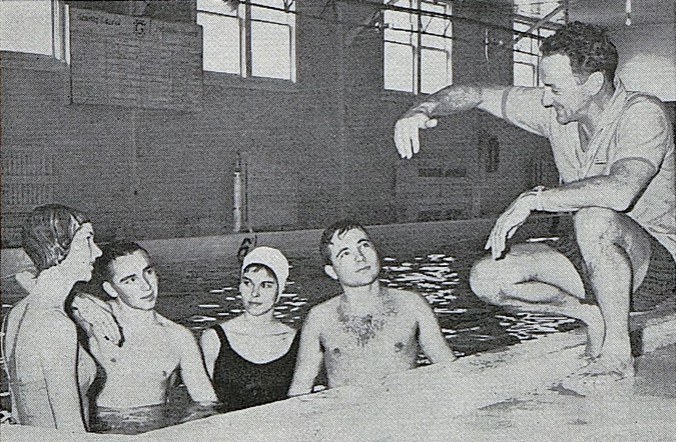
Swim tests became widely popular during the 1920s and 1930s, with most colleges and universities adding them to their list of graduation requirements. This trend reflected three inter-connected developments: 1.) the military’s recognition of the importance of teaching swimming to soldiers and sailors (which began at the service academies around the turn of the century, and then rippled outward through ROTC programs at many other colleges in the wake of WWI) 2.) progressive-minded campaigns to teach swimming as a life-saving technique (in an era when drowning was one of the leading causes of accidental death, and when access to pools or swimming instruction was confined to elites) 3.) the rapid expansion of physical education as a serious component of college curricula in the opening decades of the 20th century.

Over the years, the swimming test became one of a number of physical education tests that students had to pass for graduation. In 1961, for example, the college revised its requirements to include multiple physical fitness tests, conditioning tests, a junior “exam” in in a major and a minor sport, and most curious of all, a “dance test” that college women had to pass (in either modern, classical, or folk dance).

All of these required tests were abolished 55 years ago, when in December of 1970, the faculty voted to eliminate all physical education requirements as part of the larger overhaul that led to the open curriculum-tutorial system we have today. Interestingly, it took two faculty votes to settle the matter: the first time, the faculty voted to keep the physical education requirements, which led to some consternation and a second faculty meeting (in which an additional 30 or so faculty attended, helping to push through a majority vote in favor of jettisoning PE requirements).

One beneficiary of the change was Herbie Hancock, who did not receive his Grinnell degree in 1960, because he had not taken the swimming test or completed swim classes. With the change in requirements, the college awarded Hancock his B.A. in 1976, which helps explain why there has always been some confusion around his status (Grinnell lore often links him to other famous alumni, like Gary Cooper, who left before finishing their degrees, while Hancock’s own website, and many other sources, describe him as having received a B.A. from the college).


May Pageantry

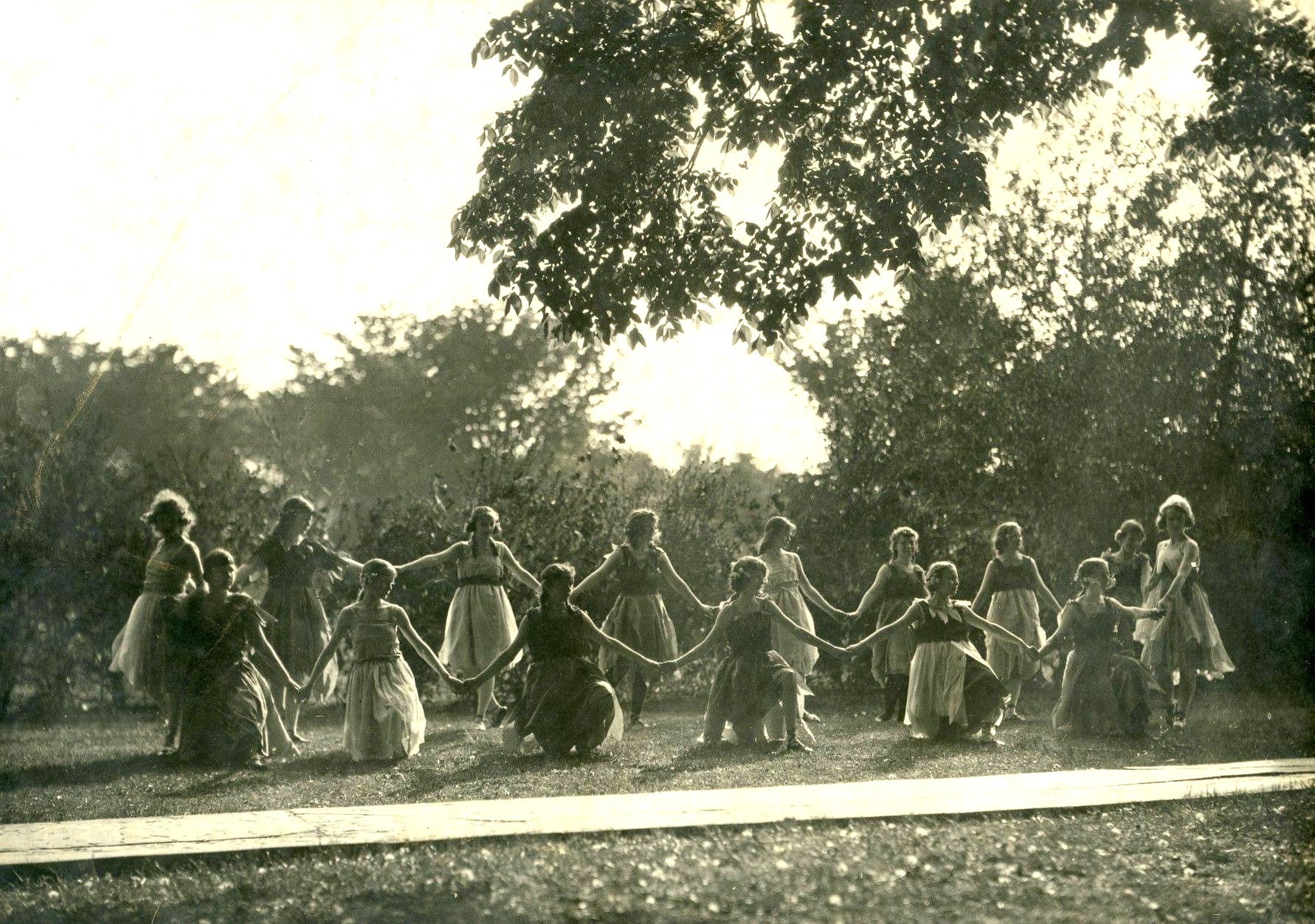
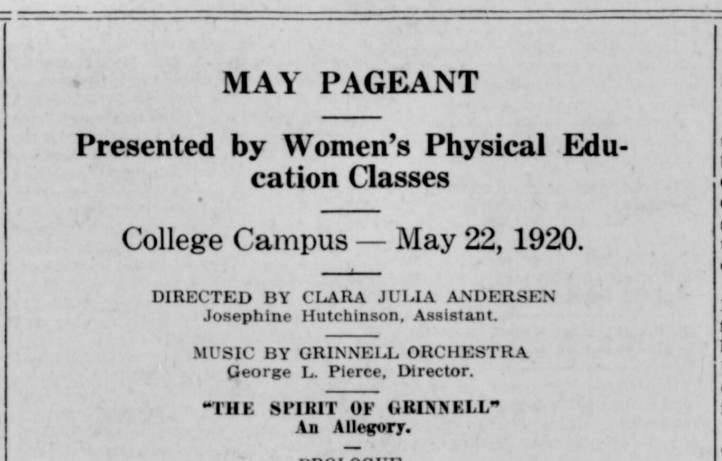
On May 22, 1920, the members of the Women’s Physical education classes performed an elaborate allegorical pageant, entitled “The Spirit of Grinnell,” on the campus grounds.  Accompanied by the Grinnell Orchestra, the pageant aimed to tell the story of the College in 5 stages:

1.) “The Spirit of the Prairie” (pictured above)

2.) “The Spirit of Education” (which depicted the founding of the college)

3.) “The Cyclone”

4.) “Grinnell’s Part in the Great Wars” (i.e. Civil War & WWI)

5.) “The Hope for the Future of Grinnell.”

According to the program, the dancing captured in the photograph above–from the prologue, the “Spirit of the Prairie”–was performed while the orchestra played portions of Charles Gounod’s 19th-century grand opera, Faust.

Grinnell Dance Cards

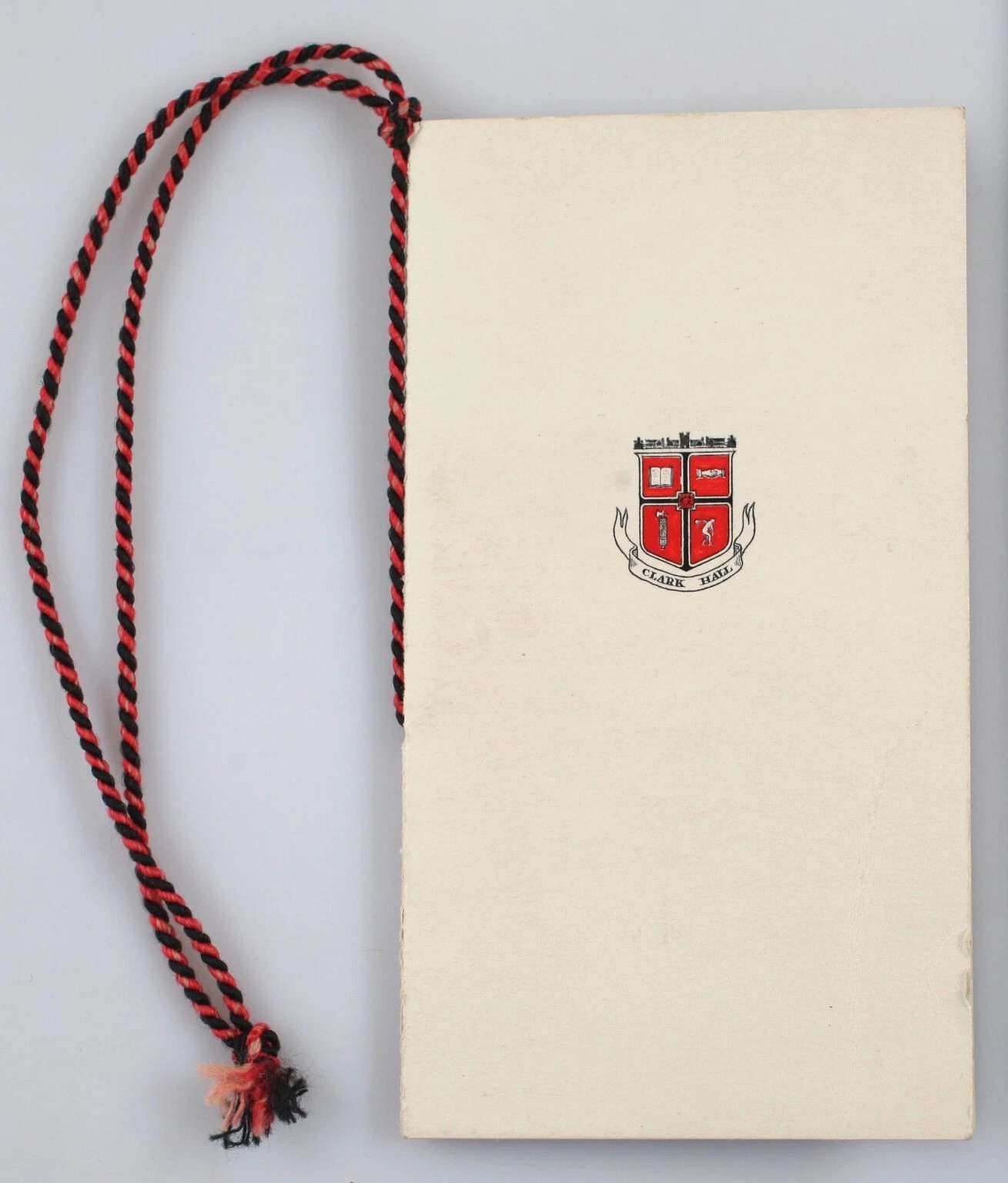
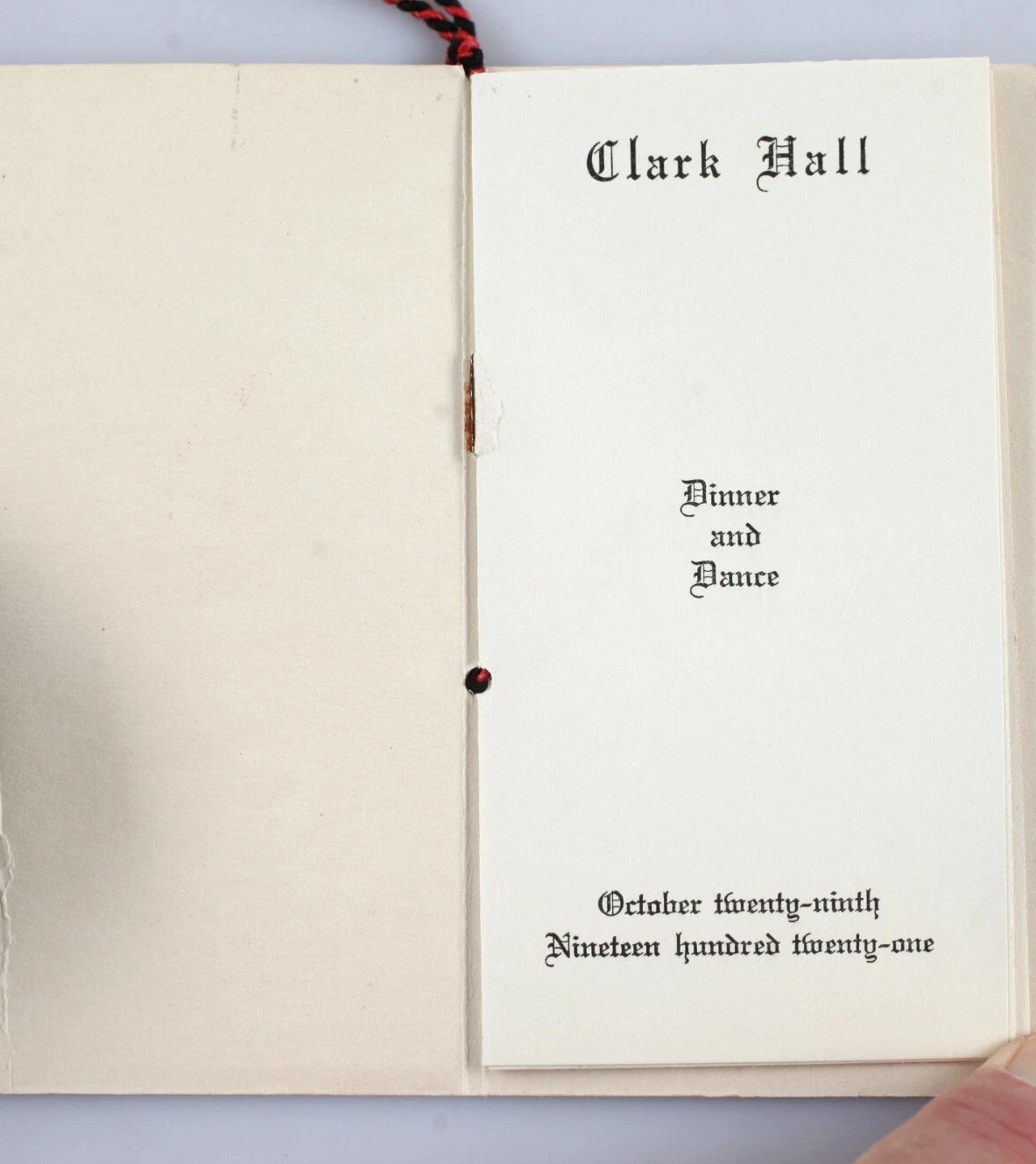
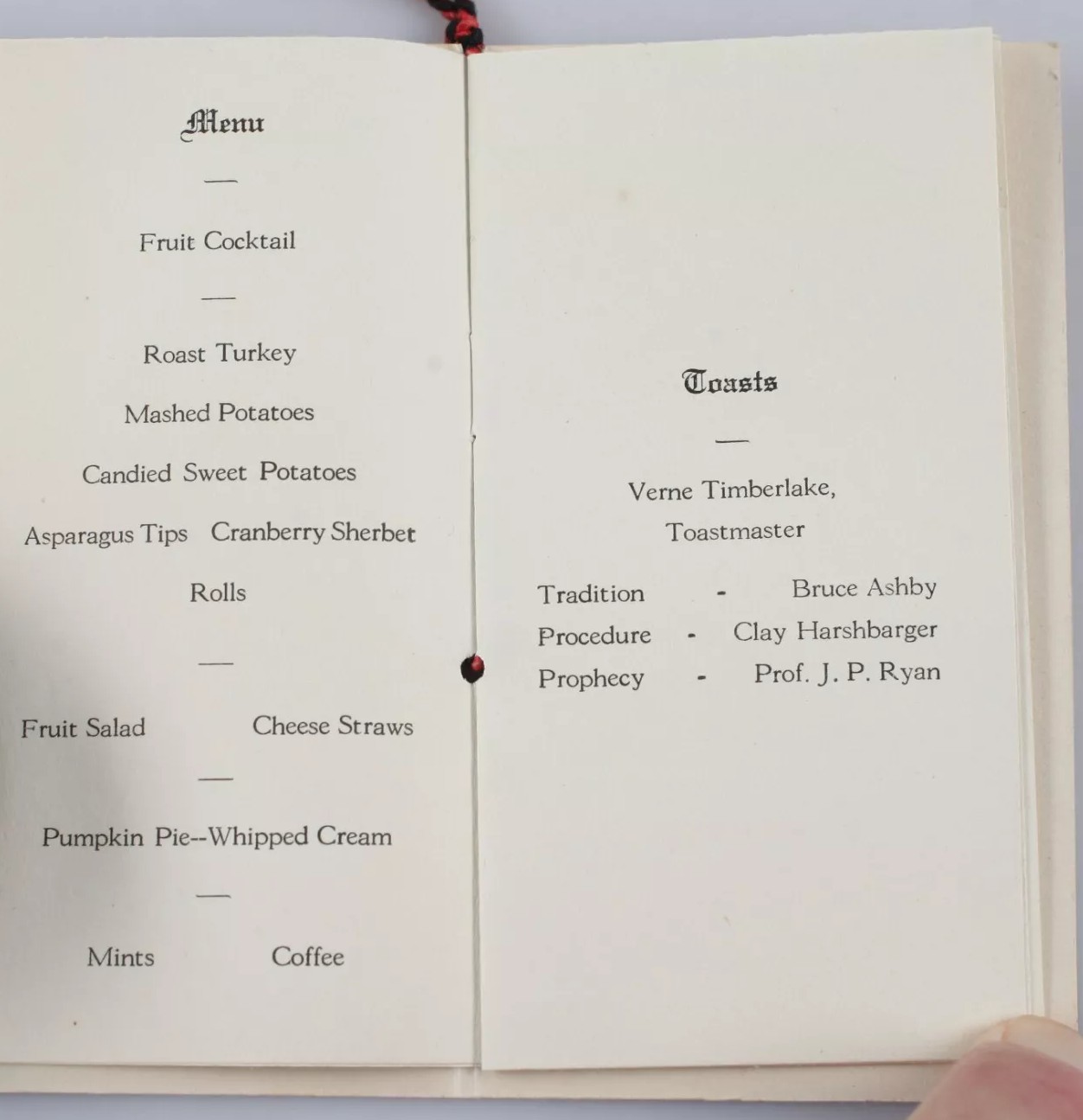
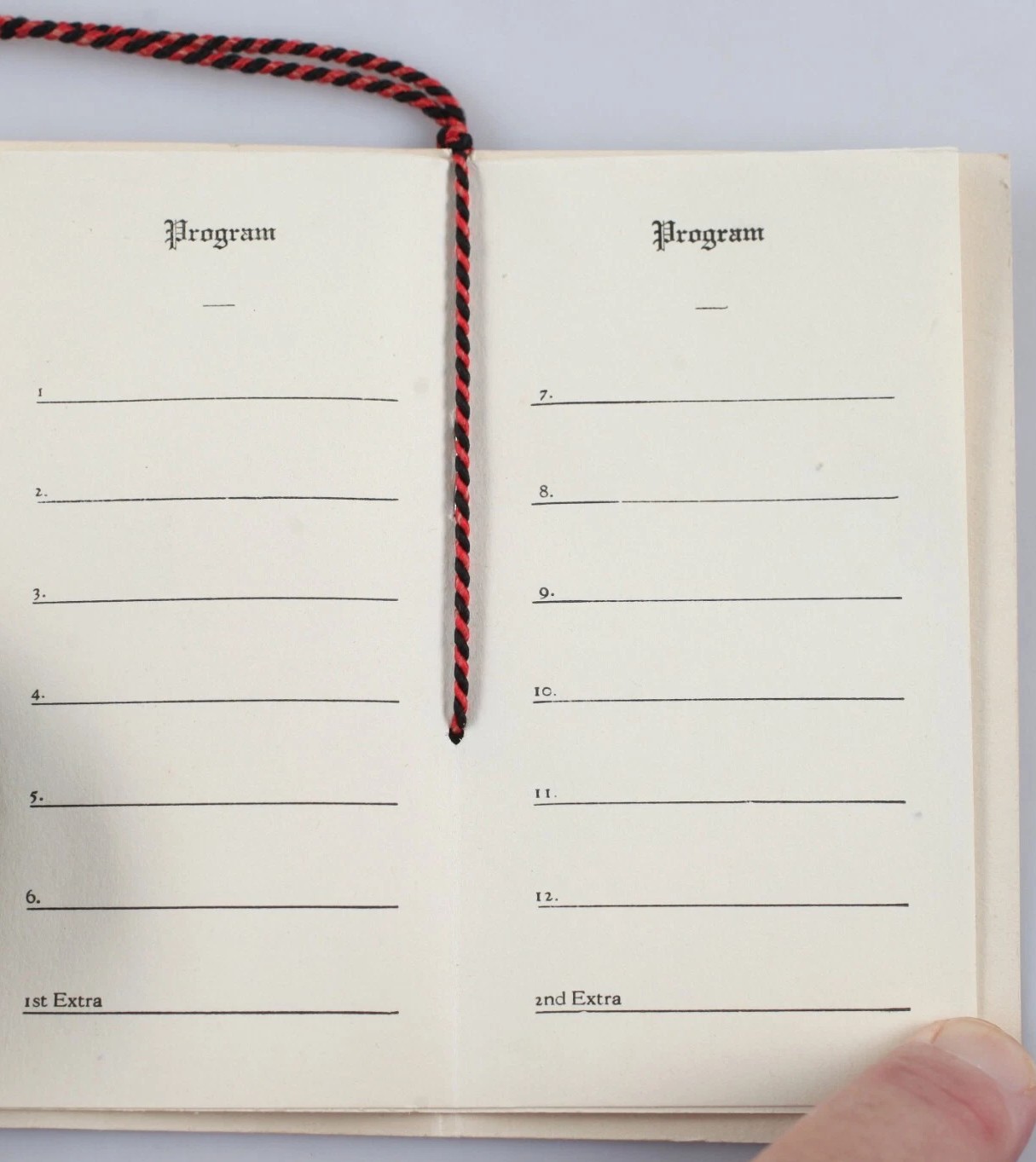
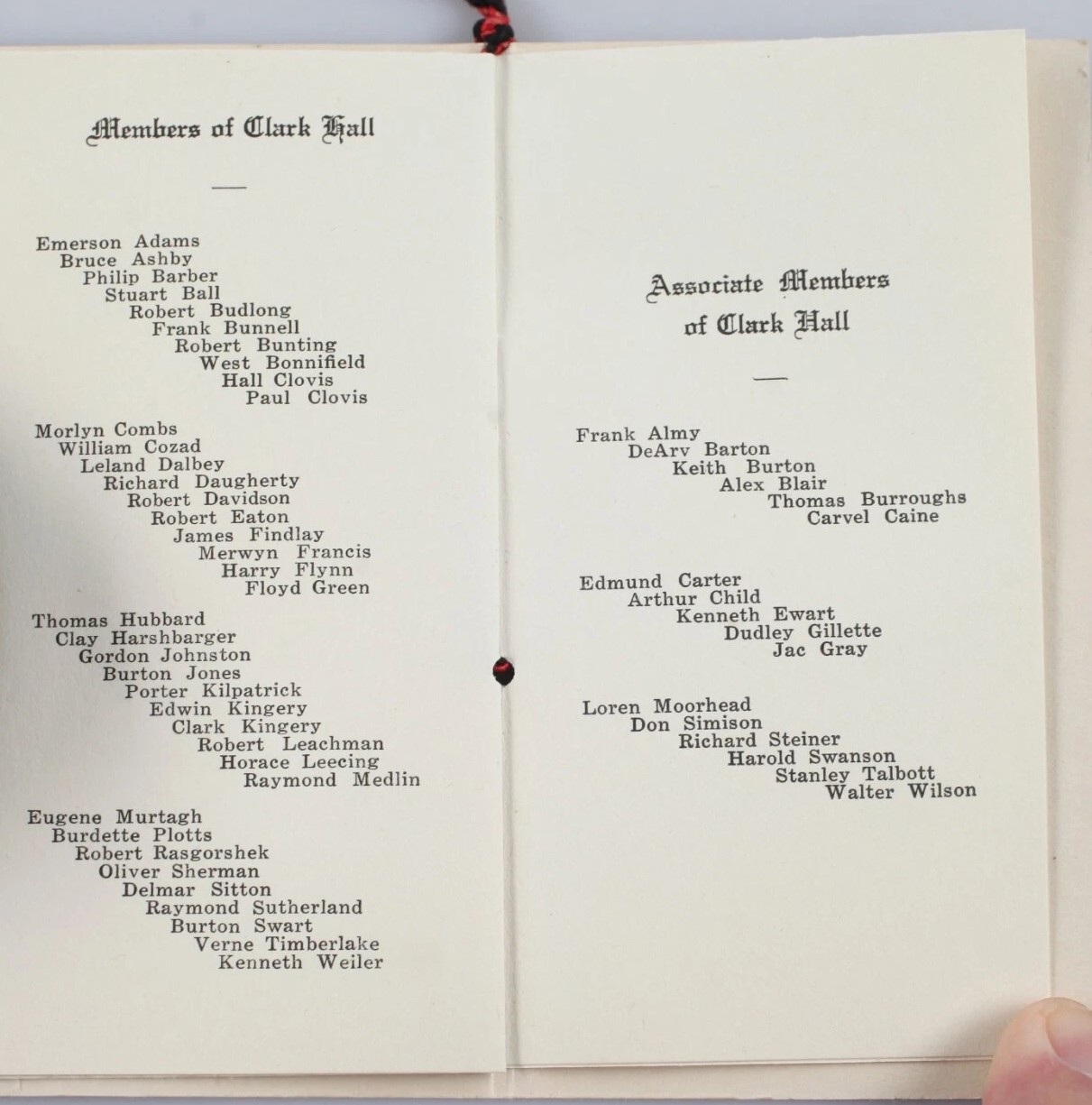
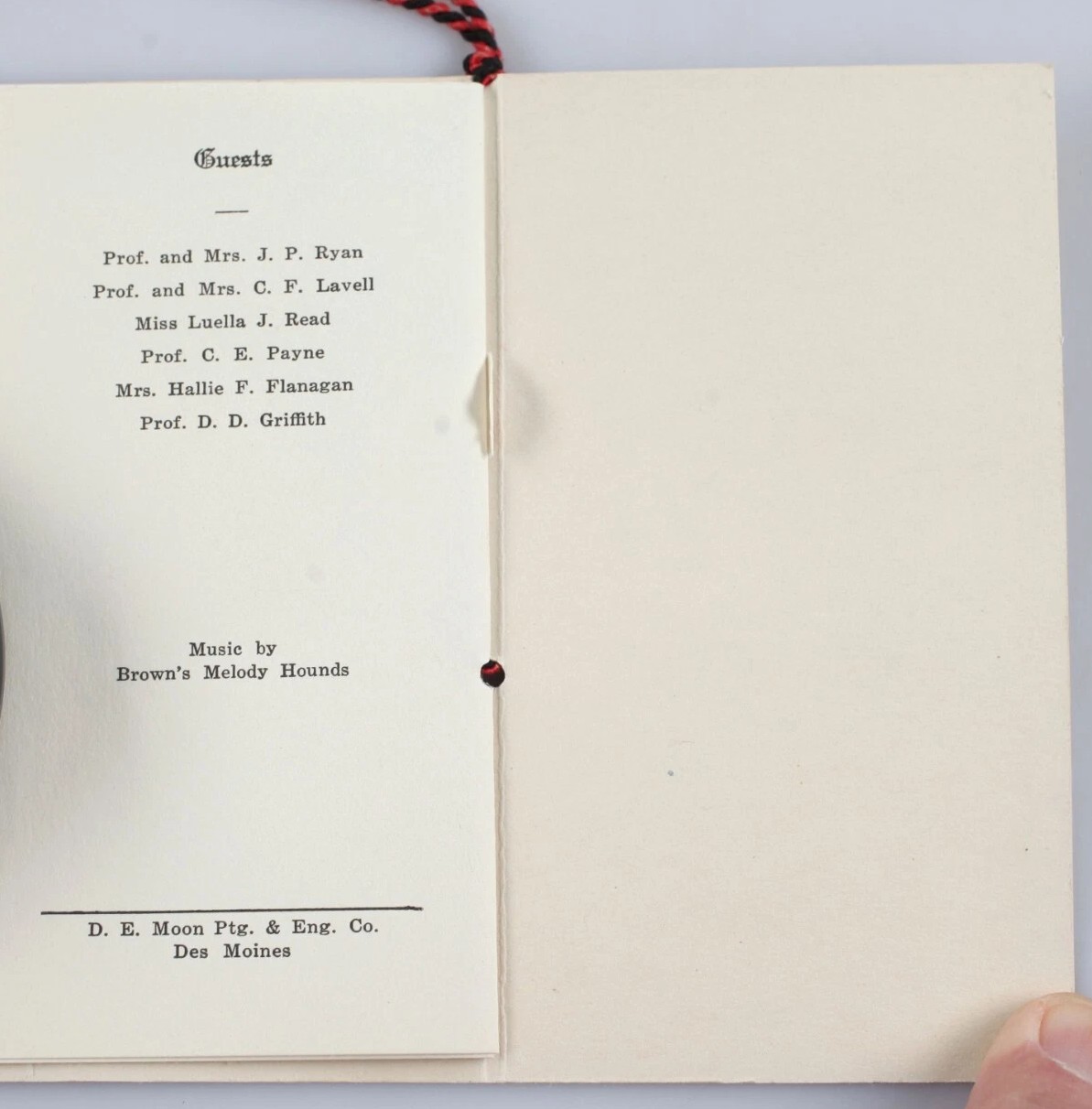
Organized dance has always been an important part of campus life–and even today, Grinnell has a Salsa Club, a Swing Society, a Contra Club, and other organized dances throughout the year. But this Dance Card–from a formal dance and dinner held by the resident’s of Clark Hall in 1921–is a reminder of a time in the early 20th century when more elaborate rituals of dance, courtship, and dining were in place. In addition to their functionality, in terms of lining up successive dance partners, these booklets also provided an important souvenir or keep-sake of these rites of passage on the college calendar.


The Red Cross and the White Lion

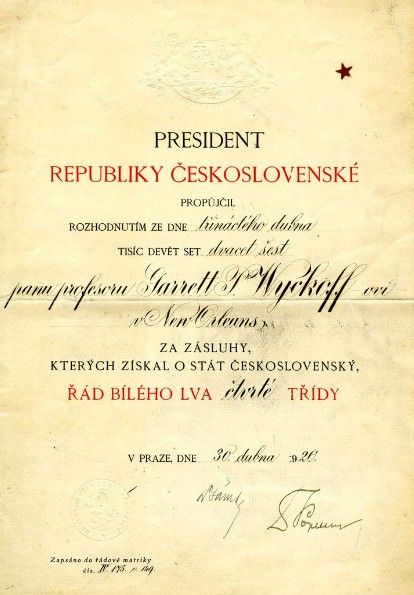
In 1926, Professor Garrett P. Wyckoff (’94) was awarded the Order of the White Lion (čtvrtý třídy, or 4th degree, meaning he was made an “officer” in that order).  The order, which represented Czechoslovakia’s highest civilian honor, was created after World War I to recognize those civilians, particularly foreigners, who had performed extraordinary service to the country. Professor Wyckoff, who taught at Grinnell for a number of years in various departments (including Applied Christianity, Political Science, Economics, and finally, Sociology), had taken leave of teaching duties during World War I to become a field director of the American Red Cross. Wyckoff directed the Gulf division, then moved on to the mid-Atlantic office (not before giving Harry Hopkins, 12′, his first big break by having him appointed as his successor in New Orleans), and then became a commissioner of organization for the League of Red Cross Societies in Geneva, Switzerland. After the war ended, Wyckoff worked for 2 years to establish a branch of the Red Cross in Czechoslovakia, for which he received this honorific award, Řád Bílého lva.


Thanksgiving 1924: The “Electric Gridiron” Comes to Grinnell

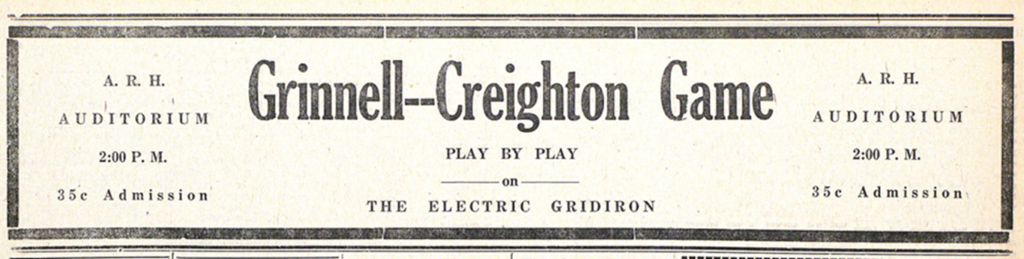
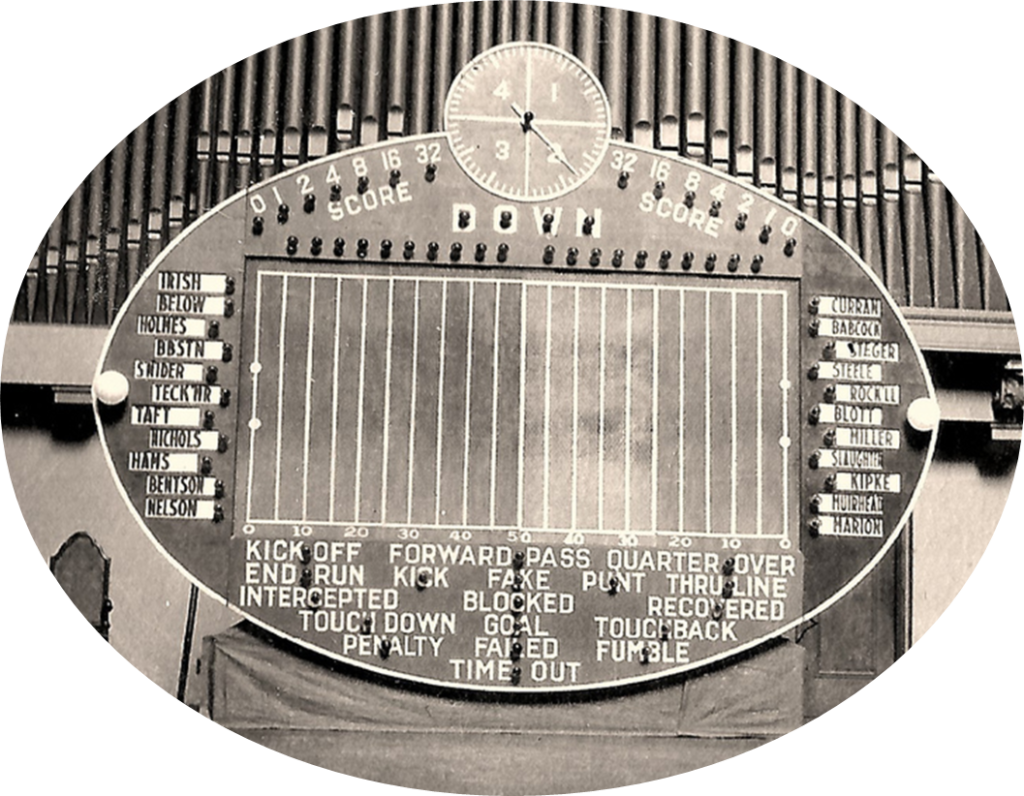
On Thanksgiving Day—100 years ago—many of the Grinnell students who remained on campus gathered in the auditorium of A.R.H to “watch” their football team play the last game of the season against their rival, Creighton, in Omaha. The college marching band assembled in the auditorium, along with Grinnell’s cheerleading squad, but all eyes were on the new “Grid-Graph” machine, which weighed nearly 1,000 pounds, and was designed to visualize remote football matches via instant telegraphy, electrical switches, and lights, so that fans could follow the action in real time, play-by-play (in an era before television coverage, and when even radio broadcasting of games was limited to a few nationally chosen matches). In the 1920s, Grid-Graph became all the rage in college sports, and Grinnell was excited to sign its own contract in 1924 to bring the marvels of modern technology (the “electric gridiron”) to campus.

Photograph of a Grid-Graph “in action” in the 1920s

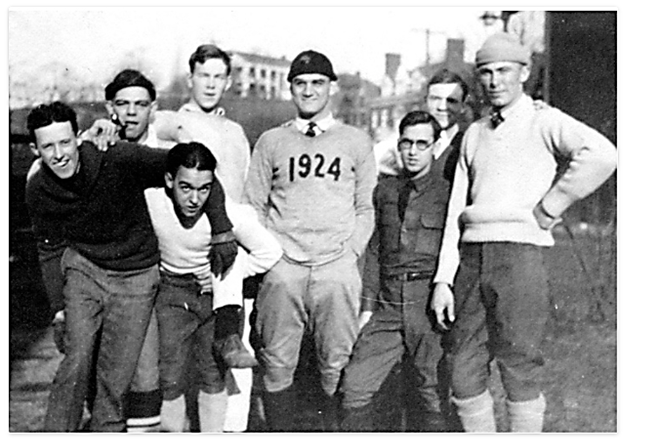
Grinnellians posing before the Thanksgiving match in 1924 (note: the player on the far right is Hap Moran, who went on to a successful career as a starter in the NFL for more than a decade)

Grinnell Gold at the Paris Olympics, July 8, 1924

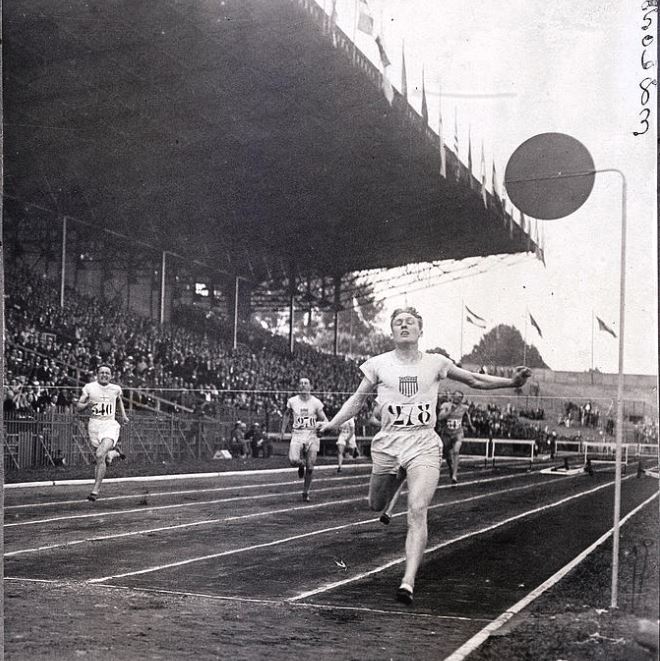
Morgan winning Gold F. Morgan Taylor was one of Grinnell’s most decorated athletes of the 20th century. In the summer of 1924, while a student at Grinnell, Taylor won the U.S. Olympic trials for the 440-yard hurdle, setting a world record time of 52.6 seconds in the process (because a hurdle was knocked down, it did not count as an official world record). At the Paris games, Morgan again came in under 53 seconds, winning a gold medal (pictured here). In all, Morgan won four collegiate (AAU) titles, and two more Olympic bronze medals in 1928 and 1932 (loosing out to the famed British hurdler, Lord Burghley, who was fictionally immortalized in the film, Chariots of Fire). Morgan was widely respected by his colleagues and was elected as the captain of the U.S. track and field team for the 1932 Olympics (Los Angeles) as well as the official flag bearer for team U.S.A (pictured here) one of the highest honors in Olympic sports.

Powered by WordPress & Theme by Anders Norén