Category: 2024-25 Page 1 of 4

Poignant Thanksgiving Letters

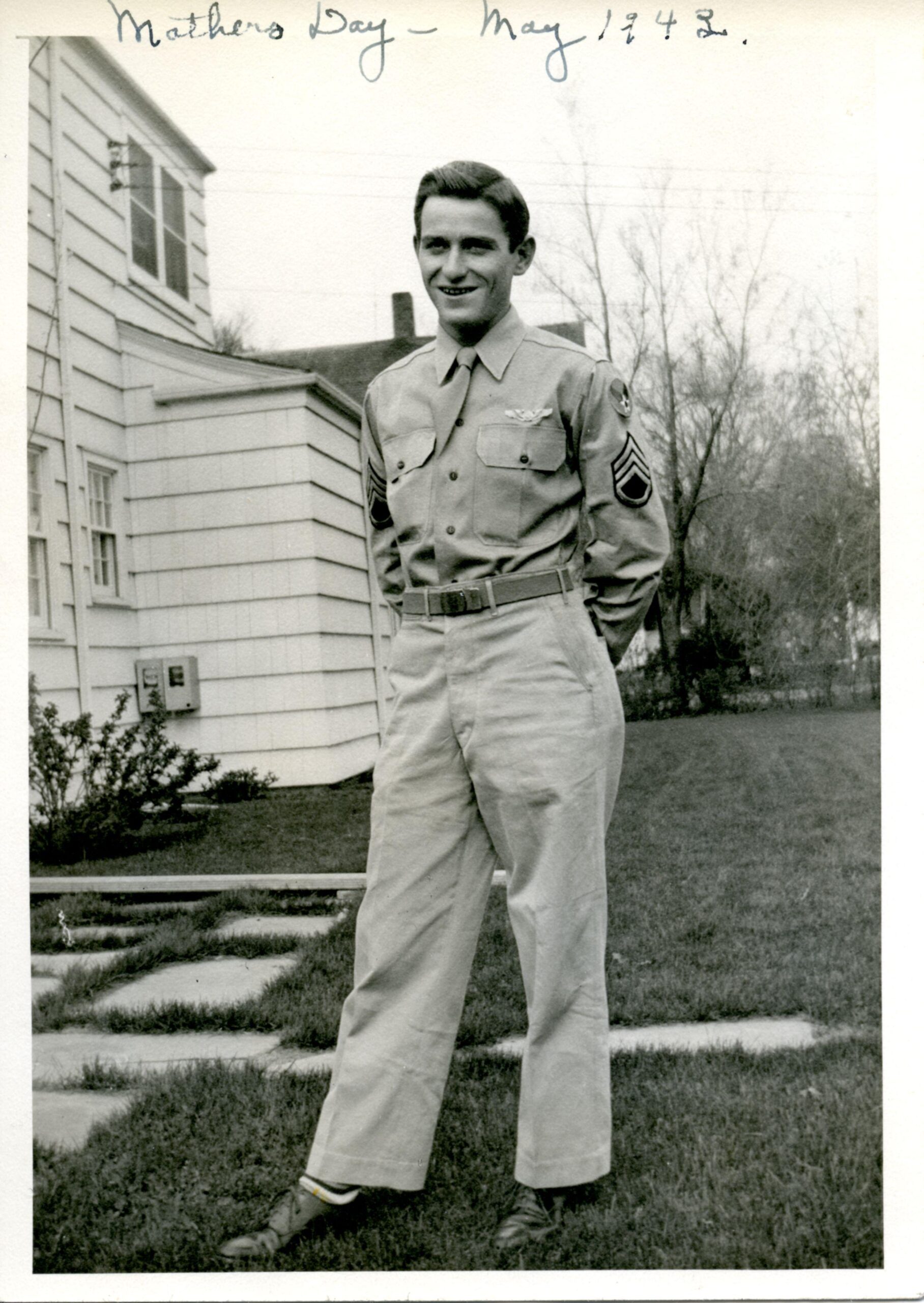
One of the memorable collections housed in the college archives is the Jimmy Ley Collection, which contains a number of letters, photographs, and personal items belonging to Staff Sergeant James J. Ley (ex-’44). Ley decided to leave Grinnell College in 1942 to join the Army Air Corps, eventually becoming a gunner/engineer on B-26 bombers, flying 25 combat missions over occupied Europe. One of the letters to his parents, written November 25, 1942, thanks them for the “Thanksgiving box” they had sent to his training base in Texas: “Of course it was all gone in about fifteen minutes, but my memory still rests with that fine box of goodies.” He went on to explain that Thanksgiving day, itself, would be their last day of training school, and they would ship out the next morning. Reflecting on the holiday, James wrote:

We’re all going to have so much to be thankful for this year. Our health, happiness, the way the war is going, and ever so many other things…I wonder where I’ll be a week from now?

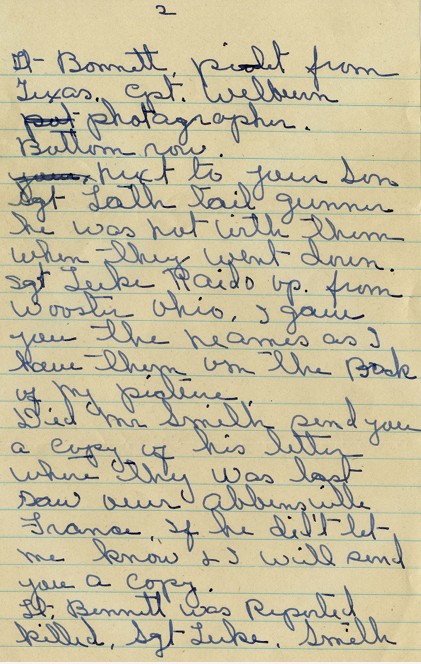
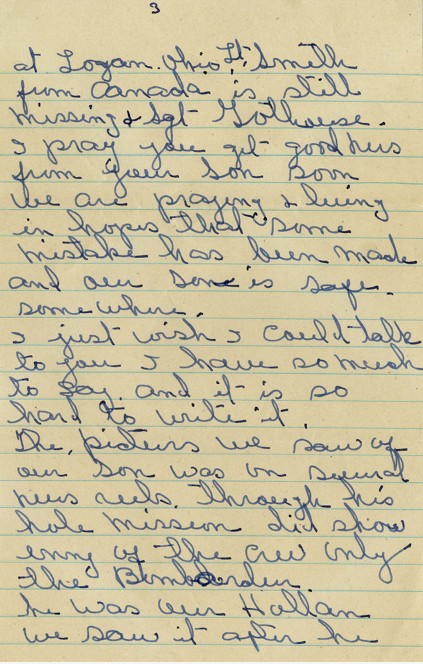
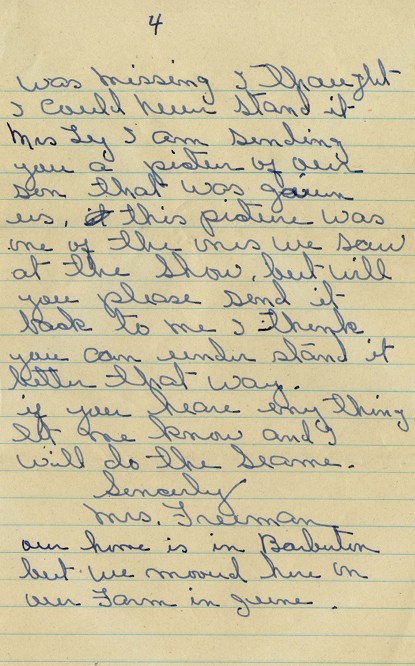
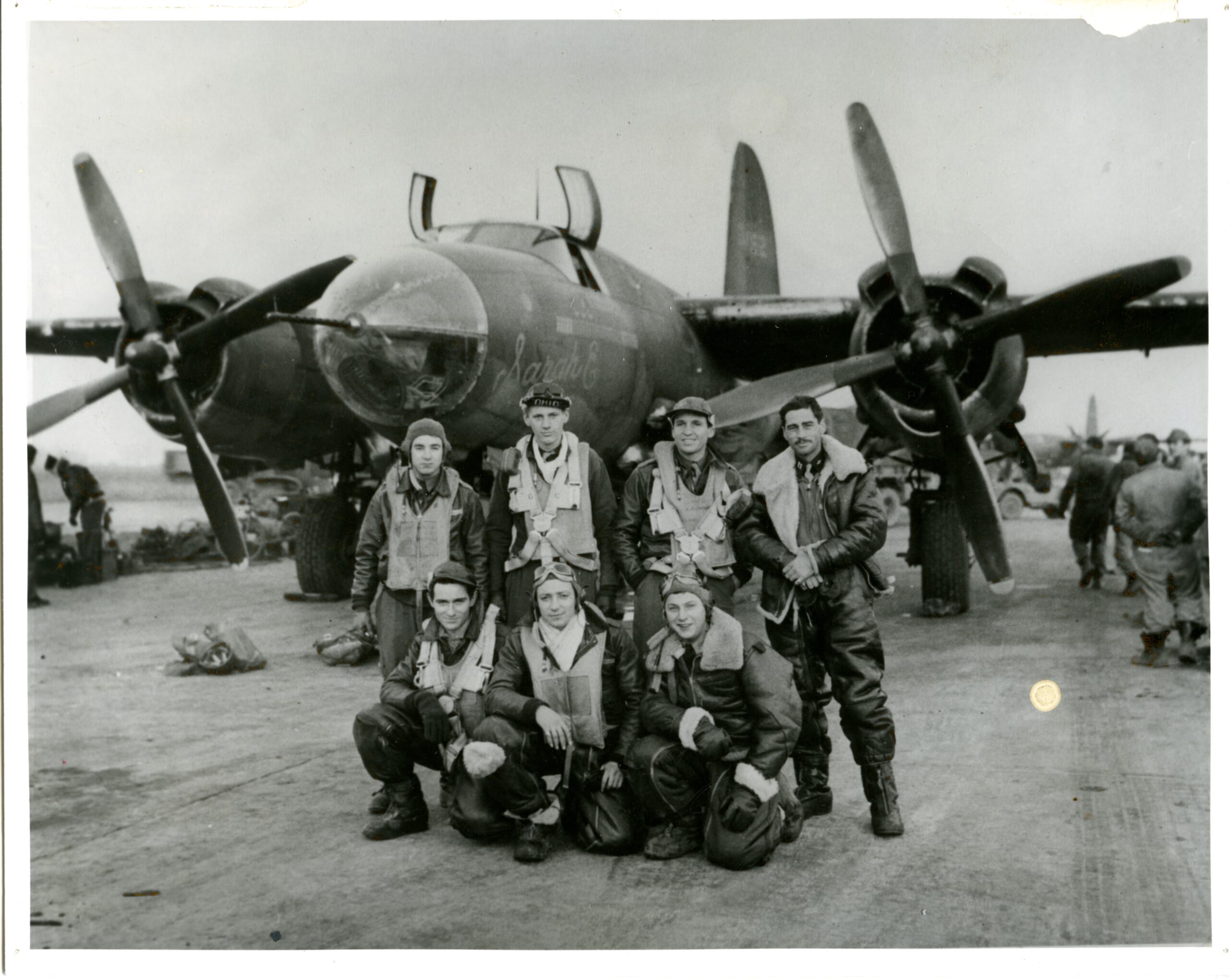
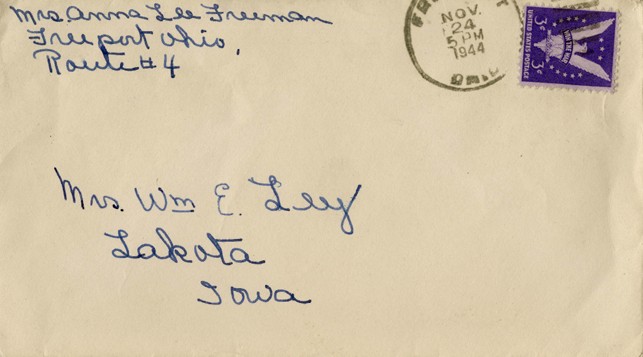
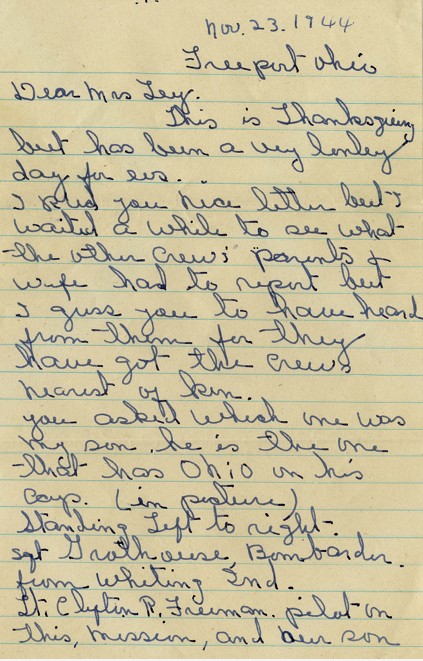
Jimmy ended up in England, assigned to the 451st bombardment Squadron, flying missions across the channel until his plane was shot down on the 29th of February, 1944, over France. The fate of the crew remained unknown for months, but one of the most poignant letters in the collection is a Thanksgiving missive (dated Nov. 23, 1944) from the mother of the plane’s pilot, Mrs. Anna Freeman, to Jimmy’s mother (below). Having learned that her son, Lt. Clifton Freeman, and three other crew members from the plane had been recently confirmed as killed-in-action, she acknowledged the pain of the moment: “This is Thanksgiving, but it has been a very lonely day for us.” She pointed out, however, that 3 of the crew (including Jimmy) were still considered missing-in-action. “I pray you get good news from your Son soon,” and she confessed that “we are praying and living in hopes that some mistake has been made and our son is safe, somewhere.” In her letter, she included a photograph of the B-26 crew, listing each member, their role, and their home town (that original picture, now preserved in the Ley collection, is reproduced below). S/Sgt Jimmy Ley was in the front row, on the left, while Lt. Freeman, was in the back row, second from the left, proudly wearing an Ohio hat (as his mother pointed out). Eleven months later, the War Department declared Jimmy Ley (and the other missing crew members) dead, and posthumously awarded S/Sgt Ley the Distinguished Flying Cross and the Air Medal with Oak Leaf clusters, presented to his family at a funeral service held in his hometown of Lakota, Iowa.


Happy Halloween

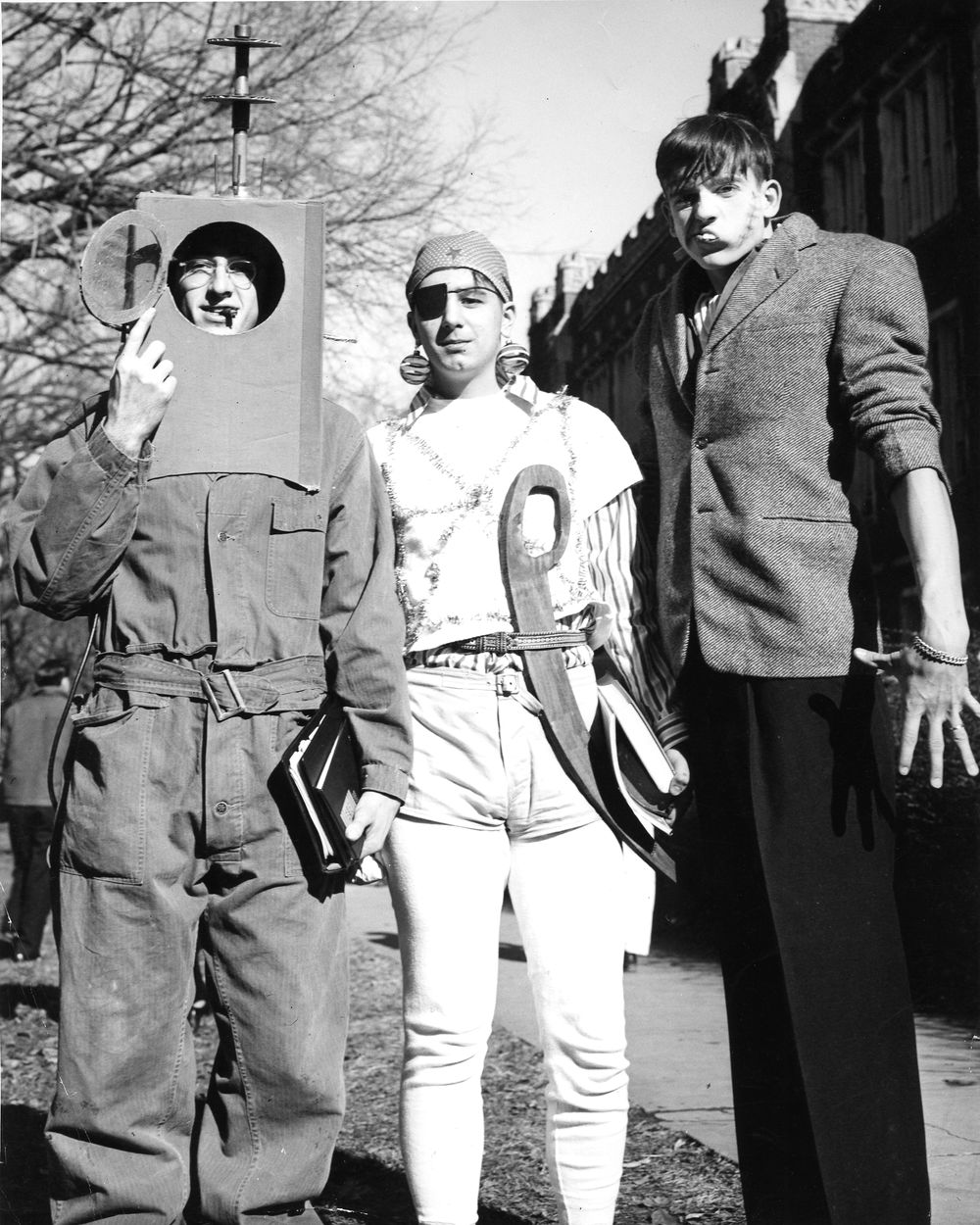
Grinnell first-year students, James Wallrich, Charles Burdick, and George Turner, dress up for a Halloween party in 1948.

The Sparkle of Summer

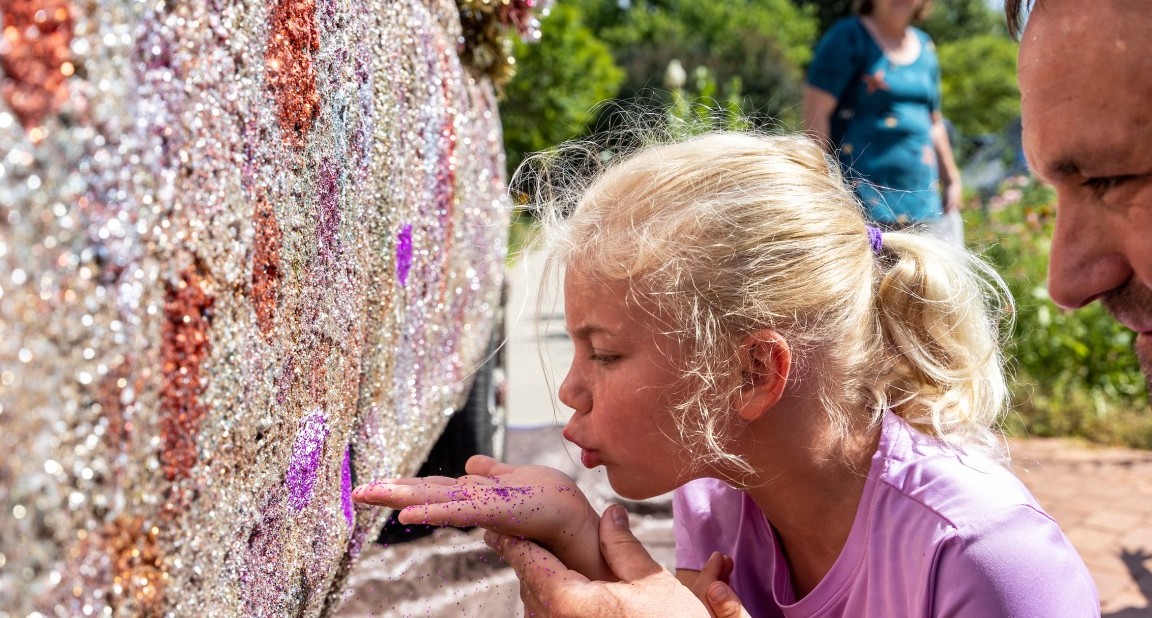
One of the delights of summer, in Grinnell, is seeing Tilly Woodward’s amazing “sparkle truck” around town. The 1989 Ford Ranger, is encrusted with layer-upon-layer of Elmer’s glue and glitter, put there by countless Grinnell children who have participated in the summer art programs sponsored by the Grinnell College Museum of Art and the Drake Community Library (Tilly is the museum’s curator of academic and community outreach).

Enjoy your summer! And don’t forget to make time for some wonder and sparkle while you’re at it.


Remembering Andrew Hsieh (1941-2024)

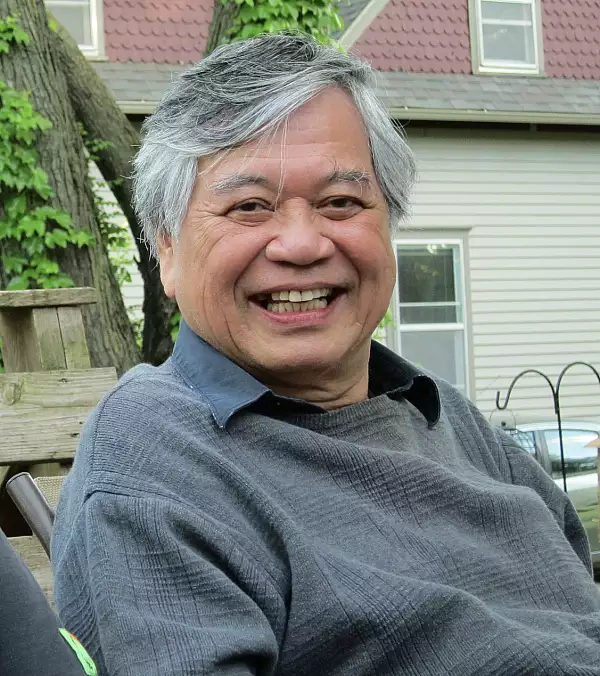
This winter, we learned that Andrew Hsieh, Professor Emeritus in the History department, passed away at his home in California.  There will be a special memorial gathering at reunion, this weekend, for his friends, colleagues, and former students.

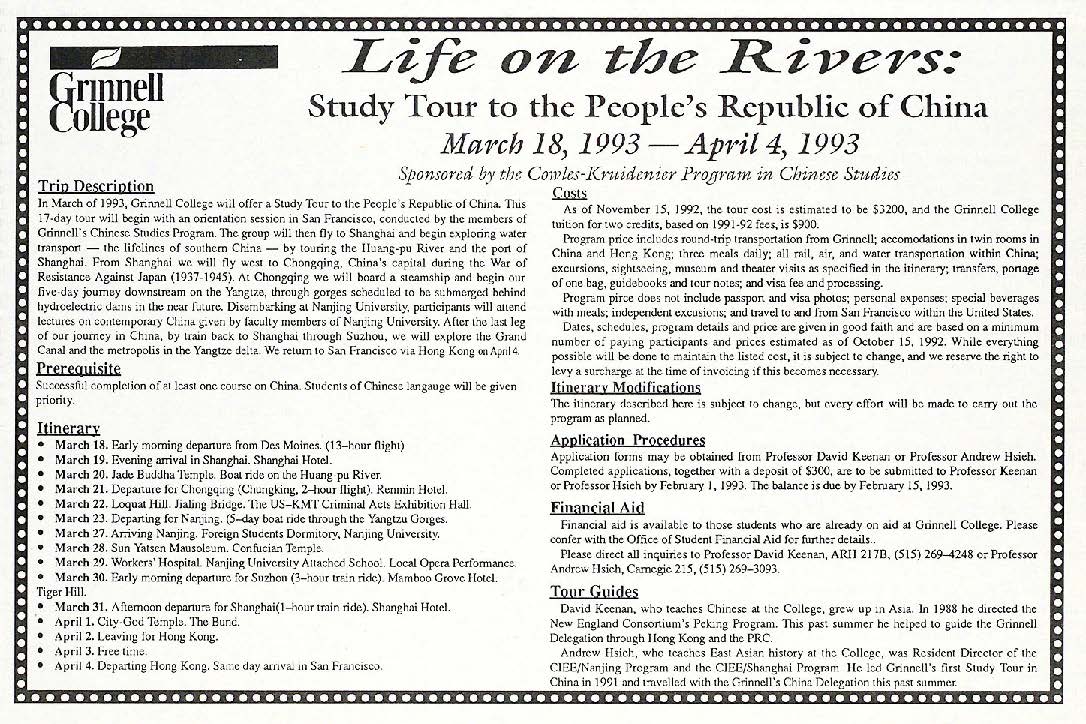
Andrew Hsieh began teaching at Grinnell in the Fall of 1978, having completed a Ph.D in history at Yale University, where he wrote a dissertation about the intellectual world of Tseng Kuo-fan, an important figure who struggled to reconcile Confucianism and the demands of officialdom in the wake of the Taiping Rebellion. Over the years, Prof. Hsieh taught a series of survey courses on Chinese and Japanese History, and played a key role in developing East Asian Studies at the college. In 1985, Prof. Hsieh helped secure a Cowles-Kruidenier grant that financed new coursework, programming, and educational opportunities centered around Chinese Studies. Hsieh organized a five-day conference in 1987, for example, that helped launch this new programming. The conference revolved around questions of reunification between Taiwan and the People’s Republic of China.  Hsieh invited speakers from Hong Kong, China, and Taiwan, alongside academics and policy-makers from the U.S., creating a “list of participants that reads like a Who’s Who in the world of Chinese Studies” (according to the S&B coverage at the time).  In addition to a long list of speakers and conferences, Hsieh used the grant to fund embedded course travel to China, such as the study tour in 1993:

study tour with Hsieh

Hsieh’s management of the grant also led to more sustained curricular changes, such as the hiring of faculty to teach east Asian languages, the creation of a new department of Classical and East Asian Languages (housing these new faculty and courses in the Classics department), and above all, the creation of an exchange program and partnership between Grinnell and Nanjing University, that began in 1987.  That program facilitated not only the exchange of faculty members, but also supported Grinnell students teaching English in the high schools in Nanjing (which would become one element of the “GrinnellCorps” program). Hseih would frequently point to Grinnell’s deep historic ties to China, encouraging students and others to do historical work on the earlier “Grinnell-in-China” program of the 1920s and 1930s.

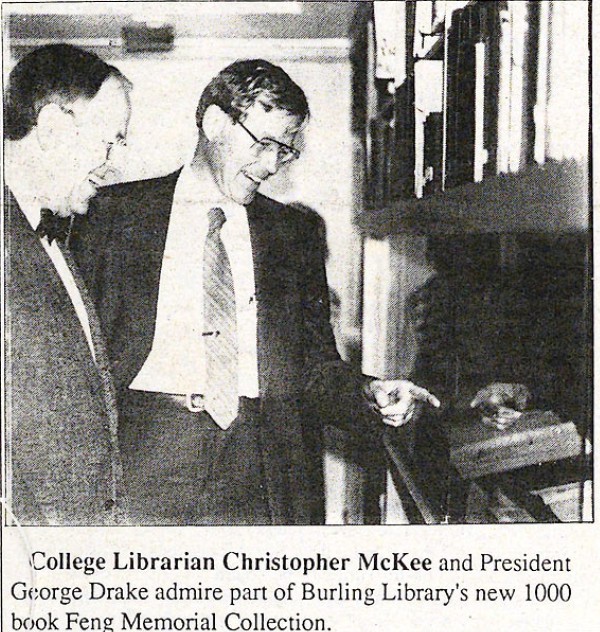
Prof. Hsieh also made a lasting contribution to the college through the Feng Memorial Collection–which contained over a 1,000 carefully chosen Chinese books that Hsieh acquired from collectors throughout China and Hong Kong to serve as a foundation for students studying Chinese language, history, culture and literature. The collection was named after Hsieh’s mother, Yu-Kuei Feng, who came from a long line of scholars going back to the 18th century, and loved books.

Hsieh’s own love of books came through in one of his last major projects, helping to develop a Faulconer Gallery exhibit–“From the Book Forest”–on Chinese print culture that drew from the collections of Nanjing University, the Yangzhou Block Printing Museum, and the C.V. Starr East Asian Library (at UC Berkeley) in 2011.

In his retirement, Prof. Hsieh finished a book The Lius of Shanghaithat explores how this influential family navigated the challenges of war and upheaval over the course of the twentieth century to establish a business dynasty. The book was co-authored with fellow historian Sherman Cochran (of Cornell University) and was published by Harvard University Press.

The Social Gospel goes to Summer School

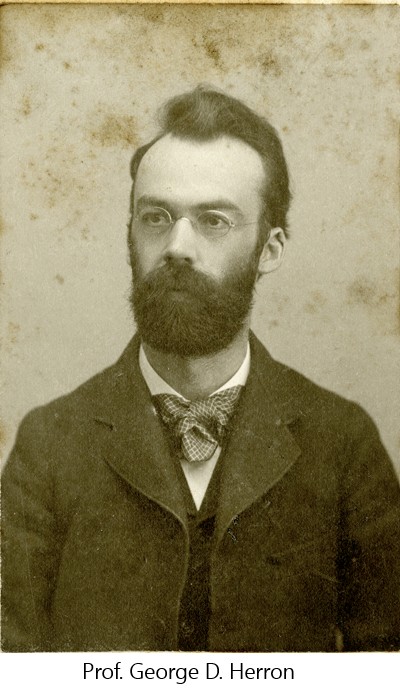
“The usual quiet of the summer vacation was broken this year,” the Scarlet & Black explained in 1894, “by the Summer School…for the systematic study of Christian sociology.” Organized by Prof. George Herron and his department of Applied Christianity, this summer school was meant to help launch the new American Institute of Christian Sociology, that was trying to blend the Social Gospel movement with the emerging fields of Sociology and social work. Intended to be an annual affair, the summer school brought together professors, students and reformers from around the country  to participate in a series of courses, supplemented by free standing lectures. Some of the topics included:

Dr. Coyle: Christ as a Socializer

Dr. Thomas Hall: The Four Laws of the Kingdom

Edward Neally: The Ethics of Jesus in the Legal Profession

Prof. John R. Commons: The Distribution of Wealth

Prof. Richard T. Ely, Private Property: A Social Trust

Josiah Strong: Methods of the New Era

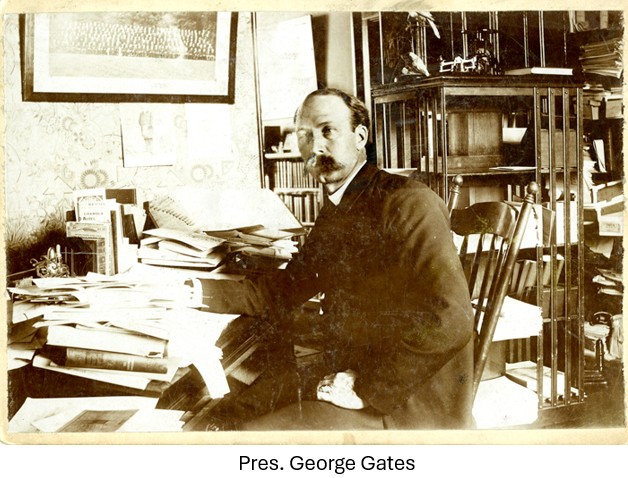
There were also lectures given by Grinnellians: President George Gates, Prof. James Macy, and Prof. Herron.

Covid Flashback: History Table, 2020-2021


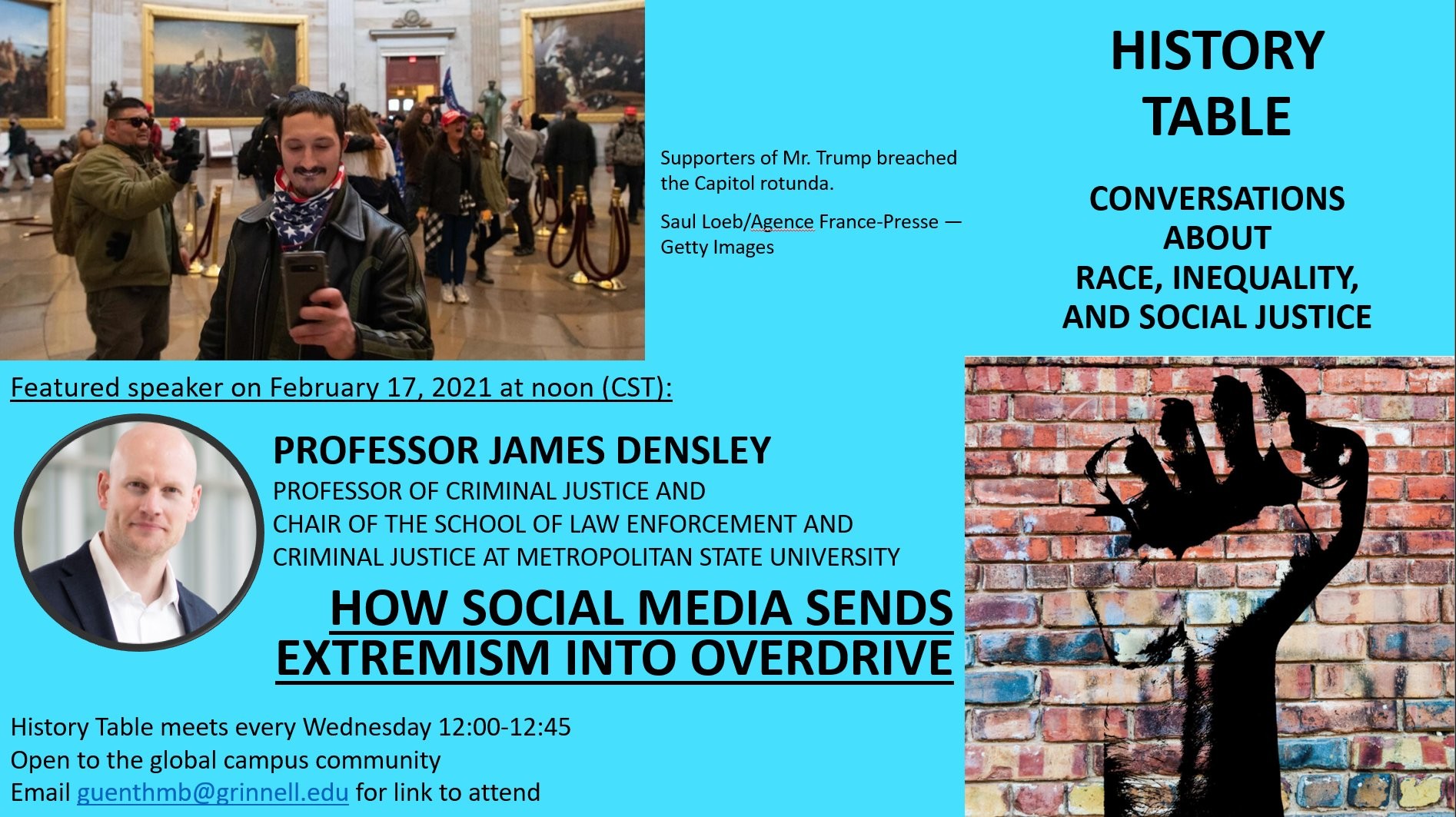
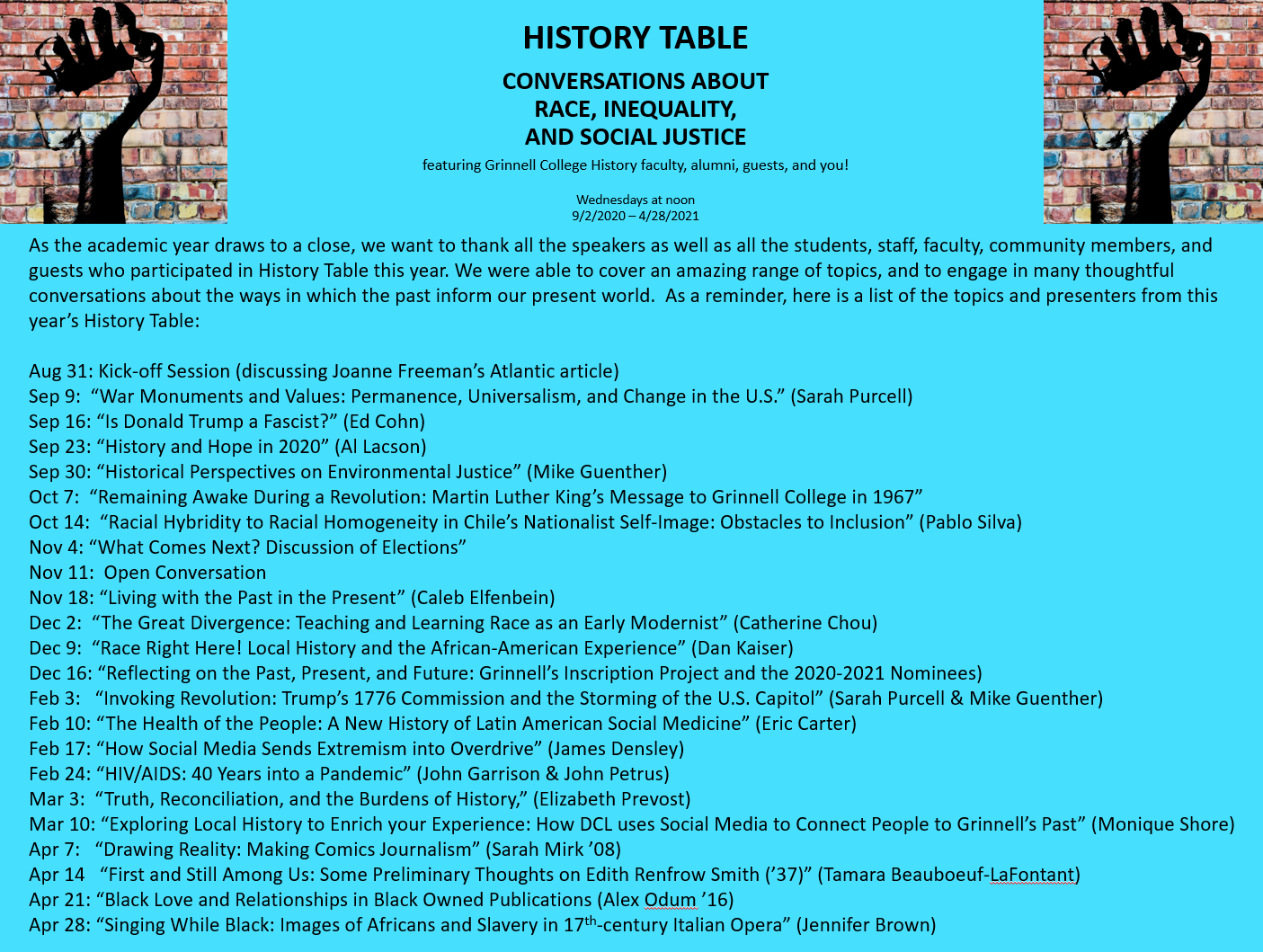
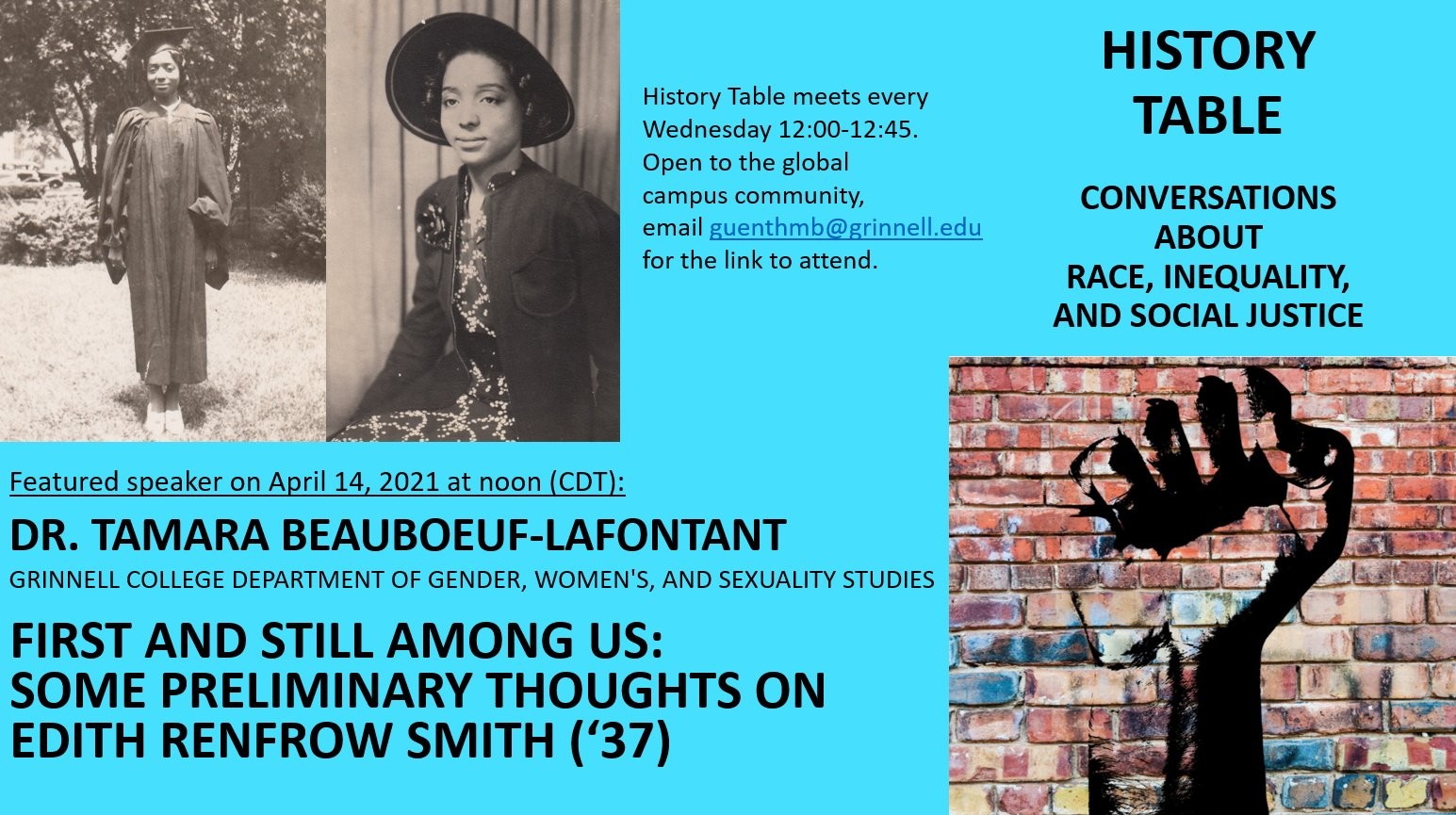
With a few exceptions, virtually all of the classes and activities on campus were held online during the 2020-2021 academic year because of Covid. The History department, therefore, decided to experiment with running an online “History Table,” that was held over the noon hour each week of the semester, in which students, faculty, staff, alumni, and community members were invited to zoom in for a short (10-15 minute) presentation, followed by a half hour of group discussion about the topic. The overarching theme for the year was “Conversations about Race, Inequality, and Social Justice,” with each “presenter” exploring one facet of this topic that connected to their own teaching, research, or public advocacy, and then leading the subsequent conversation among the group.  Like many experiments, it was a bit chaotic, a bit exhilarating, and a bit exhausting, but definitely worthwhile.

Above, is the poster from the February 17th session led by James Densley, who helped create The Violence Project, alongside Grinnell alumna, and professor of criminology, Jillian Peterson ’03. Their co-authored book, The Violence Project: How to Stop a Mass Shooting, was released a few months later and reshaped the national conversation on gun violence and gun control (we were immensely lucky to have James share this work with us, and are grateful to our departmental assistant that year, Mary Dillion, ’22, who worked on the Violence Project and helped make this event happen). There were many other special moments like this: you can see the full line up below). But we also want to highlight the poster from the April 14th session, in which Dr. Tamara Beauboeuf-LaFontant and Feven Getachew, ’24, led a discussion about the beginning stages of their work on the history of Edith Renfrow Smith ’37, which ended up having such a profound impact on Grinnell’s collective memory. Some good things did come out of Covid…


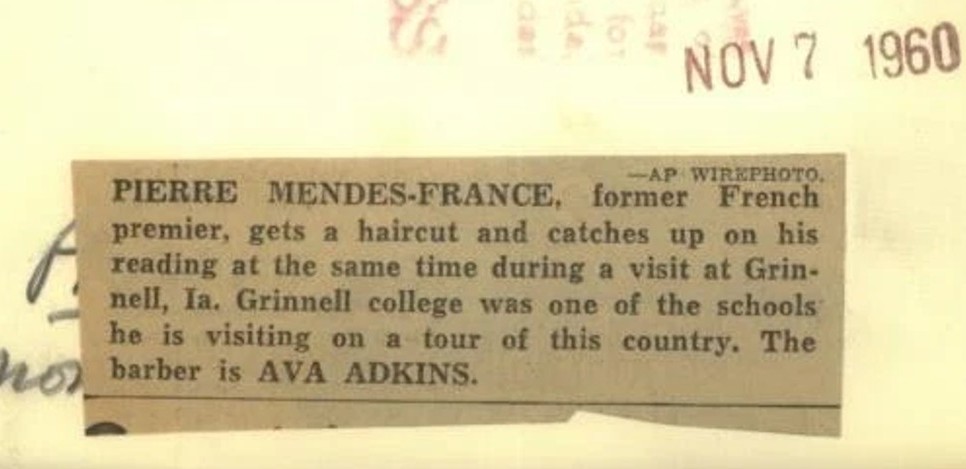
Rosenfield Lecturer (1960): Pierre Mendès France

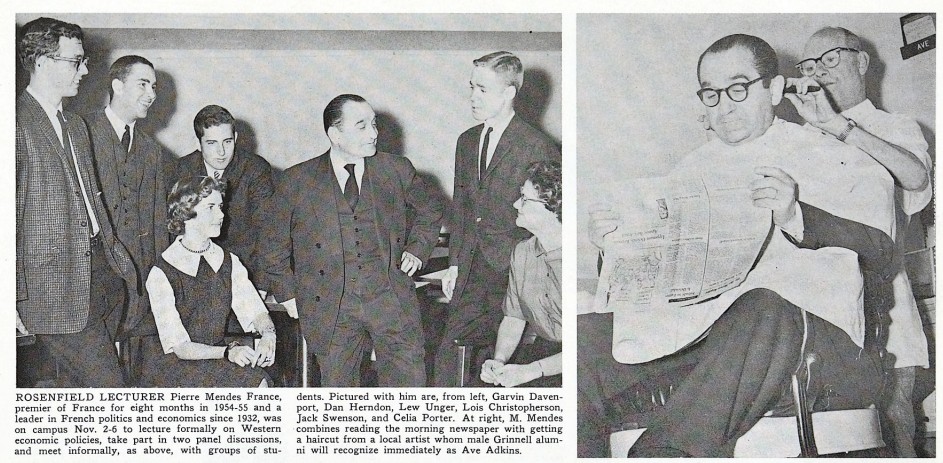
For 5 days in the the Fall of 1960, Pierre Mendès France, the one-time Premier of France and noted expert on international economics, was a resident of Grinnell, spending the week giving a series of lectures, talks, class visits, dinners, getting a haircut, etc., all leading up to his formal Rosenfield Lecture in Herrick Chapel, entitled “Can the West Retool its Economic Model?”

Mendès France had played a prominent role in the Free French government, in exile in London, and represented France at the Breton Woods Conference (where much of the post-war financial and economic order was established), leading to his appointment as Minister of the French economy by de Gaulle.  Described by the New York Times as “a towering figure of the French left for more than two decades,” Mendès France eventually broke with de Gaulle and became a leading figure in the opposition. A critic of French imperial entanglements in East Asia and North Africa, Mendès France was elected Premier in 1954, in the wake of the stinging defeat of French forces at Dien Bien Phu, and brokered France’s withdrawal from Vietnam.

Having Mendès France in Grinnell was seen as a notable milestone for the Rosenfield Lectureship–an endowed program established by Rose Frankel Rosenfield in 1934.  Rose Rosenfield had played a prominent role in civic affairs in Des Moines, particularly active in the women’s suffrage movement. Two of her children, Louise Frankel Rosenfield Noun and Joe Rosenfield, would both attend Grinnell College and play prominent roles in shaping the institution.

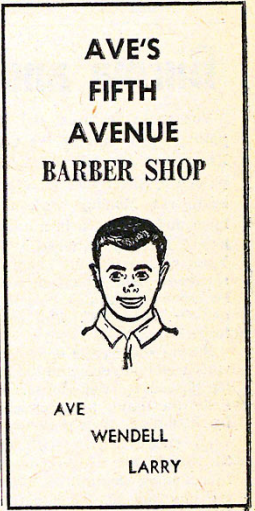
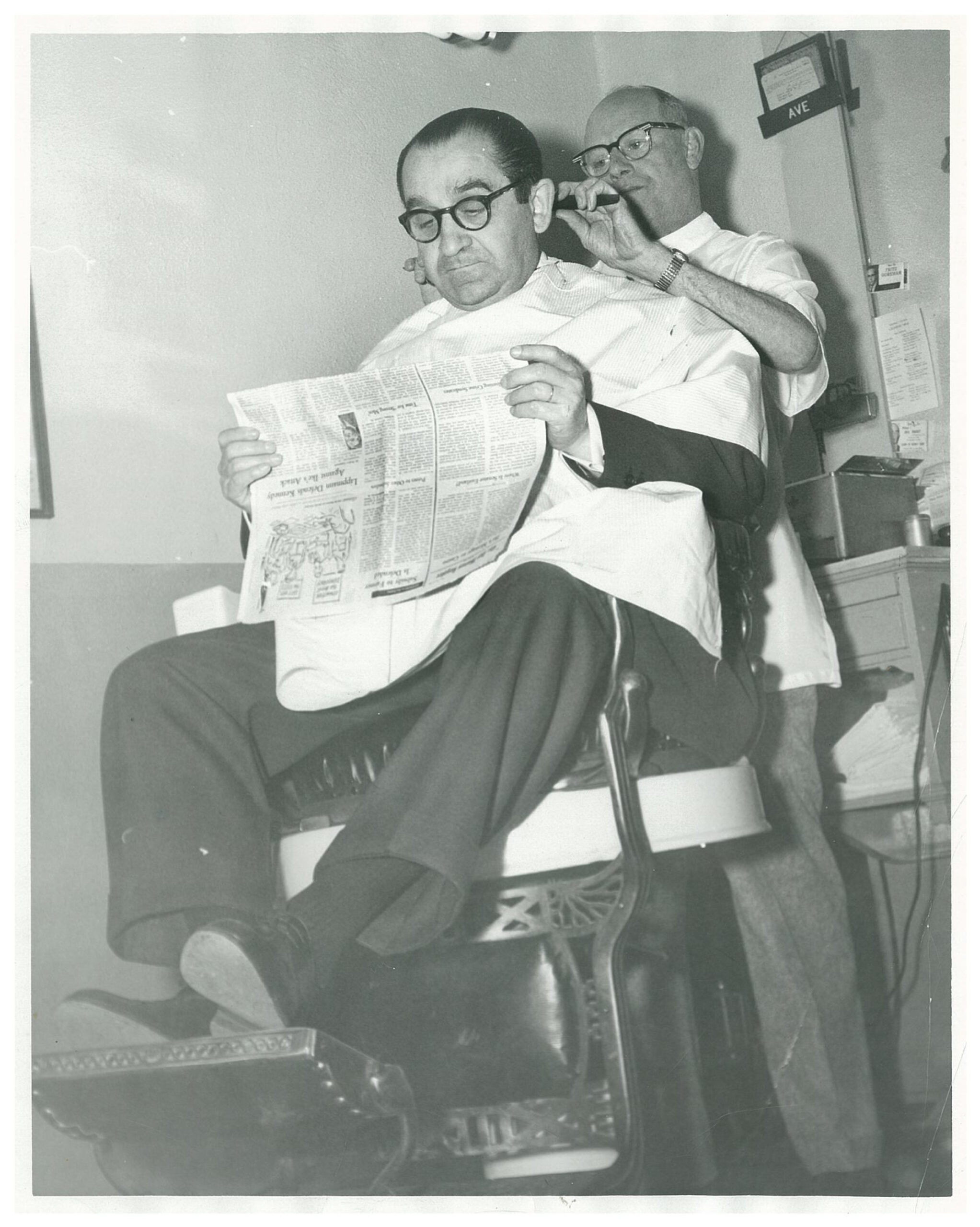
The photo of Mendès France (in the barber’s chair)  struck a chord both locally and nationally. On a local level, Grinnellians (and alumni) appreciated seeing a French premier getting his hair cut by Avery (Ave) Adkins, whose barber shop was a local institution. His son recalled that waves of college students and locals who got their hair cut at “Ave’s on Fifth Ave” from the 1930s to the late 1960s, many of whom would keep in touch for years, writing letters to his father, or swinging by to visit when they returned to Grinnell for reunions or family visits. Nationally, the photo was picked up by the AP Wire service, and appeared in newspapers around the country. It provided a kind of Rockwellesque tableau that seemed to strike a chord with audiences.

The Visual Showmanship of J.B.L. Noel

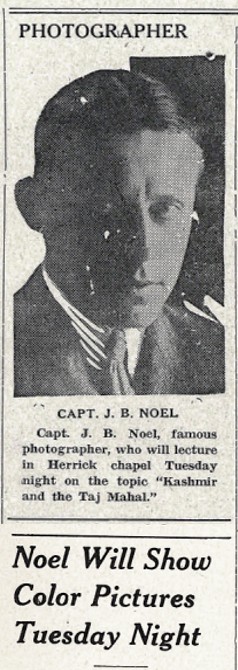
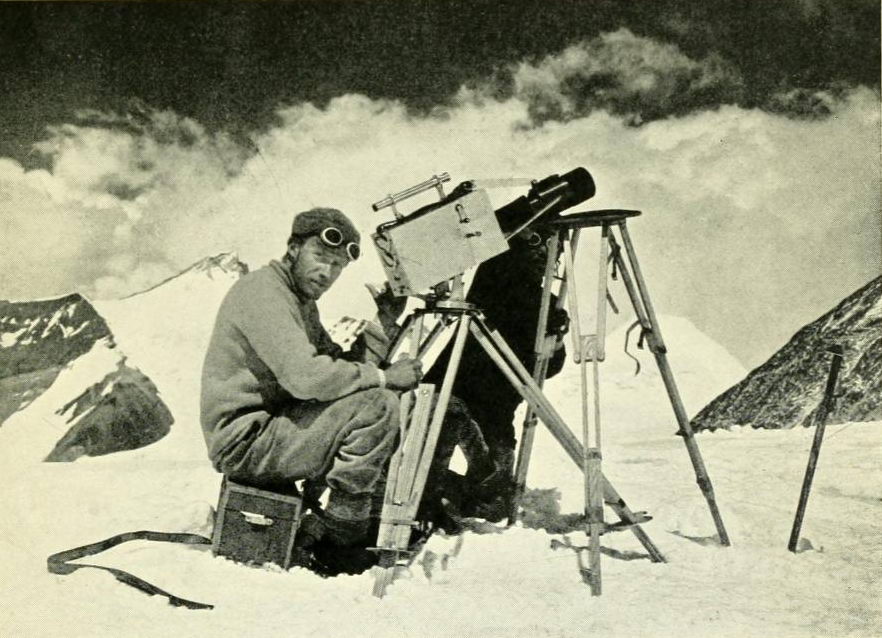
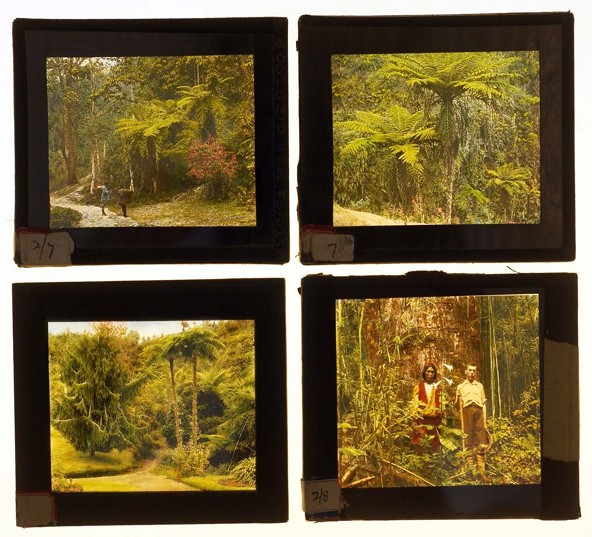
The use of visual images in talks and lectures became more popular by the 1910s and 1920s, when one encounters increasing references to slides, film, or large illustrations appearing in advertisements for campus events. But Grinnellenians got to see the cutting edge of this technology in 1936, when the famed photographer and cinematographer, Capt. John Baptist Lucius Noel came to Herrick Chapel to present colored slides and films from his travels in South Asia.  Noel had been the official photographer on the 1924 British Mount Everest expedition, which ended in tragedy, and a subsequent failed expedition two years later.  His work was developed into two films, Climbing Mount Everest (1922) and The Epic of Everest (1924).  In the early 1930s, he convinced Harvard University to fund an expedition through portions of Kashmir, Tibet, and Northern India–a trip that was captured in a short film, The Land of Shalimar and a series of photographic slides–both of which formed the basis for his Grinnell lecture, part of a larger North American lecture tour.

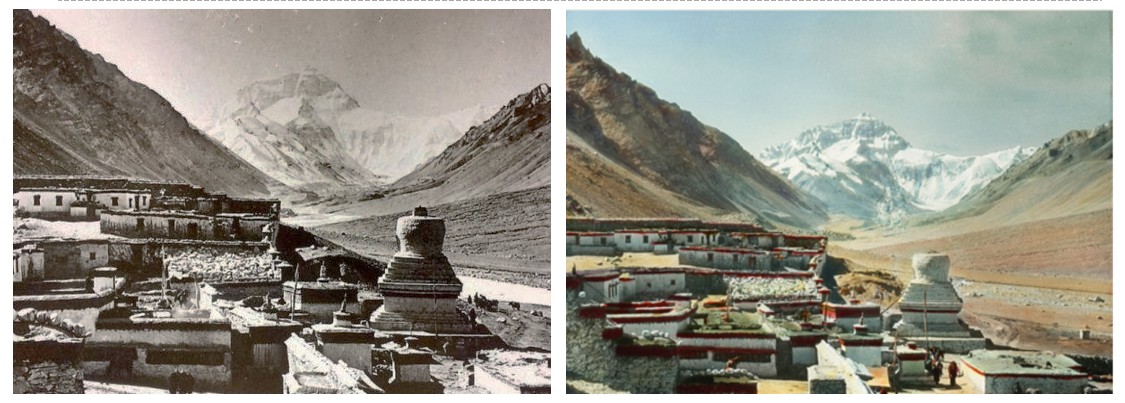
Contemporaries, as well as later scholars, consider Noel an important innovator in the development of new techniques for coloring slides and film. In particular, he developed a “Colour Dissolvograph” which allowed him to enhance the projection of hand tinted glass slides.  One reviewer exclaimed: “The method of projection which is special to this particular process merges scene into scene with all the Kaleidoscopic attraction that may rightly be called transformation.” Below is one example of a carefully colored slide that Noel used (the larger collection is preserved at the Royal Geographic Society, although no surviving version of his Dissolvograph exists, sadly).

Spring Cleaning

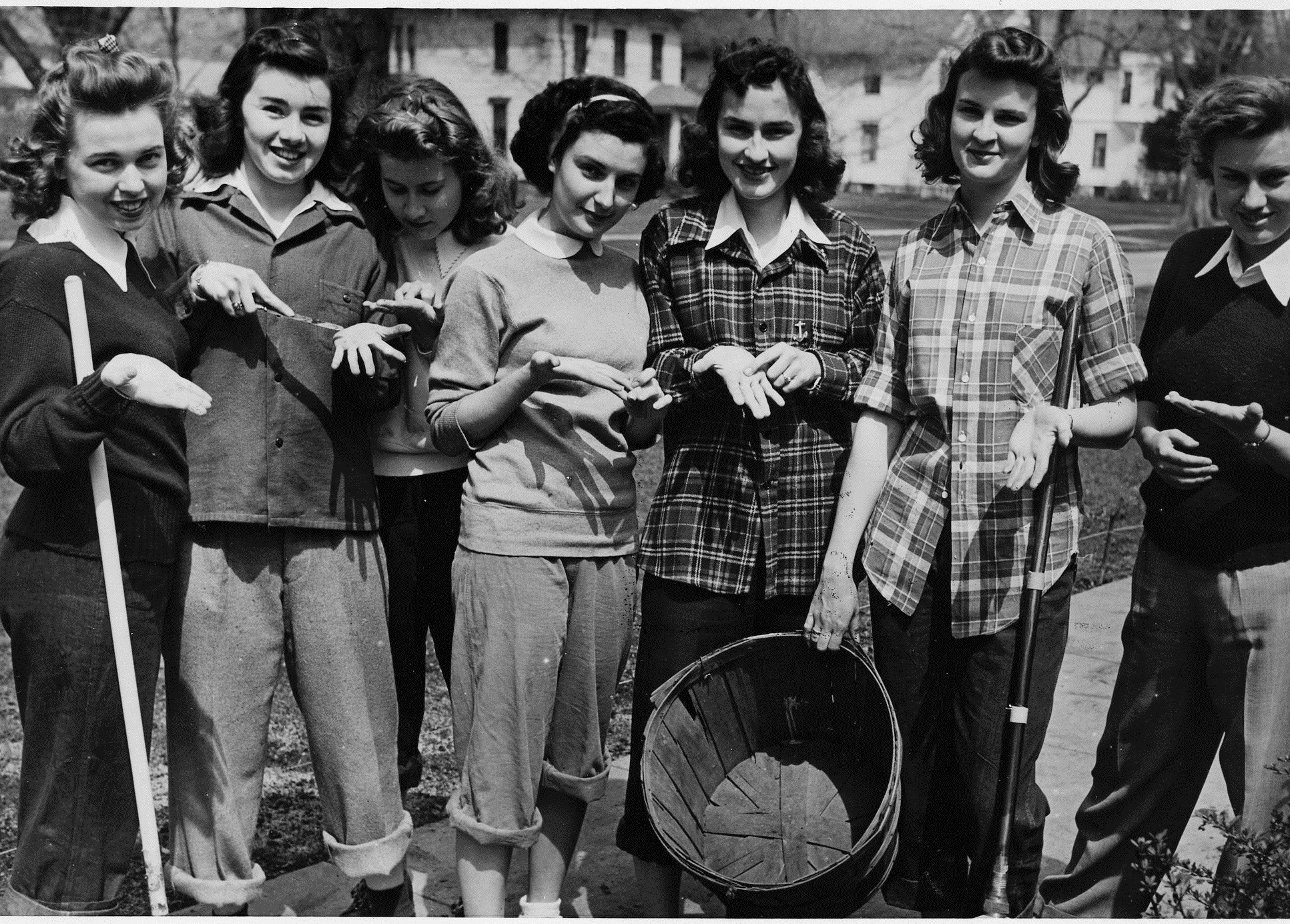
A group of Grinnell students show off their calloused hands, in May of 1948, after spending the morning taking part in the campus-wide spring cleaning that took place each year as part of the elaborate “Spring Day” festivities. Students washed windows, scrubbed facades, cleaned up the loggia, white-washed the campus signs, removed leaves, hauled off brush, and tended to the college garden. Each year, from 1940 until the mid-1960s, a student and faculty committee would select a date for the Spring Day activities, cancelling class so that all students, faculty, and staff could participate.

Grinnell Dance Cards

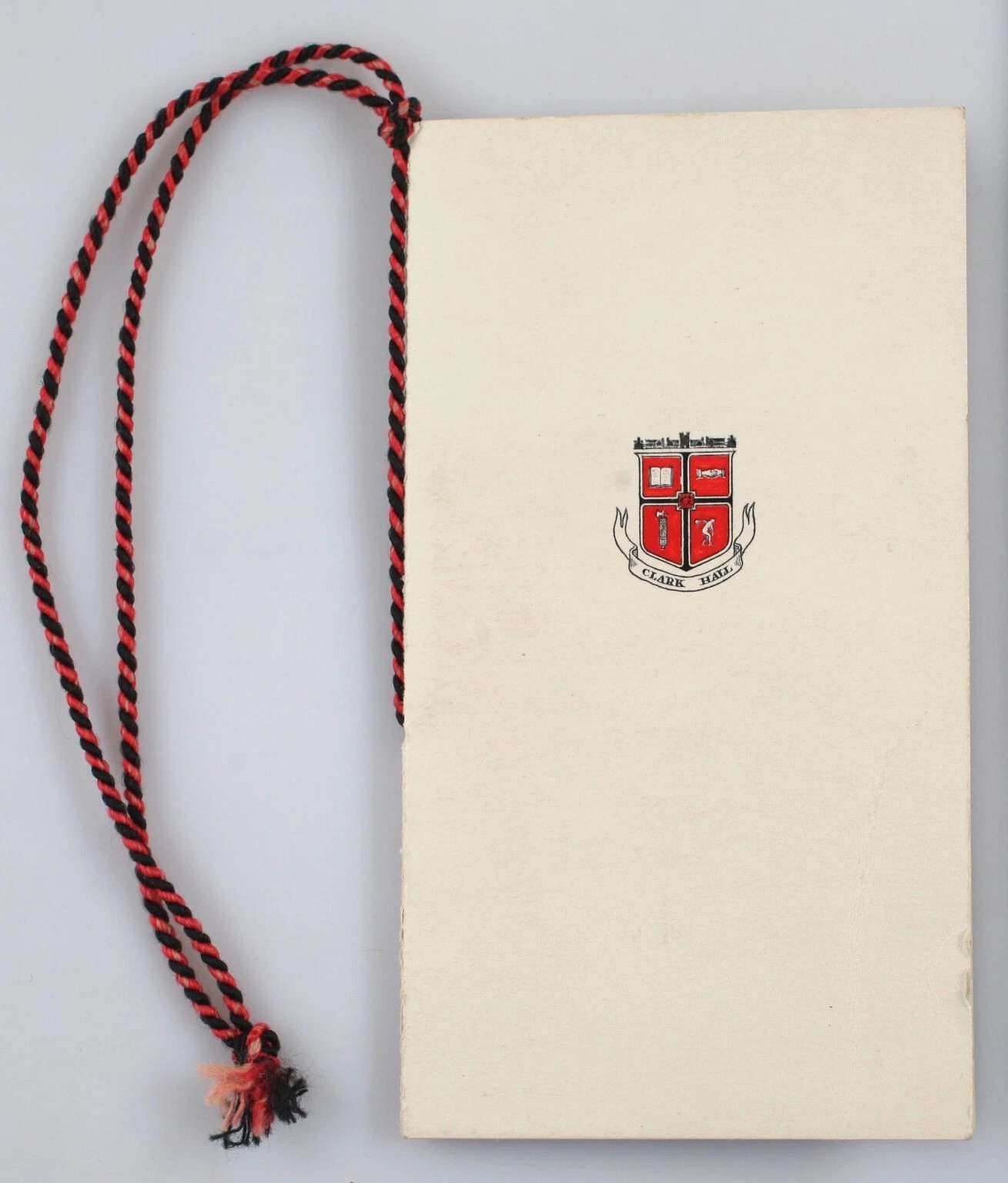
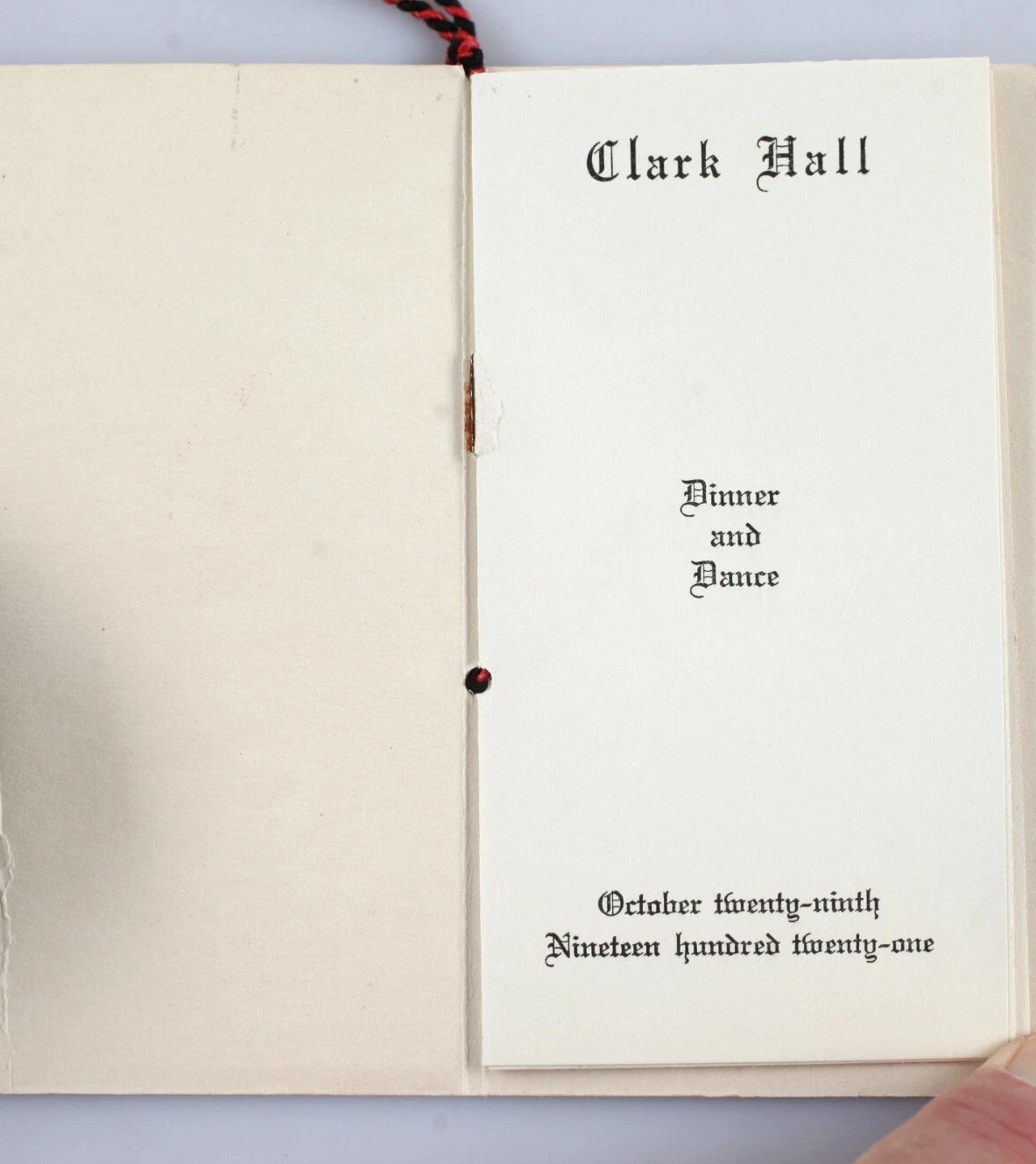
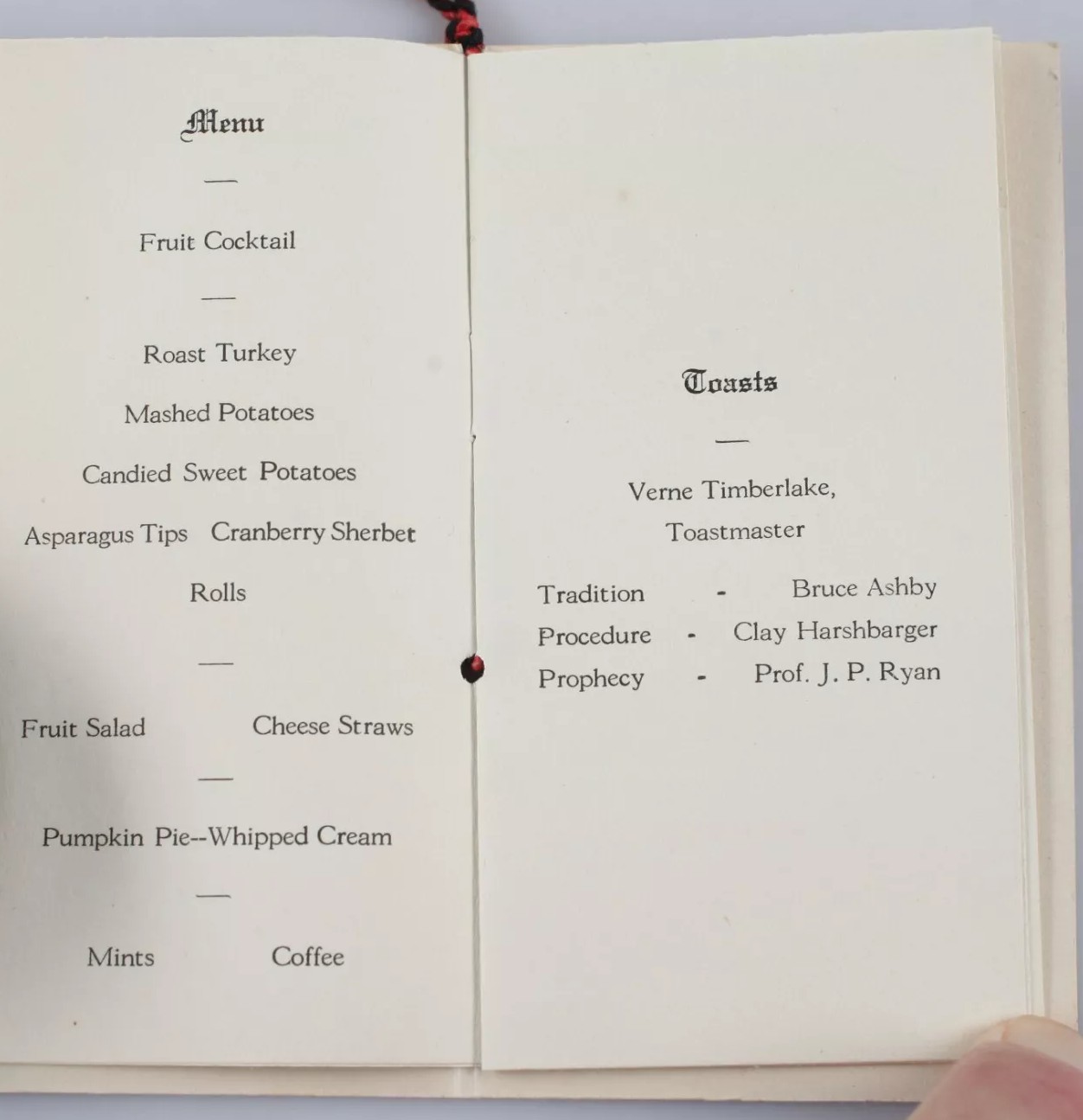
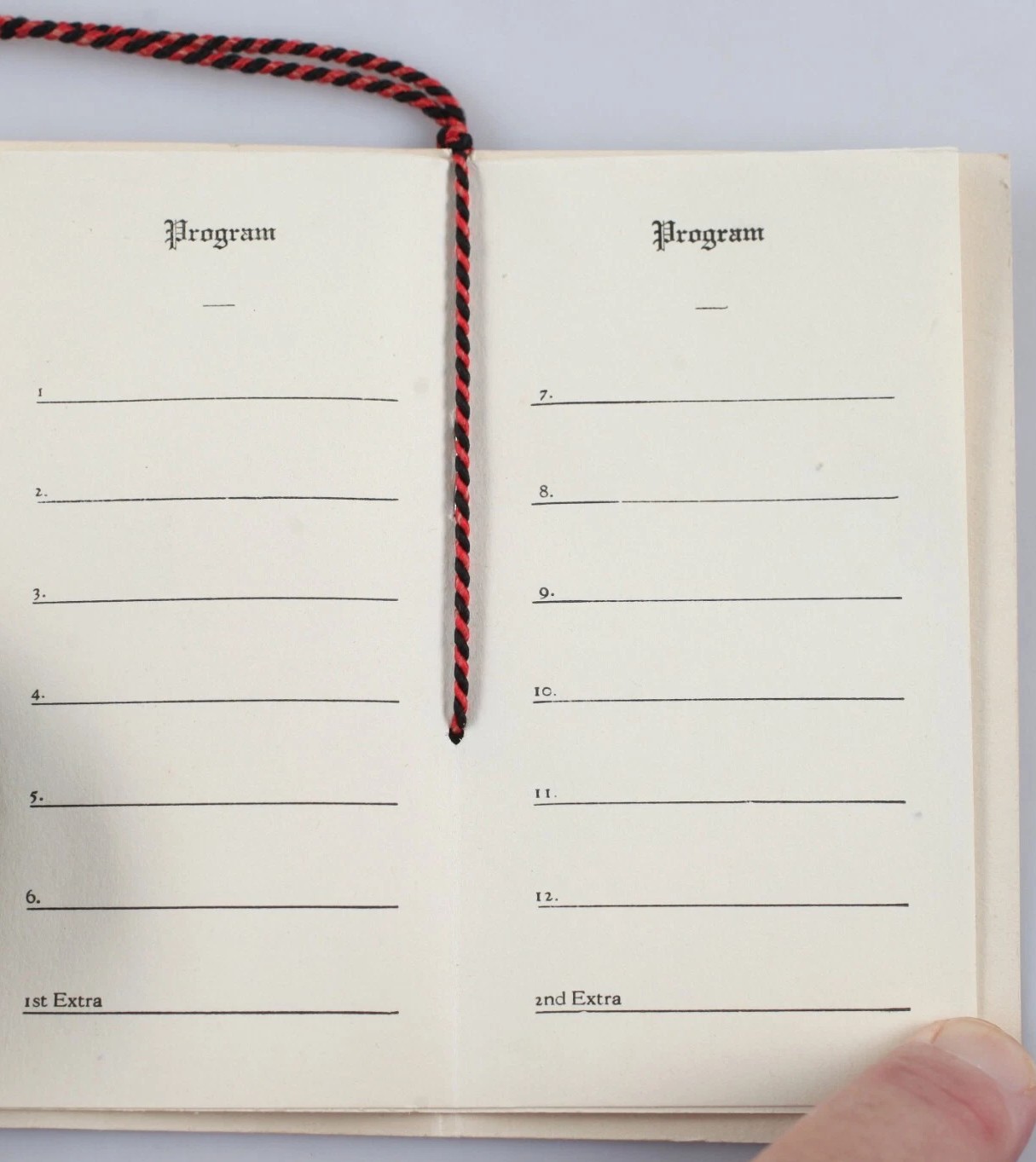
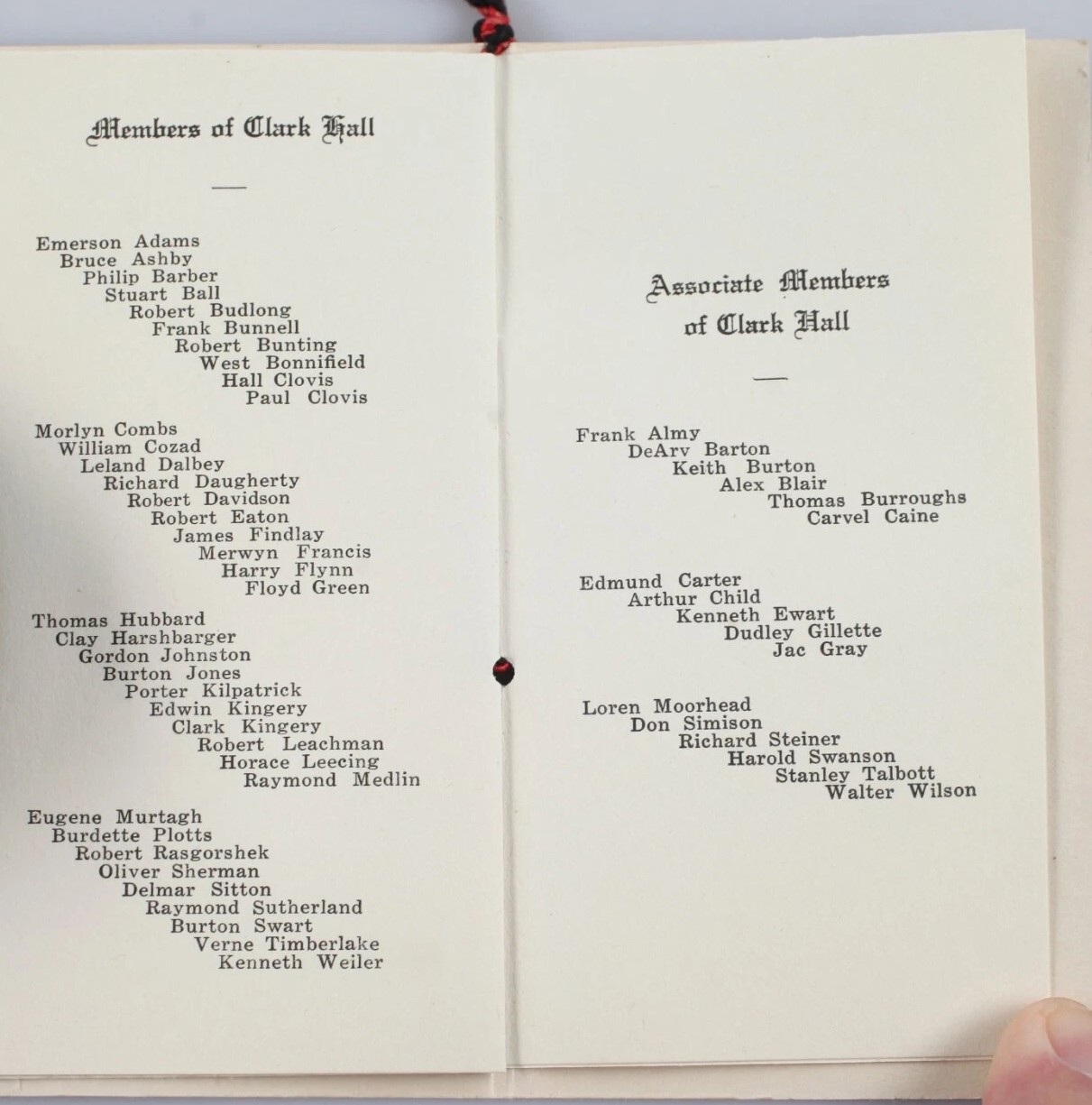
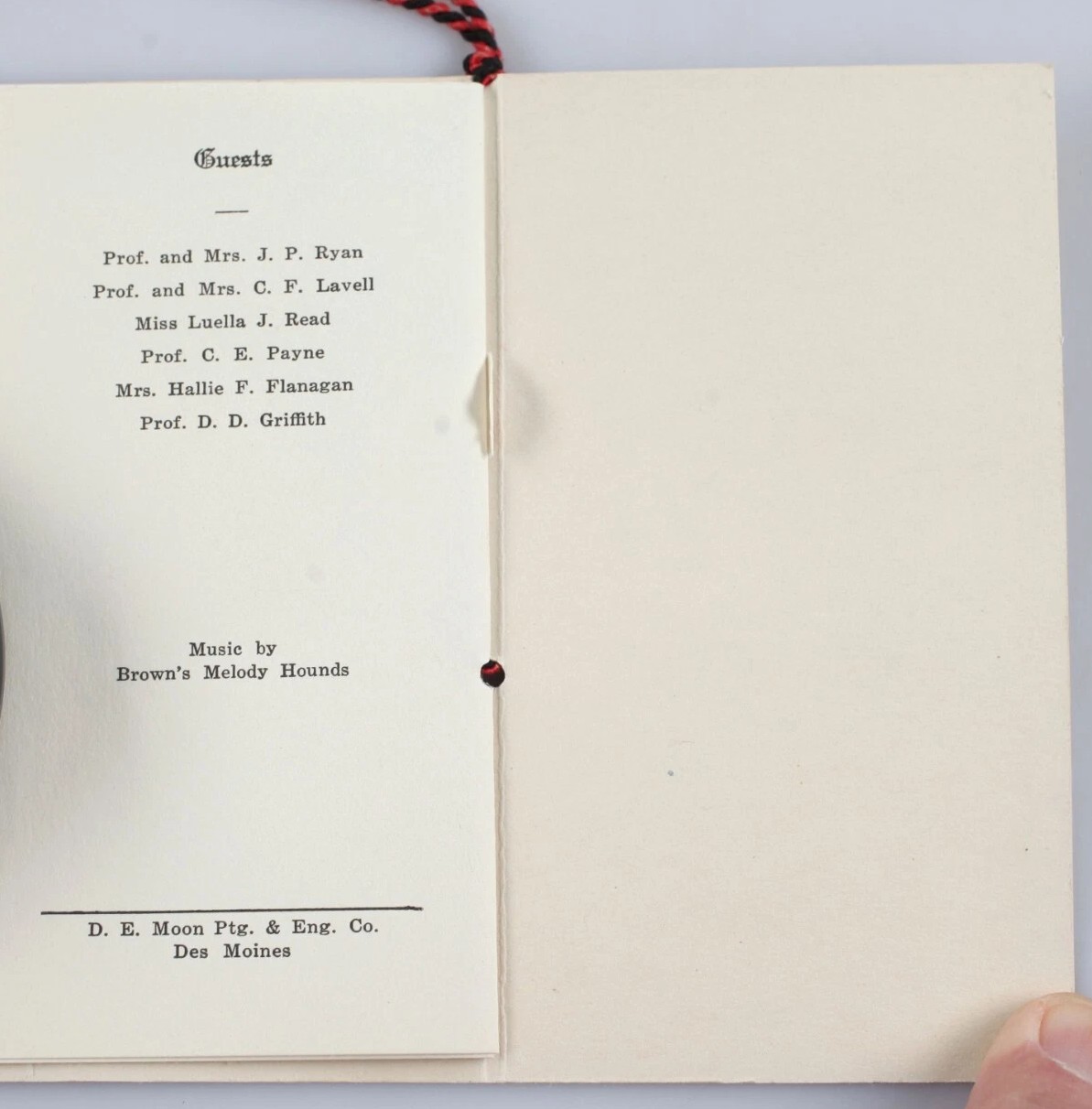
Organized dance has always been an important part of campus life–and even today, Grinnell has a Salsa Club, a Swing Society, a Contra Club, and other organized dances throughout the year. But this Dance Card–from a formal dance and dinner held by the resident’s of Clark Hall in 1921–is a reminder of a time in the early 20th century when more elaborate rituals of dance, courtship, and dining were in place. In addition to their functionality, in terms of lining up successive dance partners, these booklets also provided an important souvenir or keep-sake of these rites of passage on the college calendar.


Page 1 of 4

Powered by WordPress & Theme by Anders Norén