Tag: trains

Documenting the Glee Club’s “Western Tour” (1909)

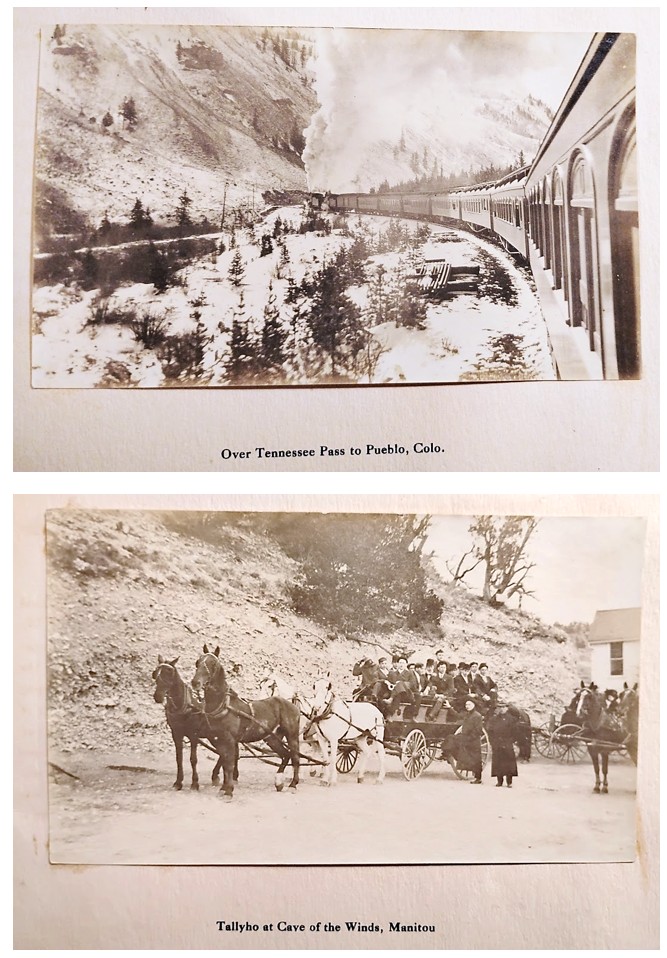
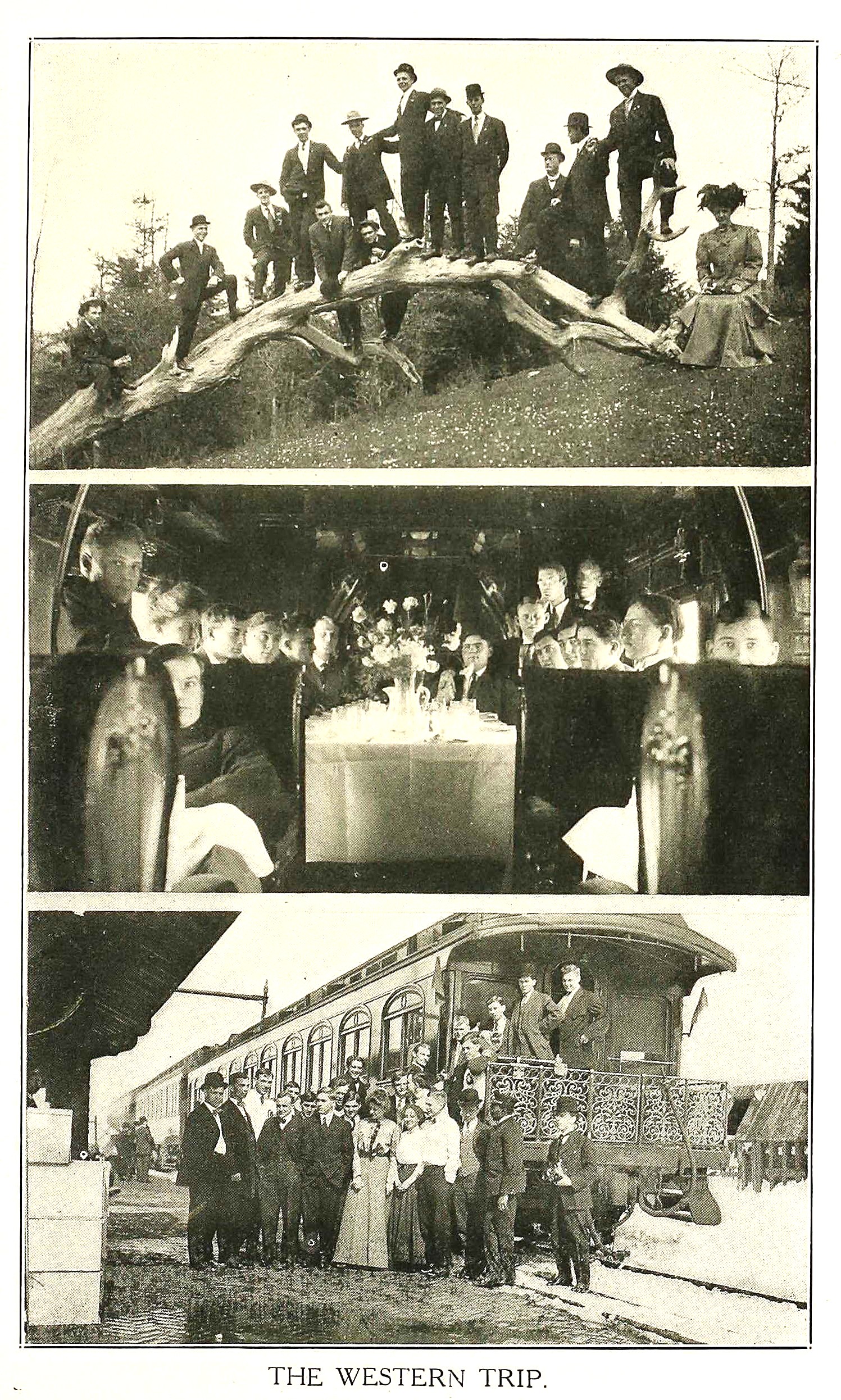
In the spring of 1909, the Men’s glee club spent an entire month touring the Great Plains and Pacific Northwest. It was estimated that they travelled about 5,000 miles, through 11 states; performing 26 “secular” concerts, 6 “sacred” concerts, and a number of informal events at high schools and Y.M.C.A.s, to “an aggregate audience of some fifteen thousand people”—all at a grand cost of five thousand dollars.
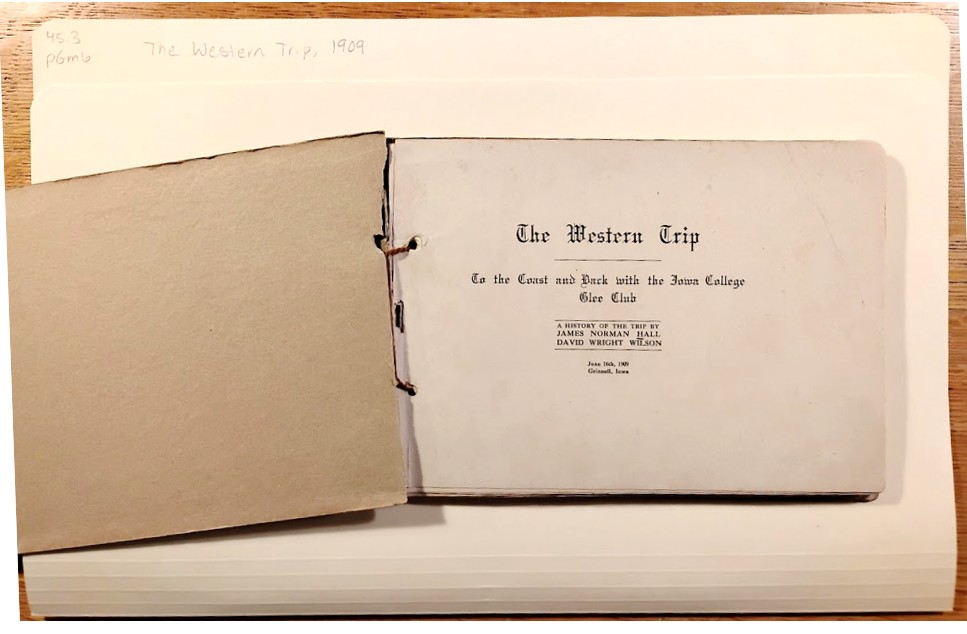
To commemorate this momentous tour, members of the Glee club created a scrap book that recorded each day of the trip, along with pictures and commentary. A local printer published a small run of this work as The Western Trip: To the Coast and Back with the Iowa College Glee Club: A History of the Trip by James Normal Hall and David Wright Wilson (a copy of which is in special collections in Burling Library, for anyone who wants to read about their adventures).
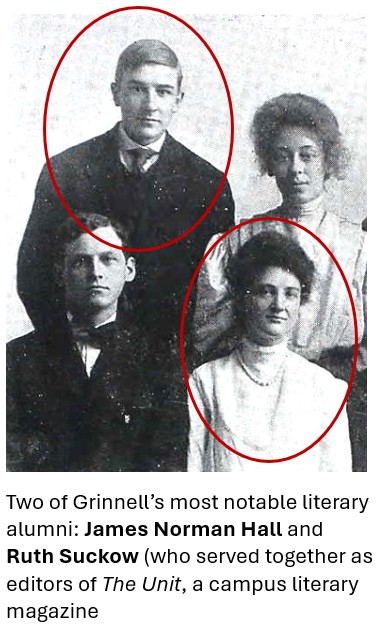
 

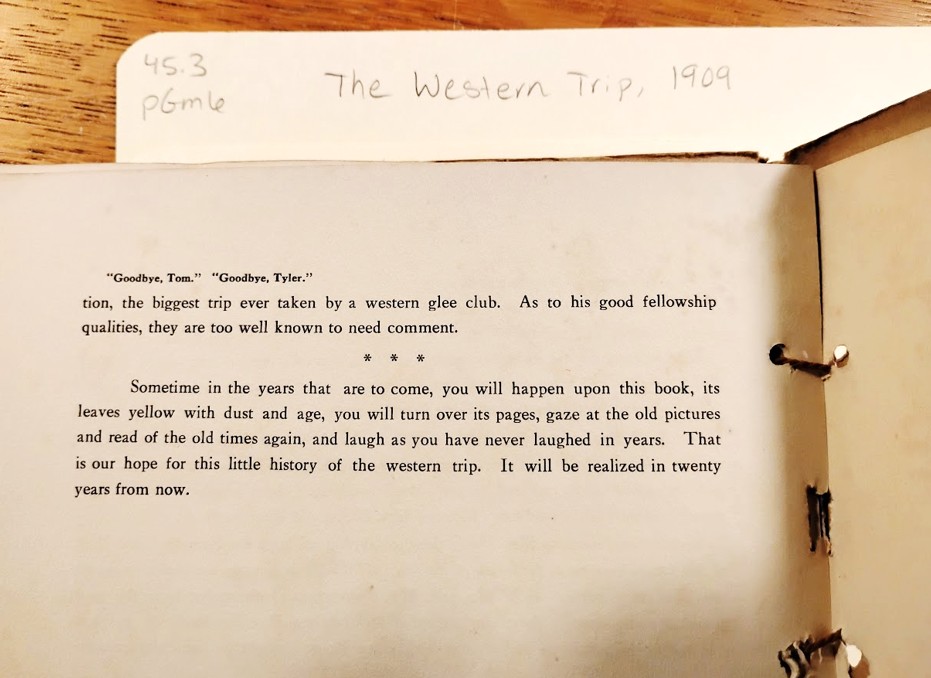
One noteworthy feature of the book is that it represents the first publication of James Norman Hall (class of ’10), who would go on to become a prolific writer and novelist (most known for his Bounty trilogy that began with Mutiny on the Bounty in 1932). It is also interesting to see how the book ends, with a note to future readers who will encounter it’s yellowing pages in decades to come…
Spring Break Travels (1909)

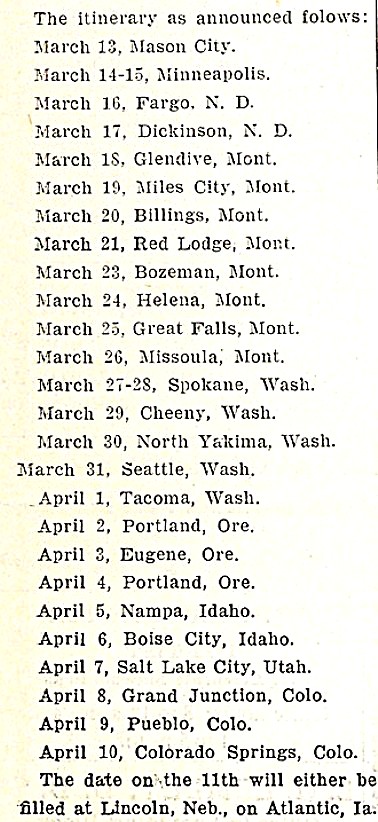
While college Glee Club had a tradition of utilizing the breaks to perform throughout Iowa, or nearby states, the spring of 1909 witnessed something much more ambitious in scope, as the Men’s Glee Club lined up a month’s long, performing tour of the American West.  The club departed from Grinnell in their own “private Pullman car especially fitted for the trip, with all the modern conveniences and comforts.”  At first, the Iowa Central line pulled their private car to Minneapolis, where it joined a larger train on the Great Northern Railroad line, that took them across the Great Plains, and ultimately to Seattle, where they joined the Oregon Line, then the Denver & Rio Grande Line, as they made their way through Idaho, Utah, Colorado, and Nebraska (see the schedule below). From March 13th to April 12th, the Glee Club toured in style.  There was some controversy when they returned, however, since they decided to finance the trip by charging $1 admission to future concerts in Grinnell, generating push-back from local students and townspeople who were not used to paying admission to hear them perform.

The “Red Special” Comes to Grinnell (1908)

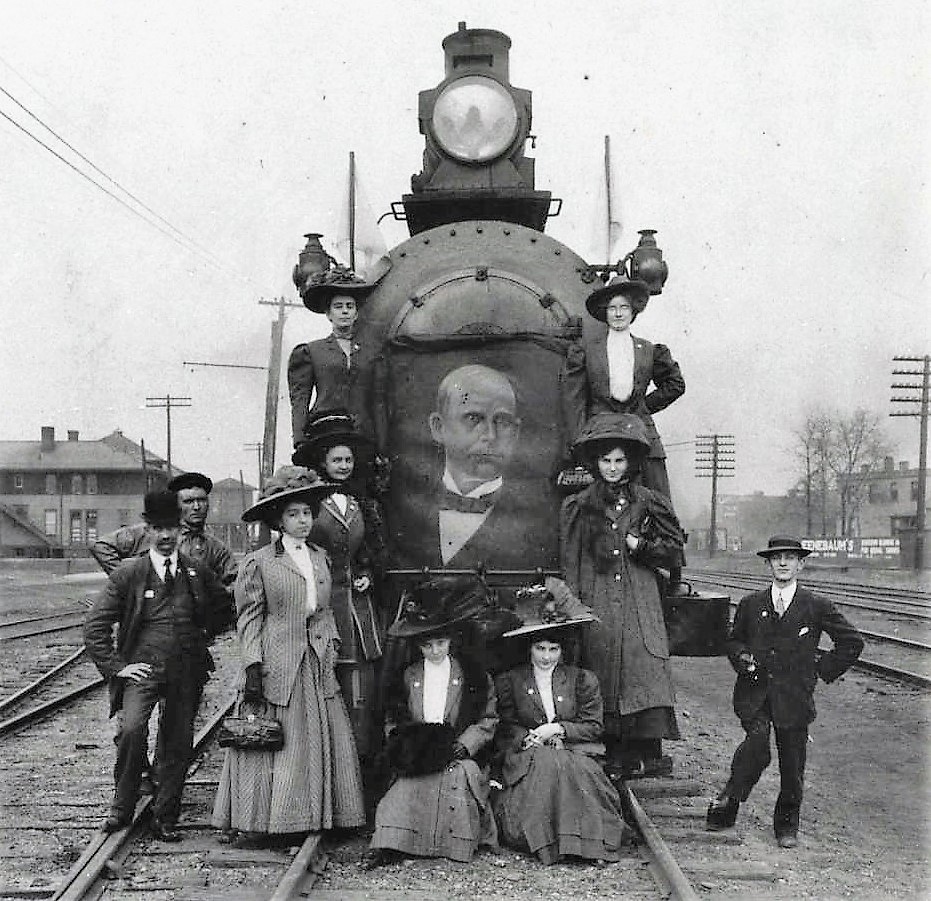
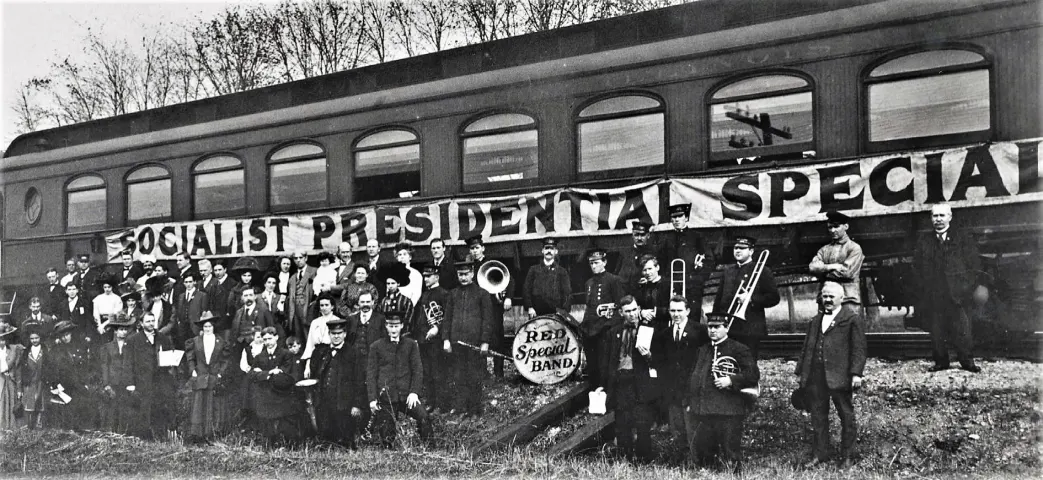
Just after 2pm on the afternoon of September 1st, Eugene Debs’s special train pulled into Grinnell’s Union Station. Debs was running for president on the Socialist party ticket that Fall (1908), and had organized a cross-country campaign in which he and a party of about a hundred supporters, campaign workers, officials, and a musical band, would stop at various cities as their privately rented train made its way from New York to California. Dubbed, the “red special,” Debs’s train (see above and below) stopped at Grinnell for about two hours, giving the band time to play in central park; giving his associates time to distribute campaign flyers, sell party tracts, and solicit donations; and giving Debs time to deliver a speech to students and townspeople who had gathered around the gazebo in the park.

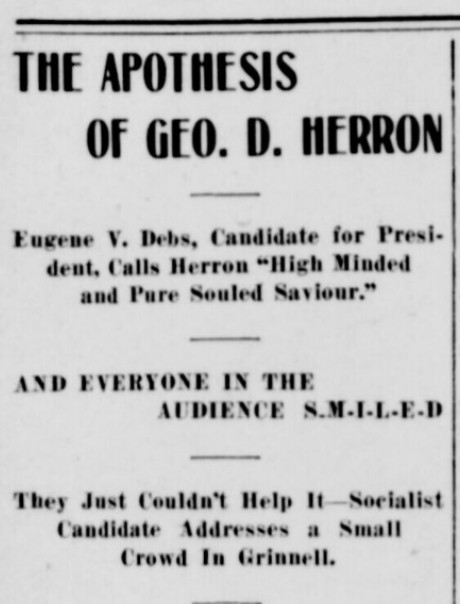
The Grinnell Herald, which was no fan of Debs, noted sarcastically that “Grinnell’s ‘down-trodden’ laboring class was so busy working at from $2 to $5 a day, that they didn’t have time to stop to hear from Mr. Debs how miserable was their condition.” In fact, the paper was less interested in reporting Debs’ political message than in discussing his controversial remarks about ex-Grinnellian, George D. Herron, who had been forced out of his endowed chair in Applied Christianity at the college when he eloped with Carrie Rand, the Dean of Women at the college (and daughter of Elizabeth Rand who had endowed the chair and larger program).  Herron was one of the most prominent spokesmen for the Social Gospel and Christian Socialism, and Debs took this opportunity to chastise Grinnell over its treatment of Herron, saying:

Grinnell had crucified its saviour; that because George D. Herron had been a high-minded, pure-souled man, Grinnell had driven him out and that when all the rest of us are forgotten Mr. Herron will be remembered

In fact, Herron received top-billing in the headline framing the story of Debs’ visit in the Herald:

One person who would have agreed with Debs, however, was Laetitia Moon Conard, who was a personal friend and follower of George Herron; who taught sociology at Grinnell College; and who would eventually run for governor of Iowa on the Socialist party ticket, a few decades later. Sadly, Laetitia never got her own “red special” when she campaigned for the governorship in 1932.


Powered by WordPress & Theme by Anders Norén