
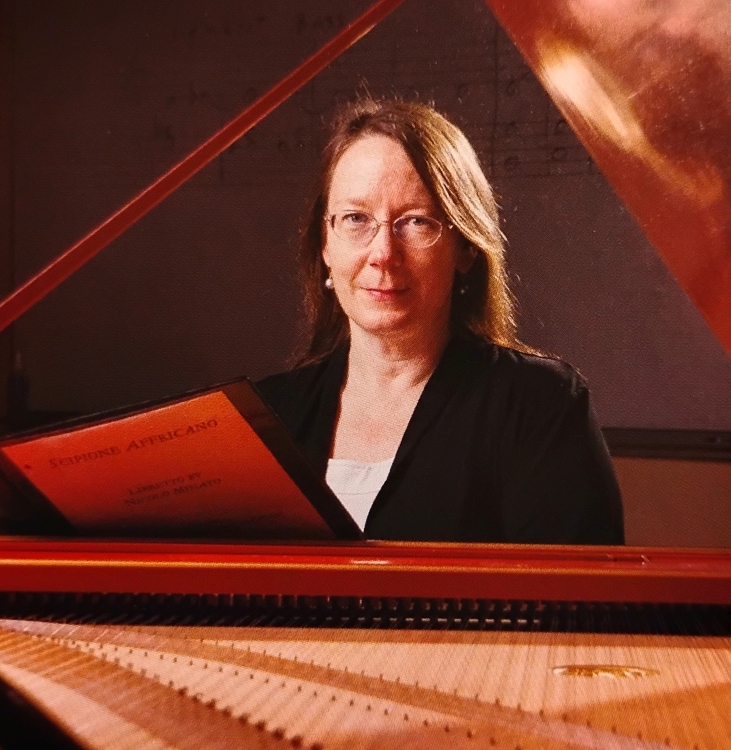
 Last week, Jennifer Williams Brown, Professor of Music, passed away at her home in Grinnell after a long battle with ALS. Prof. Brown was a distinguished musicologist and performer, who specialized in early modern opera (particularly translating and analyzing the work of Francesco Cavalli). She taught baroque music and dance at LSU and the Eastman School of Music before joining Grinnell’s Music department in 2005.
Twenty years later, at the 2025 commencement, President Harris’s special recognition citation (marking Prof. Brown’s transition to Senior Faculty Status) captured the wide-ranging contributions she made to the college, and to her field, through a remarkable record of teaching, scholarship, and service.
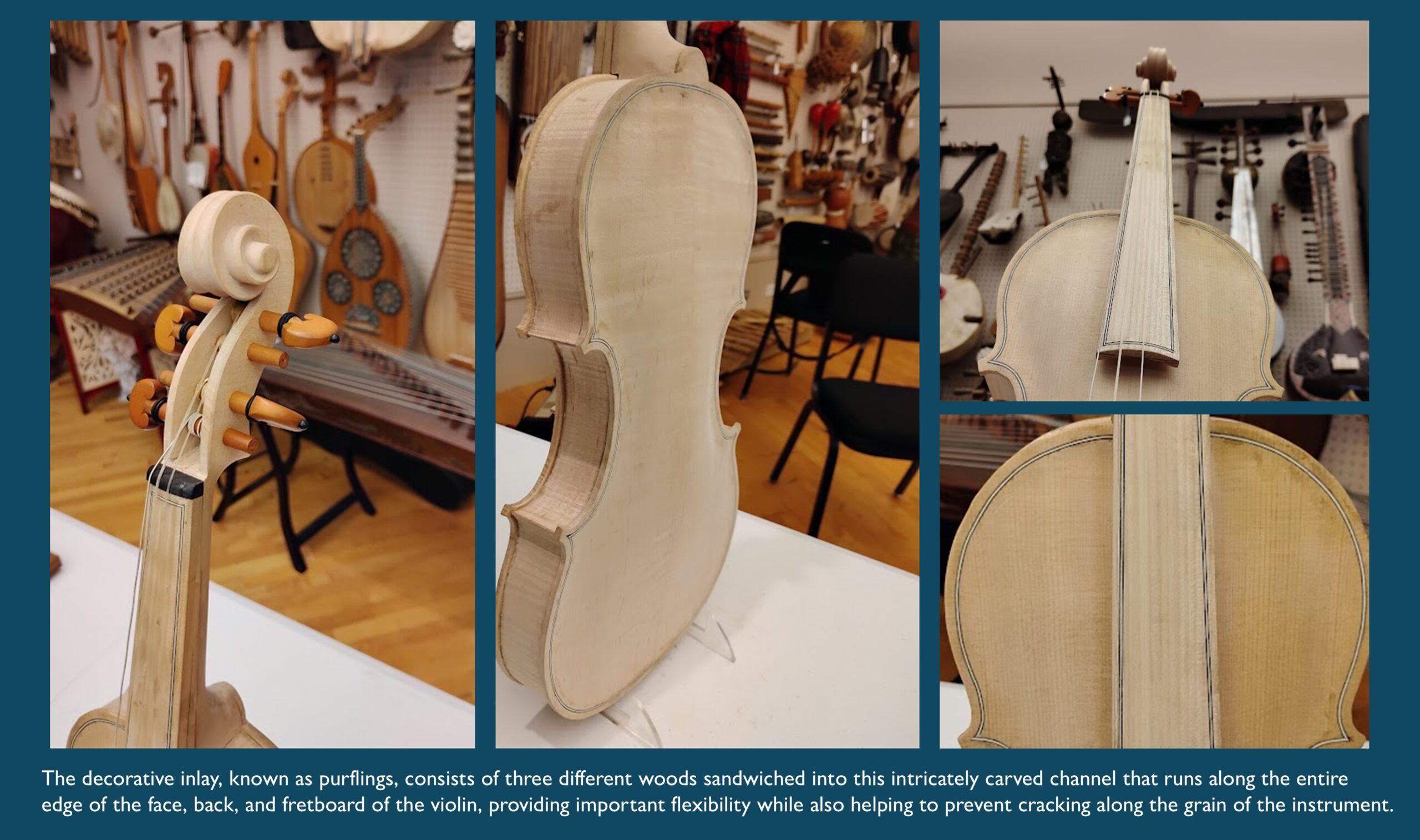
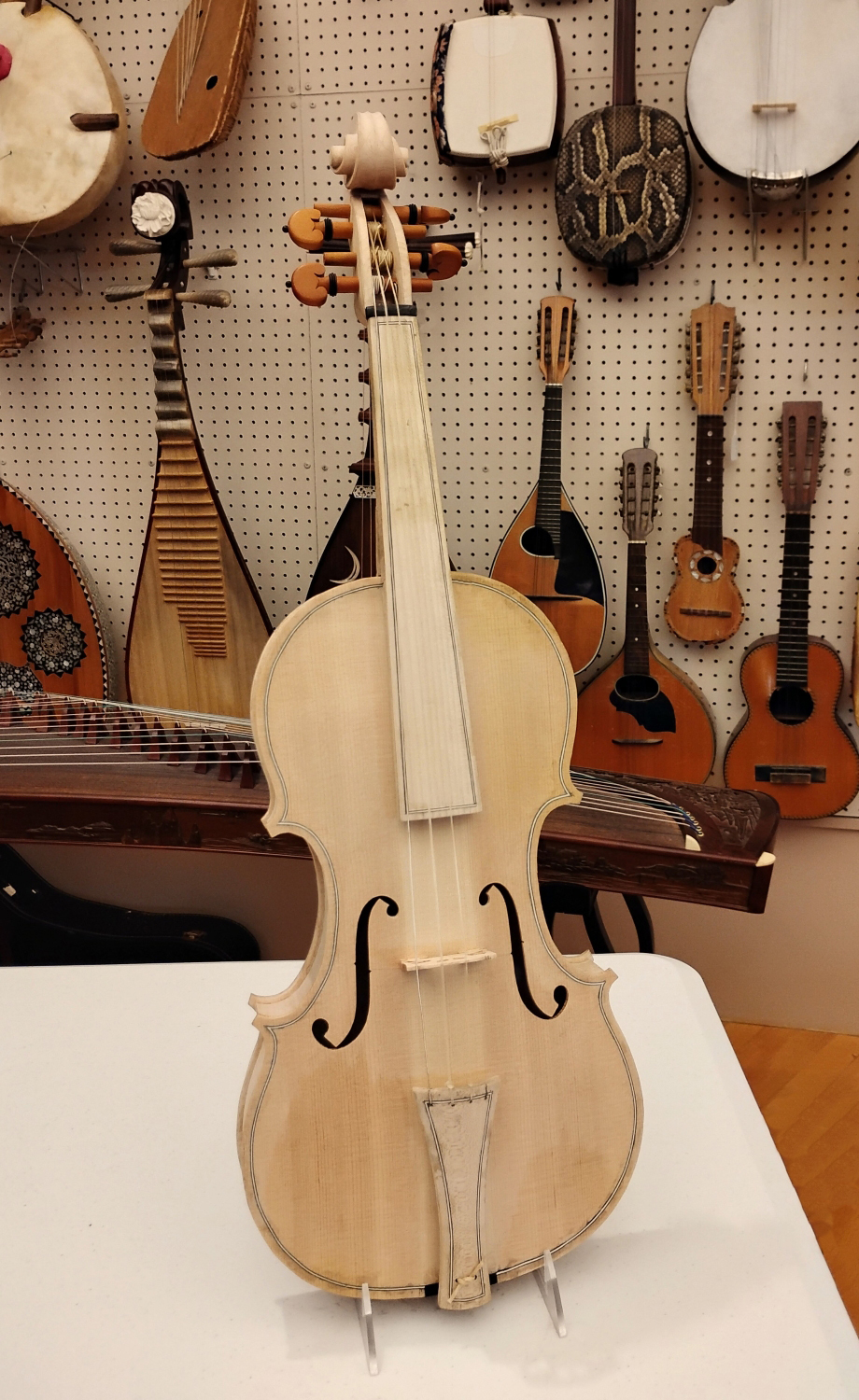 For this Archive Alcove post, we wanted to focus on one revealing artifact in the college’s collection that illuminates some of the creativity, passion and expertise that Prof. Brown brought to her work with students. The violin (pictured here) is a special instrument that was carefully crafted during a summer MAP by one of her students, Katie Krainc ’17, who wanted a project that would tie together her interests as a Physics and Music major. The challenge of crafting such an instrument—modelled on the baroque violins made by famed Cremona luthiers like Amati and Stradivarius—required complex craftsmanship married to an understanding of acoustics, geometry, and musicology. “To me, this is a model kind of MAP,” Prof. Brown explained in an interview at the time. “It’s taking academic knowledge and historical research and applying them practically to the process of making the instrument. And then, the ultimate test is the music it can make. To me, it’s totally perfect.”
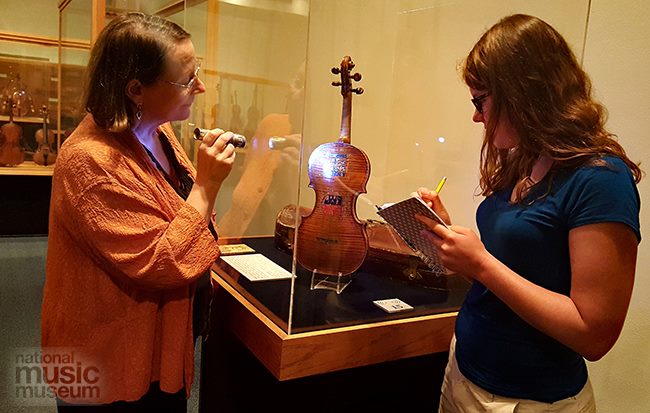 Prof. Brown and Katie travelled to the National Music Museum that summer to study, up close, historic examples that would serve as models for the violin (pictured here). Ultimately, the violin became part of the larger collection of historic instruments used by Collegium Musicum, the college’s early music ensemble that Prof. Brown created and directed. In that sense, it represents the larger legacy of instruments and scores, people and performances, that will live on as a testimony to Prof. Brown’s impact at Grinnell.
Those interested in learning more about the college’s fascinating collections of musical instruments are encouraged to visit their website: https://omeka-s.grinnell.edu/s/MusicalInstruments/page/welcome
To learn more about Collegium Musicum, including an inventory of the early instrument collection, you can visit:https://www.grinnell.edu/academics/majors-concentrations/music/ensembles/collegium-musicum
Leave a Reply