
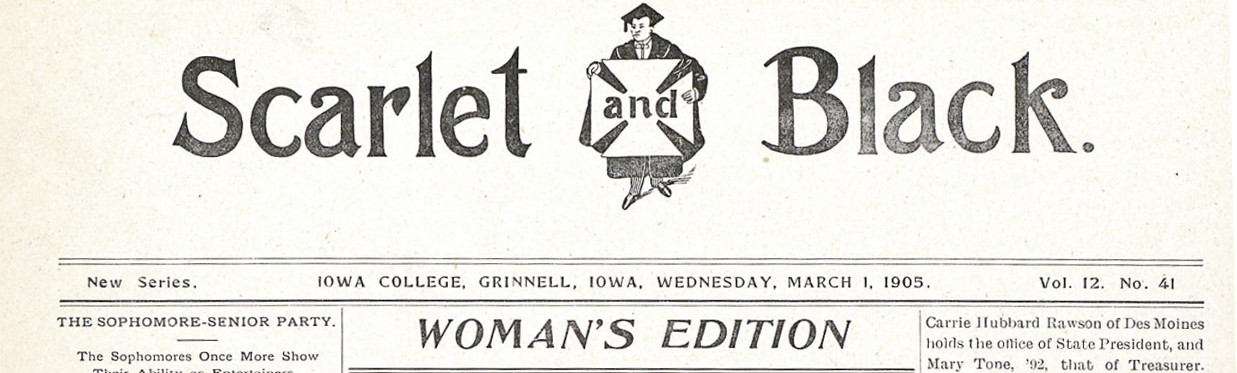
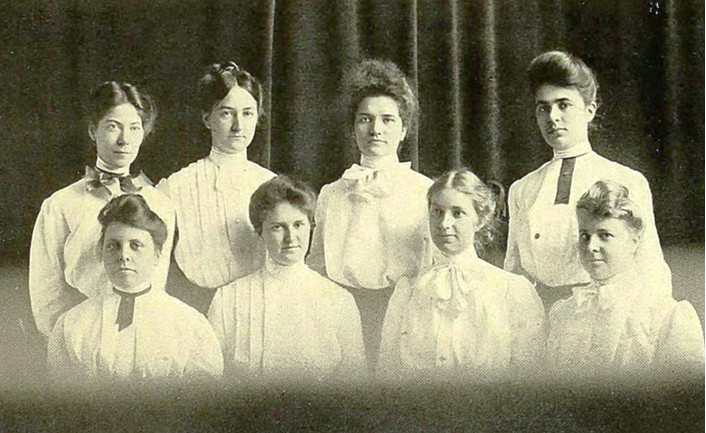
In the spring of 1905, the editorial board of the Scarlet and Black turned over their paper to a special editorial team that would create the paper’s first “Woman’s Edition,” which appeared on March 1st. The all-female team—led by Adah Hopkins ’05 (who would go on to teach Sociology at the college before carving out a trailblazing career in the newly professionalized field of social work)—noted the surprising lack of women in shaping the college’s newspaper. At a time when women outnumbered men at Grinnell (267 to 195), and had such “a prominent share” in the literary clubs and cultural life of the institution, the lack of female input and leadership in the school paper was striking: “for several years the Scarlet and Black has been entirely in the hands of the men of the institution.”
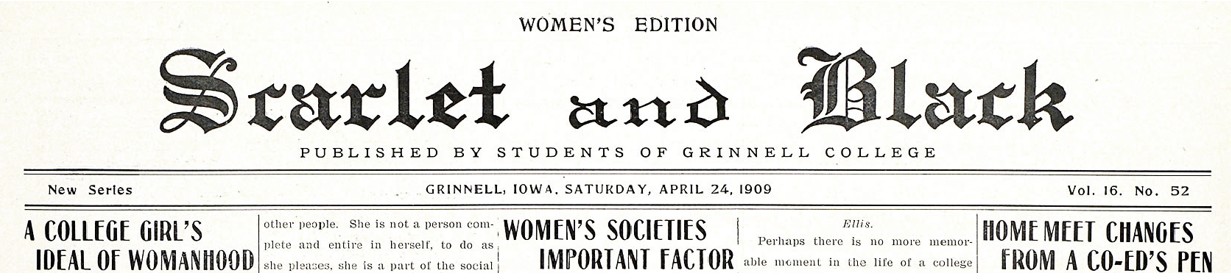
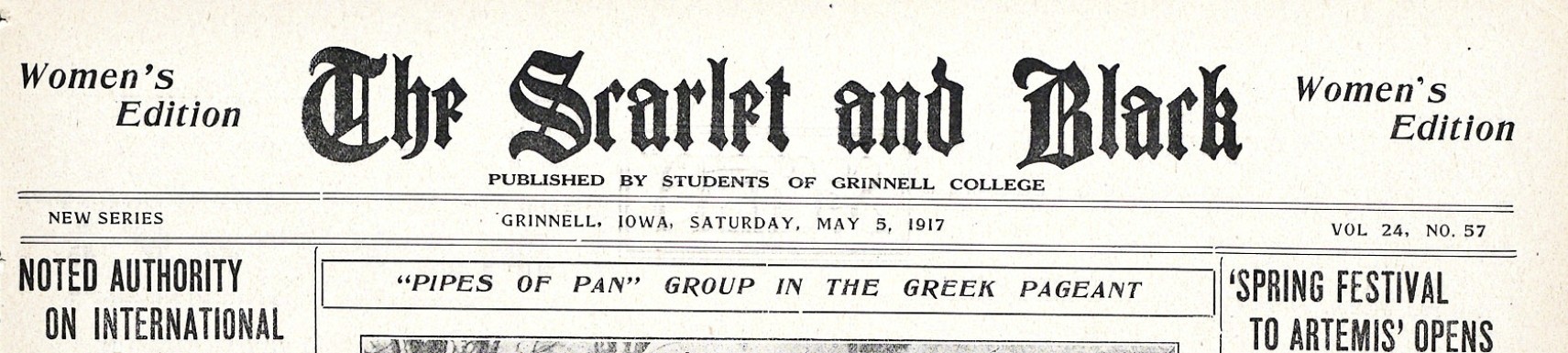
While the first woman’s edition would aim to reflect the interests, perspectives, and voice of women on campus, they also conveyed their hopes “of future appearances some years hence, of Woman’s Editions of forty pages, properly illustrated” that would serve “as a record of the history and conditions of co-ed life at Grinnell.” For a dozen years or so, the S&B carried on this tradition of creating a special women’s edition each year, produced by an all-female team (the spelling changed to women’s, instead of woman’s, and they dropped the title of “editresses”). Over time, these special editions would start to include a growing numbers of letters, sent in by alumnae, expressing their appreciation for these annual issues. But like so many other elements of the Progressive era, this tradition ended in 1917, disrupted by the First World War never to really resume. Still, these editions continue to offer a unique “record of the history and conditions of co-ed life at Grinnell” and are fascinating to explore.
1905 Editorial Statement: 1905 editorial
Alumnae Letters: Alumnae Letter Section
Leave a Reply