
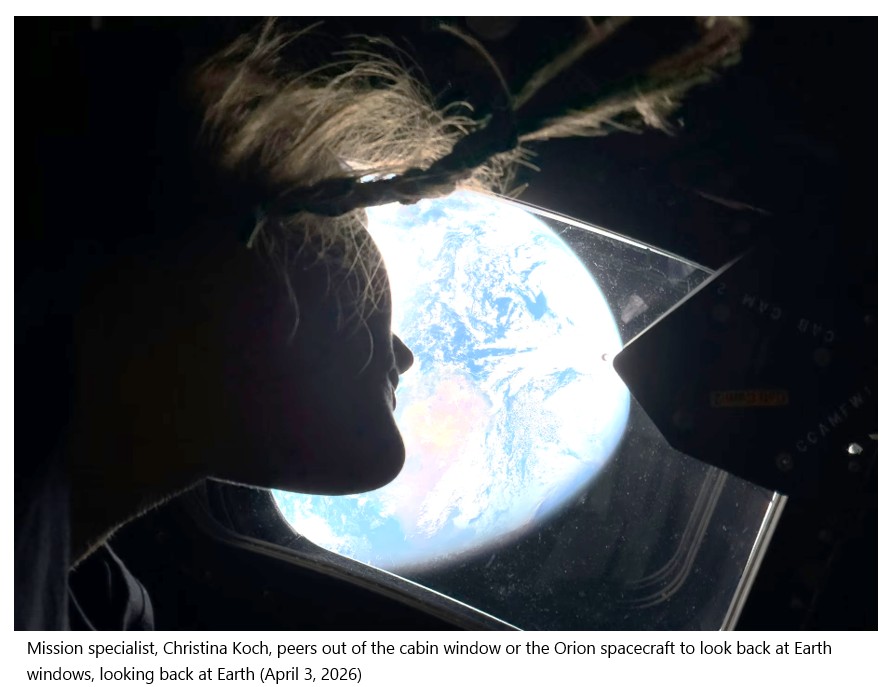
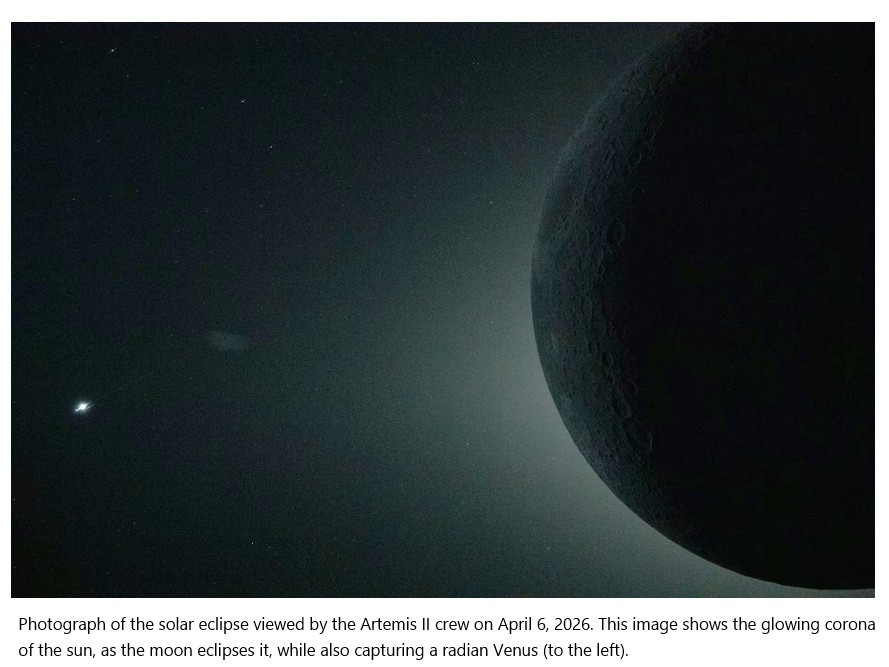
As the crew of Artemis II send back stunning images from their lunar orbit, it’s worth noting the role that visual imagery and the arts played in NASA’s original Apollo program, some 50 years ago. While iconic photos like “Earthrise” (1968) or “Blue Marble” (1972) dominate our visual memory of the events, NASA actually created a full scale arts program for the Apollo missions, reminiscent of the artistic projects of the WPA era. Curator of the National Gallery, Hereward Lester Cook, wrote to many top (and rising) artists, asking them to seize this historic moment to come down to Cape Canaveral to spend months observing and engaging with the Apollo program (Apollo 8-13), noting:
As Daumier pointed out about a century ago, the camera sees everything and understands nothing. It is the emotional impact, interpretation, and hidden significance of these events which lie within the scope of the artists’ vision.
Artists were given housing, stipends, and unfettered, behind-the-scenes access to NASA’s work. In all, the program attracted nearly 200 artists ranging from Annie Leibovitz and Andy Warhol to Robert Rauschenberg and Vija Celmina (even Norman Rockwell participated).
NASA selected some of the most evocative pieces of artwork to form a special exhibit, “Mission Apollo” that premiered at the National Gallery of Art, before travelling to select locations around the country.
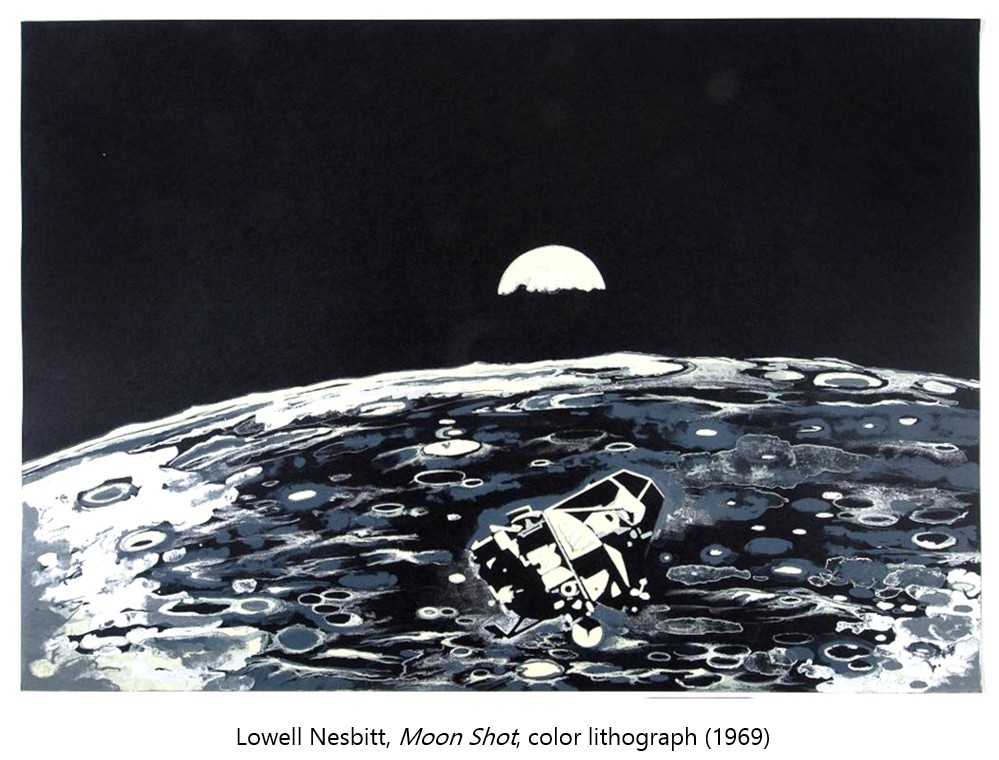
At the end of January, 1971, Grinnell College was fortunate to host that exhibit for a week, which contained nearly 50 paintings, drawings, lithographs, and watercolors, that went on display at the Fine Arts Center. Pictured here are two items from that exhibit.
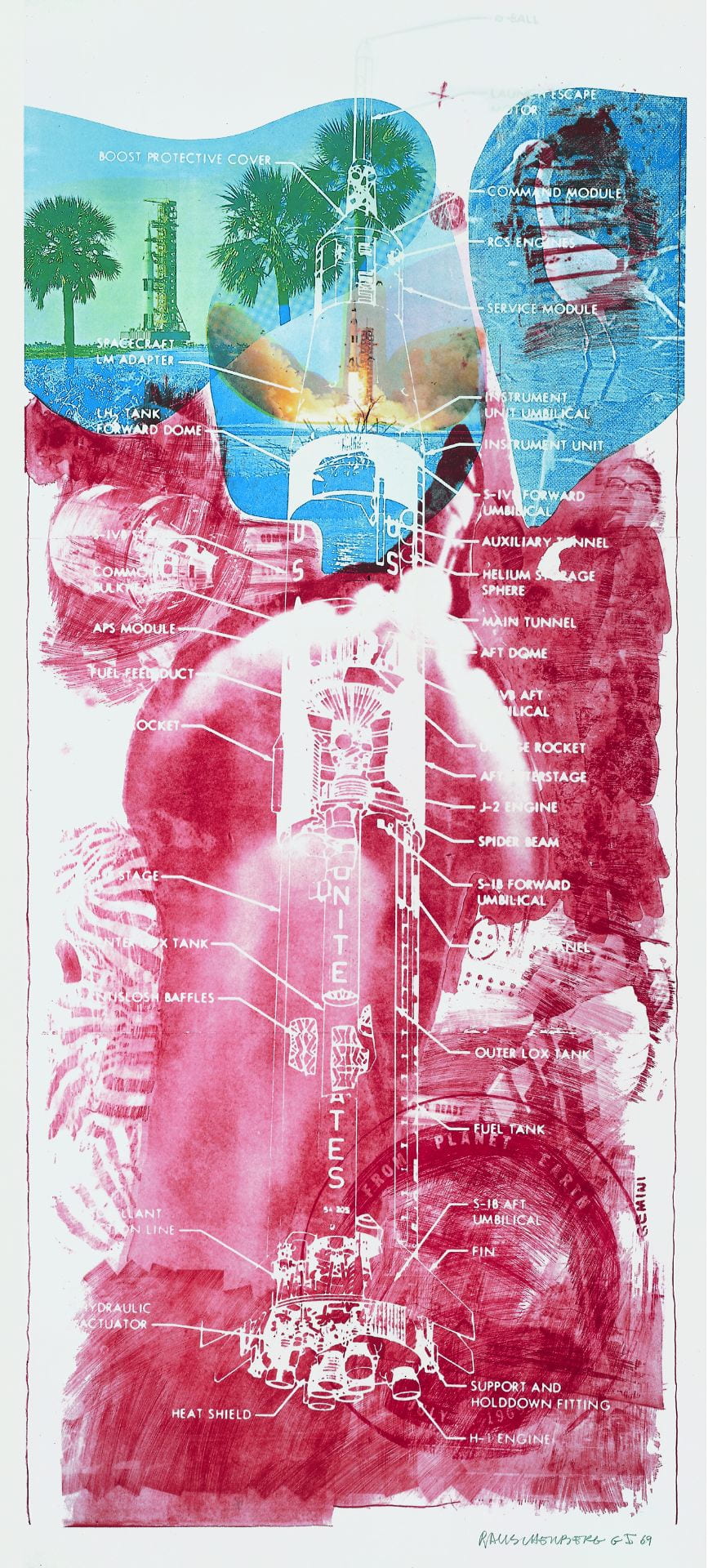
Robert Rauschenberg, “Sky Garden,” 1969, 6-color lithograph
Leave a Reply