
In light of recent faculty discussions, underscoring the desire for more consistent reflection and conversation about the meaning of a liberal arts education at Grinnell, we’re going to spend some time this spring highlighting how this issue has played out over the college’s history. The early years of Iowa College—both in Davenport and then subsequently in Grinnell—saw very few students attaining a bachelor’s degree, and little structure in terms of the requirement for the B.A. (most of the students were enrolled in the preparatory academy). It was the period after the Civil War, when Grinnell’s first President, George Magoun, took charge that the faculty created an organized curriculum and set of requirements for entering college students, which would hold sway until a series of curricular reforms in the 1890s.
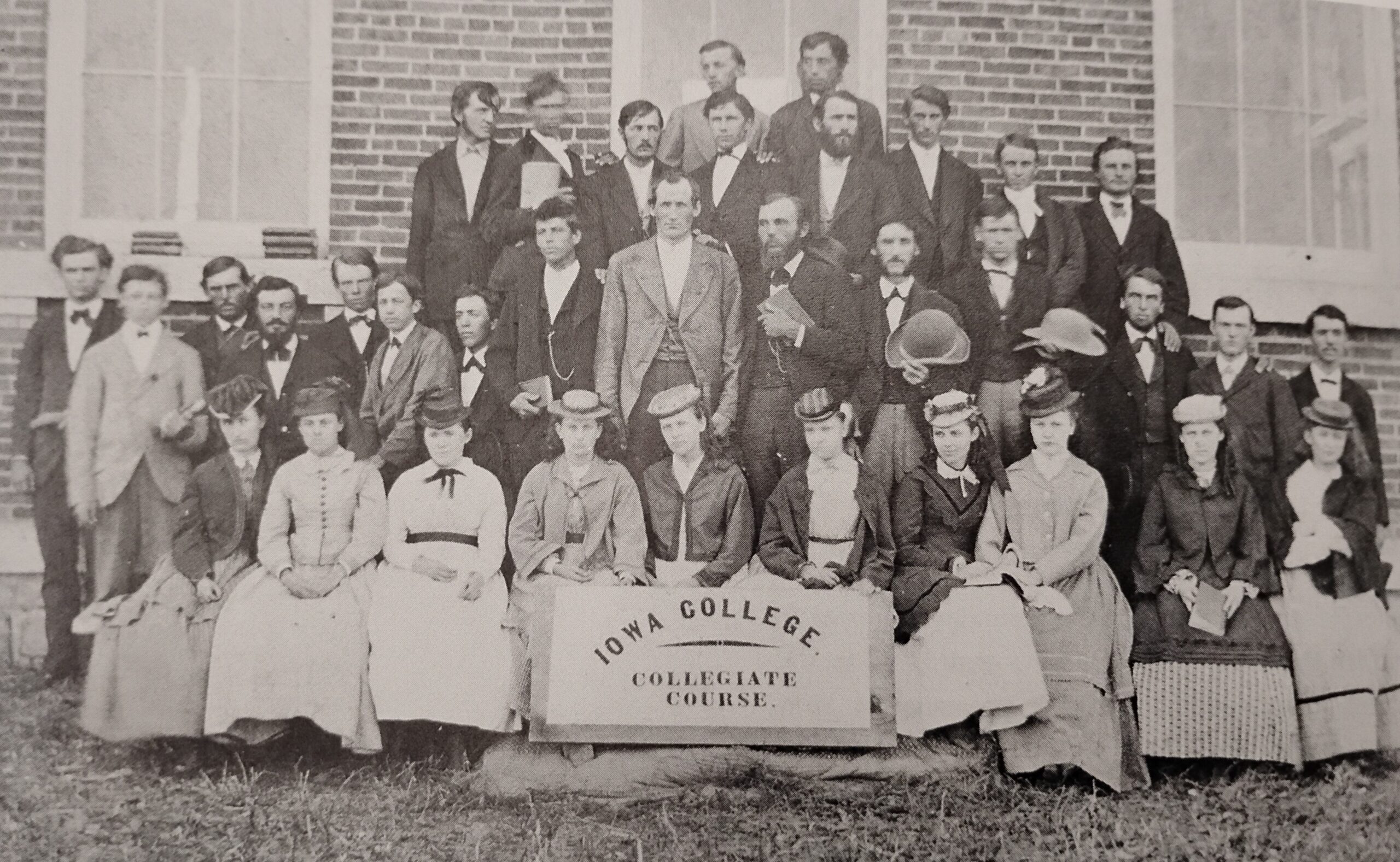
How did Grinnell approach a liberal arts education in 1870 (when the students pictured here, entered the college)? There were four main “courses,” or tracks, that students could pursue:
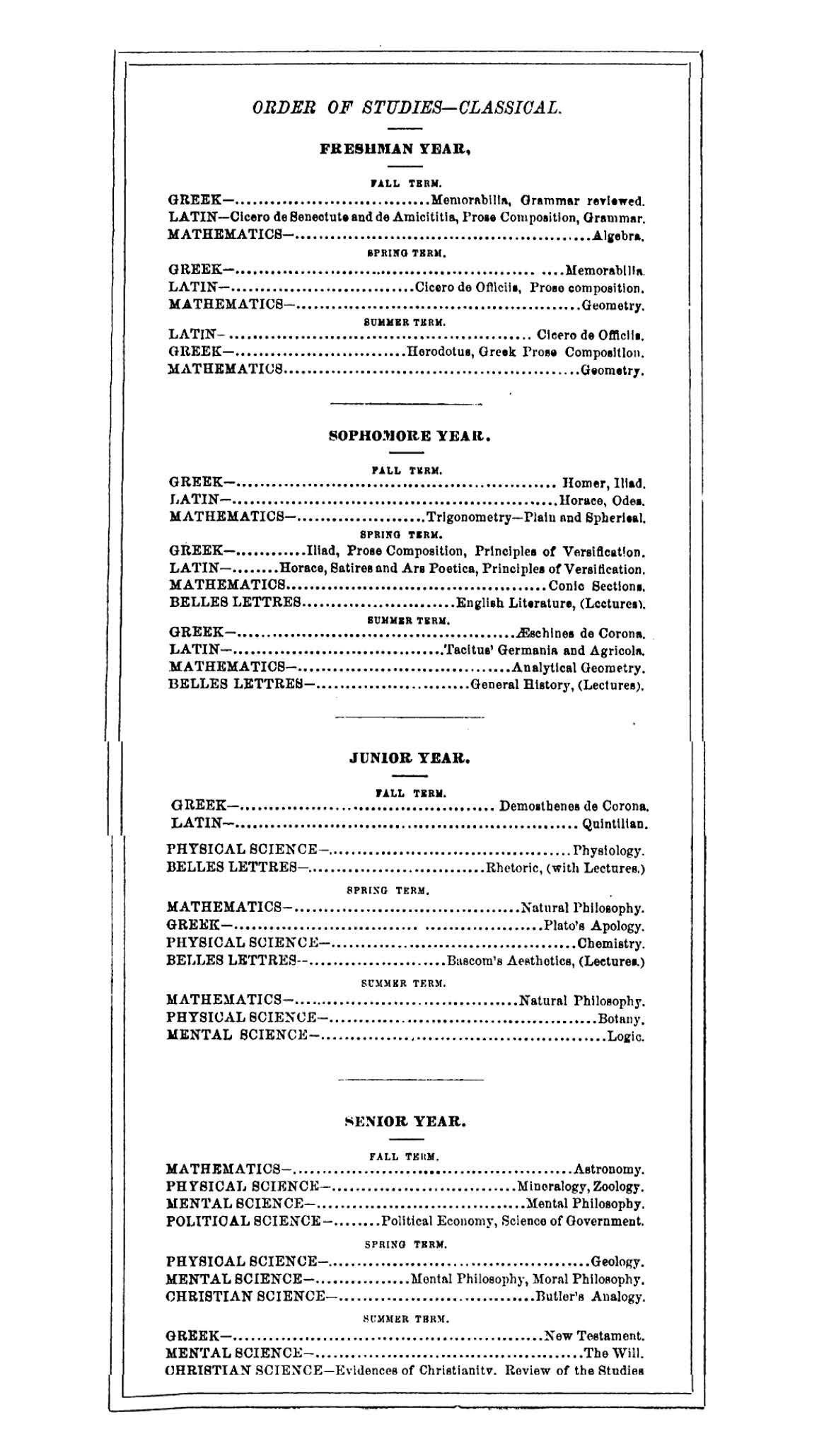
1.) a classical course, leading to the Bachelor’s of Arts (A.B.) degree
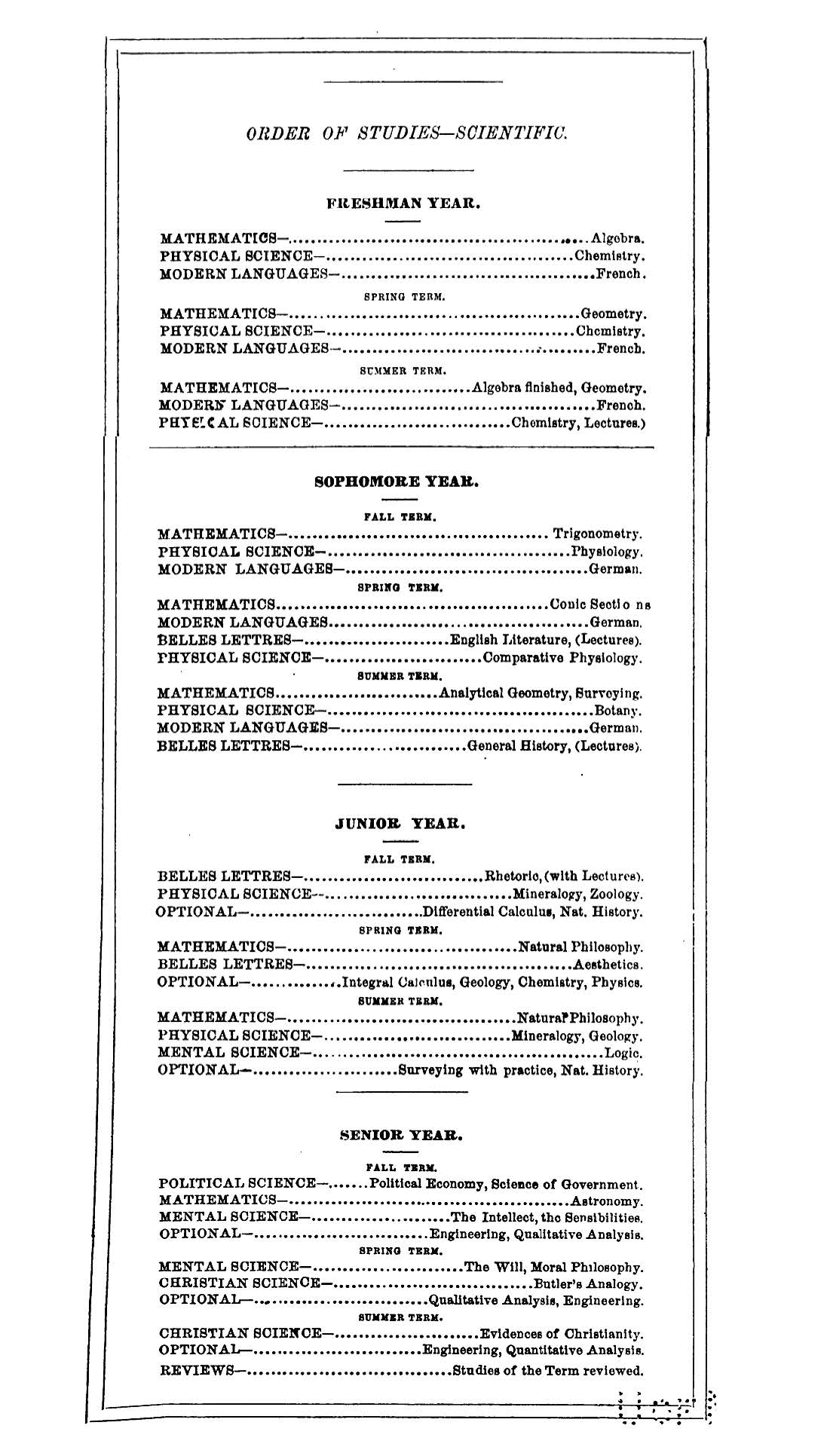
2.) a scientific course, leading to the Bachelor’s of Science (B.S.) degree
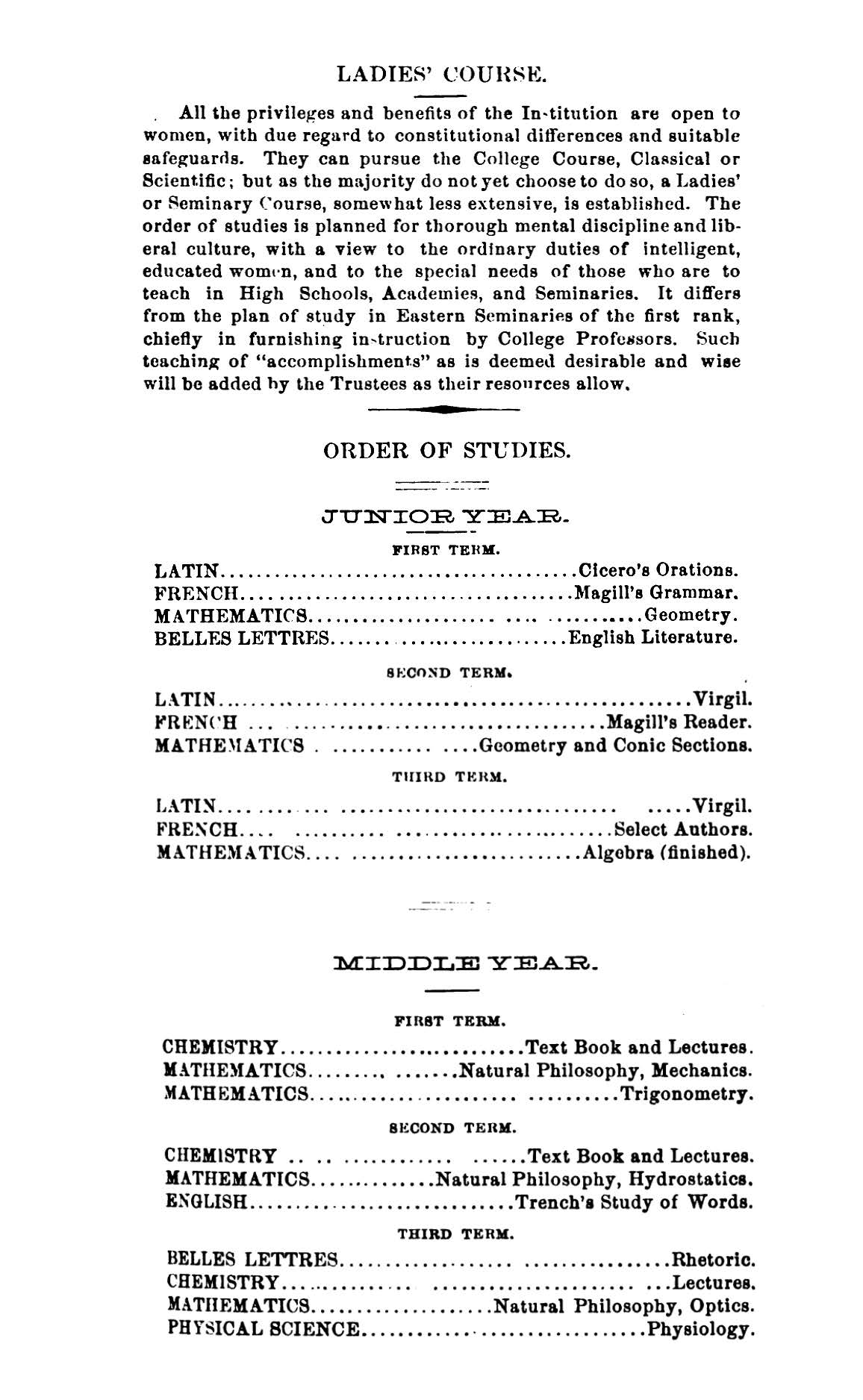
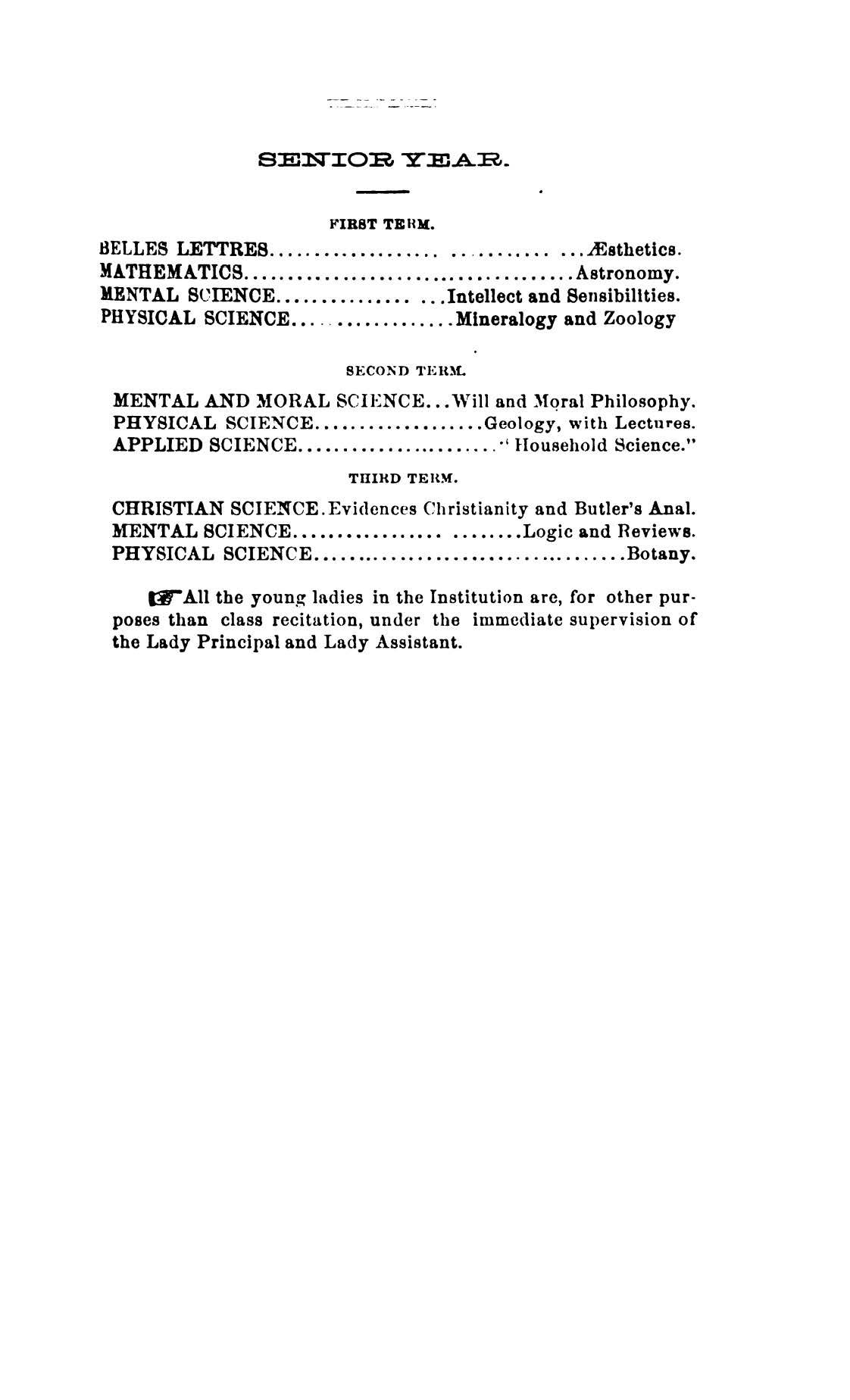
3.) a “Ladies Course,” (explained in the catalog page below) that evolved a decade later into the “Literary” course, and increased from 3 to 4 years. This course, however, led to a diploma rather than a bachelor’s degree.
4.) an “Optional Studies” course, which allowed students to freely choose the classes they wanted to take, but did not lead to a formal diploma or degree.
As you will see (below), each of these tracks were pretty rigid in terms of specifying the array and sequence of courses students would take each year.
Printed, here, are the course requirements and sequencing for those three main tracks, established in 1870. All students were also required to attend religious service each morning (and twice on Sundays) while Men were required to participate in “military drill.”
 In 1875, a Conservatory, or School of Music, was also created as a separate institution (although it was under the supervision of the same board of trustees as the college). It initially awarded diplomas, but by 1890, it also offered a Bachelor’s of Music degree to those who completed the full course of study involving musical theory, musical history, musical education, and demonstrated proficiency in one major, and one minor, instrument. It’s also worth noted that, at this time period, Grinnell College continued to run its preparatory Academy as well as a sizable “English or Normal School” that focused on training future school teachers. At times, the Academy and Normal school enrollment was much larger than the number of students in these collegiate tracks.