
 One of the casualties of the 1882 tornado was the college’s natural history museum, which had been housed in the “Central” building, destroyed by a combination of wind and fire. This was not the first time disaster had struck the museum. In 1870, a previous museum had been lost in a fire that consumed the East Building. But like a phoenix rising from the ashes, the college was undeterred by these previous losses, and sent its resident naturalist, Prof. H.W. Parker, on a tour of the east coast to raise funds for a new museum. Paker exceeded all expectations, returning to campus “as a conquering hero” (the Grinnell Herald reported) with donor pledges totaling in the thousands of dollars–enough to equip the museum with the finest natural history collection west of the Mississippi.
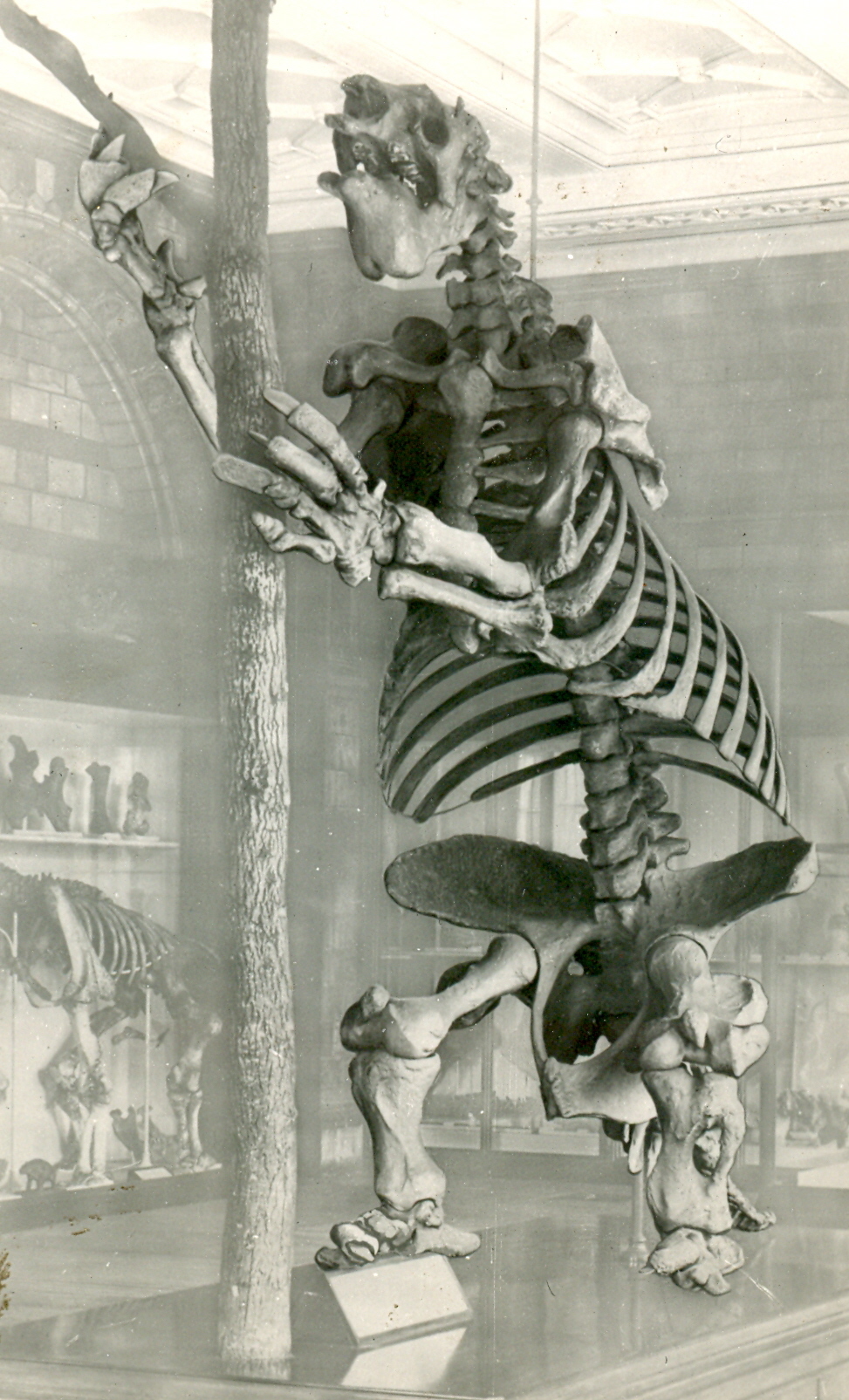
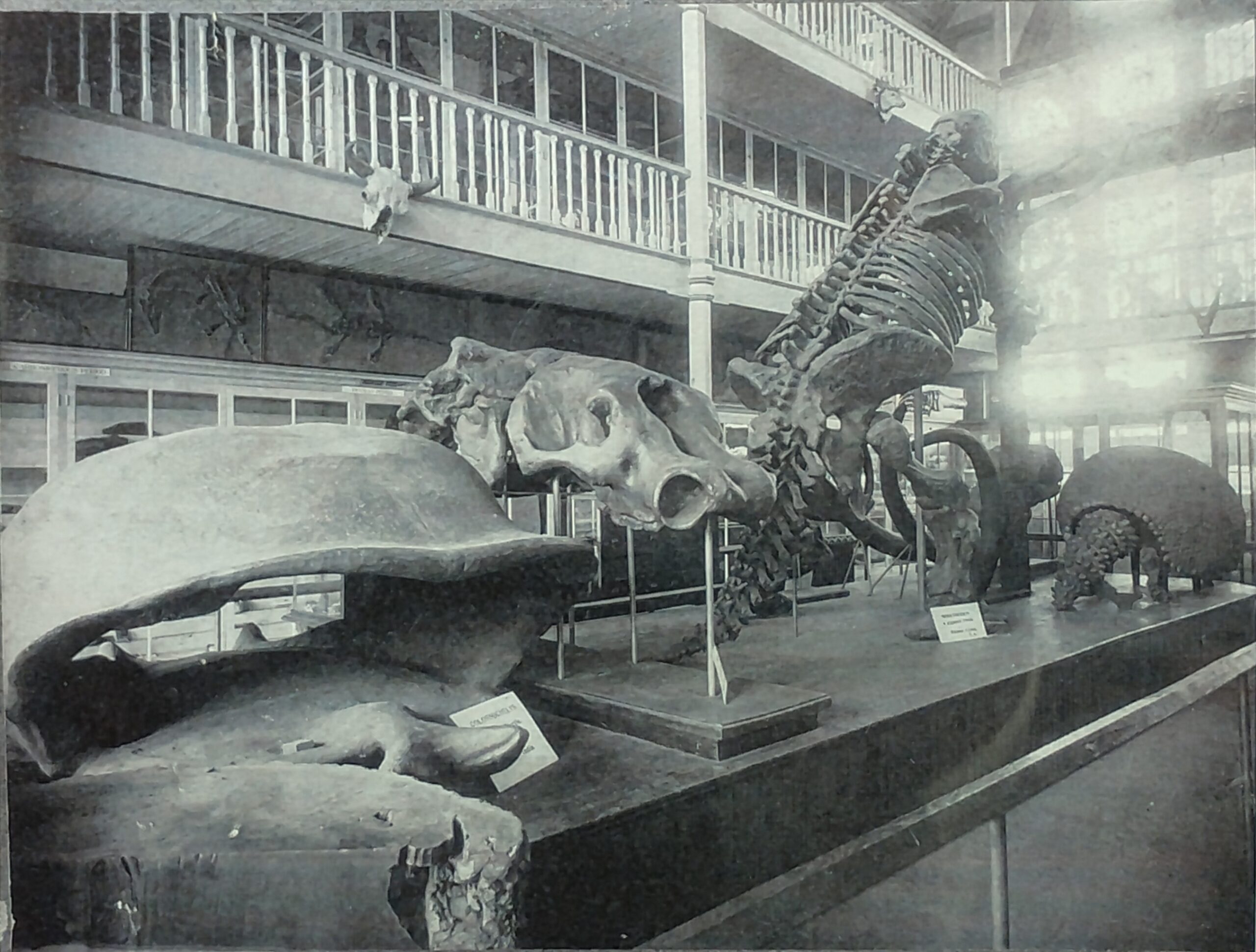
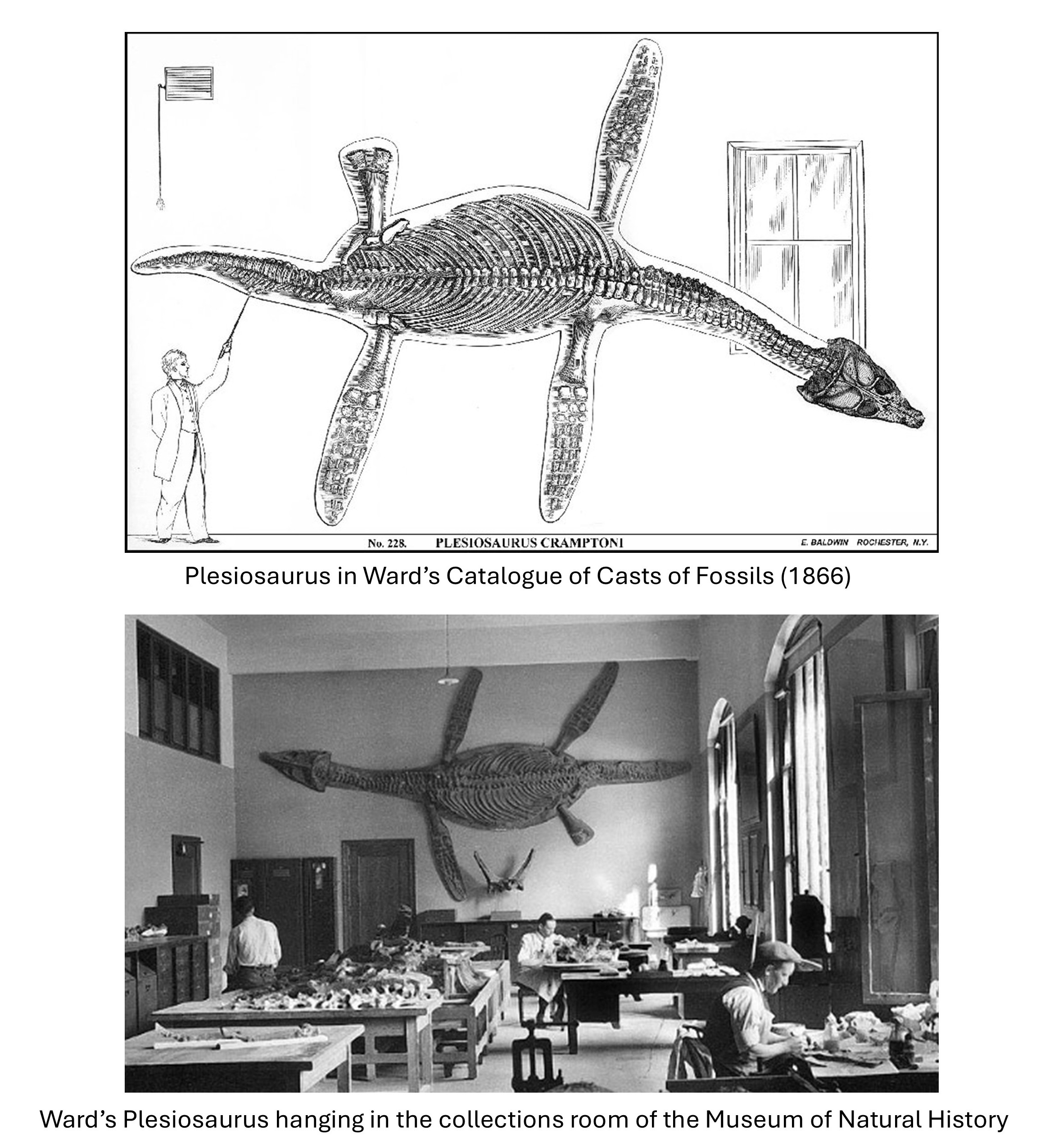
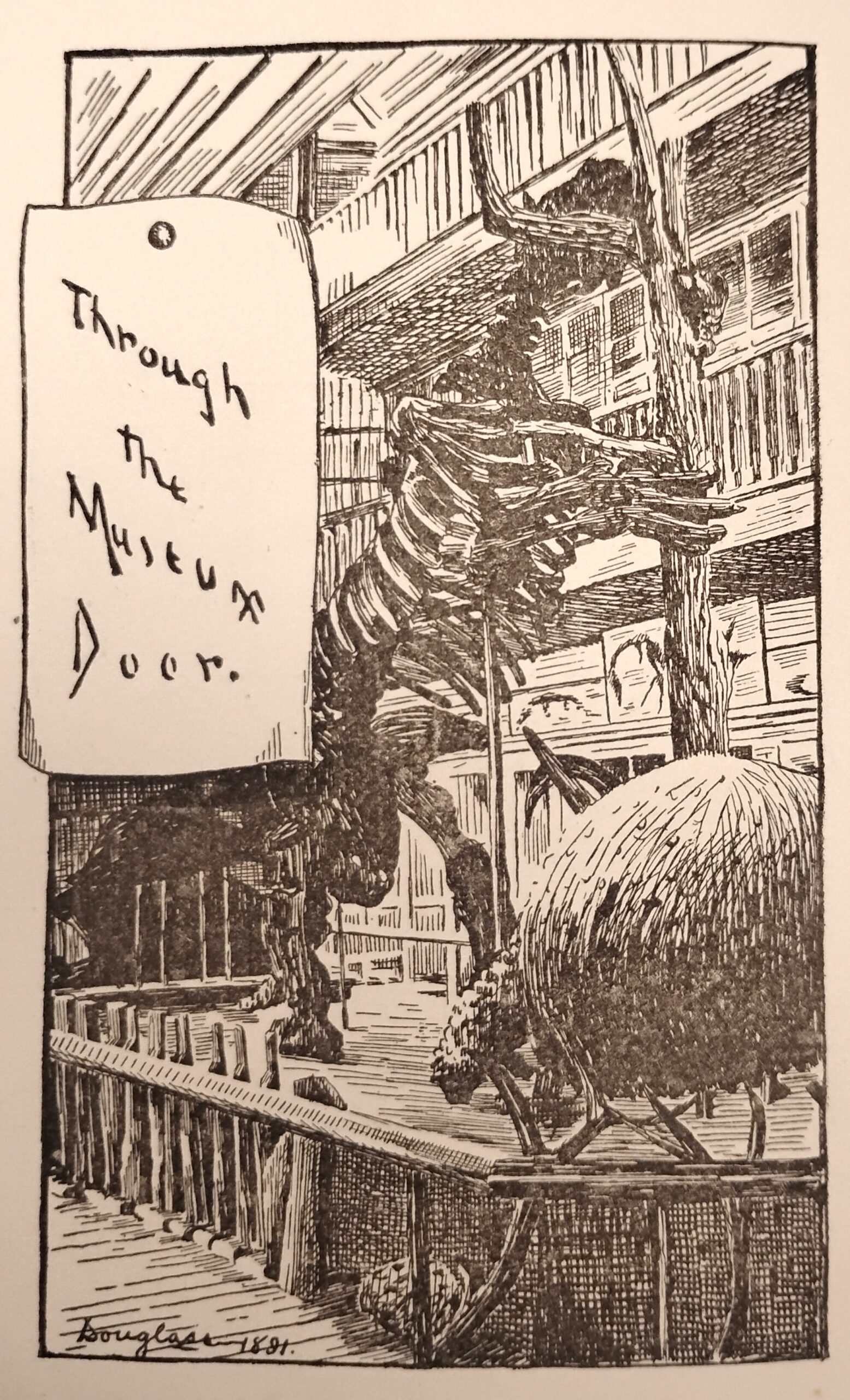 The college chose to spend much of these funds buying the “complete” line of exhibit specimens from Henry A. Ward, a charismatic naturalist and entrepreneur, who ran a series of elaborate workshops at the University of Rochester that churned out taxidermic specimens, reproduction casts of fossils, and many other exhibit collections used by museums around the country. Grinnell spent roughly $7,000 to acquire a complete set of taxidermic and fossil specimens from Ward, including three large, pre-historic items that attracted considerable attention (all three are captured in this picture, below, from Dartmouth’s museum): the Megatherium (i.e. Giant Sloth), the Glyptodont (a kind of giant armadillos), and the Plesiosaurus (hanging on the wall on the left).
 The museum remained in Blair Hall, until the 1950s, when it was dismantled as the surrounding science departments moved from Blair Hall into the new “Hall of Science” that would become the nucleus of the Noyce Science Center.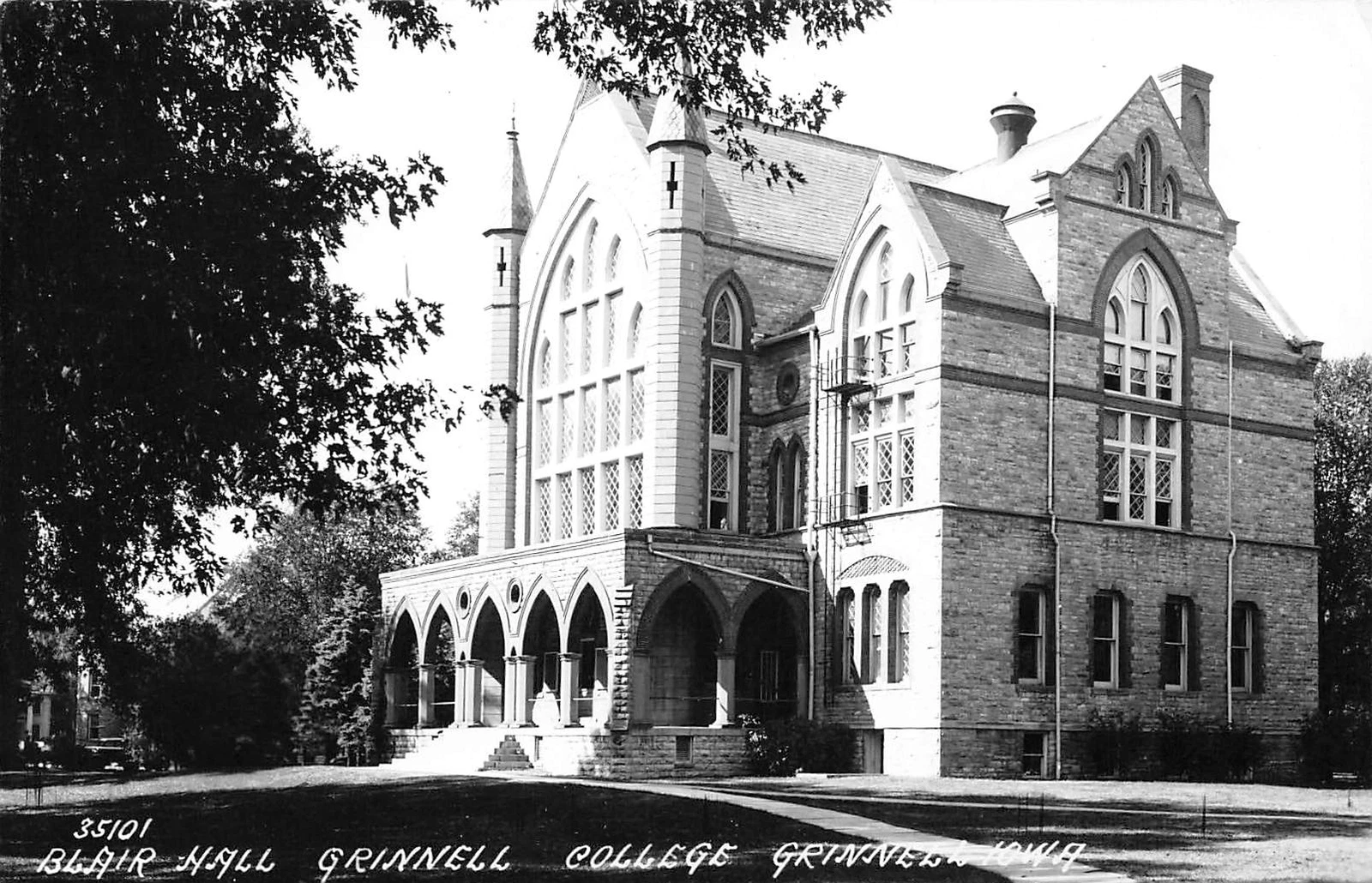
Leave a Reply