The Liberal Arts at Grinnell: The Birth of the Major (1895-1930s)

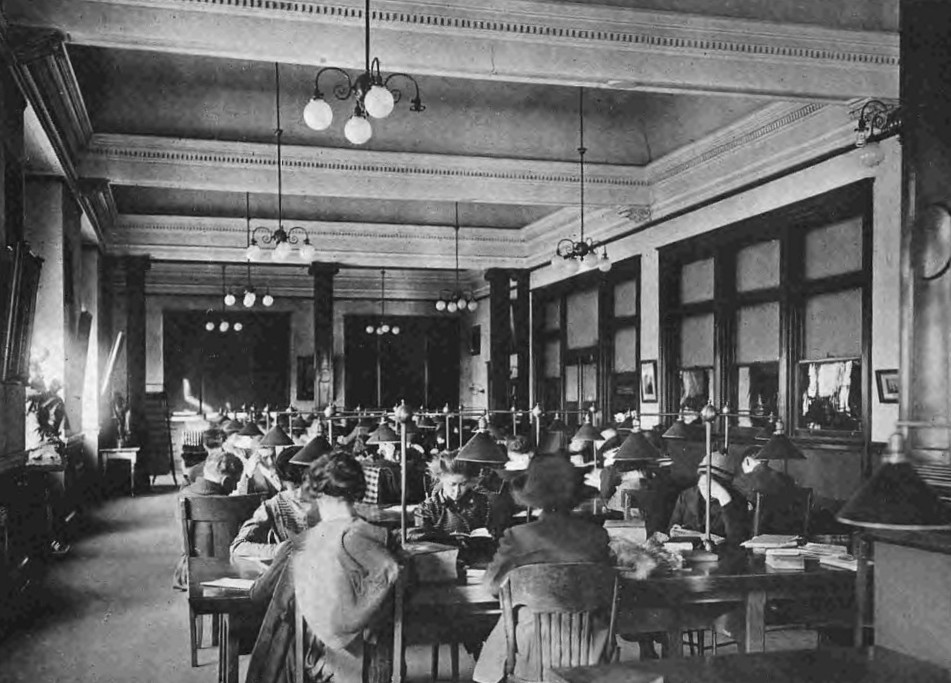
The Reading Room in Carnegie Library (1913)Carnegie Reading Room 1913
In the 1890s, there was heated debate within higher education about the appropriate way to structure the curriculum, with one camp of traditionalists favoring the established path of a carefully defined sequence of courses to be taken at each stage, while new reformers promoted a far more open curriculum that would be almost entirely elective (a trend popularized by many of the new colleges and state universities emerging in the West). Grinnell originally tried to accommodate both philosophies by having a degree track, with a well-defined sequence of courses students had to fulfill each year on their way to a bachelor’s degree, while also having an “Optional Studies” track where students could choose any array of courses they wanted, but would not lead to an actual degree.

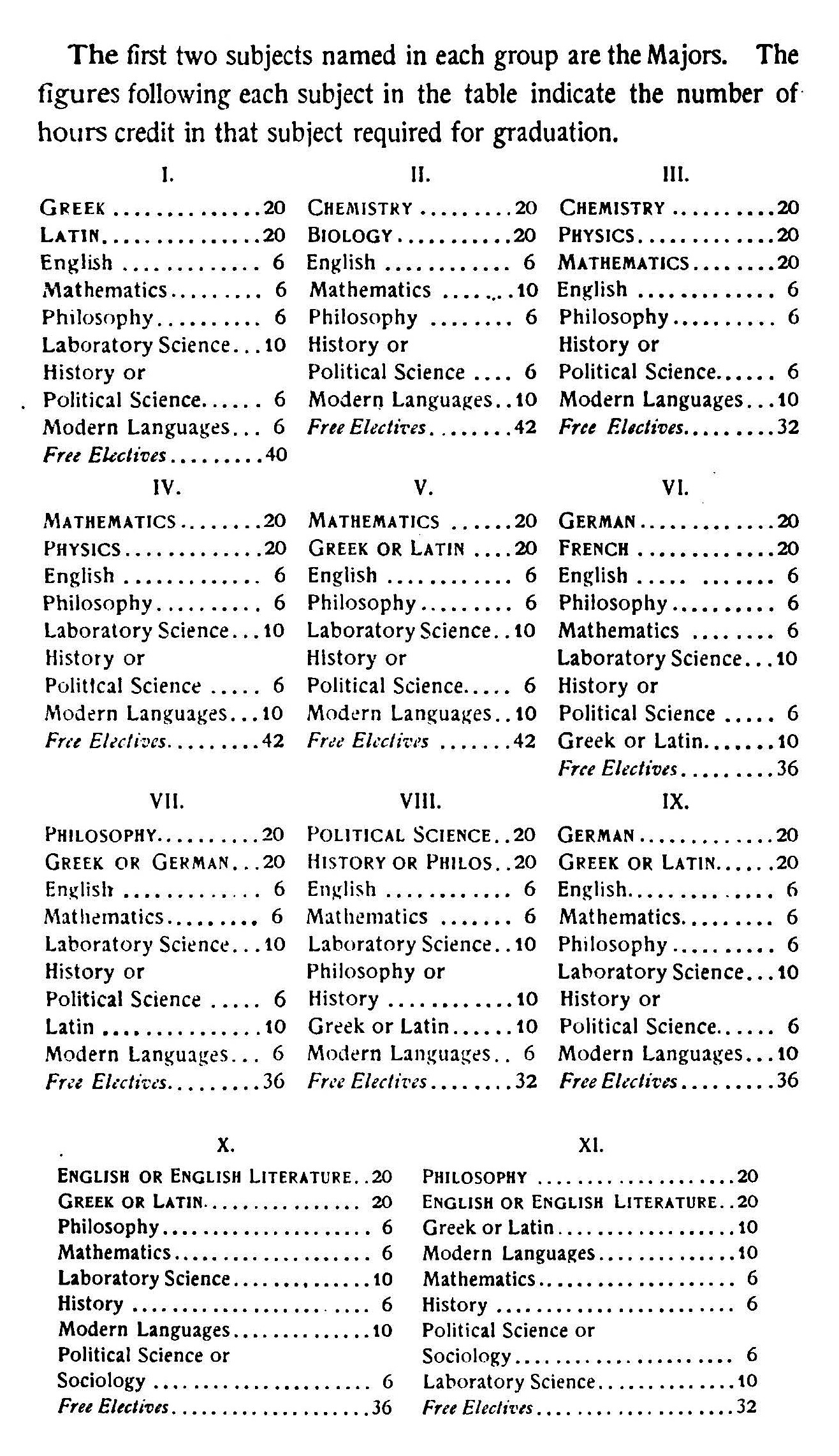
When George Gates became president of the college, in 1887, he began a series of important administrative and curricular reforms that would lead to Grinnell’s adoption of the “Group System” curriculum in 1895. This system, pioneered by the newly created Johns Hopkins’ University, tried to balance the demands of structure and choice, while addressing the mounting problem of how to incorporate new subjects into a fast-changing collegiate environment. For the first time, this system required students to choose a “major”—actually, two complimentary majors—each of which would consist of 20 credits of sequenced course work in those departments. At Grinnell, students could pair these complimentary majors in 9 combinations (increased to 11 in the catalog below), although students could also petition the newly created curriculum committee (yes, we can thank George Gates for creating the first standing committees of the faculty) to approve a new combination. In addition to their two majors (40 credits), students would also choose courses from a variety of required subjects, as specified in the catalog. But note that students could select what course to take in History, for example, or what modern language they would study (as opposed to the older curriculum which spelled out the specific classes a student would take each year).  The end result was a curriculum of roughly thirds (one third of the credits in their major fields, one third in required fields, and one third as open electives).

The college touted the virtues of this compromise, explaining that:

The Group system aims to combine the advantages of the rigid course system with those of the free elective system, while avoiding the dangers of each to maintain a proper balance between educational control on the one side and individual freedom of choice and self-direction on the other…the aim has been to organize each Group that it may afford the opportunity for a well-rounded liberal education, while preventing the waste and dissipation of energy incident to absolutely unlimited election.
To guide students in these choices, the college (for the first time ever) mandated that a faculty member should serve as an individual advisor for students who were majoring in their department.

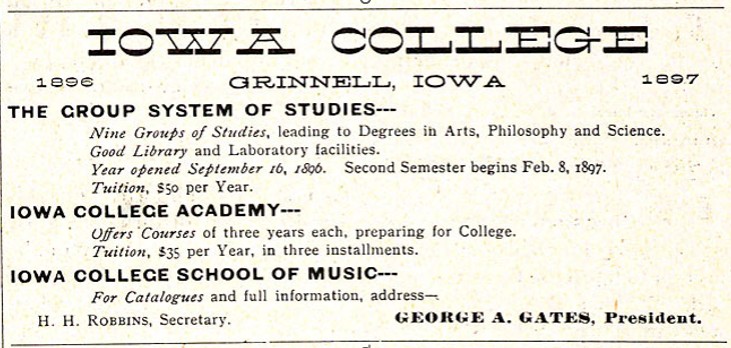
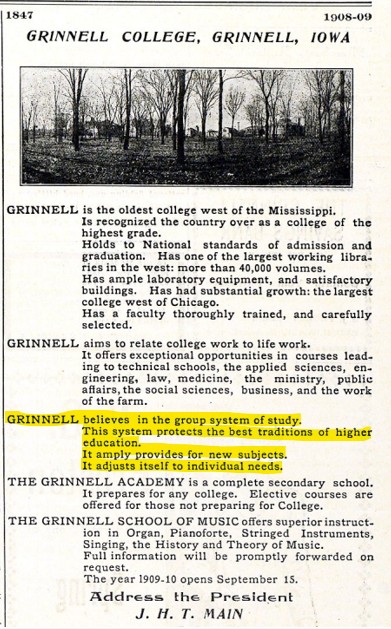
The College’s advertisements from this period (as you can see here), highlighted the group system as a defining feature of Grinnell.  While certain elements would evolve over time—the two majors, for example, became one “major” and one “minor”—the essential framework would remain in place for decades, shaping the institution.


The Liberal Arts Curriculum at Grinnell: c.1870-1895

In light of recent faculty discussions, underscoring the desire for more consistent reflection and conversation about the meaning of a liberal arts education at Grinnell, we’re going to spend some time this spring highlighting how this issue has played out over the college’s history. The early years of Iowa College—both in Davenport and then subsequently in Grinnell—saw very few students attaining a bachelor’s degree, and little structure in terms of the requirement for the B.A. (most of the students were enrolled in the preparatory academy). It was the period after the Civil War, when Grinnell’s first President, George Magoun, took charge that the faculty created an organized curriculum and set of requirements for entering college students, which would hold sway until a series of curricular reforms in the 1890s.

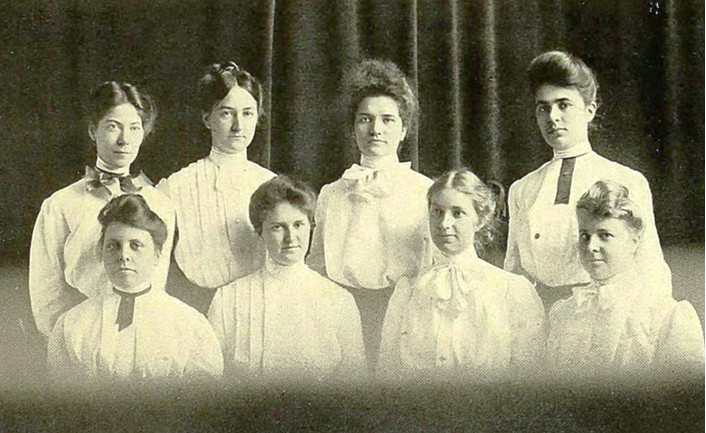
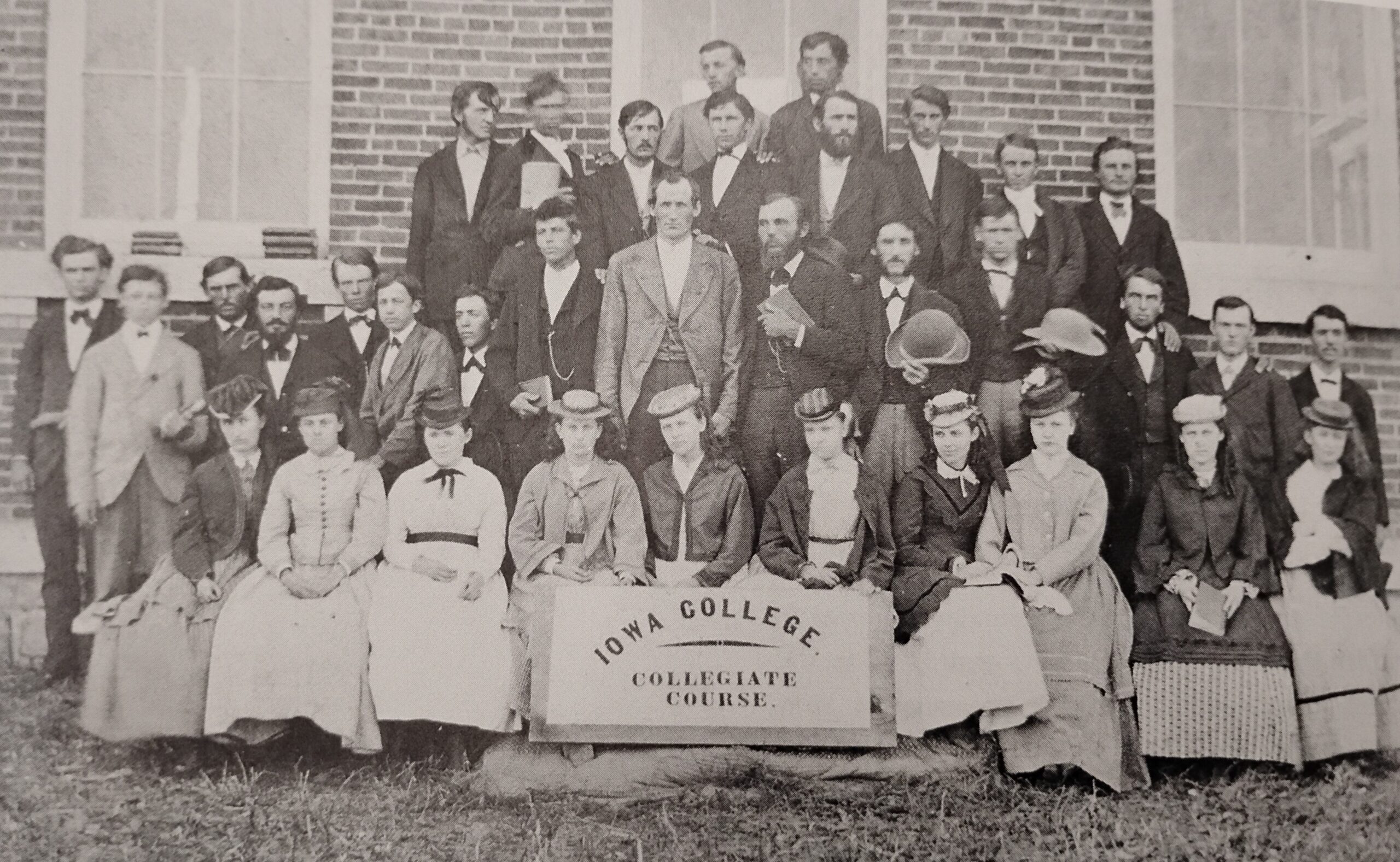
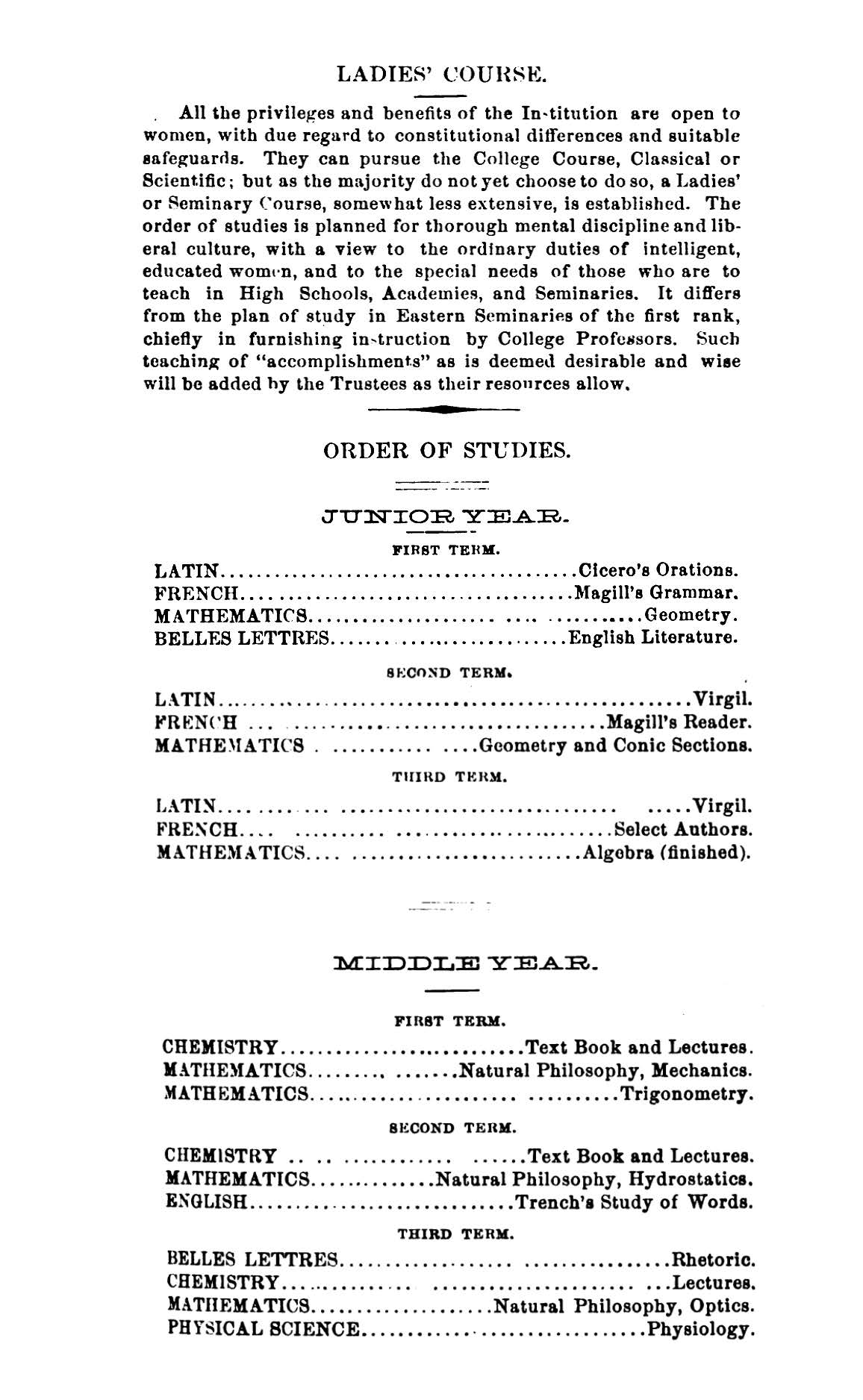
How did Grinnell approach a liberal arts education in 1870 (when the students pictured here, entered the college)?  There were four main “courses,” or tracks, that students could pursue:

1.) a classical course, leading to the Bachelor’s of Arts (A.B.) degree

2.) a scientific course, leading to the Bachelor’s of Science (B.S.) degree

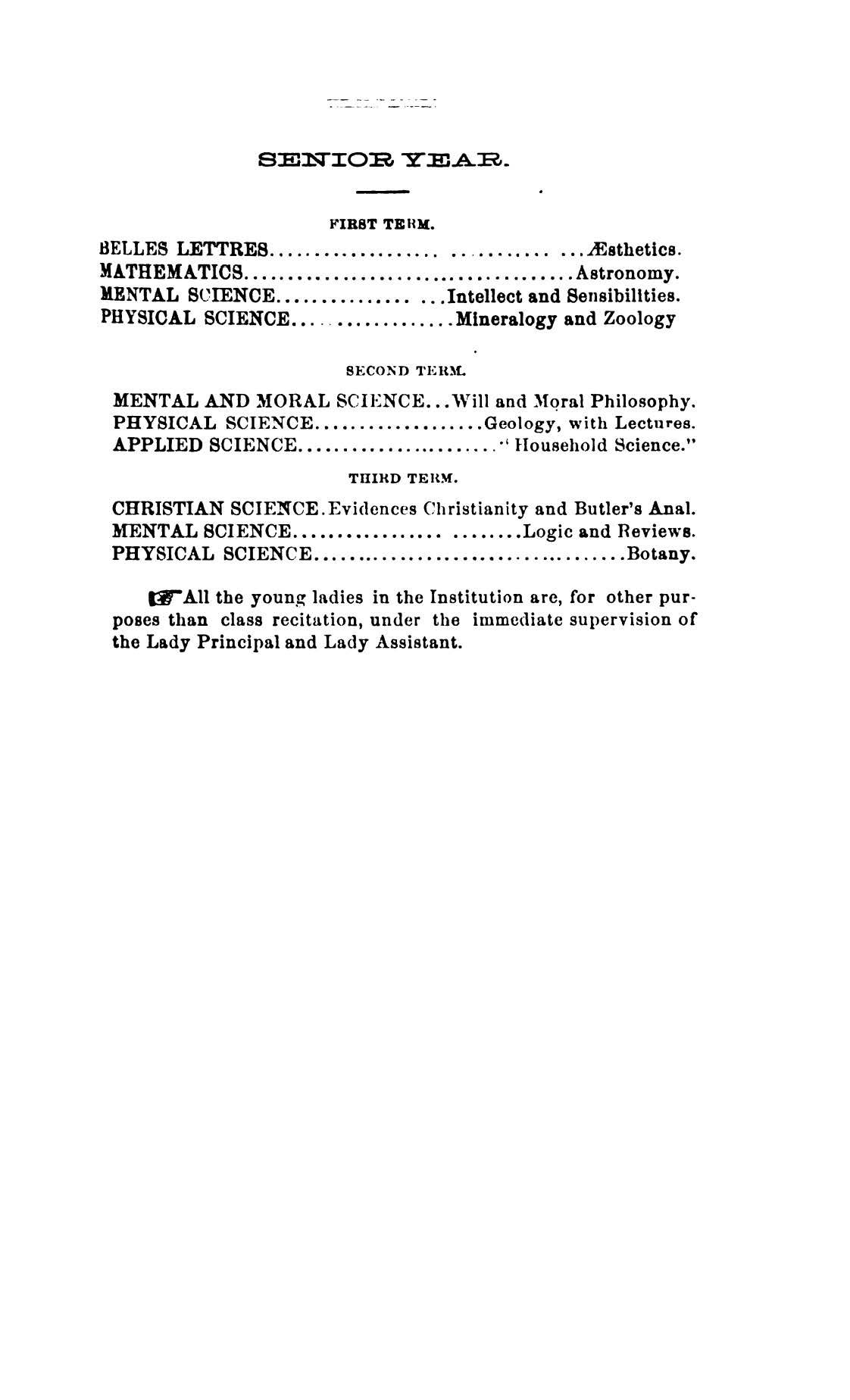
3.) a “Ladies Course,” (explained in the catalog page below) that evolved a decade later into the “Literary” course, and increased from 3 to 4 years. This course, however, led to a diploma rather than a bachelor’s degree.

4.) an “Optional Studies” course, which allowed students to freely choose the classes they wanted to take, but did not lead to a formal diploma or degree.

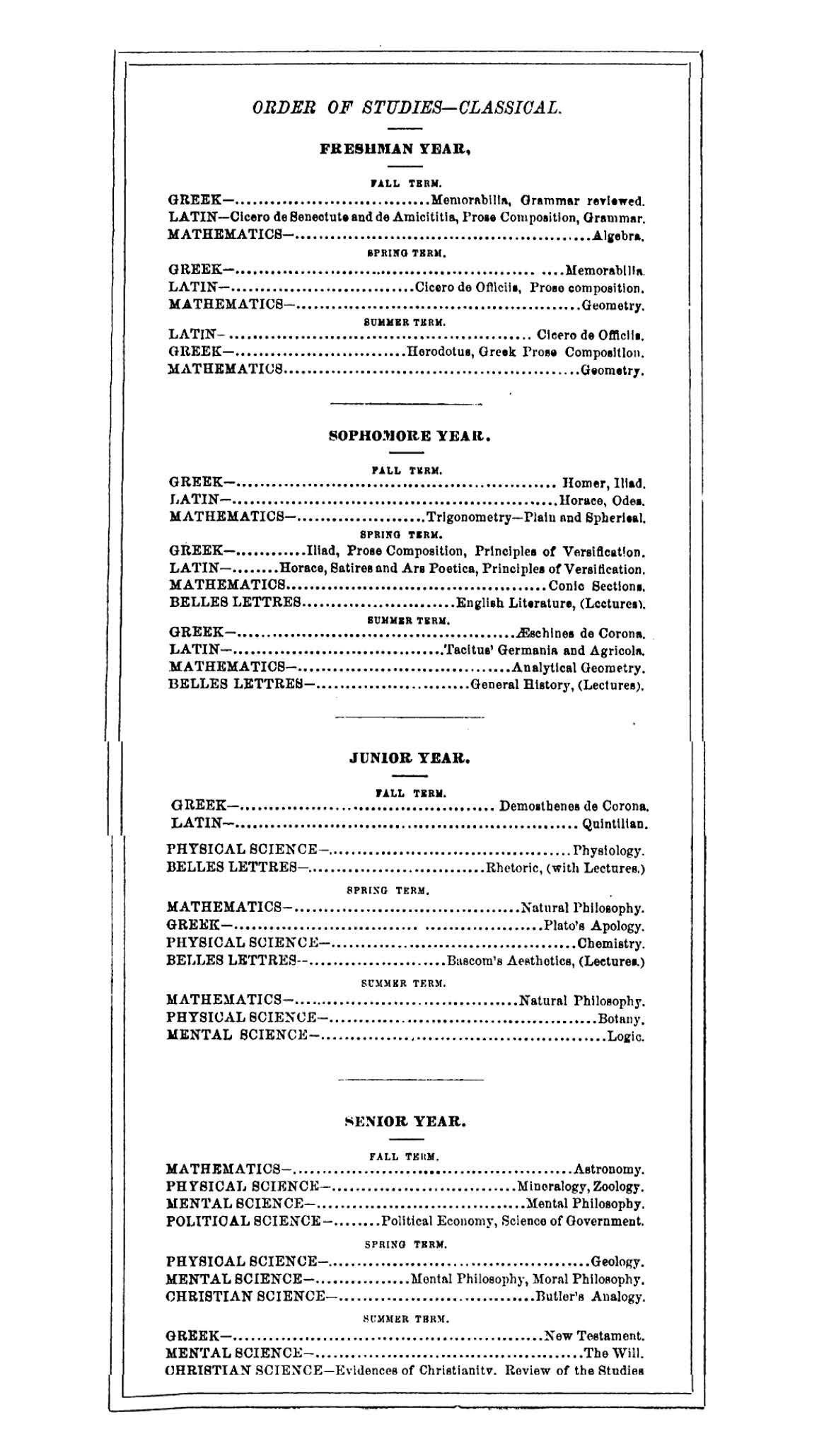
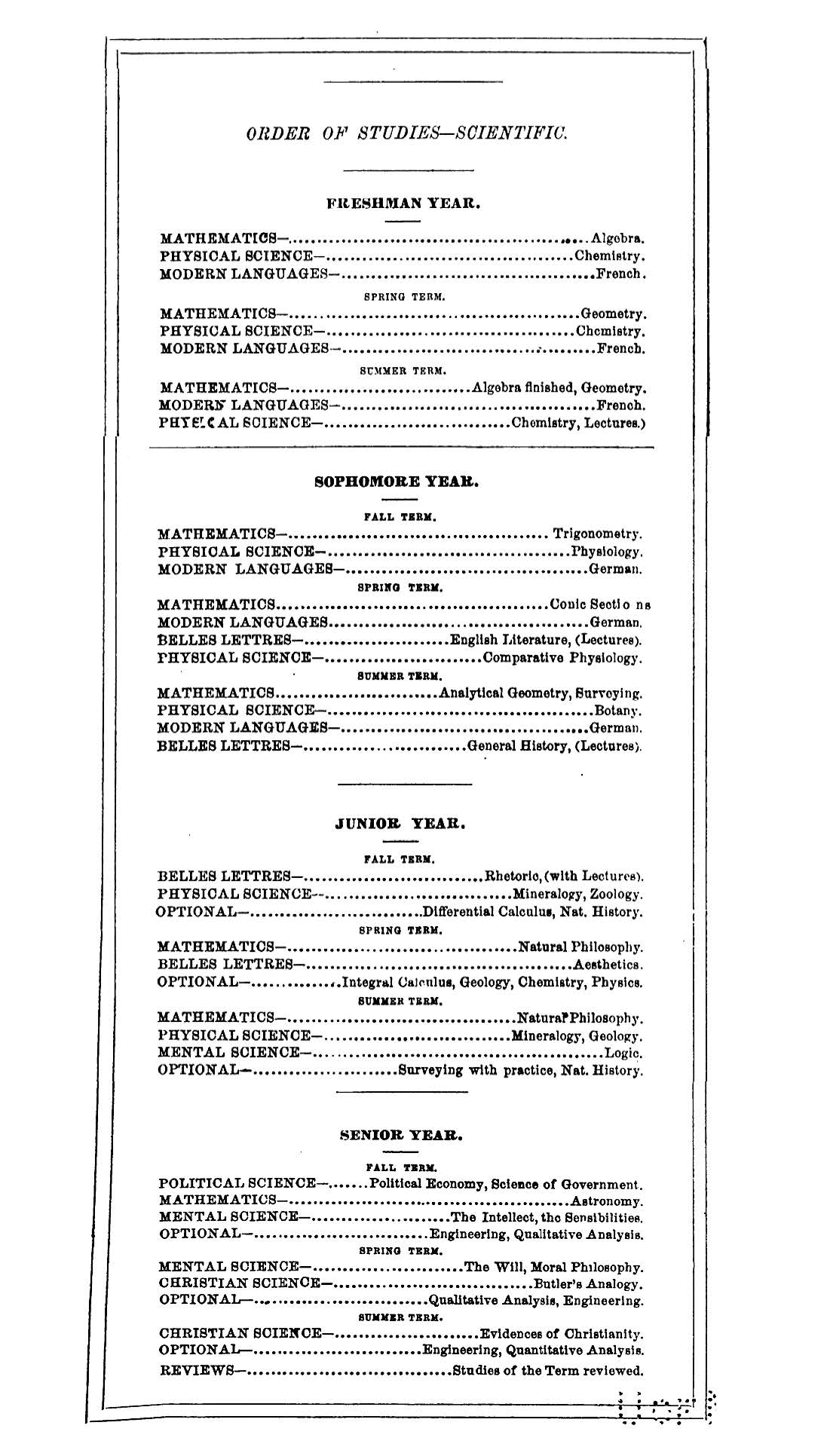
As you will see (below), each of these tracks were pretty rigid in terms of specifying the array and sequence of courses students would take each year.

Printed, here, are the course requirements and sequencing for those three main tracks, established in 1870.  All students were also required to attend religious service each morning (and twice on Sundays) while Men were required to participate in “military drill.”

In 1875, a Conservatory, or School of Music, was also created as a separate institution (although it was under the supervision of the same board of trustees as the college). It initially awarded diplomas, but by 1890, it also offered a Bachelor’s of Music degree to those who completed the full course of study involving musical theory, musical history, musical education, and demonstrated proficiency in one major, and one minor, instrument. It’s also worth noted that, at this time period, Grinnell College continued to run its preparatory Academy as well as a sizable “English or Normal School” that focused on training future school teachers. At times, the Academy and Normal school enrollment was much larger than the number of students in these collegiate tracks.

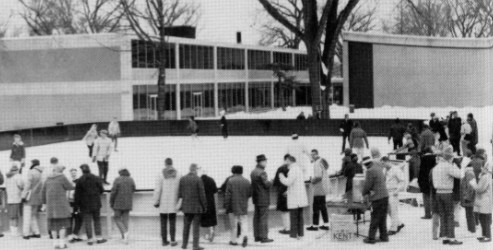
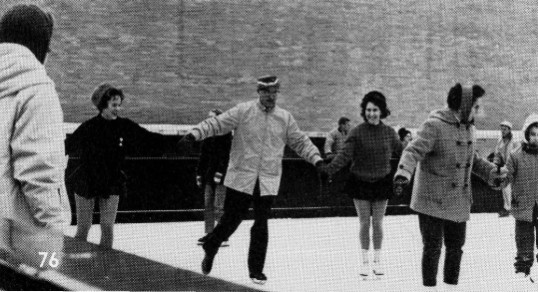
Ice Skating at Barber Plaza

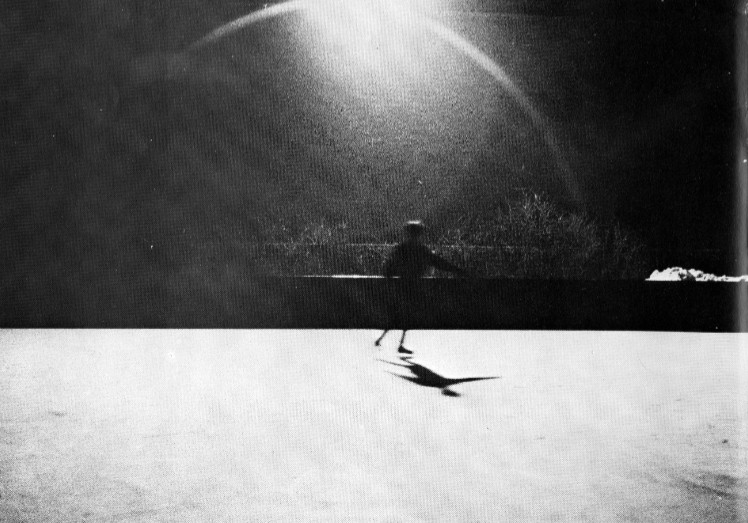
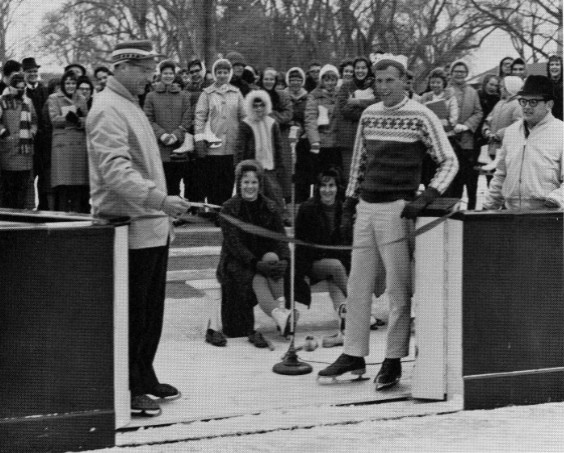
For most of Grinnell’s history, students interested in ice skating took to nearby frozen lakes (such as Arbor Lake in town, or beginning in the 1950s, to the newly created Rock Creek Lake, located seven miles west of the college), while hockey enthusiasts made use of a temporary rink set up each winter for intramural games. But in 1961, a Grinnell alumna and ice-skating enthusiast, Margaret Kyle Barber ’99, donated funds for a more permanent ice-skating rink on campus that would be open from October through March. Named, “Barber Plaza,” and modelled loosely on the ice rink at Rockefeller Center in New York City, this 7,000 square foot rink was constructed to the immediate north-east of the Fine Arts Building, and in fact, used that building’s air-conditioning system to maintain consistently frozen ice on the rink through a network of cooling channels embedded in the plaza’s concrete. During the warmer months—i.e. March through September—the plaza became a useful space for hosting outdoor dances, dinners, concerts, and other events*

At the opening ceremony of Barber Plaza, in January of 1962, President Howard Bowen spoke about the importance of physical exercise and education within a liberal arts college, which was a consistent theme of his presidency which saw a notable expansion in both areas. It also seems as if the 1950s and 1960s represented the peak of “winter culture” on campus, with an impressive range of outdoor activities, programming, and winter sports.


*Having just marked Martin Luther King day, last week, it is worth noting that Barber Plaza served as the site for a large campus gathering on Sunday, April 7th (3 days after King’s assassination in Memphis), in which hundreds gathered to mourn King’s death, to rally in support of the civil right’s movement, and to raise money for the striking sanitation workers in Memphis, TN.

Black Martyrs’ Weekend

In the wake of Martin Luther King’s assassination, on April 4, 1968, the  Concerned Black Students organization (CBS), began planning a “Black Martyrs’ Weekend” that would commemorate the one-year anniversary of Dr. King’s death, the following spring. The first Black Martyrs’ weekend took place from April 3rd to the 6th (1969), and included a range of talks, performances, panels, and lectures honoring those who had died in the struggle for racial justice, while also educating the campus and community, more broadly, about Black culture and the continuing fight for equality. That year’s program included:

  • a talk by the head of the Black Student Party (from San Francisco State)
  • a panel discussion, “In Defense of Black People—The Black Panther Party” (led by members of the Des Mones Black Panther Party)
  • a lecture by Dr. Charles Nichols on “Martin Luther King, Jr. and the present American Mood,”
  • a performance of African dance by members of CBS
  • a concert by The Jackson Five
  • a screening of Martin Luther King’s speech, “Remaining Awake through a Great Revolution.”
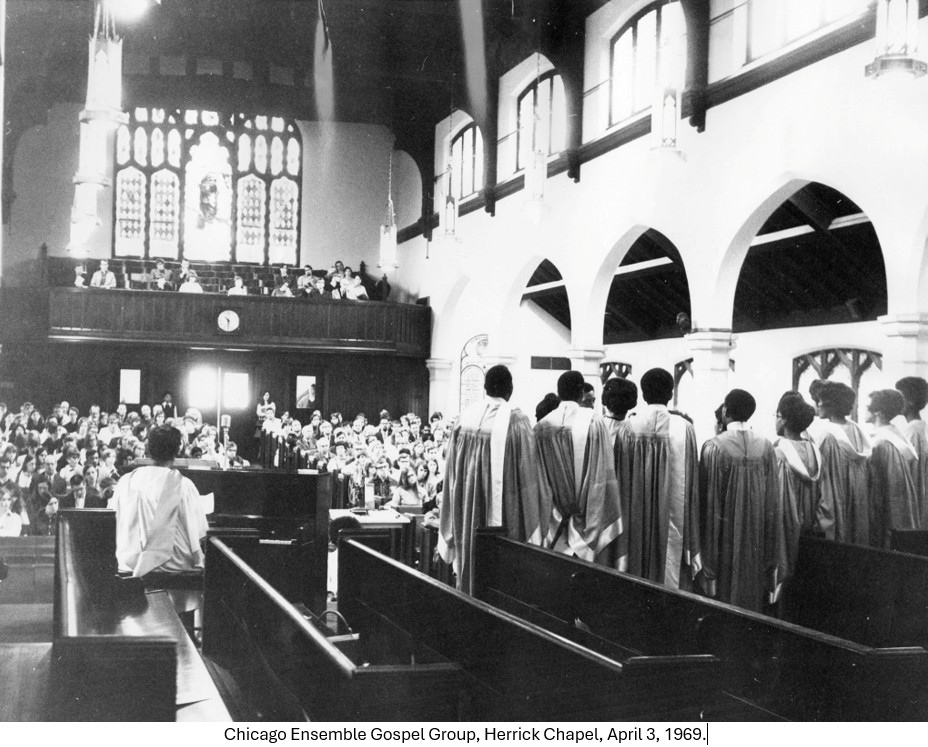
  • a performance by the Chicago Ensemble Gospel Group (pictured here)
  • a sermon by the Father Kwasi Benefee, a black liberation theologian/priest.


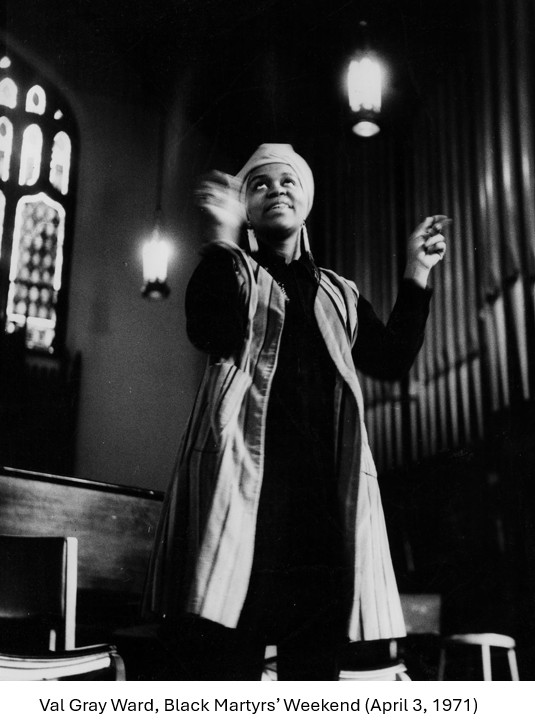
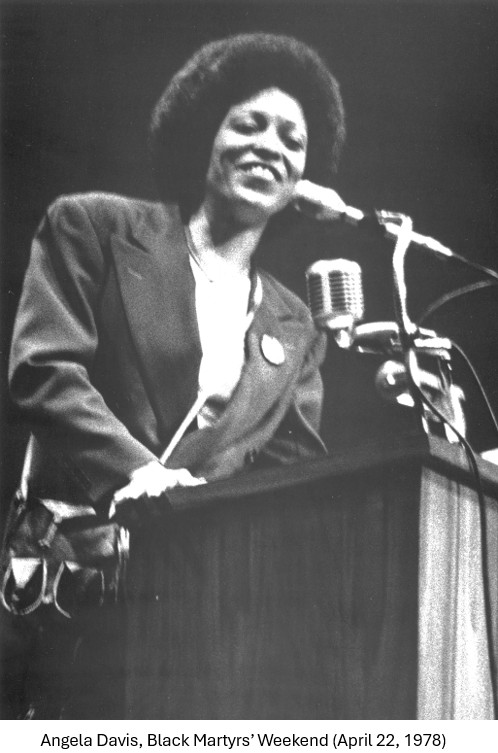
While some events were held in the Forum, many of the talks and performances took place in Herrick Chapel, which would serve as the main site for future iterations of the Black Martyrs’ Weekend that were held throughout the 1970s, and would include many prominent figures like Angela Davis, Gwendolyn Brooks, Dick Gregory, Herbie Hancock, and more.

On today’s campus, the commemoration of Martin Luther King has shifted to January, with the advent of the federal holiday marking MLK Day, in the 1980s. There is something fitting, however, about the fact that this year’s MLK Day speaker, Jamelle Bouie, will delivering his address on “The Civil Rights Movement and the Reconstruction Amendments,” in Herrick Chapel (this Thursday evening). It’s a space, and a pulpit, that has a rich tradition associated with this topic, thanks to the work of the CBS and others who began this process more than fifty years ago.

Winter Break

The Fall semester is now officially over, and the college will be on winter break until January 20th.

Enjoy the holidays!

The Uncle Sam’s Club Holiday Dinner

One hundred years ago (on December 16, 1925), the students of Grinnell College started a new holiday tradition by hosting a special Christmas dinner for local children from the Uncle Sam’s Club. The Uncle Sam’s Club was a local organization that had been created by Grinnell students at the turn of the century to provide programming, education and recreation to local kids at time when there were very few such programs or services. It proved so successful that, within a few years, they had raised enough funds to build a large clubhouse on the south side of town, where more than 50 students a year volunteered to work with hundreds of local kids on everything from art classes to Sunday school to sports leagues.

The holiday dinners became an annual tradition that grew in size, so that by the 1950s, there were as many as a 150 children attending these Christmas feasts, held in the Cowles Dinning Hall (pictured here). The meal consisted of roast meats, served with almost a dozen different side dishes, and capped off with special ice cream for dessert. These meals took on added importance during the 1930s and 1940s, when the Great Depression, and then the rationing of the war years, made this kind of holiday feast more extraordinary and appreciated. The tradition also grew to include after dinner entertainment—ranging from variety shows to magician acts to movies—as well as distributing Christmas toys.


It may be hard to believe, today, but the holiday calendar used to be even more packed with events, parties, festivals and fetes that Grinnellians somehow managed to squeeze into the last week of the semester. And among these, the Uncle Sam’s Club Dinner always proved to be a favorite.

Baroque Legacies: The Life & Work of Jennifer Williams Brown

Last week, Jennifer Williams Brown, Professor of Music, passed away at her home in Grinnell after a long battle with ALS. Prof. Brown was a distinguished musicologist and performer, who specialized in early modern opera (particularly translating and analyzing the work of Francesco Cavalli). She taught baroque music and dance at LSU and the Eastman School of Music before joining Grinnell’s Music department in 2005.


Twenty years later, at the 2025 commencement, President Harris’s special recognition citation (marking Prof. Brown’s transition to Senior Faculty Status) captured the wide-ranging contributions she made to the college, and to her field, through a remarkable record of teaching, scholarship, and service.

For this Archive Alcove post, we wanted to focus on one revealing artifact in the college’s collection that illuminates some of the creativity, passion and expertise that Prof. Brown brought to her work with students. The violin (pictured here) is a special instrument that was carefully crafted during a summer MAP by one of her students, Katie Krainc ’17, who wanted a project that would tie together her interests as a Physics and Music major. The challenge of crafting such an instrument—modelled on the baroque violins made by famed Cremona luthiers like Amati and Stradivarius—required complex craftsmanship married to an understanding of acoustics, geometry, and musicology. “To me, this is a model kind of MAP,” Prof. Brown explained in an interview at the time. “It’s taking academic knowledge and historical research and applying them practically to the process of making the instrument. And then, the ultimate test is the music it can make. To me, it’s totally perfect.”


Prof. Brown and Katie travelled to the National Music Museum that summer to study, up close, historic examples that would serve as models for the violin (pictured here). Ultimately, the violin became part of the larger collection of historic instruments used by Collegium Musicum, the college’s early music ensemble that Prof. Brown created and directed. In that sense, it represents the larger legacy of instruments and scores, people and performances, that will live on as a testimony to Prof. Brown’s impact at Grinnell.

Those interested in learning more about the college’s fascinating collections of musical instruments are encouraged to visit their website:  https://omeka-s.grinnell.edu/s/MusicalInstruments/page/welcome

To learn more about Collegium Musicum, including an inventory of the early instrument collection, you can visit:https://www.grinnell.edu/academics/majors-concentrations/music/ensembles/collegium-musicum

Grinnell’s Swim Test

This 1930s cartoon, from a student-run magazine, The Malteaser, pokes fun at one of the relatively new requirements for graduation: passing a swim test. When the college built its first swimming pool, in 1927, it changed its physical education requirements to include a series of mandatory swimming classes, which could be circumvented by passing a swim test, administered at the start of each school year.

Swim tests became widely popular during the 1920s and 1930s, with most colleges and universities adding them to their list of graduation requirements. This trend reflected three inter-connected developments: 1.) the military’s recognition of the importance of teaching swimming to soldiers and sailors (which began at the service academies around the turn of the century, and then rippled outward through ROTC programs at many other colleges in the wake of WWI) 2.) progressive-minded campaigns to teach swimming as a life-saving technique (in an era when drowning was one of the leading causes of accidental death, and when access to pools or swimming instruction was confined to elites) 3.) the rapid expansion of physical education as a serious component of college curricula in the opening decades of the 20th century.

Over the years, the swimming test became one of a number of physical education tests that students had to pass for graduation. In 1961, for example, the college revised its requirements to include multiple physical fitness tests, conditioning tests, a junior “exam” in in a major and a minor sport, and most curious of all, a “dance test” that college women had to pass (in either modern, classical, or folk dance).

All of these required tests were abolished 55 years ago, when in December of 1970, the faculty voted to eliminate all physical education requirements as part of the larger overhaul that led to the open curriculum-tutorial system we have today. Interestingly, it took two faculty votes to settle the matter: the first time, the faculty voted to keep the physical education requirements, which led to some consternation and a second faculty meeting (in which an additional 30 or so faculty attended, helping to push through a majority vote in favor of jettisoning PE requirements).

One beneficiary of the change was Herbie Hancock, who did not receive his Grinnell degree in 1960, because he had not taken the swimming test or completed swim classes. With the change in requirements, the college awarded Hancock his B.A. in 1976, which helps explain why there has always been some confusion around his status (Grinnell lore often links him to other famous alumni, like Gary Cooper, who left before finishing their degrees, while Hancock’s own website, and many other sources, describe him as having received a B.A. from the college).


Poignant Thanksgiving Letters

One of the memorable collections housed in the college archives is the Jimmy Ley Collection, which contains a number of letters, photographs, and personal items belonging to Staff Sergeant James J. Ley (ex-’44). Ley decided to leave Grinnell College in 1942 to join the Army Air Corps, eventually becoming a gunner/engineer on B-26 bombers, flying 25 combat missions over occupied Europe. One of the letters to his parents, written November 25, 1942, thanks them for the “Thanksgiving box” they had sent to his training base in Texas: “Of course it was all gone in about fifteen minutes, but my memory still rests with that fine box of goodies.” He went on to explain that Thanksgiving day, itself, would be their last day of training school, and they would ship out the next morning. Reflecting on the holiday, James wrote:

We’re all going to have so much to be thankful for this year. Our health, happiness, the way the war is going, and ever so many other things…I wonder where I’ll be a week from now?

Jimmy ended up in England, assigned to the 451st bombardment Squadron, flying missions across the channel until his plane was shot down on the 29th of February, 1944, over France. The fate of the crew remained unknown for months, but one of the most poignant letters in the collection is a Thanksgiving missive (dated Nov. 23, 1944) from the mother of the plane’s pilot, Mrs. Anna Freeman, to Jimmy’s mother (below). Having learned that her son, Lt. Clifton Freeman, and three other crew members from the plane had been recently confirmed as killed-in-action, she acknowledged the pain of the moment: “This is Thanksgiving, but it has been a very lonely day for us.” She pointed out, however, that 3 of the crew (including Jimmy) were still considered missing-in-action. “I pray you get good news from your Son soon,” and she confessed that “we are praying and living in hopes that some mistake has been made and our son is safe, somewhere.” In her letter, she included a photograph of the B-26 crew, listing each member, their role, and their home town (that original picture, now preserved in the Ley collection, is reproduced below). S/Sgt Jimmy Ley was in the front row, on the left, while Lt. Freeman, was in the back row, second from the left, proudly wearing an Ohio hat (as his mother pointed out). Eleven months later, the War Department declared Jimmy Ley (and the other missing crew members) dead, and posthumously awarded S/Sgt Ley the Distinguished Flying Cross and the Air Medal with Oak Leaf clusters, presented to his family at a funeral service held in his hometown of Lakota, Iowa.


Carrie Adeline Barbour: Artist, Paleontologist, & Professor


Last week’s post focused on the college’s museum of natural history; or more precisely, the third iteration of this museum, that was assembled after the devastating cyclone of 1882. As the new collection began to come together in Blair Hall, the college hired its first geologist and paleontologist, Erwin H. Barbour, who became the Stone Professor of Natural History, charged with overseeing the museum and related coursework. In addition to his academic training, Erwin had spent several years doing field work out west, serving as assistant paleontologist for the U.S. Geological Survey.

But Erwin Barbour did not come to Grinnell alone. His sister, Carrie Adeline Barbour, also joined the faculty at this time, teaching studio art courses in carving, ceramics, and porcelain painting (which she had studied at Oxford Female College, later absorbed into Miami of Ohio, and at a fine arts school in Cincinnati). Given the close links between art and science that existed in the world of natural history, as well as the tendency for family members to participate in the collective work of science, in an era before paid staff and technicians, it is not surprising to discover that Carrie Barbour became involved in the geological and paleontological work of her brother. Carrie was also personally drawn to the subject, revealing that her mother, Adeline Barbour, had instilled in both of her children a deep love of natural history and collecting specimens.

On the right of the image, Carrie Barbour stands on a short ladder and uses a chisel to work on the dinosaur femur. The femur is fastened to wooden boards, which hold it vertically. In the background are tables and shelves with other artifacts and equipment. Digitized from glass-plate negative.

Eventually, Erwin left Grinnell College in 1891 to establish a geology department and museum at the University of Nebraska. Carrie was torn between continuing her career as an art professor, and taking up a position at Nebraska, working with her brother as a full-time paleontologist. “I realized I couldn’t divide my time between the two jobs and accomplish much in either,” she later recalled, “Fossils fascinated me so much I decided to continue a thorough work with them.” Over the next 40 years, Carrie Barbour carved out a remarkable career in paleontology, becoming an assistant curator of the museum, a professor of paleontology, an author of noted scientific papers, and perhaps most unusual for a female scientist at this time, a leader of field expeditions and excavations.

Although Carrie Barbour eventually received recognition, and an academic position of her own, her experience is also part of a larger story about the often-hidden role that wives, sisters, and daughters played in an age when academic work was often a shared, family endeavor while academic publication and credit was limited to the (mostly male) professoriate.


Page 2 of 8

Powered by WordPress & Theme by Anders Norén