Stop the Presses! (Special Edition)

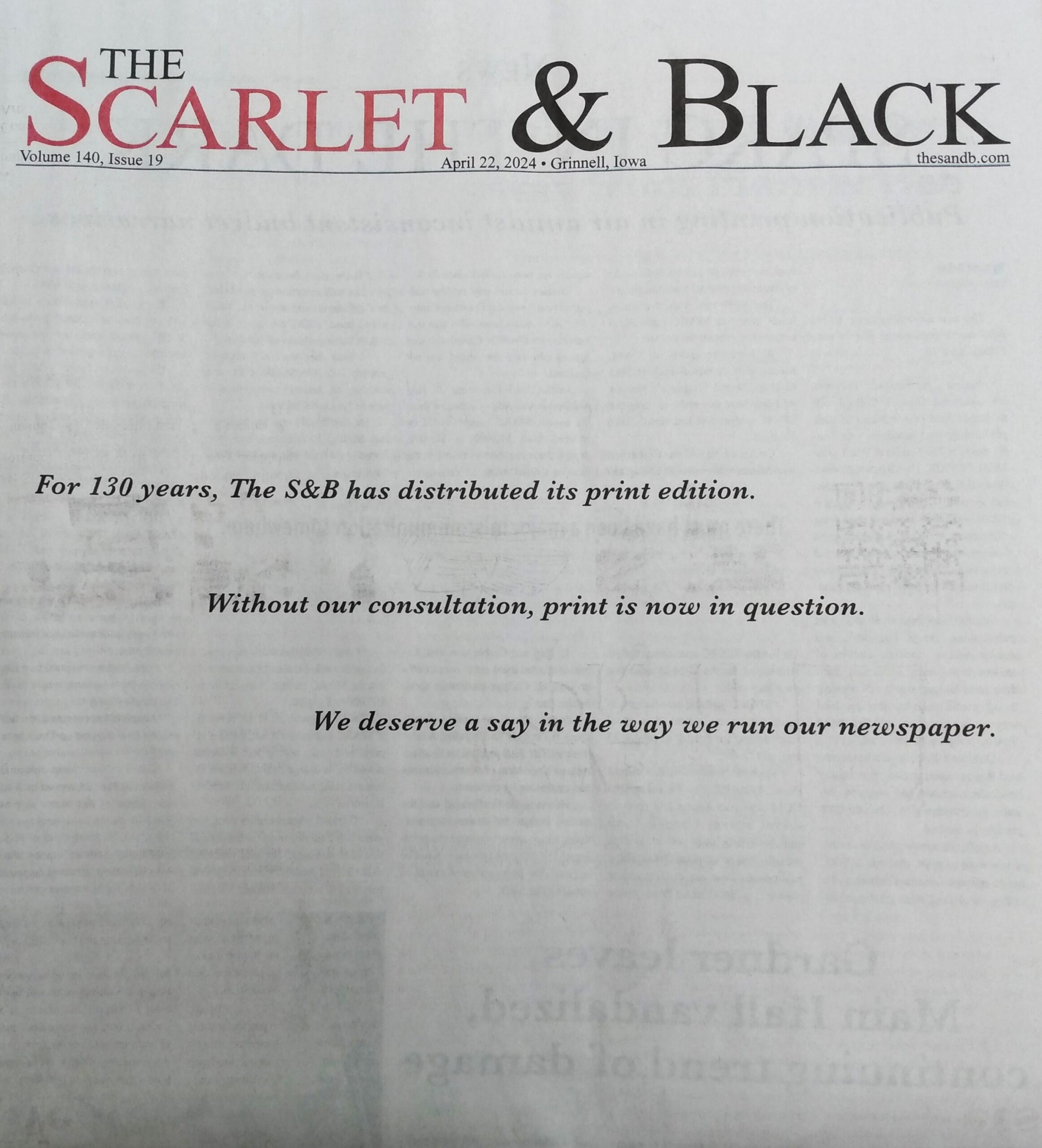
Scarlet & Black (cover page) Aprill 22, 2024
This striking cover of the S&B (this week), drew attention to budget cuts that threatened to end the 130-year tradition of print publication of the newspaper (which for many years, carried the tagline “Oldest College Newspaper West of the Mississippi River in its headline banner). It may be interesting to note that this is not the first time the publication has battled with the administration, printers, or budget cuts to keep the presses going. The 1960s, in particular, witnessed several battles unfold on these fronts…
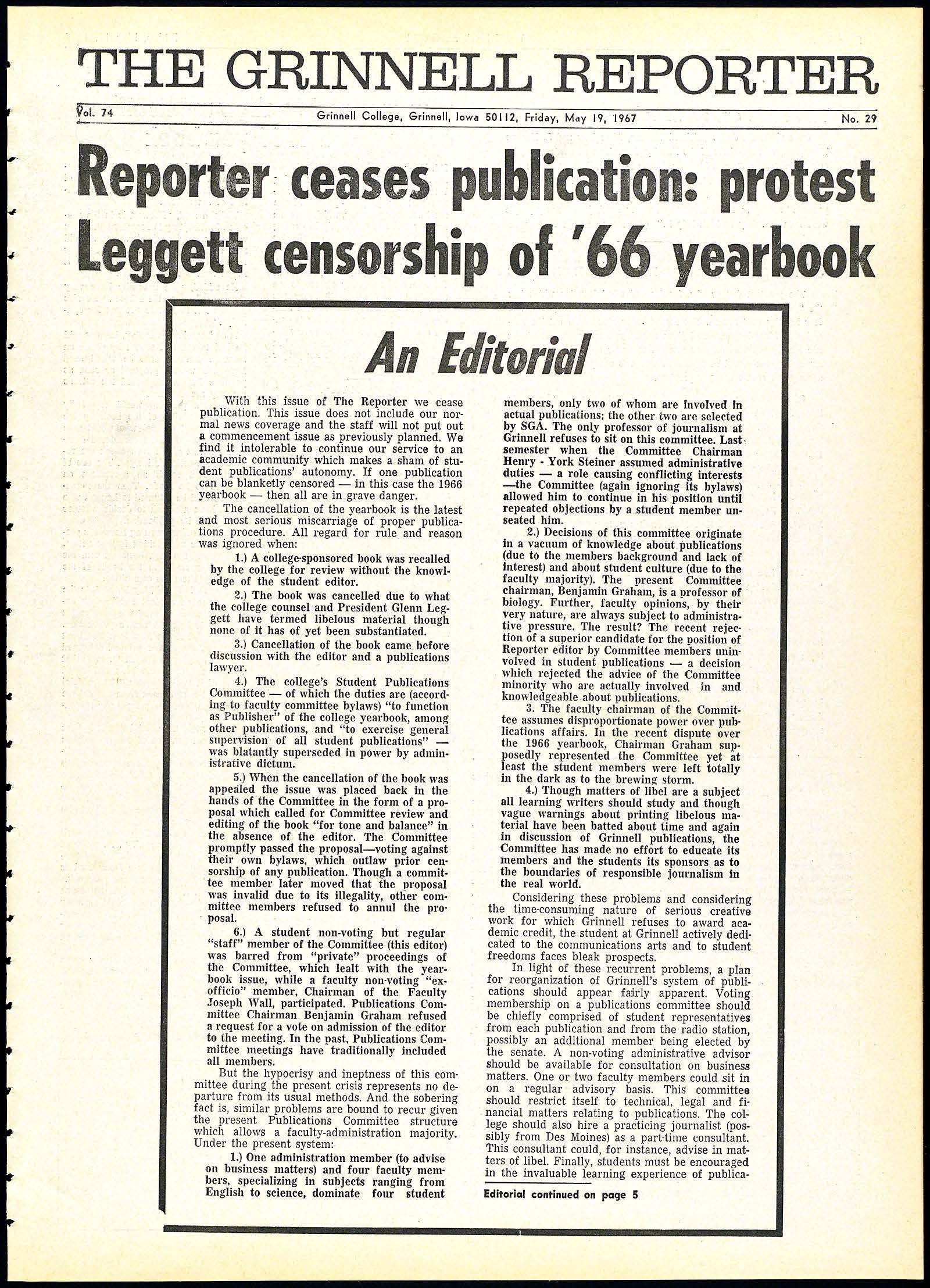
“The Grinnell Reporter” (cover page) May 19, 1967

The college refused to allow students to publish the 1966 yearbook because it contained language and images they found inappropriate. The editors and staff of the S&B decided, therefore, to suspend publication of the newspaper, issuing this special edition under the name “The Grinnell Reporter” to announce that they would not resume printing the newspaper until the President reversed the decision regarding the yearbook.

Two years later, the S&B would face a new series of battles…

Scarlet & Black (mimeographed cover pages) Nov 21st & Dec 5th, 1969

An anti-war editorial, and some reprinted articles from the student magazine, Pterodactyl, caused the Newton printer, E.K. Shaw, to refuse to continue printing the college newspaper, and it took several weeks to find an alternative printer for the paper.
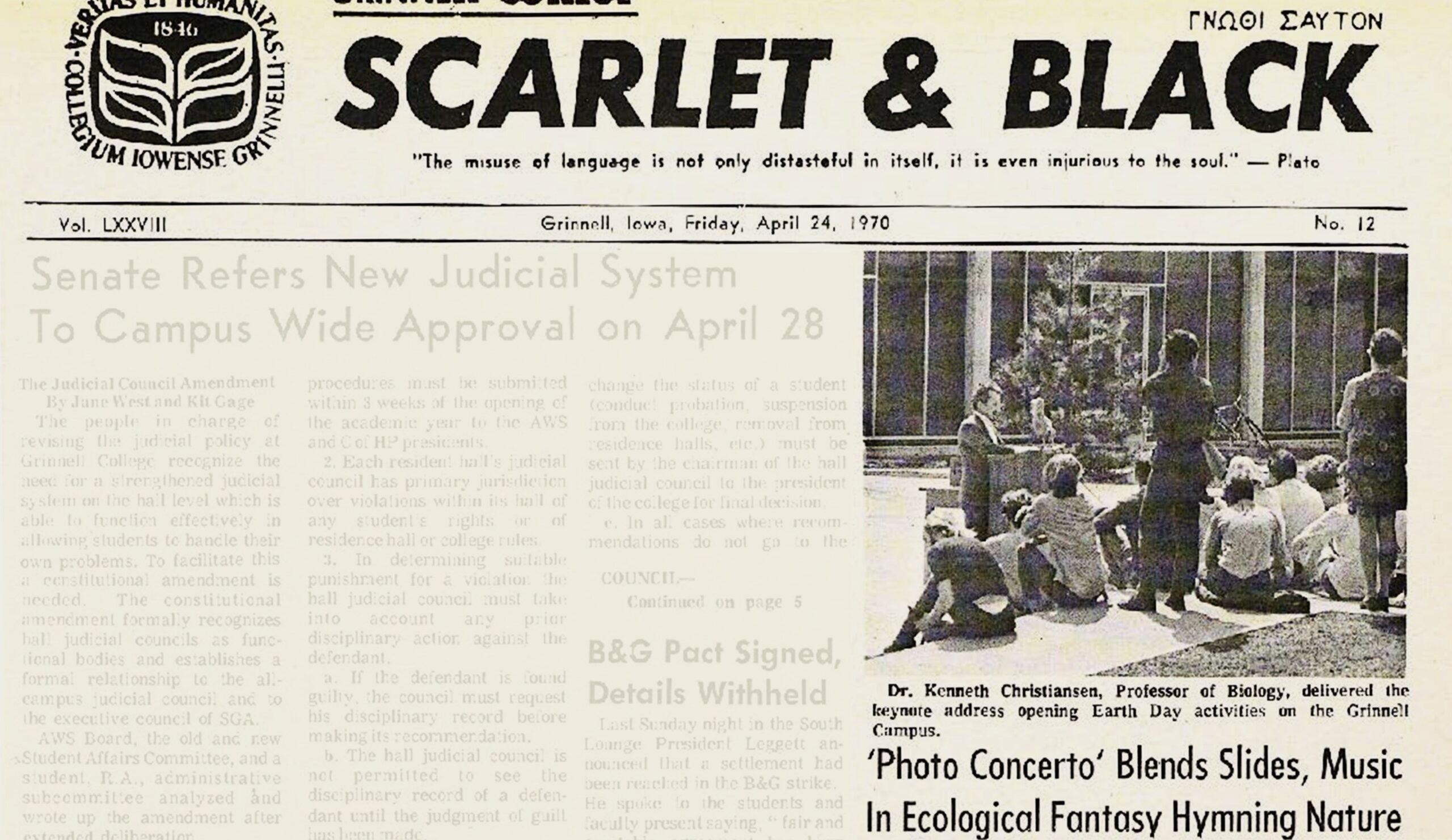
First Earth Day: April 22, 1970

First Earth Day: April 22, 1970

Grinnell College marked the first Earth Day, which began in 1970, with a series of teach-ins, programs, and events, culminating in a campus wide “macro-biotic” dinner, in which students grew, harvested, and cooked all their own organic food. Students and Faculty also created the LEAP program (Local Effluents and Abatement Procedures), which lasted for 3 years, and involved more than 500 students, who enrolled in special classes and collective research projects that studied pollution, energy use, food policy, and recycling on campus and in the local community.

Images:
• S&B cover page, April 24, 1970, showing Prof. Ken Christensen, giving the first of a series of talks and teach-ins that culminated in an address by Paul Erhlich (whose recent book, The Population Bomb [1968] was hugely influential in environmentalist circles).
• Picture of the salad table from the “macro-biotic” dinner to celebrate earth day (Apr. 1970)
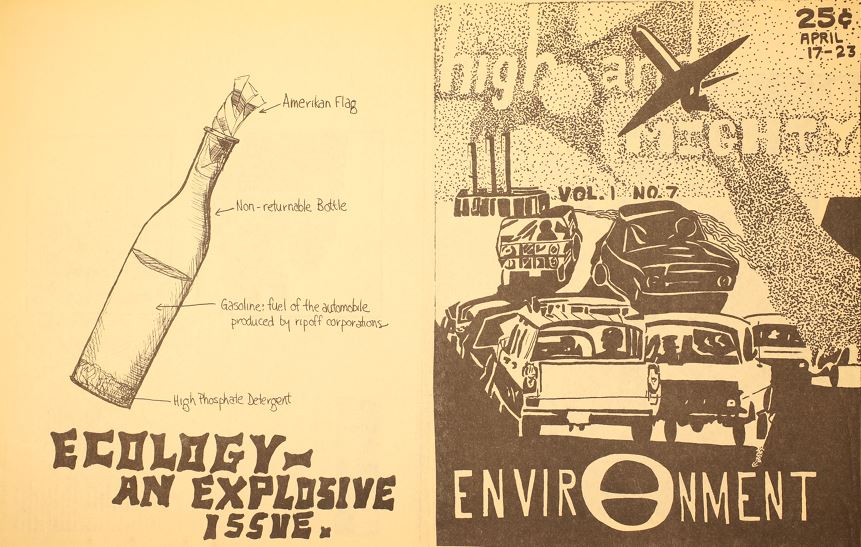
• Earth-day issue of the Grinnell student zine, High and Mighty, April 1970.

Grinnell’s First Bicycle Club

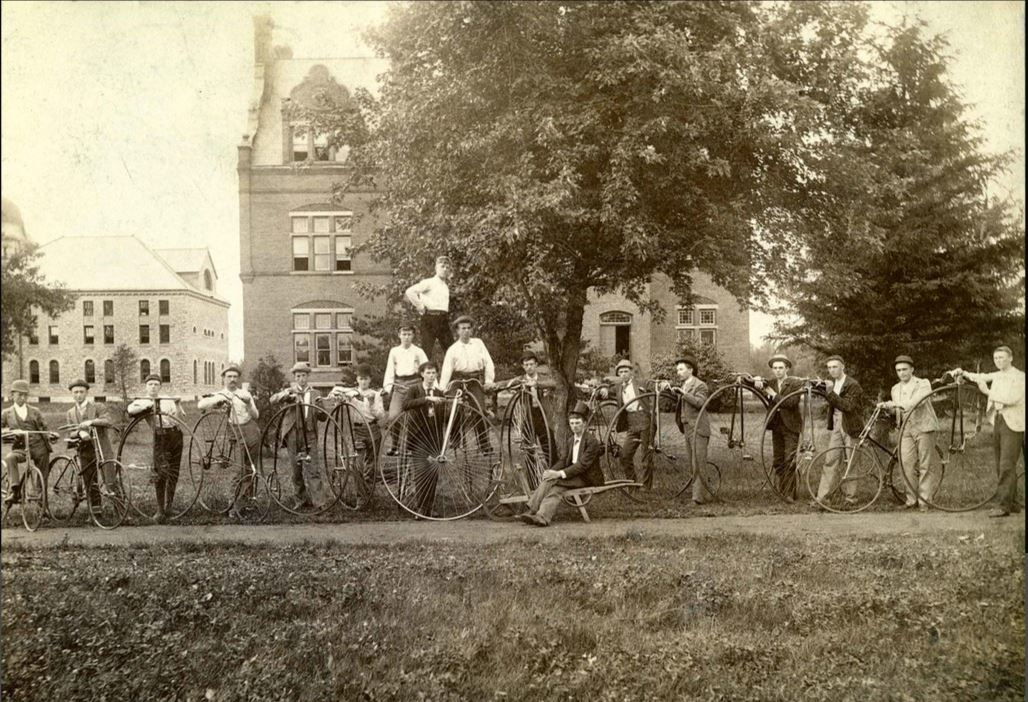
Grinnell College Bicycle Club, 1891.

The college’s bicycle club poses in front of Chicago Hall, with Goodnow on the left (you can just make out the original observatory, in the top left, that used to sit atop Goodnow’s Tower, housing the college’s telescope).  Bicycling was all the rage in the 1890s, and was actually incorporated into collegiate track & field competitions for about 30 years.


Page 8 of 8

Powered by WordPress & Theme by Anders Norén