Registration in the Days of Yore

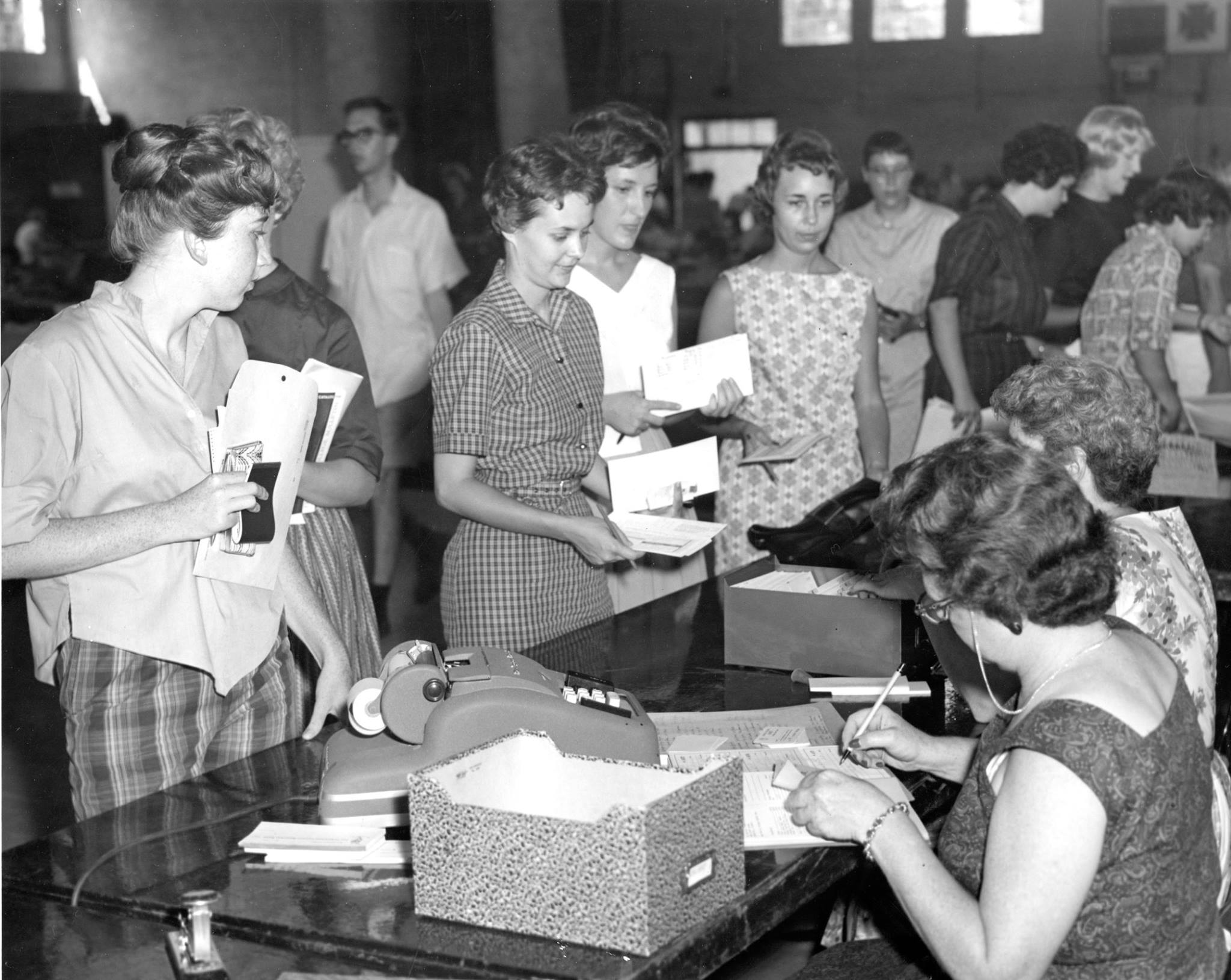
As students go through the rituals of pre-registration on campus, this week, it’s fun to look at an image of registration from the Fall of 1961, in Darby Gym, when everything was done by hand, face-to-face.

What curricular requirements would have been on the minds of students in 1961 as they selected their courses?

The College had just made some important changes to these requirements the year before:

  • It eliminated 3 requirements (e.g. 1 course in English & Speech, 1 course in Modern European History, and a numerical distribution requirement).
  • It added four new required courses:  Humanities I (first semester) and Humanities II (second semester), Historical Studies I (second semester) and Historical Studies II (third semester).
  • It kept in place required coursework in science, foreign language, fine arts, religion or philosophy, and physical education.
  • It also retained the requirement of passing a swim test (or, alternatively, completing a course in swimming).
  • Lastly, the college created a new “junior liberal arts exam” that 3rd year students would have to successfully pass to graduate (beginning with the class of ’63, who were no doubt excited to be pioneers in this regard).

Jane Addams Lectures at Grinnell (1906)

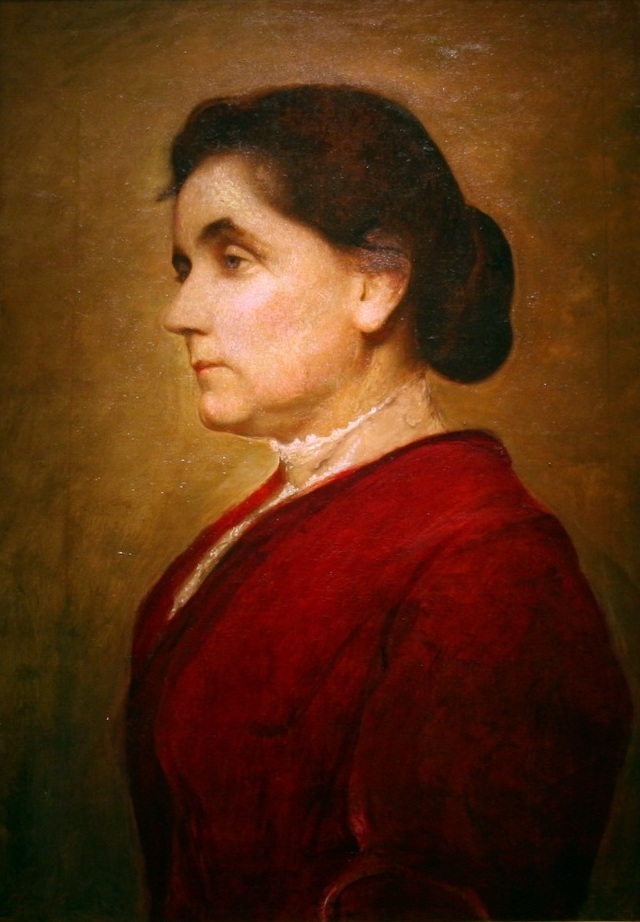
Jane Addams made several visits to Grinnell, because of her close ties to leaders of the Social Gospel movement at the college (such as Carrie Rand, George Herron, President George Gates,and Edward Steiner).

In 1906, Addams gave a lecture on “The Rise and Development of the Social Settlement Idea” at the Congregational church, which also served as a local fundraiser for the Uncle Sam’s Club, which received the proceeds from the ticket sales for the sold-out event.  Newspaper coverage noted that this might be audiences last chance to hear from Addams because her growing list of duties and responsibilities were such that she would have to “retire from the stage” (i.e. be unable to lecture widely in the future).  Addams discussed the origins of the settlement movement in Whitechapel London, begun by students at Oxford and Cambridge, and focused heavily on her own work at Hull House in Chicago. Adams emphasized that settlement houses stood for “high moral, political, and educational ideals” which she juxtaposed with the “tin-pan Americanism” that animated nativists and their calls for assimilation. Addams also detailed some of the programming at Hull House: study classes, social clubs, a kindergarten, a labor museum, a music school, a theater program, a gymnasium, a coffee house, and gardens (serving a communities made up of more than 25 nationalities).

In true Grinnell fashion, Jane Addams also combined a class visit with her lecture, attending a course taught by her friend and colleague, Prof. Edward Steiner.


Grinnell-in-Star Wars

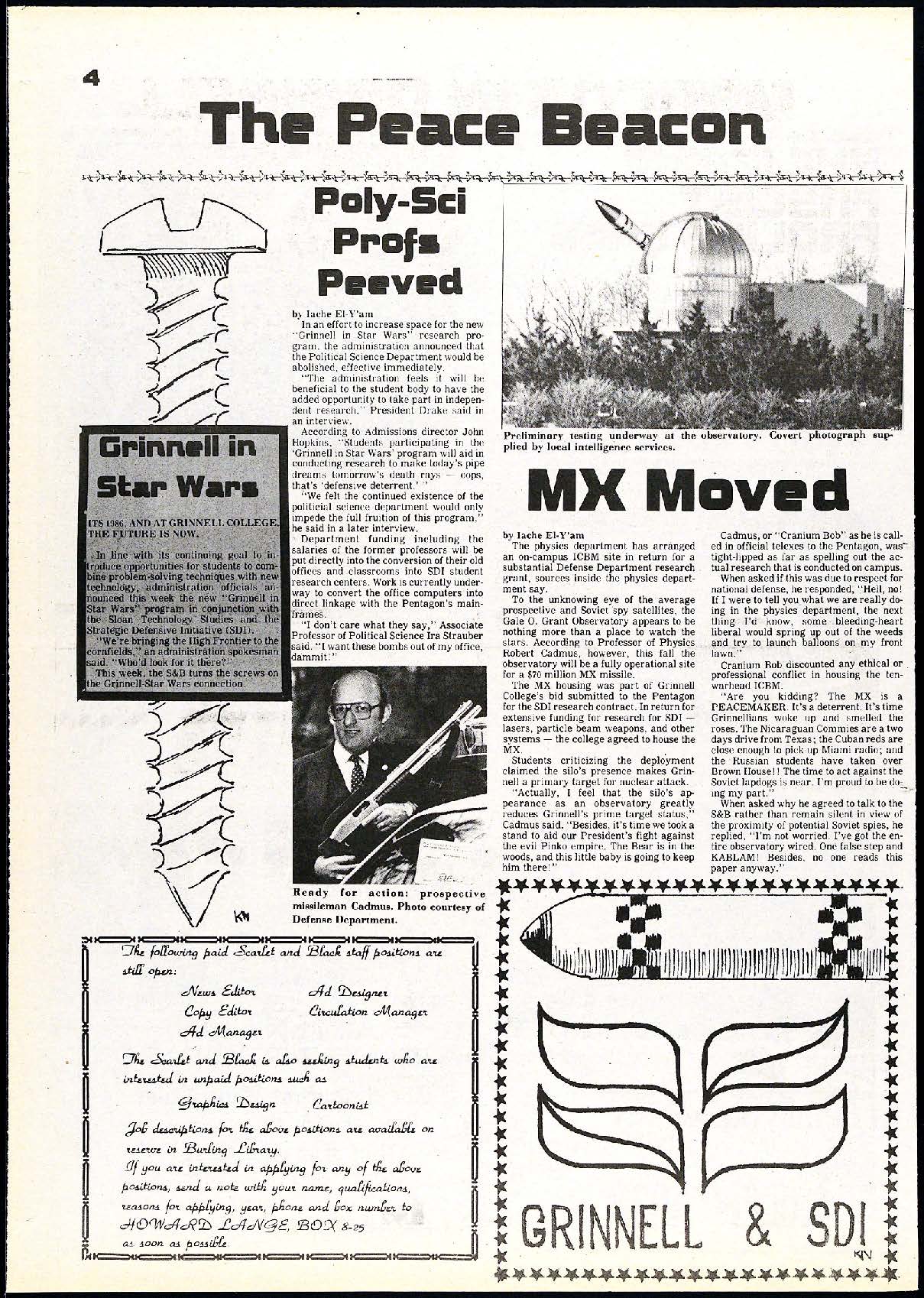
In the spring of 1986, a Grinnell alumnus gave a talk in support of Regan’s controversial Strategic Defense Initiative (SDI), commonly known as “Star Wars.” After dutifully reporting the contents of the talk, the S&B ended the paper with a satirical page describing how the college was launching its own “star wars” initiative.  The context for this spoof (that may be lost on those of us  who were not on campus in 1986), was the awarding of the large Sloan Foundation grant (relating to technology), the creation of the new Technology Studies program, and in turn, its creation of a new study program in Washington, D.C., which would become known as Grinnell-in-Washington (a program that ran until the 2010s). Fear not: the political science department was not abolished, the observatory was not turned into a missel silo, and Bob Cadmus never sported a shotgun like this.

Link to full-sized pdf:    Grinnell in Star Wars

Amelia Earhart’s Visit to Grinnell

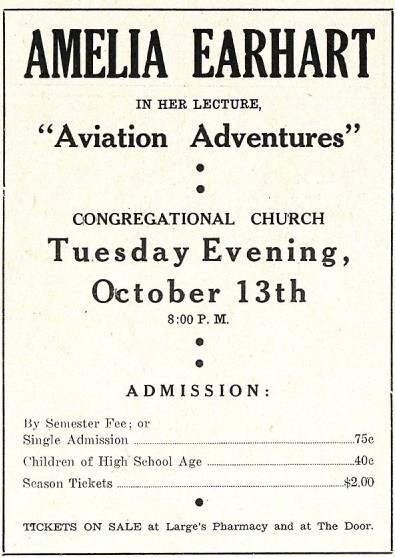
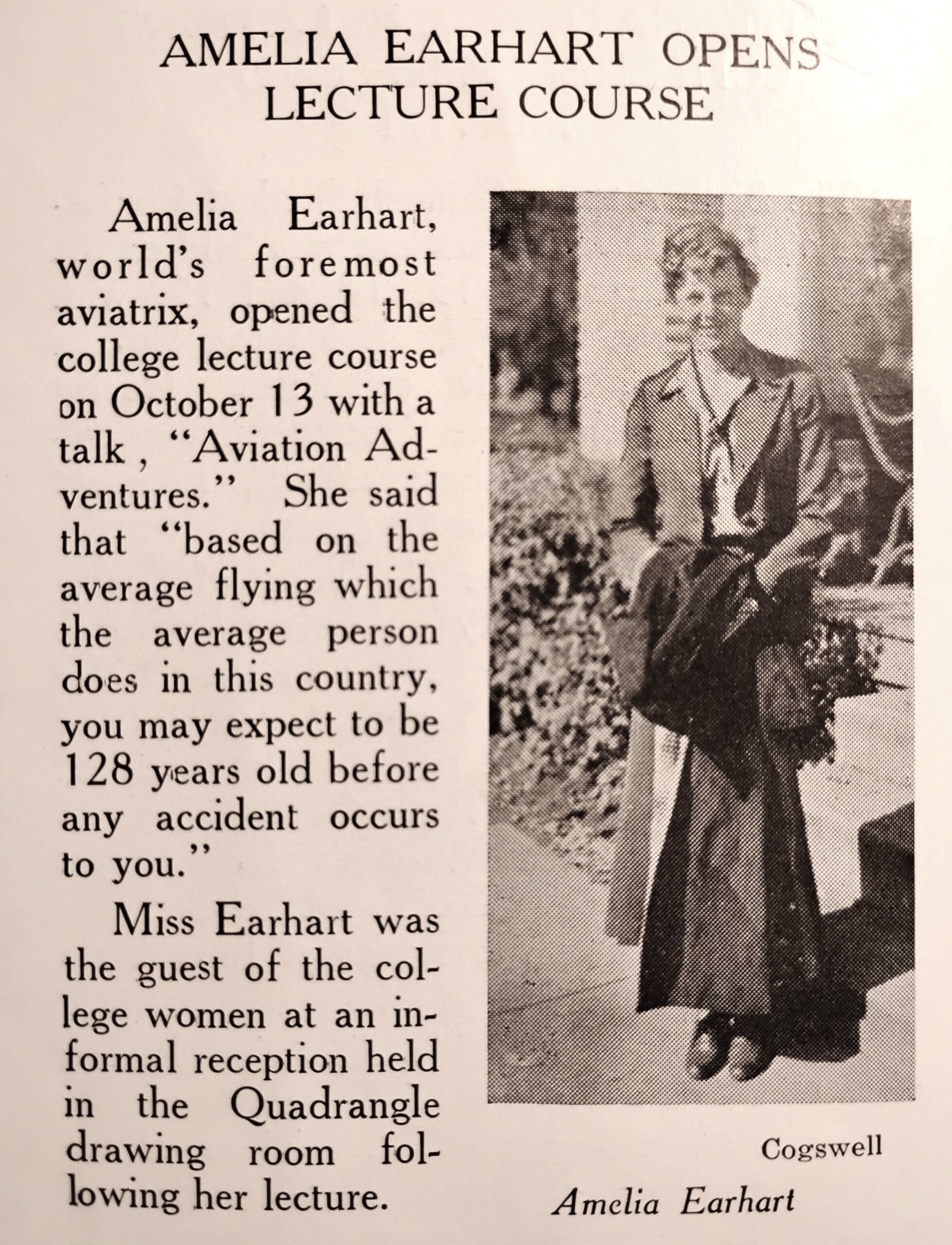
On a crisp October evening in 1936, an unusually large crowd gathered in the Congregational Church in Grinnell to hear Amelia Earhart deliver a lecture on “Aviation Adventures.” Originally scheduled for Herrick Chapel, the college event was moved to the Congregational Church since it could seat many more people and was used for such keynote gatherings (including graduation).

Billed as “the world’s premier aviatrix,” Earhart was touring the country in the wake of two unprecedented flights the year before: one was as the first person to fly solo across the Pacific from Hawaii to California (in January) while the other entailed the first solo (non-stop) flight from Mexico City to Newark, NJ (in May). Just a few years’ earlier, she had gained international fame as the first woman pilot to fly solo across the Atlantic Ocean.

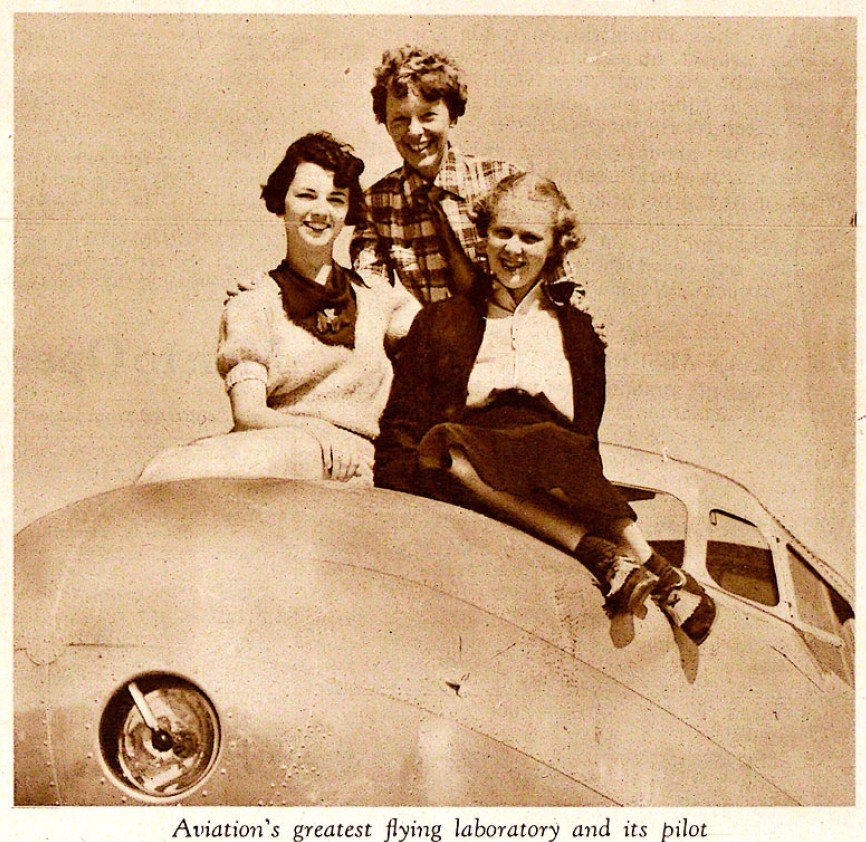
In the Fall of 1936, Earhart was making preparations for her most ambitious project yet: to become the first female pilot to circumnavigate the globe (flying solo, with just one companion, a navigator). To fly that distance, Earhart needed a different kind of plane, and was spending the Fall modifying a newly acquired Lockeed 10-E Electra (pictured here) that would be used to make the voyage the following summer.

Grinnellians were eager to make the most of this visit. The college library, in Carnegie, dedicated a “corner stall [that] will feature literature by and concerning the famous flyer.” And a special reception was held, after the talk, in the women’s Quandrangle drawing room–an event that was for “Grinnell co-eds and faculty women only.” Recently appointed a faculty member, herself, Earhart had joined Purdue University in 1935 to help them develop a new program in aviation (that she hoped would spread to other schools, opening up new opportunities for a rising generation of women and men).

Amelia Earhart’s plane disappeared the following July, n route from New Guinea to Howland Island.  Since it was during the summer, we don’t know much about how the campus reacted to the news of her disappearance.

What’s in a Name?: A Grinnell Artist Names a Mountain

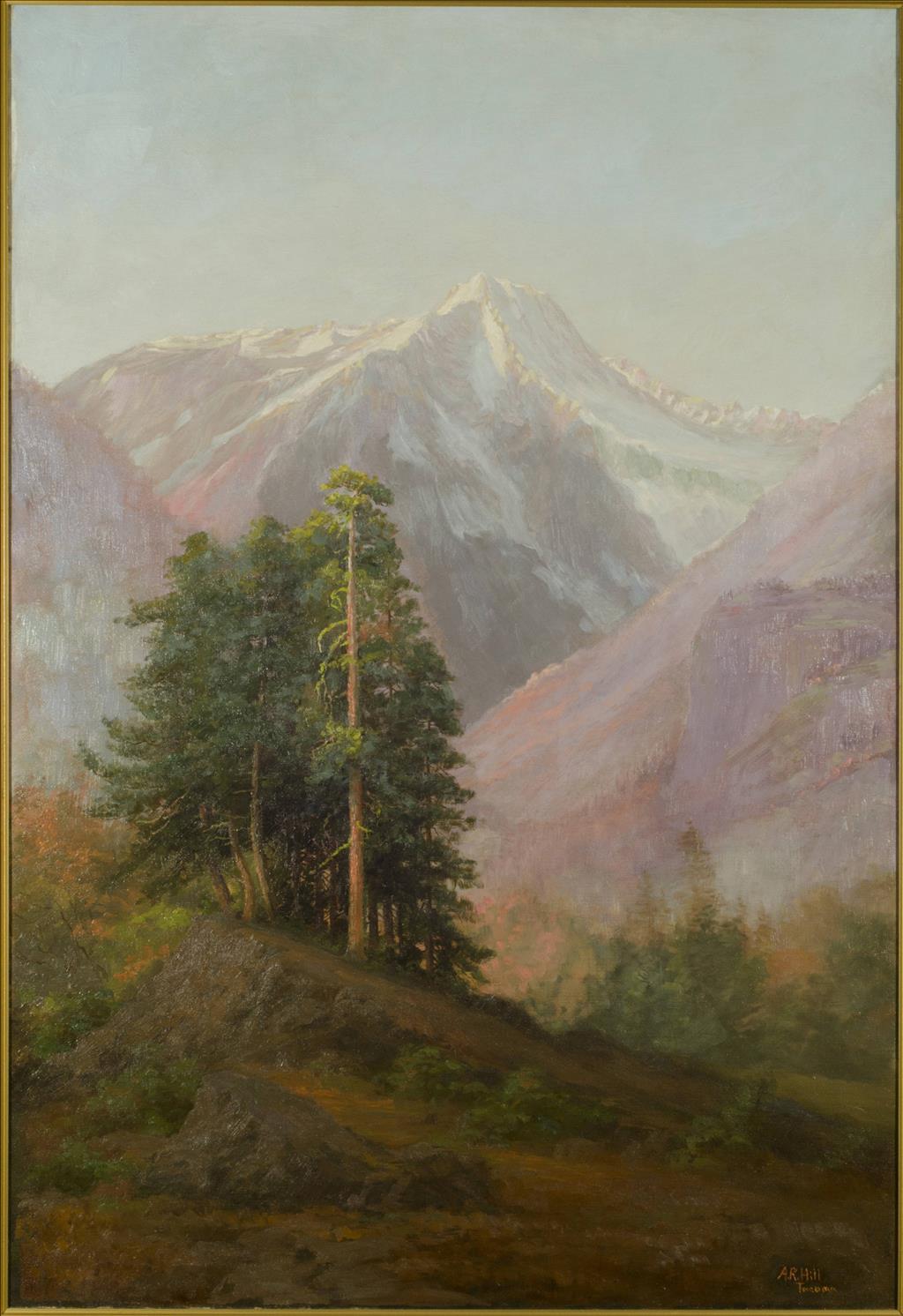
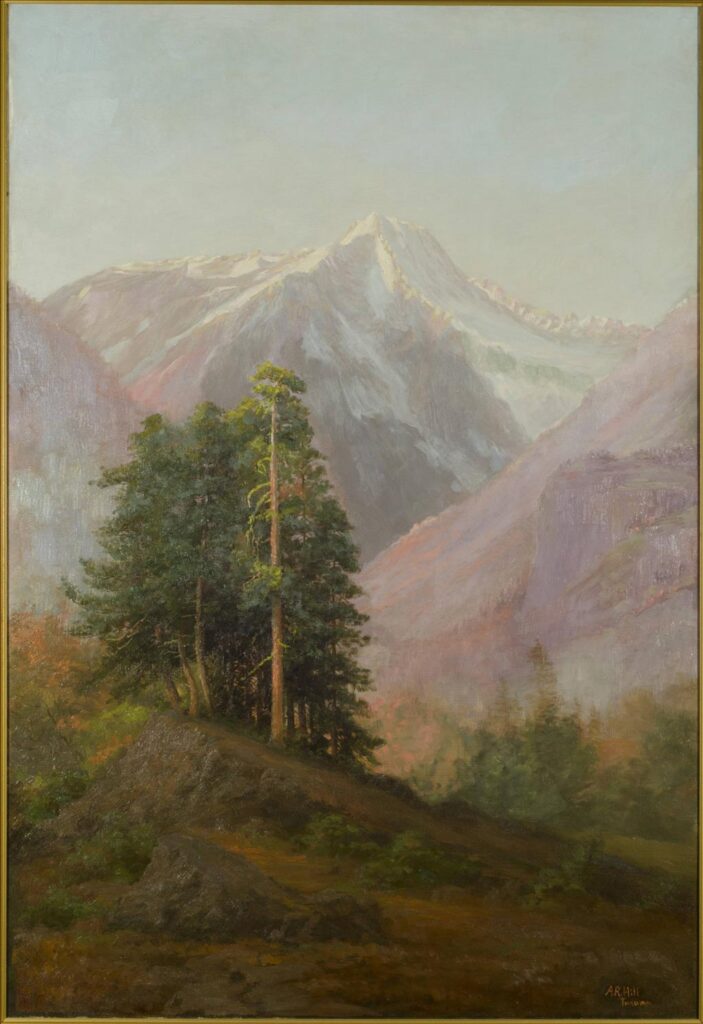
Mount Booker near Lake Chelan (1903) 29″ x 42″ (Collins Memorial Library, U. Puget Sound)

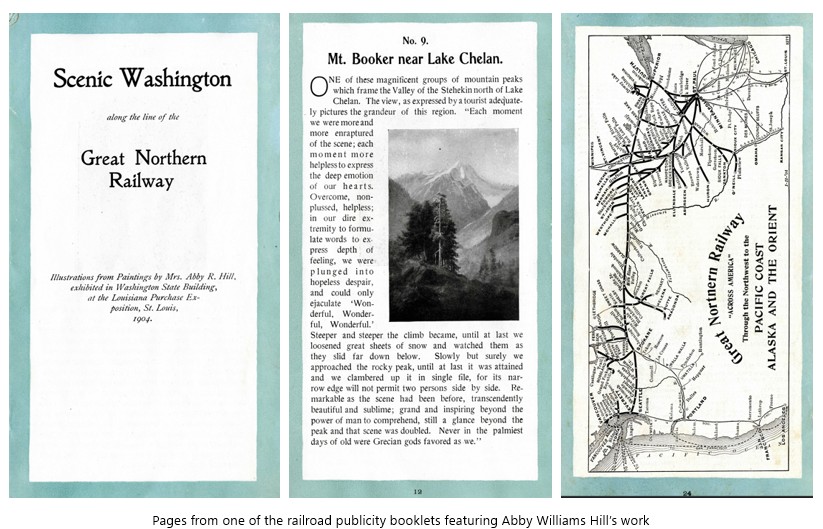
Abby Williams Hill ’07, who has been featured before, was one of the most prominent artists to come out Grinnell. Her collection of landscape paintings, from the early 1900s, portrayed the national parks and western landscapes to a wide public audience, being exhibited at the World’s Fair in St. Louis in 1904, and then published in serial form (subsidized by railroad companies eager to promote western tourism).

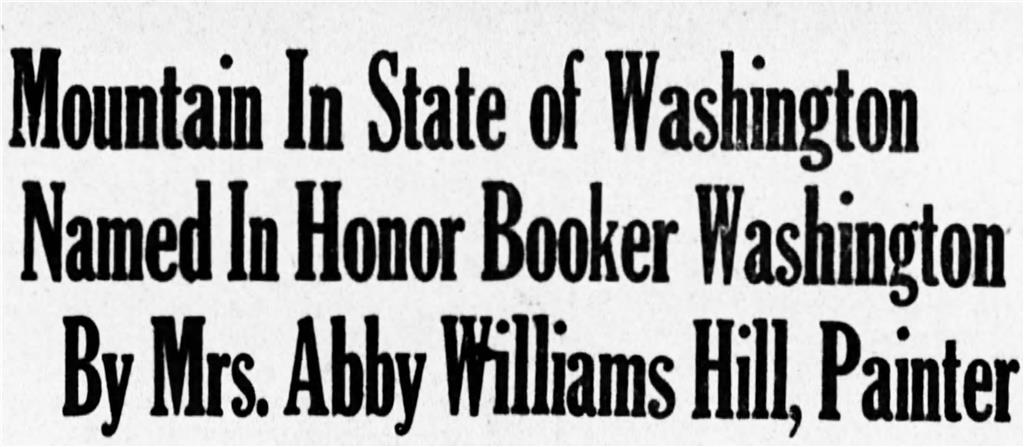
Hill was painting one particularly arresting peak, in the Cascades in 1903, when she was surprised to learn that no one knew of a name for that specific mountain.  She wrote to the U.S. Geological Survey, which reported back (to their own surprise) that it was one of the few peaks that had not been assigned an official place name, a toponym, in their records. So they gave Hill the opportunity to choose its official name. She wrote back saying that she would like it to be named after Booker T. Washington, someone she admired deeply. Only a few years earlier, Hill had taken her four children on a whistle stop tour of Progressive America, visiting prominent reform sites such as Jane Addams’ Hull House, in Chicago, and Booker T. Washington’s Tuskegee Institute, in Alabama, where she spent a considerable amount of time in the company of both Booker and Margaret Murray Washington.
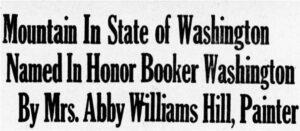
When interviewed by a New York newspaper about the name choice, Hill explained:

Here was a glorious monument not made by the hand of man but carved by the Almighty. What could be more fitting than to name it for one of the most truly great men of our times… When we look at Mt. Booker let us be thankful for Booker Washington’s life, for what he did to solve seemingly impossible problems… His influence like the stream from the mountain will go on through the ages to bless and help mankind.

Naming a mountain after an African American stirred some controversy in the press, , as Grinnell’s local newspaper, the Herald, explained:

This aroused negro-phobia into activity. The name became a red rage for anti-negro venom. Choice epithets easily imagined, fell in a shower of mud around her [Abby Hill]; an effort was made to change the name. The Government at Washington was consulted but only to learn that the name was given by authority, was a matter of record, and could not be changed.

In Grinnell, Booker T. Washington was a widely admired figure, invited twice to speak to the Grinnell community, and the subject of many talks and papers on campus during this period.
 

The “Red Special” Comes to Grinnell (1908)

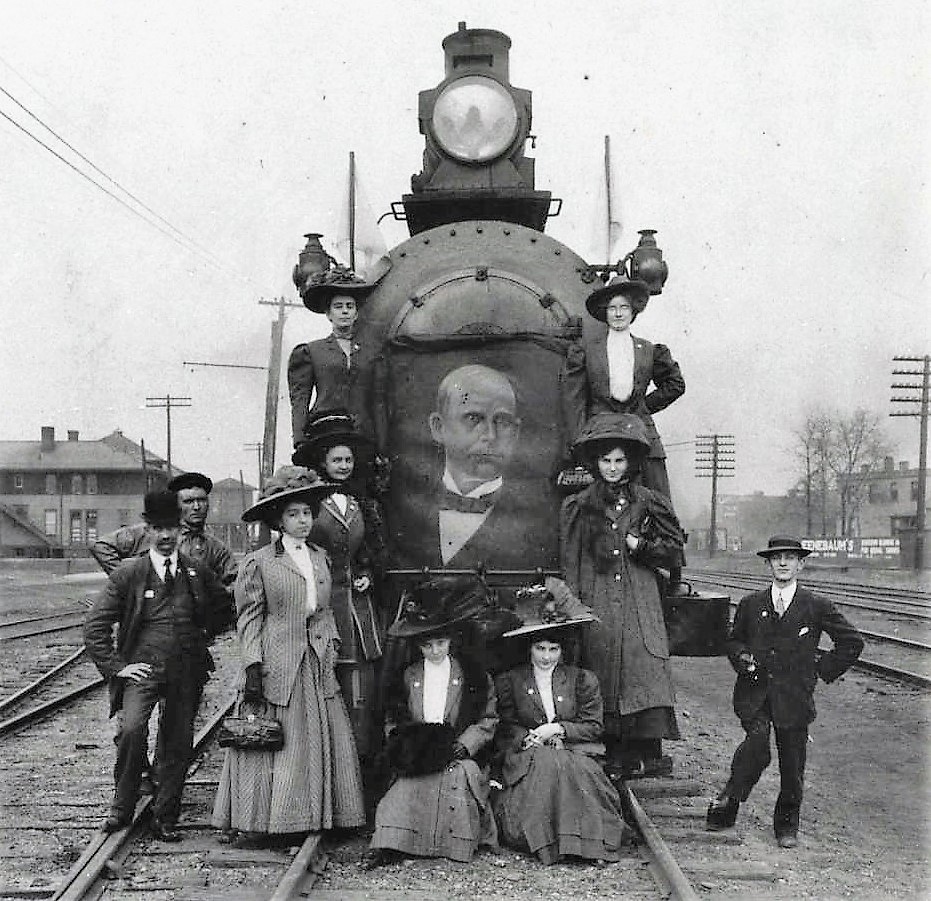
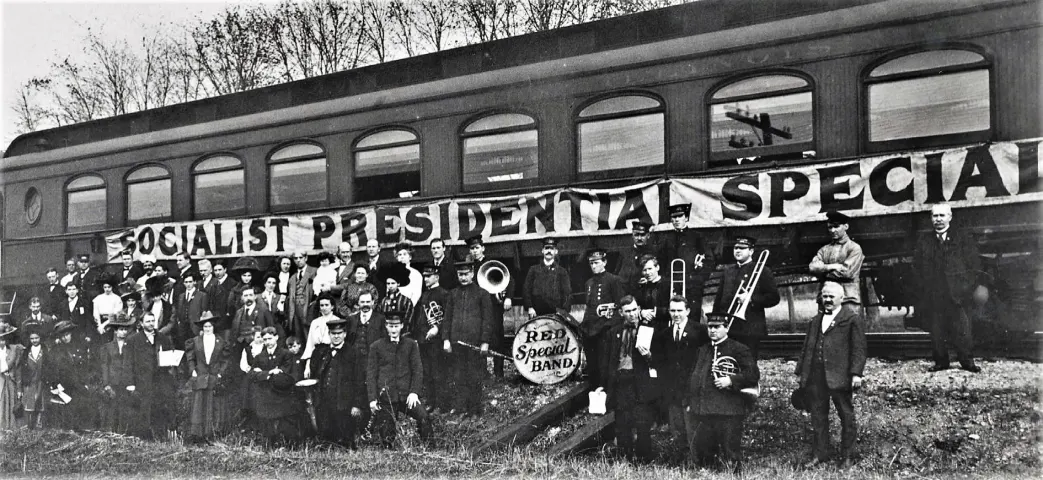
Just after 2pm on the afternoon of September 1st, Eugene Debs’s special train pulled into Grinnell’s Union Station. Debs was running for president on the Socialist party ticket that Fall (1908), and had organized a cross-country campaign in which he and a party of about a hundred supporters, campaign workers, officials, and a musical band, would stop at various cities as their privately rented train made its way from New York to California. Dubbed, the “red special,” Debs’s train (see above and below) stopped at Grinnell for about two hours, giving the band time to play in central park; giving his associates time to distribute campaign flyers, sell party tracts, and solicit donations; and giving Debs time to deliver a speech to students and townspeople who had gathered around the gazebo in the park.

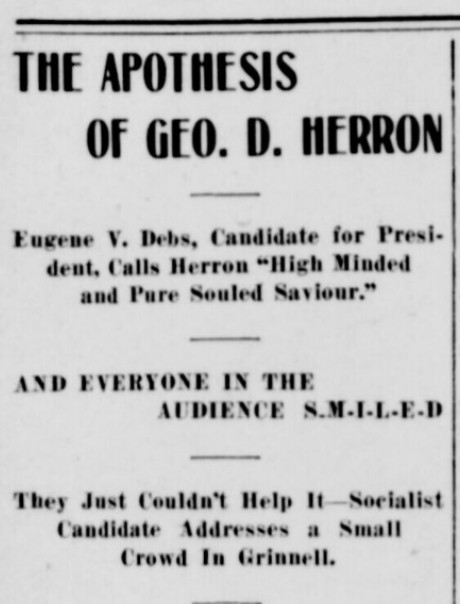
The Grinnell Herald, which was no fan of Debs, noted sarcastically that “Grinnell’s ‘down-trodden’ laboring class was so busy working at from $2 to $5 a day, that they didn’t have time to stop to hear from Mr. Debs how miserable was their condition.” In fact, the paper was less interested in reporting Debs’ political message than in discussing his controversial remarks about ex-Grinnellian, George D. Herron, who had been forced out of his endowed chair in Applied Christianity at the college when he eloped with Carrie Rand, the Dean of Women at the college (and daughter of Elizabeth Rand who had endowed the chair and larger program).  Herron was one of the most prominent spokesmen for the Social Gospel and Christian Socialism, and Debs took this opportunity to chastise Grinnell over its treatment of Herron, saying:

Grinnell had crucified its saviour; that because George D. Herron had been a high-minded, pure-souled man, Grinnell had driven him out and that when all the rest of us are forgotten Mr. Herron will be remembered

In fact, Herron received top-billing in the headline framing the story of Debs’ visit in the Herald:

One person who would have agreed with Debs, however, was Laetitia Moon Conard, who was a personal friend and follower of George Herron; who taught sociology at Grinnell College; and who would eventually run for governor of Iowa on the Socialist party ticket, a few decades later. Sadly, Laetitia never got her own “red special” when she campaigned for the governorship in 1932.


I’ll Take You There: The Staples Singers at Grinnell

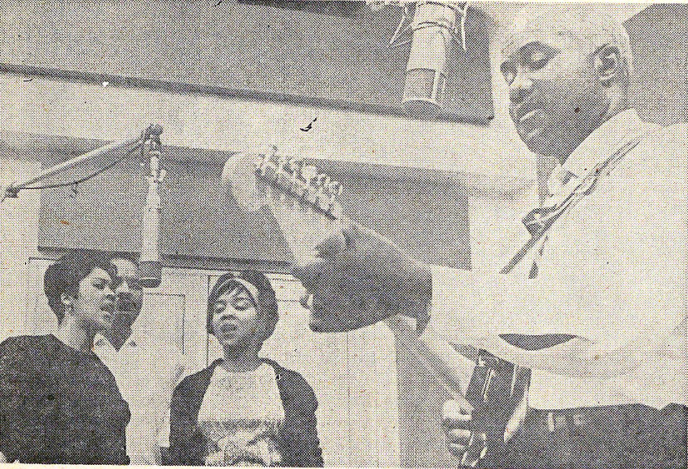
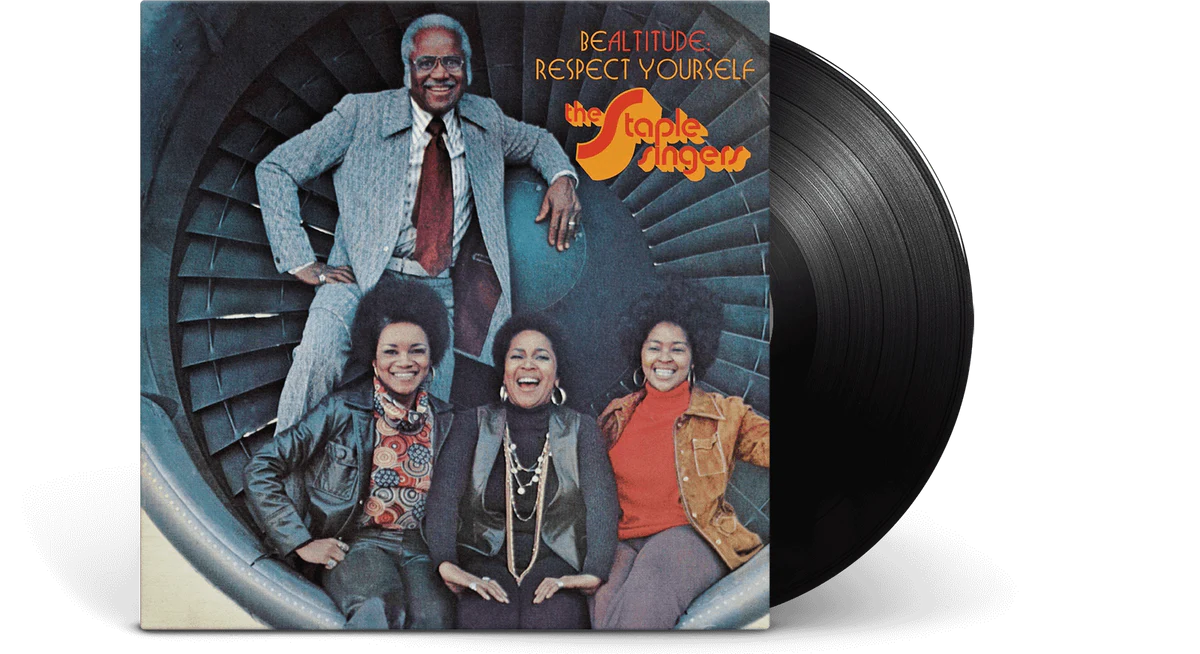
In the 1960s and 1970s, Grinnell had a national reputation for securing some of the best musical acts in the country, by finding talented performers who were on the cusp of breaking through to stardom (due to the legendary work of Georgia Dentel, the “activities counselor” who managed the events programming throughout this period). One  example of this was the Staples Singers, who played Darby Gym on February 17th 1964 (pictured here from the S&B).  In the 1950s and early 60s, this family act had established a name for itself in Gospel circles, but was just beginning to develop cross-over appeal to audiences more attuned to the new sound of “soul” and R&B. In 1965, the group gained more national attention with the release of Freedom Highway (an album that engaged heavily with the events of the civil rights movement) and then signed with Stax Records, in Memphis TN, where they became leaders of the soul movement of the late 1960s and early 1970s (alongside other Stax artists like Isaac Hayes, Sam and Dave, Eddie Floyd, William Bell, and Wilson Pickett).

The Red Cross and the White Lion

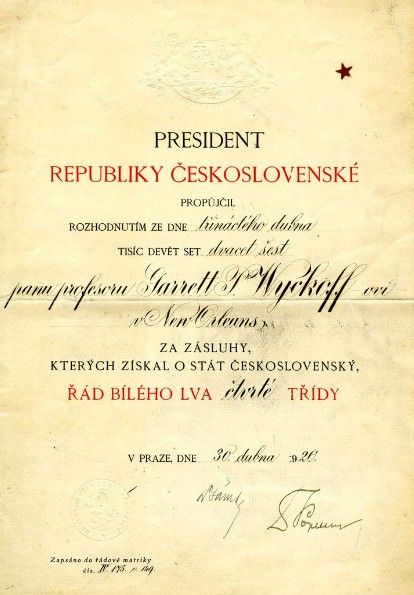
In 1926, Professor Garrett P. Wyckoff (’94) was awarded the Order of the White Lion (čtvrtý třídy, or 4th degree, meaning he was made an “officer” in that order).  The order, which represented Czechoslovakia’s highest civilian honor, was created after World War I to recognize those civilians, particularly foreigners, who had performed extraordinary service to the country. Professor Wyckoff, who taught at Grinnell for a number of years in various departments (including Applied Christianity, Political Science, Economics, and finally, Sociology), had taken leave of teaching duties during World War I to become a field director of the American Red Cross. Wyckoff directed the Gulf division, then moved on to the mid-Atlantic office (not before giving Harry Hopkins, 12′, his first big break by having him appointed as his successor in New Orleans), and then became a commissioner of organization for the League of Red Cross Societies in Geneva, Switzerland. After the war ended, Wyckoff worked for 2 years to establish a branch of the Red Cross in Czechoslovakia, for which he received this honorific award, Řád Bílého lva.


Viewing the Cyclone of 1882

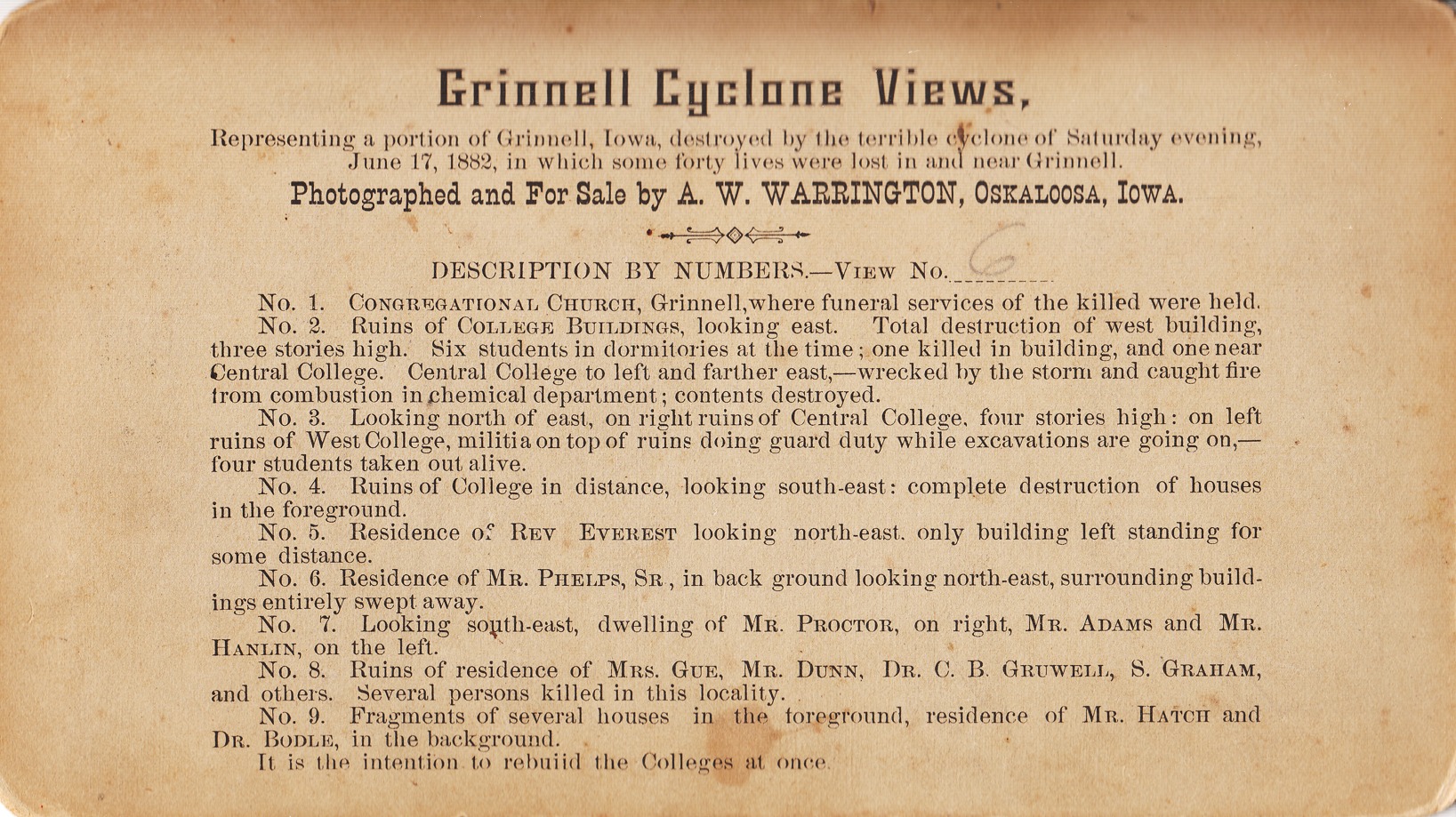
On the evening of June 17, 1882, two tornadoes joined together (near 8th Ave and Broad St.) to form one devastating “cyclone” that destroyed many buildings on campus and in town, killing nearly 40 people (2 of whom were students at the college). This local tragedy received national attention, as various newspapers and magazines reported on the devastation.

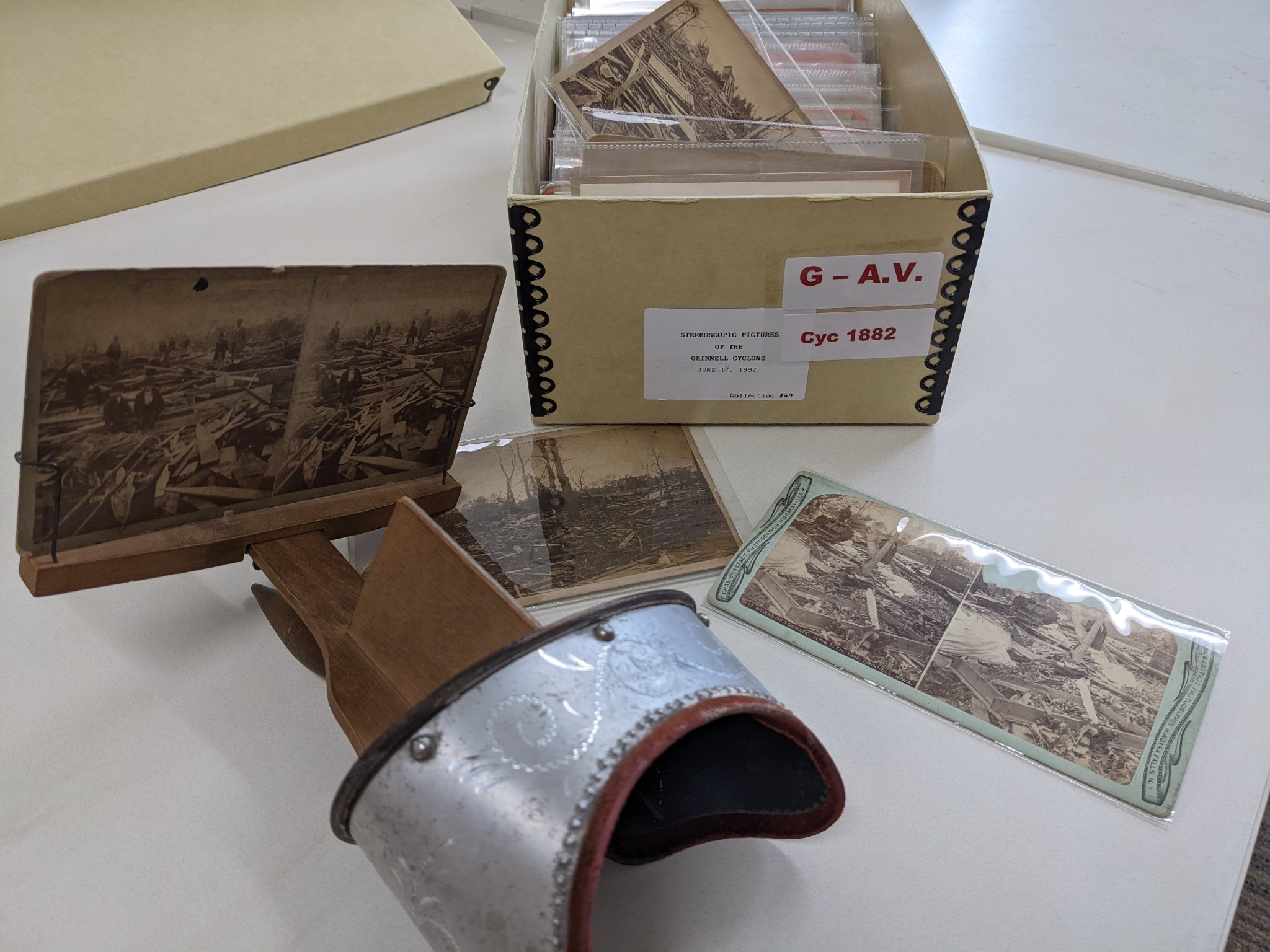
Images of the aftermath were highly sought after, and some companies began to create stereoscopic cards, known as “stereoviews” that allowed for a kind of immersive, 3-D, experience of the scene. Pictured above is one of the popular Holmes stereoscopes, along with a set of stereoviews showing the destruction wrought by the cyclone in Grinnell.

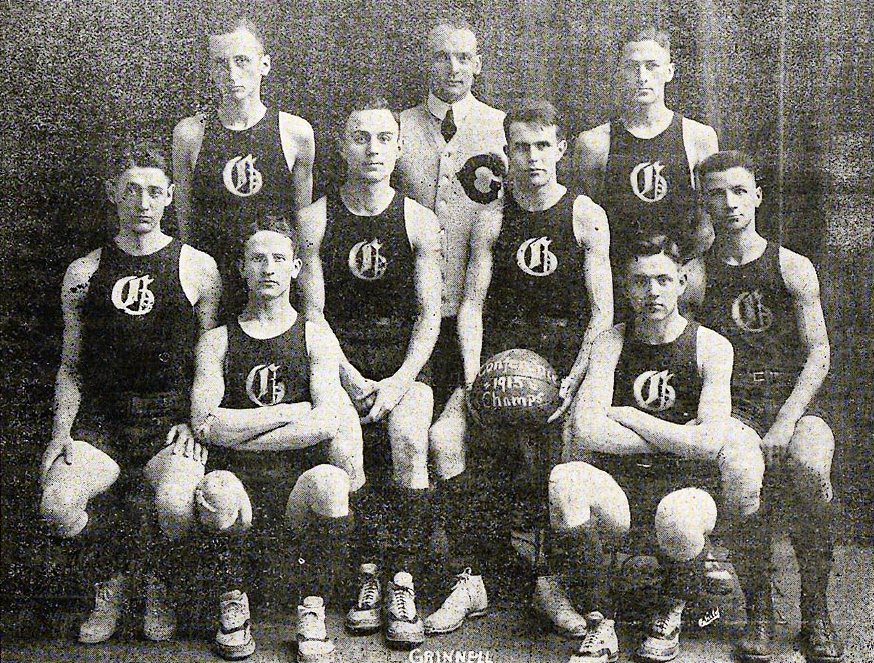
The Men’s Squad, 1915

Back row, from left to right: Meacham, Fisher (Coach), Swan | second row-Tharp, Jones, Lynch, Loper (Captain), Targgart, Norris.

Last week, we saw the women’s basketball squad, that won the interclass league in 1915.  This image shows the men’s team, which had just captured its sixth consecutive conference championship, having edged out the University of Iowa for the title, once again. From 1908 to 1915, Grinnell was on an epic winning streak, loosing only 12 (out of a 100) games, scoring 3,147 points (to their opponent’s 1,594 points), with two undefeated seasons, and 6 championship titles (besting Kansas, Illinois, Iowa State and the University of Iowa).

Note the gothic G that the basketball team wore as their emblem until the 1930s, when it was changed because students complained it was too difficult to decipher (fans could not tell if it was meant to be a G a C a B, or something else).

Page 5 of 8

Powered by WordPress & Theme by Anders Norén