The 1915 Women’s Basketball Champions

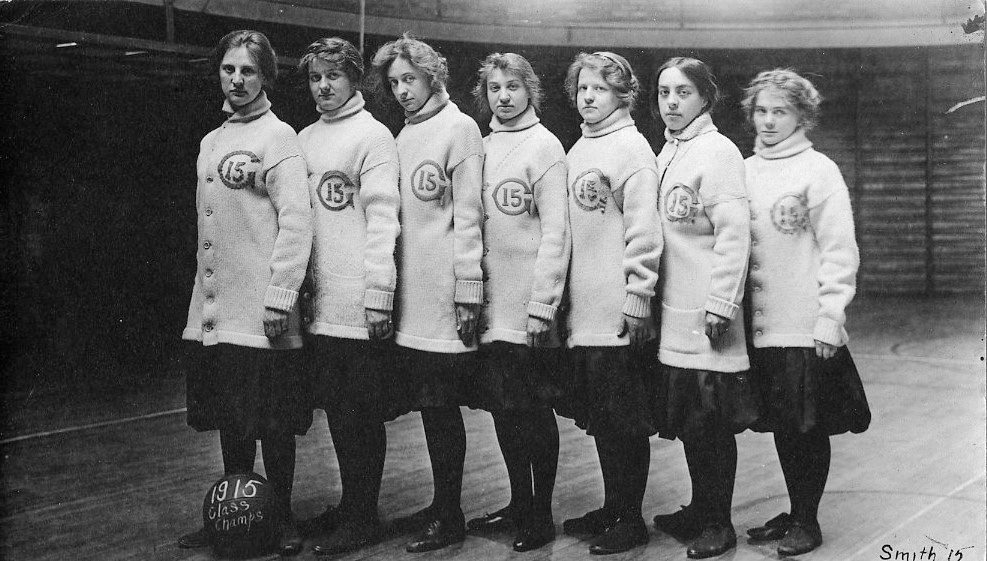
This picture captures the victorious senior women’s basketball team after they won the 1915 inter-class series (hence the “class champs” written on the basketball). While men’s athletics revolved around intercollegiate competition, women’s sports were organized along intramural lines, and at Grinnell, that meant that each academic class would field a team that competed against other years. In 1915, the “senior women” went undefeated, winning the title and the coveted Silver Loving Cup (which had been donated by H.W. Somers that year to promote a “keen spirit of rivalry” among the teams, and add even more drama to the series). The senior team was comprised of E. Hoesley, H. MacEachron, H. Whitney, E. Dunham, I. Barhite, I. Pyle, and R. Coy.  This same team won the previous year’s championship as the junior squad in 1914.


Holiday Travel in the 30s

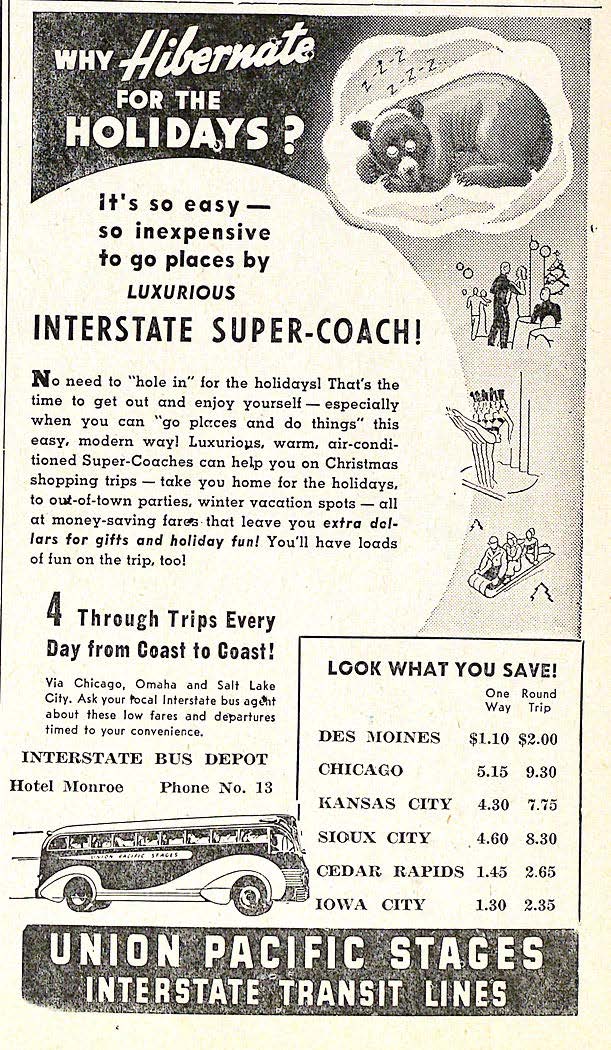
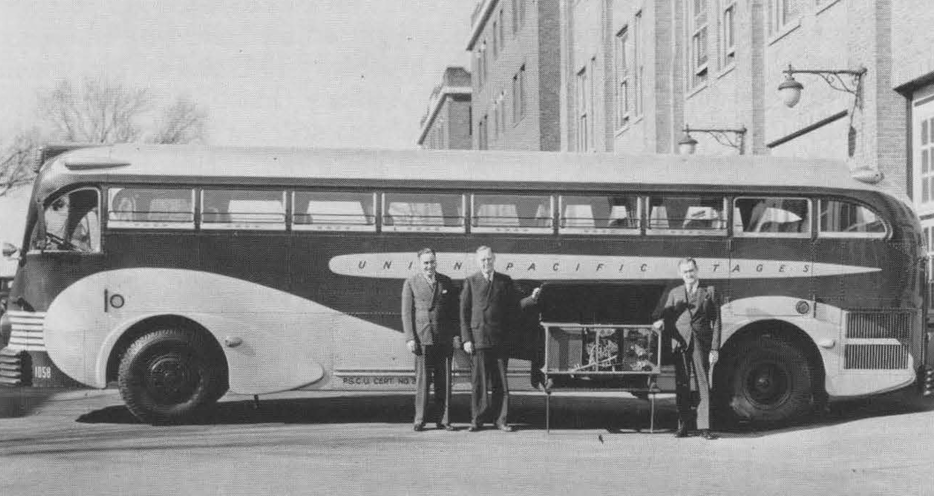
Many Grinnellians may recall that (before 1970) many people often travelled to and from Grinnell via the train, using the Union Depot train station that was located across from Central Park and the Monroe Hotel. Less well known is the fact that several bus lines also served Grinnell over the years, such as the Union Pacific’s “Stages” line, that the railroad giant had created in the 1920s to compete with Greyhound and other emerging bus lines.  This advertisement appeared on campus in November of 1939, touting their luxurious new “super” coaches that would whisk travelers to these midwestern destinations as well as dozens of other cities (by changing buses a their hubs in Chicago, Kansas City, and Omaha).  The picture below shows engineers proudly installing an air-conditioner into one of the new super-coaches that would service towns like Grinnell.

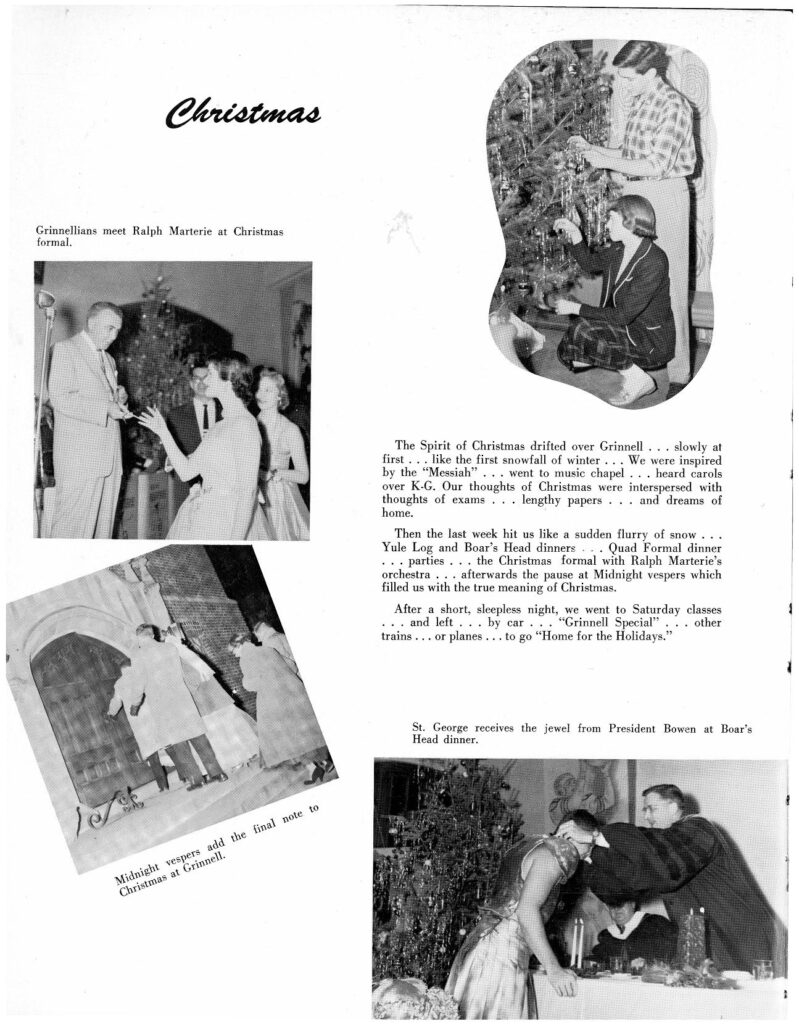
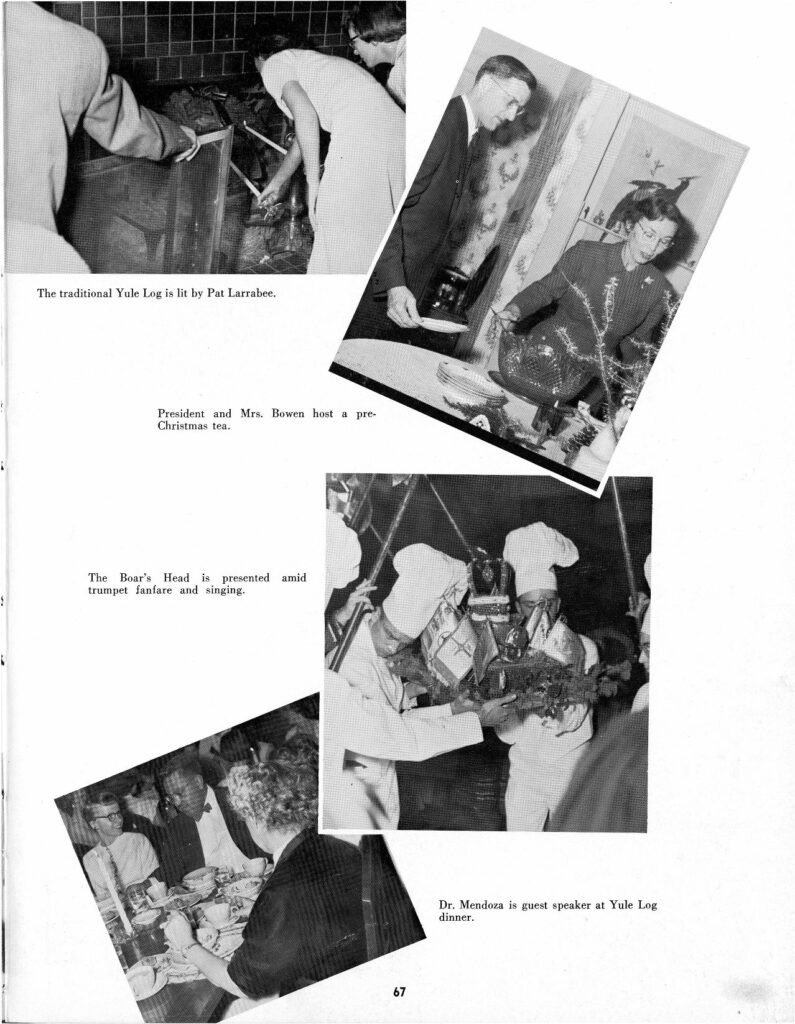
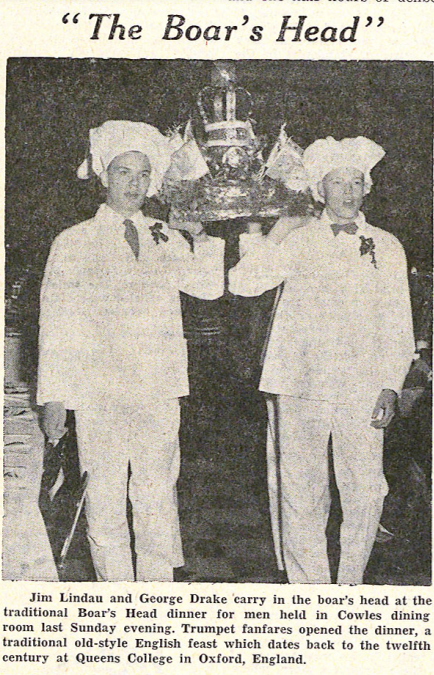
The Christmas Season 70 Years Ago

As you can see from these pages in the Cyclone yearbook, the Christmas season used to be packed with even more social events in year’s past: including several festive dinners (the Yule Tide dinner, the Boar’s Head dinner, the Uncle Sam’s Club dinner); several balls & concerts; all leading up to a dramatic, candle-lit vespers service in Herrick Chapel at midnight to mark the end of the semester.  We’ve also included an image from the 1954 Boar’s Head dinner (from the S&B) that features our friend and colleague, George Drake ’55.

Abby Williams Hill (’07)

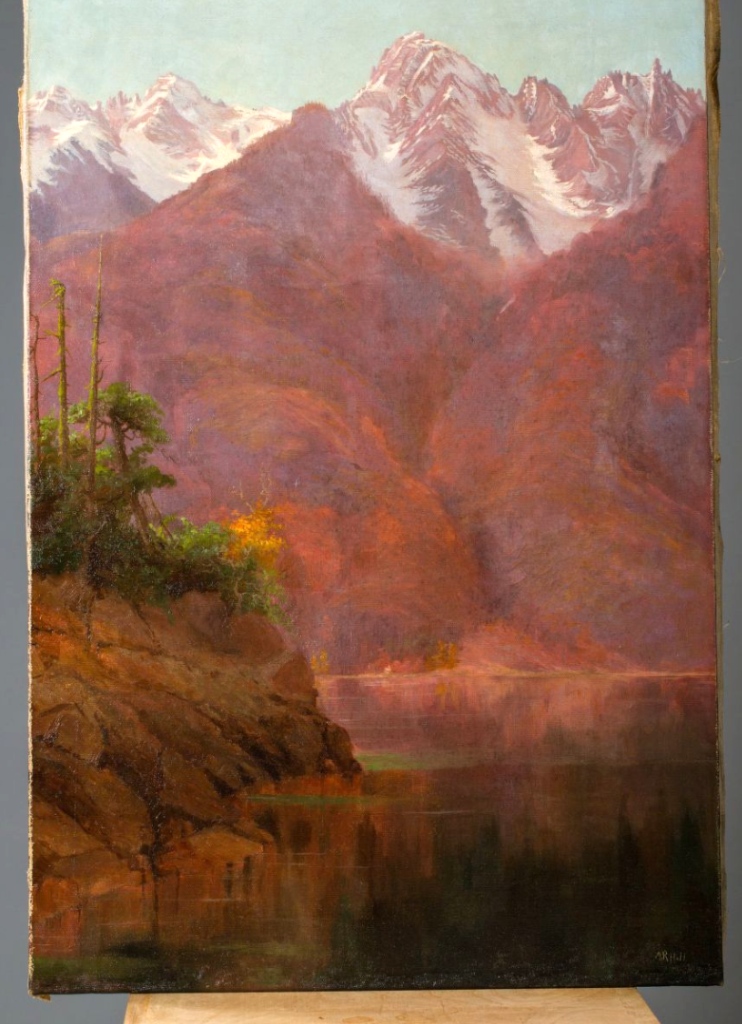
Abby Rhoda Williams Hill (1861-1943) grew up in the town of Grinnell (her parents being some of the first settlers who arrived with J.B. Grinnell in 1854). Hill loved drawing and painting from an early age: she taught local art classes, studied art at the college, and then travelled to Chicago, New York, and Hamburg (Germany) for more formal training. She returned to Grinnell to teach briefly at the college; but then moved to the Seattle area where she gained a national reputation for painting western landscapes after being commissioned by the Great Northern Railway to do a series of plein air landscape paintings of national parks and scenic areas served by the railroad. These paintings were displayed at the Word’s Fair, to much acclaim, and were made available to a wider public in the form of a popular booklet. Hill went on to paint hundreds of landscapes throughout the West, and always brought her children camping with her for these extended en plen air sessions (pictured below). Her journals describe many family adventures: evading forest fires, negotiating with bears, avoiding rattlesnakes, and one particularly harrowing encounter with a mountain lion that chased them. Despite making a home in the West, Hill returned frequently to Grinnell to visit family, friends, and members of the college community. She donated several works to the college (see below) and to the Stewart Library, in town.

Painting by Abby Williams Hill (’07) that was donated to the College. It used to hang prominently in the Old Library, Carnegie Hall, along with another of her landscapes.

Abby Williams Hill, with her four children, on a plein air excursion to Yellowstone National Park (c. 1906)


Thanksgiving 1924: The “Electric Gridiron” Comes to Grinnell

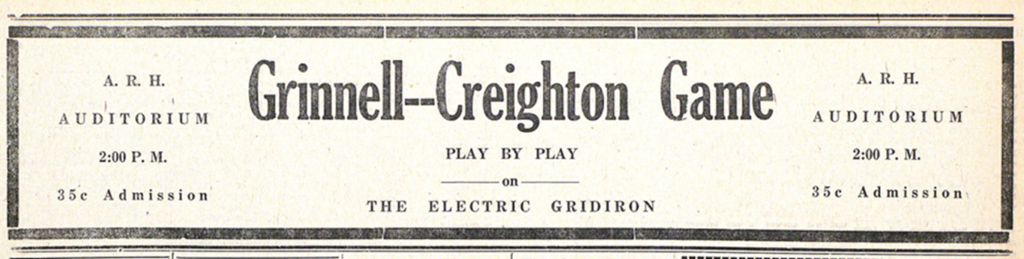
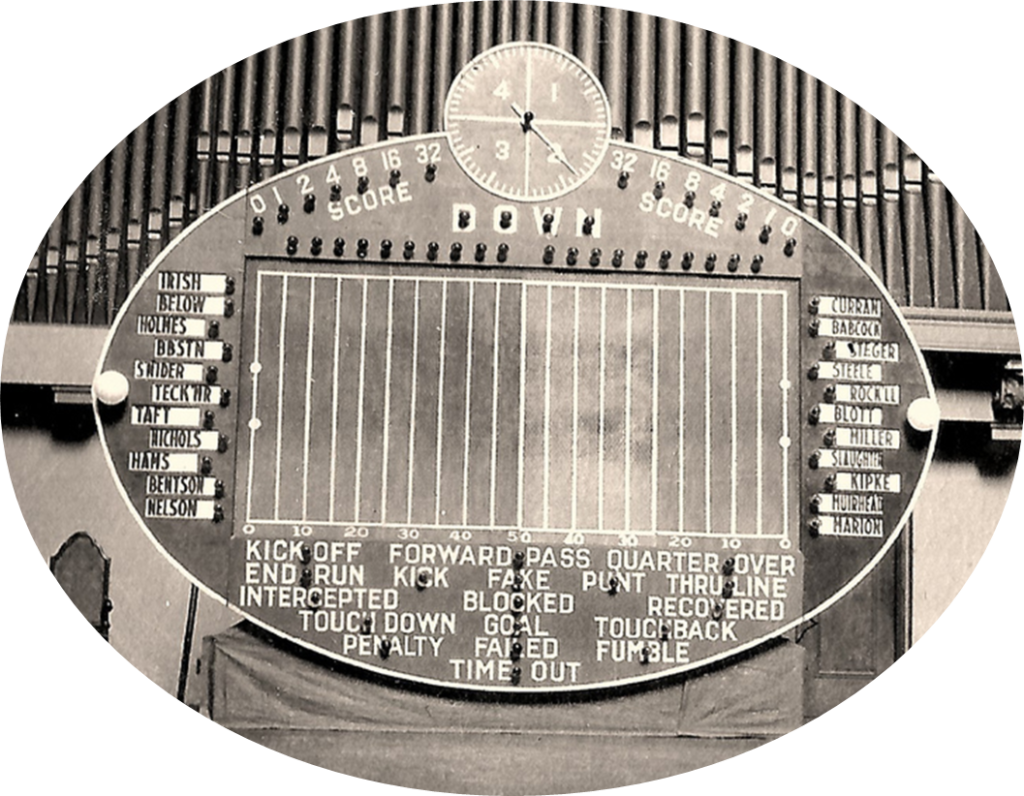
On Thanksgiving Day—100 years ago—many of the Grinnell students who remained on campus gathered in the auditorium of A.R.H to “watch” their football team play the last game of the season against their rival, Creighton, in Omaha. The college marching band assembled in the auditorium, along with Grinnell’s cheerleading squad, but all eyes were on the new “Grid-Graph” machine, which weighed nearly 1,000 pounds, and was designed to visualize remote football matches via instant telegraphy, electrical switches, and lights, so that fans could follow the action in real time, play-by-play (in an era before television coverage, and when even radio broadcasting of games was limited to a few nationally chosen matches). In the 1920s, Grid-Graph became all the rage in college sports, and Grinnell was excited to sign its own contract in 1924 to bring the marvels of modern technology (the “electric gridiron”) to campus.

Photograph of a Grid-Graph “in action” in the 1920s

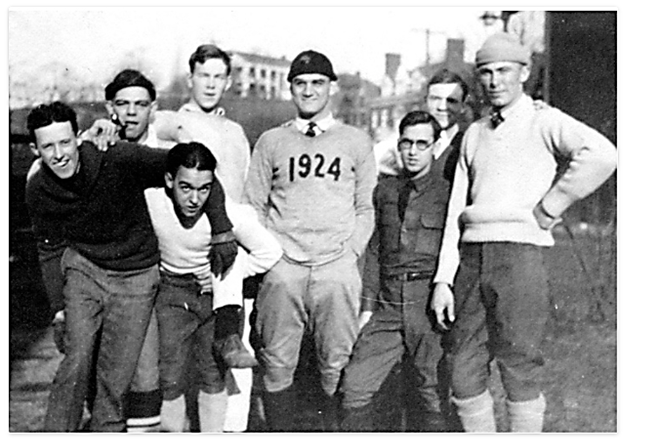
Grinnellians posing before the Thanksgiving match in 1924 (note: the player on the far right is Hap Moran, who went on to a successful career as a starter in the NFL for more than a decade)

Forest Bathing in the Conservation Era

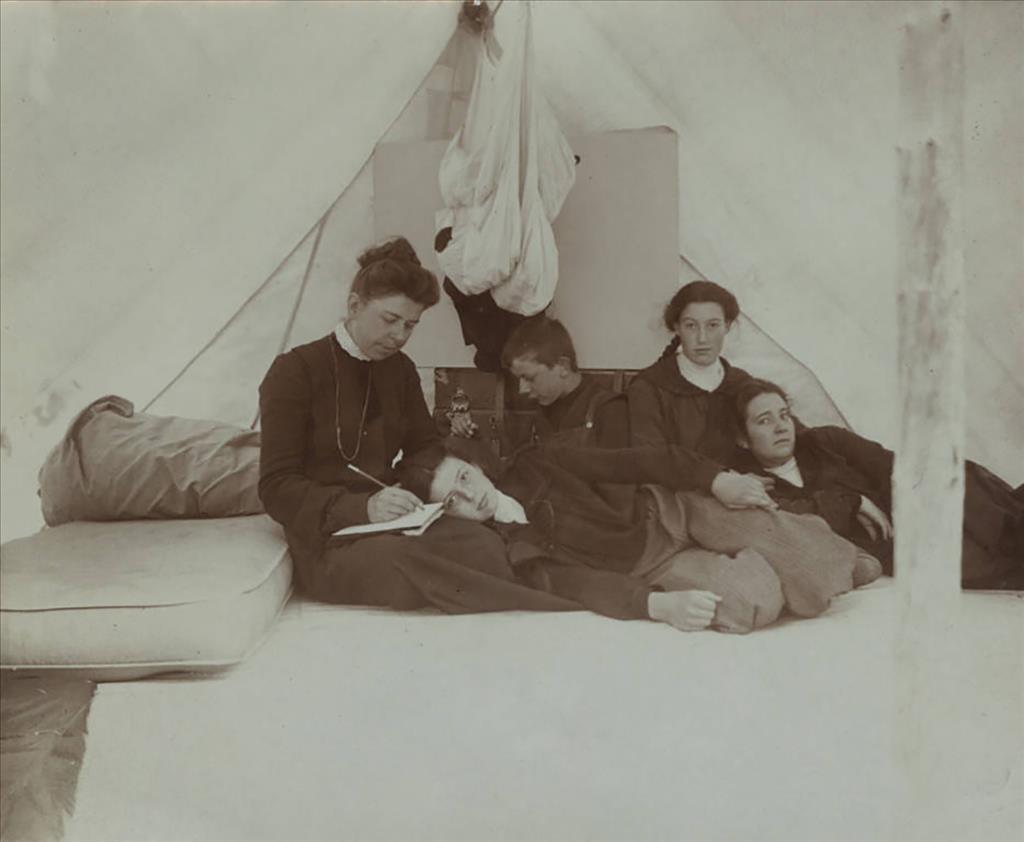
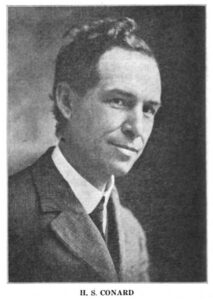
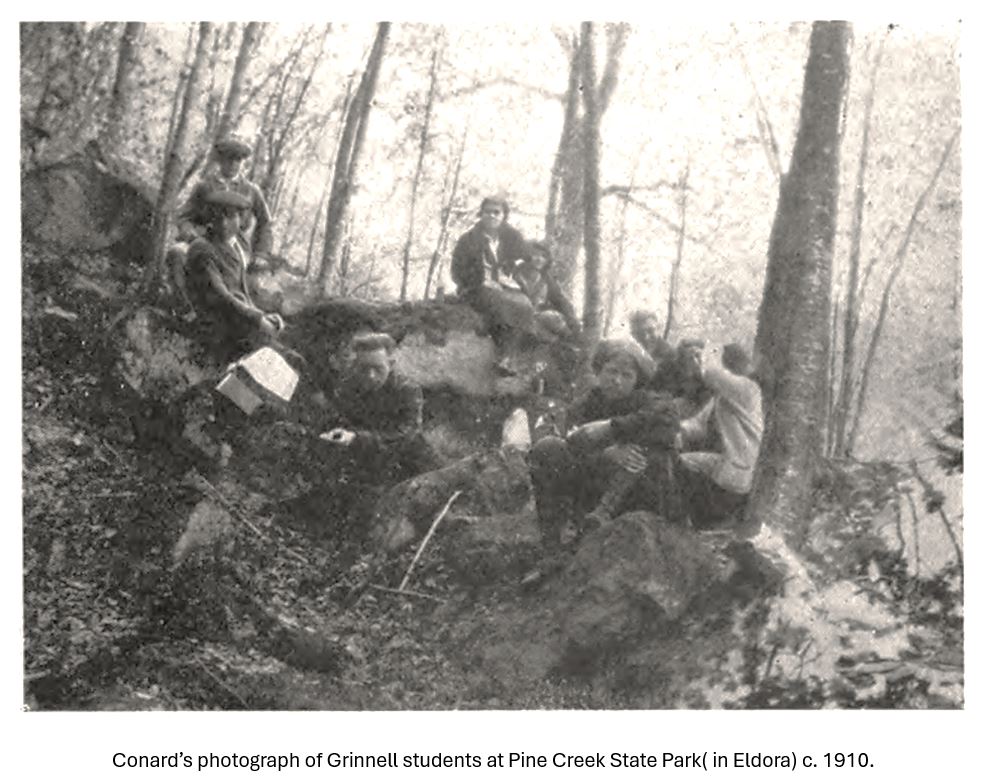
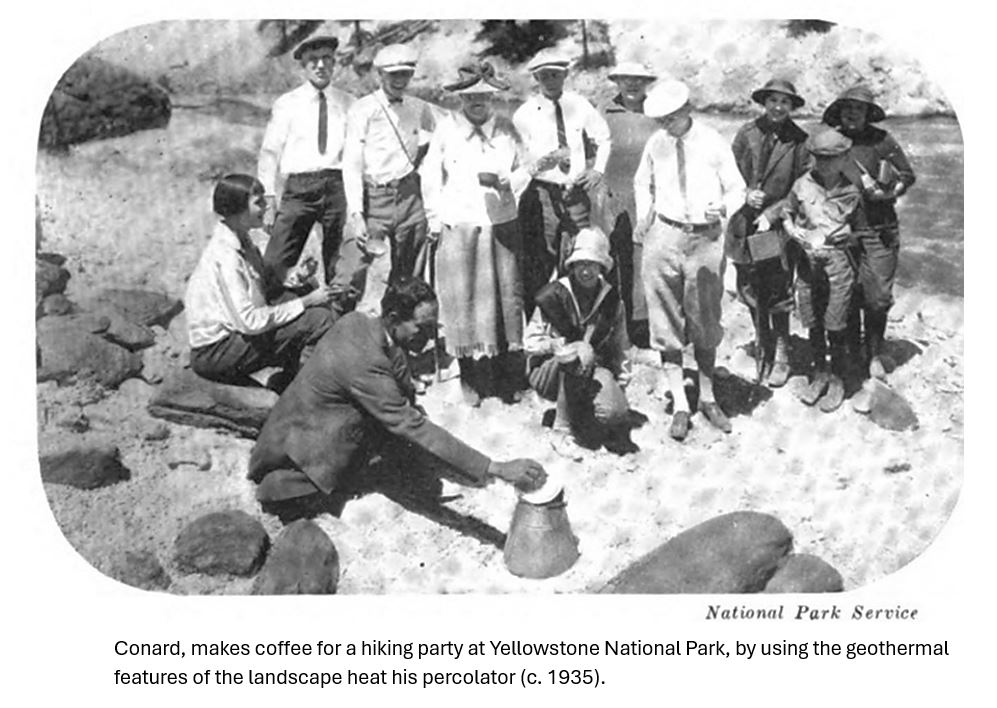
This week marks the end of the Fall program of “forest bathing” at Grinnell, in which students can sign up to spend part of a Tuesday afternoon walking through woodlands and immersing themselves in nature. Although billed as a modern wellness practice—and a form of environmental health or environmental medicine—the essential goal of these trips would have been quite familiar to Henry Shoemaker Conard, who taught Biology at Grinnell College one hundred years ago. Conard, who also served as president of the Iowa Conservation Association, advocated for a system of state parks in Iowa that would provide wilderness preserves for study, recreation, and immersion. He regularly took students on extended camping and hiking trips through Pine Creek State Park (in Eldora) as pictured here. Conard also helped organize similar, albeit shorter, trips for local school children to state parks and preserves. And in the 1930s, Conard was hired as a “Ranger-Naturalist” to lead extensive hiking parties through Yellowstone National Park in the summers, blending science, recreation, and wellness that were seen as inter-connected elements of the conservation movement in the Progressive era.

Gwendolyn Brooks at Grinnell

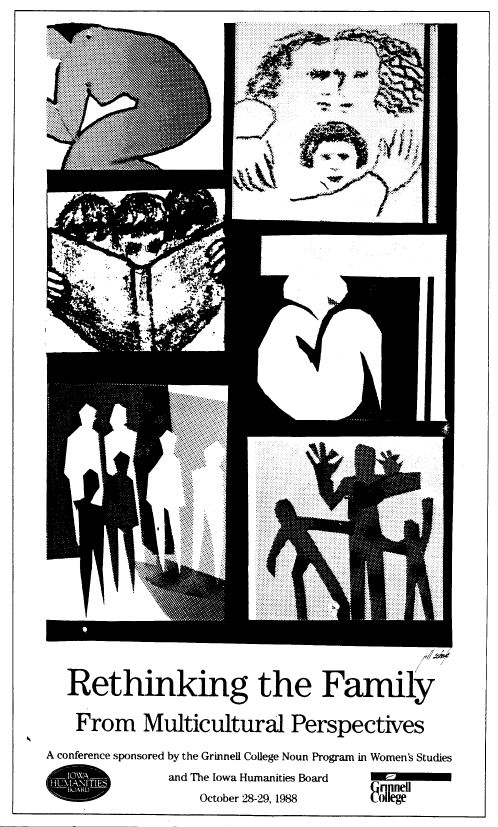
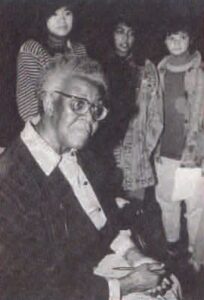
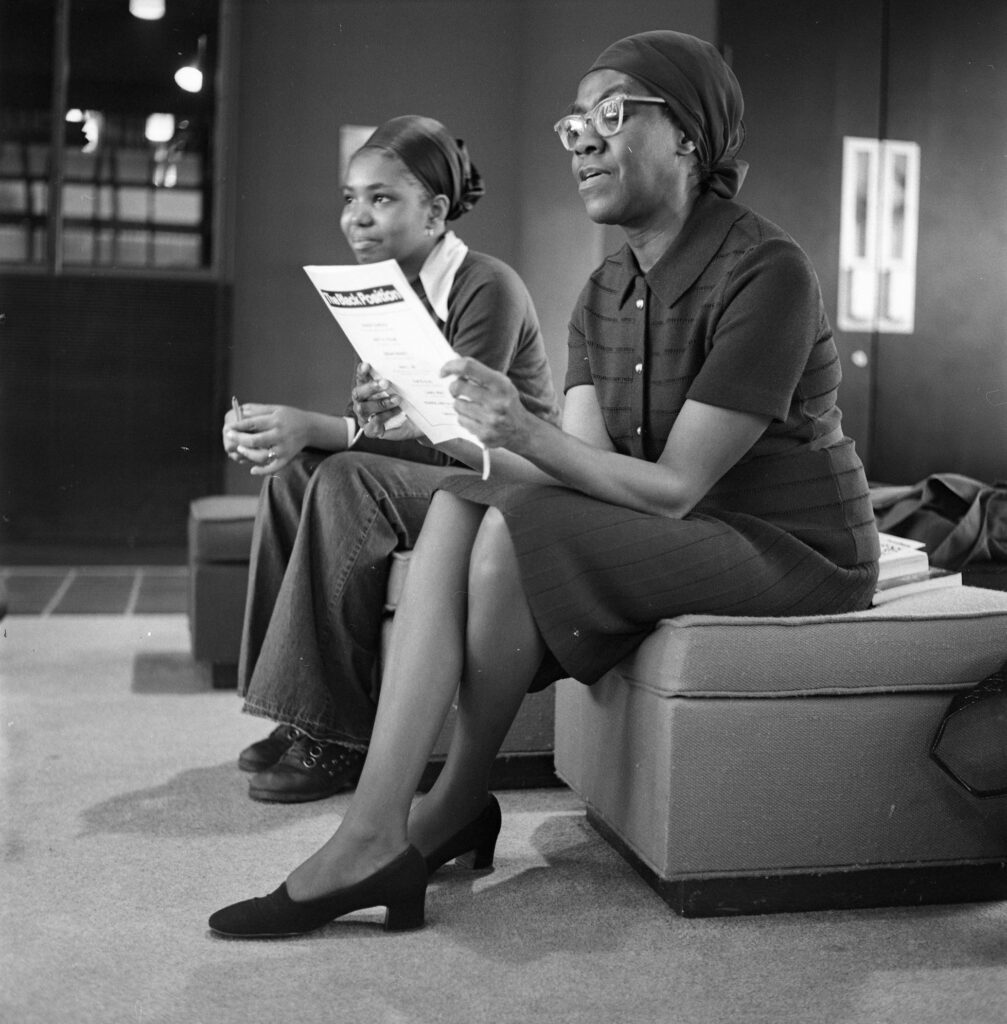
Before GWSS became a major—or even a concentration—Grinnell had the Noun Program in Women studies and the Noun Chair in Women’s Studies (both endowed by Louis Rosenfield Noun in 1986).  One of the first major events the Noun program sponsored was a large symposium in the Fall of 1988, entitled “Rethinking the Family From Multicultural Perspectives” (see the brochure posted here).  The keynote event of that conference was a reading by the Pulitzer Prize-winning poet, Gwendolyn Brooks, who was one of the defining voices of the 20th century (pictured here with three Grinnell Students behind her). This was not Brooks’ first visit to Grinnell, however. In 1972, students invited Brooks to headline the Black Martyrs Weekend event, which involved leading a workshop on poetry in the morning (captured in this picture showing Brooks and a student in the South Lounge), and then reading her own work in the evening. At the bottom of this post is one of Brooks’ poems, written in tribute to Paul Robeson, the famed singer, actor, and global activist. The poem references Robeson’s stirring performances of “Ol’ Man River” from the Hammerstein musical (and subsequent film) Show Boat, and the deeper message he conveyed.

Gwendolyn Brooks at 1988 symposium
Brooks leading a Poetry workshop in South Lounge, 1972
Rethinking_the_family_Noun_Symposium_1988 (Click here for full symposium brochure)


PAUL ROBESON

by Gwendolyn Brooks

That time

we all heard it,

cool and clear,

cutting across the hot grit of the day.

The major Voice.

The adult Voice

forgoing Rolling River,

forgoing tearful tale of bale and barge

and other symptoms of an old despond.

Warning, in music-words

devout and large,

that we are each other’s

harvest:

we are each other’s

business:

we are each other’s

magnitude and bond.

Elections Past & Grinnell’s Program in Practical Political Education (PPPE)

Elections Past & Grinnell’s Program in Practical Political Education (PPPE)

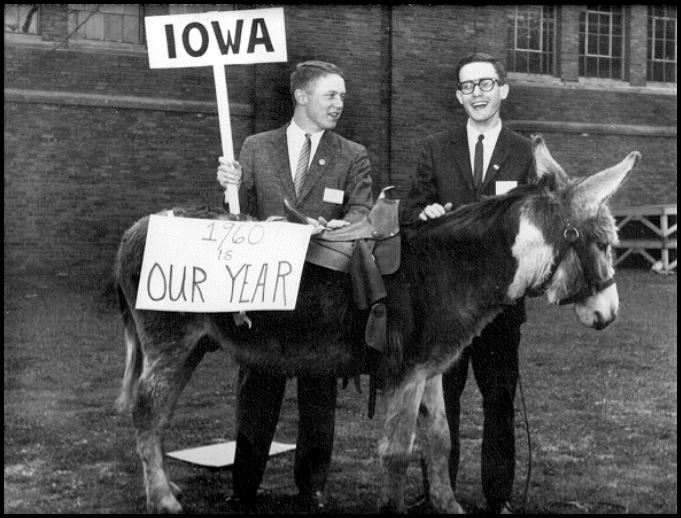
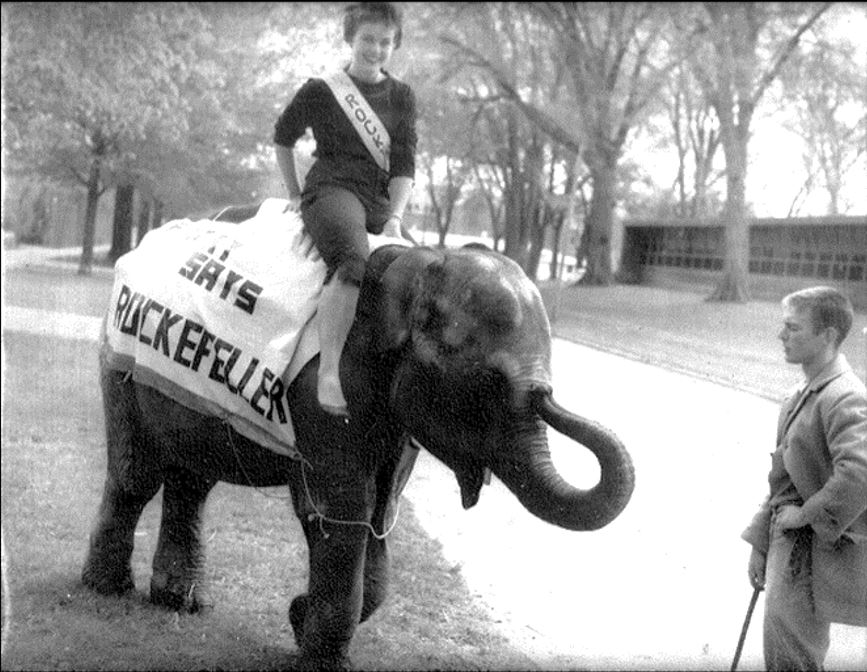
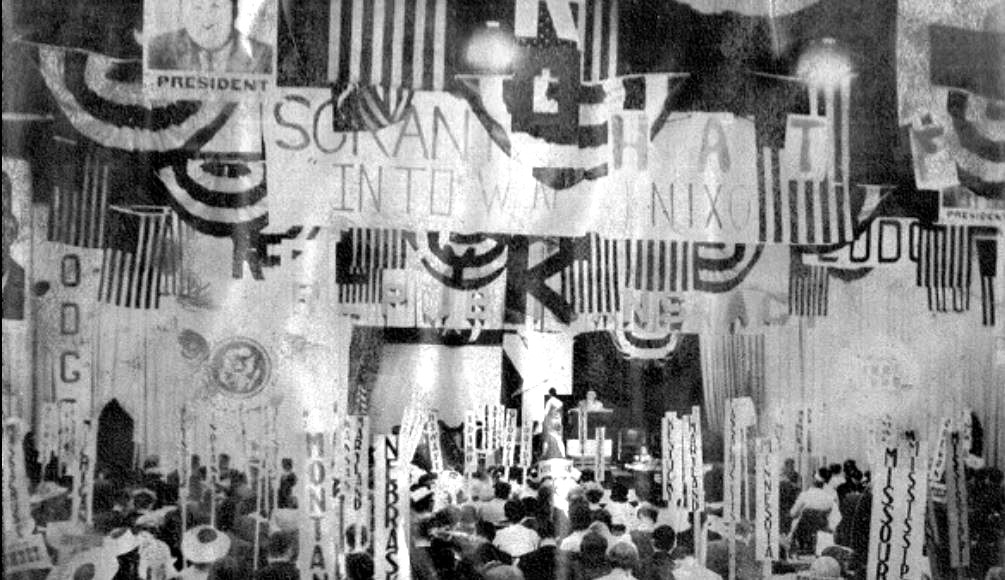
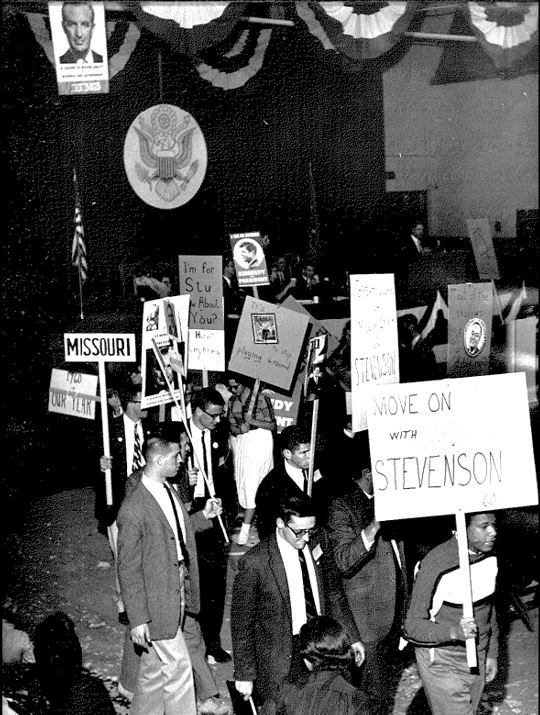
These images, from 1960, show students participating in full-blown, mock conventions for the Democratic party and the Republican party, as part of Grinnell College’s “Program in Practical Political Education” (PPPE) that ran from 1959 to 1970. Under the leadership of Prof. C. Edwin Gilmour, and funded largely by outside grants, the PPPE aimed to encourage students to become involved in day-to-day politics, even partisan politics, through a mixture of training, summer internships, funded fieldwork, political science “labs” that involved campaigns, election, or administrative experience, and a steady stream of state, local, and national politicians who came to Grinnell to give talks, teach short courses, or to work with students for a more extended period of time as “politicians-in-residence.” On election nights, the PPPE “caucus room” became the place on campus to watch coverage of the incoming election results.

Autumnal Landscapes of the Past

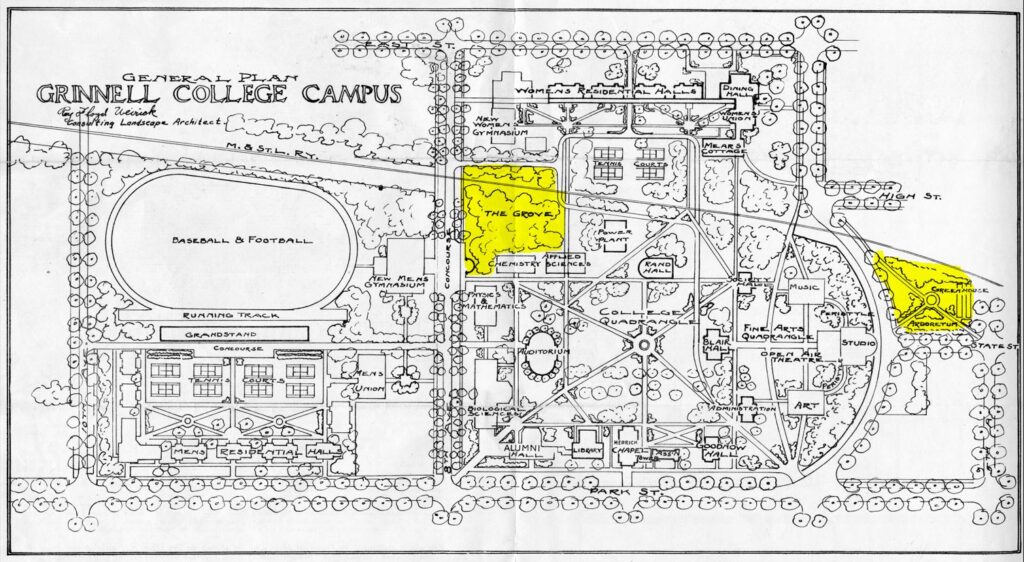
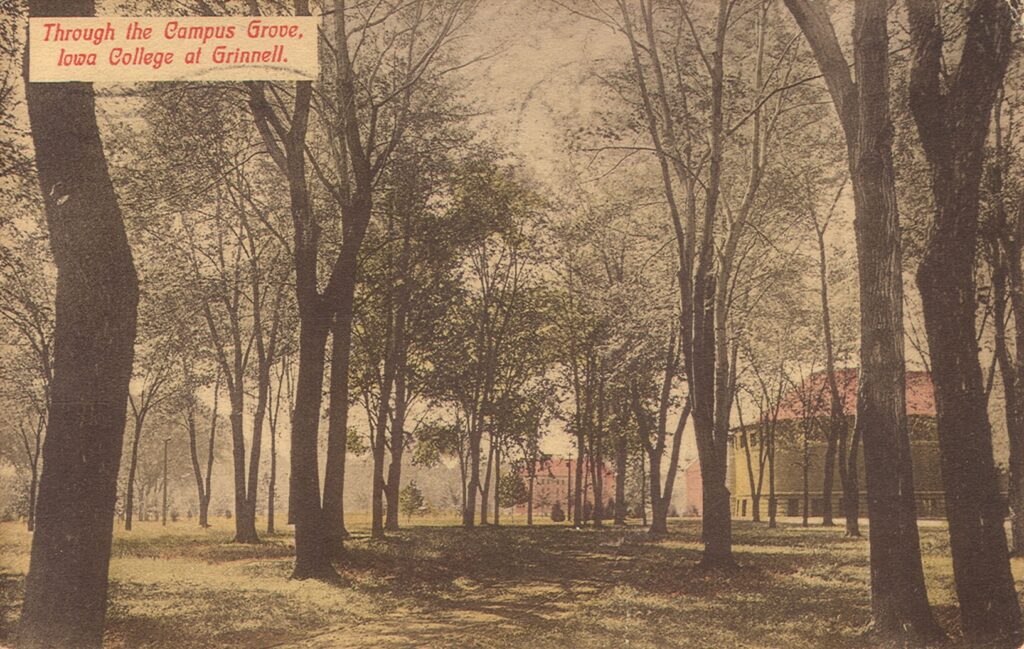
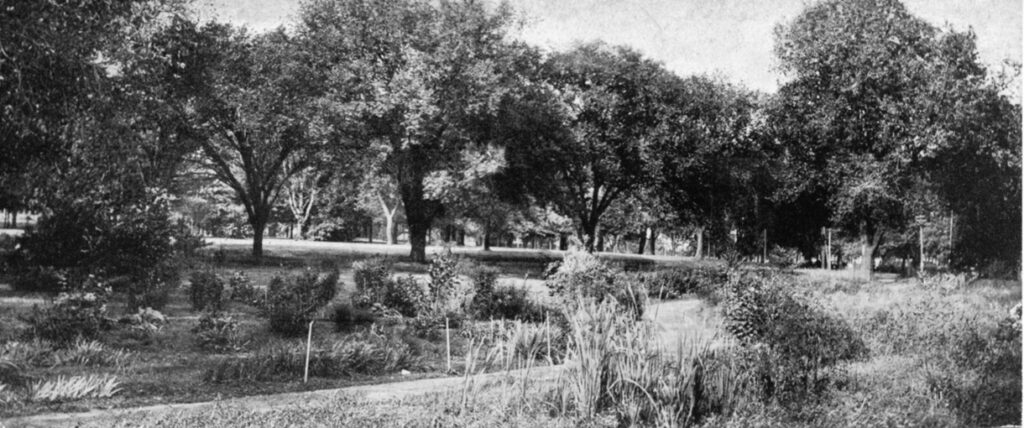
As Fall arrives, and leaves start to change color throughout the Midwest, it’s worth remembering some of the distinctive autumnal features of our campus landscape that have disappeared. One of those was “the Grove”— a parcel of the campus planted with trees that turned gold, crimson, and auburn each Fall (and is now home to the eastern half of the Noyes Science Center and its parking lot). The other space was the college’s arboretum and botanical gardens, located across Sixth Avenue, on the large plot of land that eventually became the home of St. Paul’s Episcopal church. In their heyday, both locations provided a calm retreat where members of the campus community could enjoy a bit of nature, particularly during the seasonal changes of Fall and Spring.

The Campus Grove (postcard)

Photograph of Grinnell Arboretum & Botanic Garden

The “Encampment” Tradition at Grinnell College

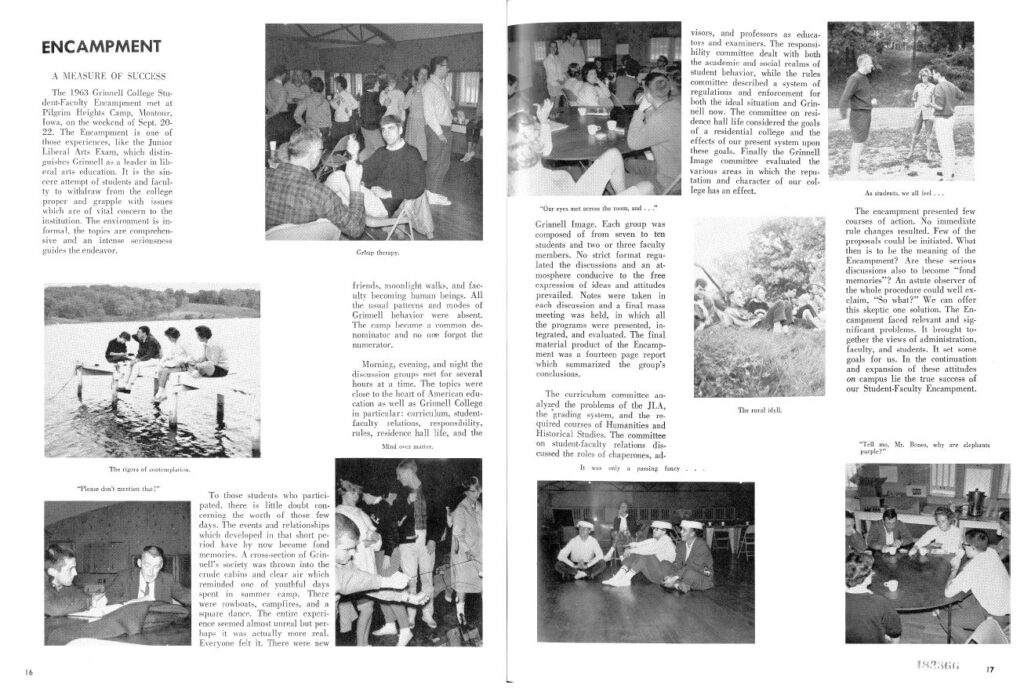
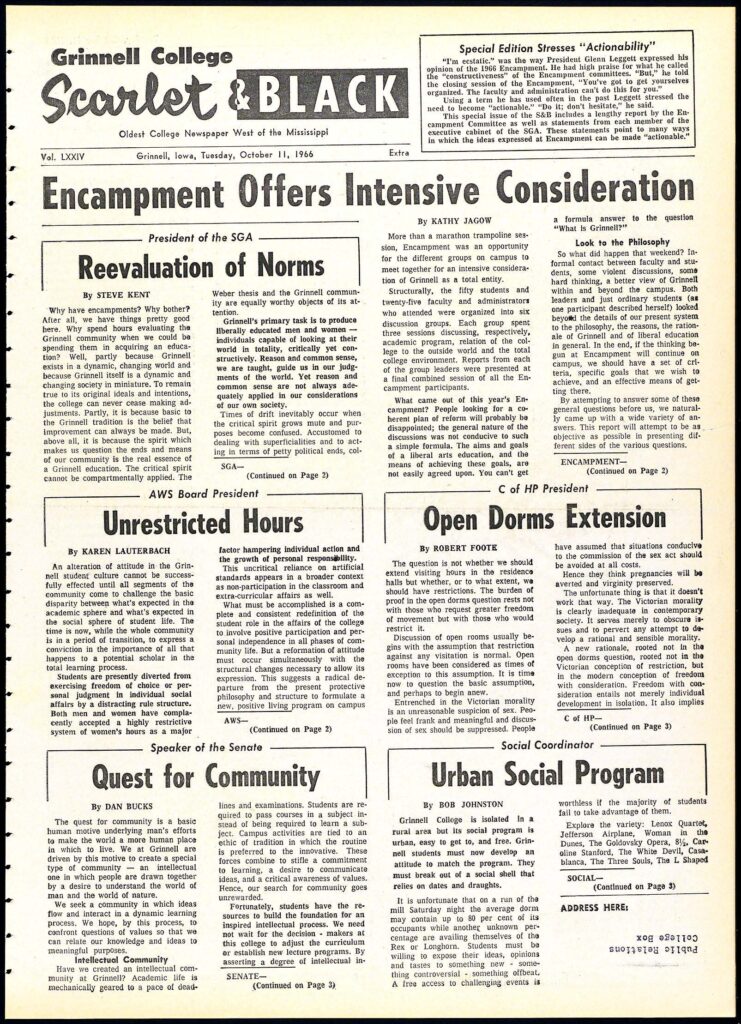
In 1960, the Student Government Association and President Howard Bowen agreed to hold a multi-day retreat, off-campus, that would bring together a select group of students, faculty, and administrators to discuss the “Purposes and Values of a Liberal Arts Education” at Grinnell. This retreat, or “Encampment,” as they called it, became a recurring tradition, in which about 100 members of the campus community would gather at some retreat site in October, each year, to spend a few days informally discussing broader issues of campus culture and curriculum as well as tackling concrete issues, needs, or policies (on a more practical level). The tradition of encampments was seen as one of the more distinctive aspects of campus life and shared governance at Grinnell.

Images: Cyclone Yearbook 1964  and Scarlett & Black special edition, 10/11/66.

encampment in 1964 cyclone yearbook (click here for full sized pdf)

S&B 1966 coverage of encampments at Grinnell (click here for full sized pdf)

Page 6 of 8

Powered by WordPress & Theme by Anders Norén