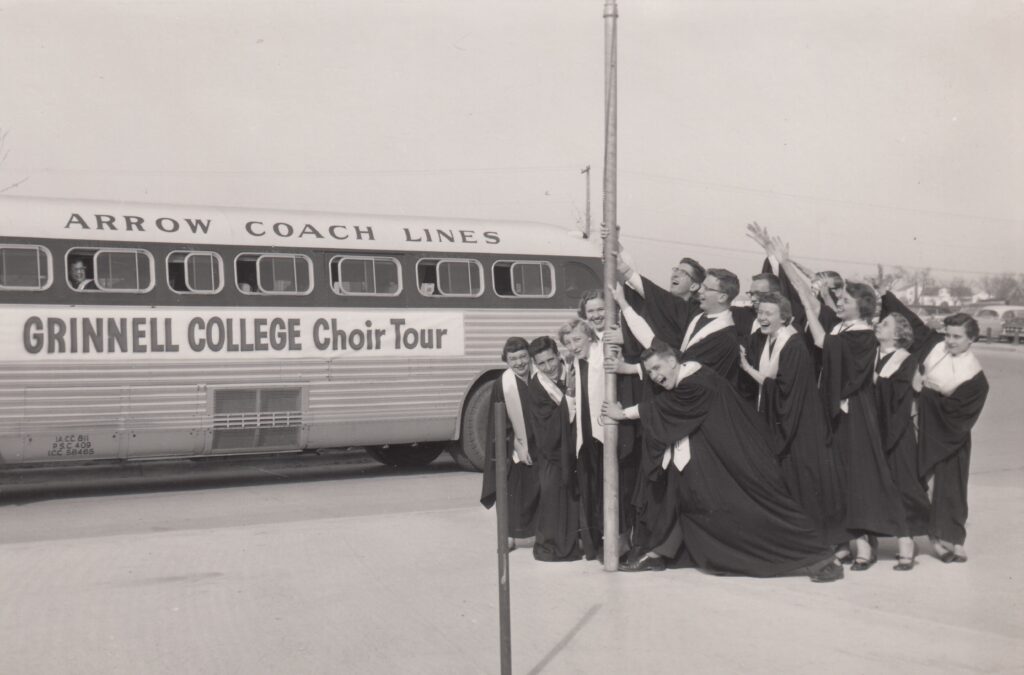
This photograph, taken by Grinnell alumna and long-time resident, Joanne Bunge, captures the Grinnell Choir on their Fall Break tour in 1955, travelling through Iowa, Nebraska, and Minnesota.
Make sure to enjoy your fall break, next week!!

This photograph, taken by Grinnell alumna and long-time resident, Joanne Bunge, captures the Grinnell Choir on their Fall Break tour in 1955, travelling through Iowa, Nebraska, and Minnesota.
Make sure to enjoy your fall break, next week!!
S&B Sept 1975 Springsteen Cover 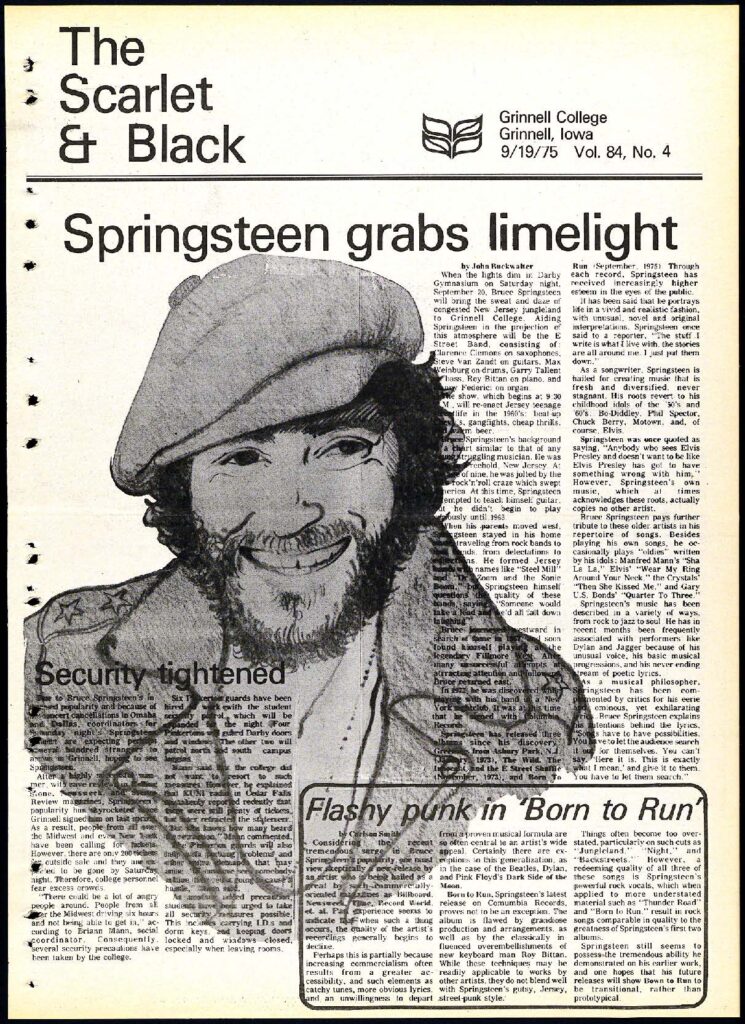
Bruce Springsteen Concert at Grinnell, Fall 1975
50 years ago, Bruce Springsteen and his E Street band came to campus to perform in front of a packed house in the old Darby Gymnasium. Springsteen, whose career was just taking off that Fall, with the August release of his successful Born to Run album, was one of the more than 1,000 concerts that Georgia Dentel organized in her 40+ year career at college, overseeing performances and events. Dentel’s career has been the recent focal point for a series of group MAP projects, over the past two summers, in which Grinnell students have carefully reconstructed her life, work, and musical legacy.
The set list for the September 20th concert at Grinnell was:
Encore
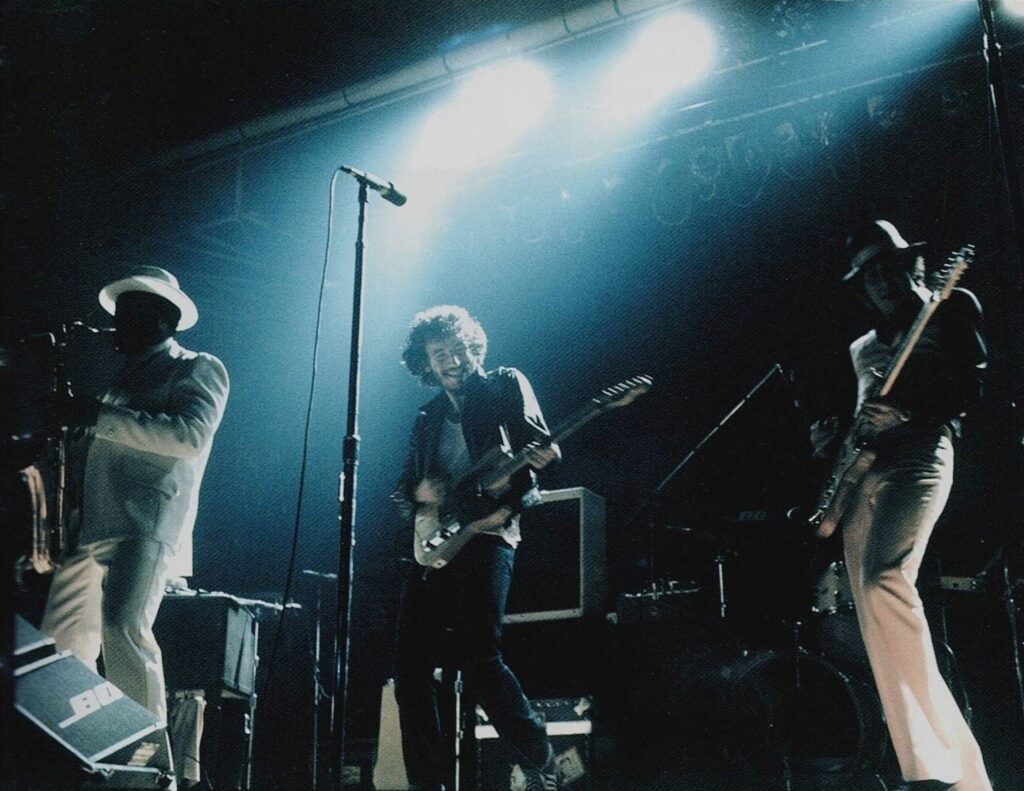
Clarence Clemons (sax), Springsteen and Steve Van Zandt (guitar), Darby Gymn, Sept. 20, 1975
While there is no known recording of the Grinnell concert, you can listen to the live set Springsteen played (later in the Fall) at the University of Iowa’s Hancher Auditorium (available at the Springsteen Archives on Youtube): https://youtu.be/H9BsJXUt0EQ?si=MY5LcAtWb0gQqELF
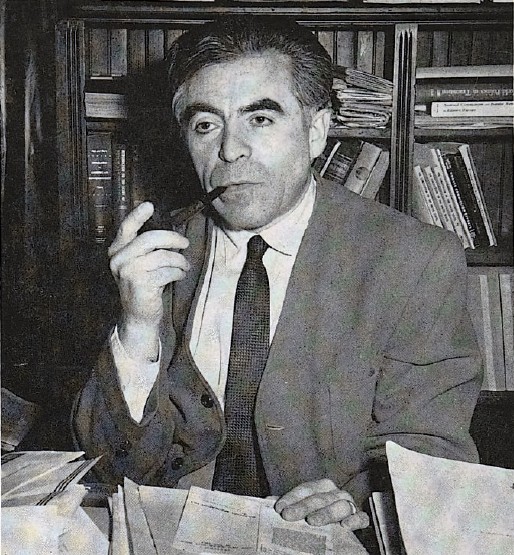
Dr. Joseph Dunner, Professor of Political Science at Grinnell from 1946-1963, had a remarkable life and career. As an Israeli newspaper asked, in a 1973 profile piece about the seemingly soft-spoken, pipe-wielding professor:
What would you say about a man who was chief of the intelligence section OWI (London, England) in 1944-45, was head of the press control section of Information Control in Munich, Germany 1945-46, was the director of the Institution of International Affairs 1946-58, and in 1954 was decorated with the Order of Ouissam Alaouite Cherifren by the Sultan of Morocco…and is the author of over ten books?
Born in Germany, Josef Dünner was a leader of the Social Democratic party, an outspoken opponent of Hitler, and a prominent Jewish intellectual. For these reasons, he appeared on the first list, issued by the Nazi regime in 1933, stripping particular individuals of their citizenship. Receiving a tip from local police, Dunner fled Germany the night before he was scheduled to be arrested, crossing the border into Switzerland. With the support of the Brookings Institute, he eventually resettled in America, and played a prominent role in intelligence in World War II (mentioned above). After working to re-establish a free press in German in the wake of the war, Dunner moved to Grinnell to become the chair of its political science department. A specialist in both political philosophy and international relations, Dunner sought to infuse both areas into Grinnell’s program that had traditionally focused on domestic politics, municipal administration, and civic reform (the legacy of Jesse Macy and the Social Gospel movement). The picture above shows Dunner in his office in Goodnow with his trademark pipe.
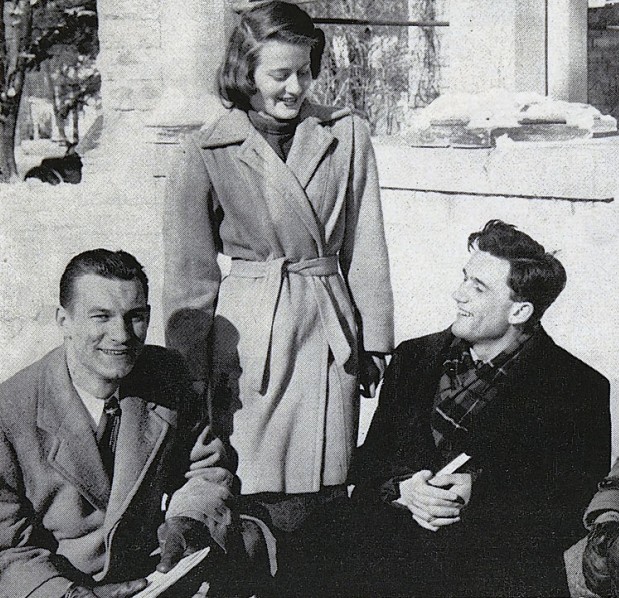
In 1949, the Student Council at Grinnell decided to participate in a new program aimed at finding collegiate homes for young international students displaced by war, or fleeing repressive regimes behind the rapidly descending iron curtain. This idea had been created by the National Student Association, and the whole initiative appears to have been largely student driven (including raising scholarship funds to pay for tuition for these “displaced persons,” a term used to describe the participants and the program). Pictured here are 2 of the first participants to join Grinnell College: Leon Bildusas, from Lithuania, on the left, and Serafim Romberg, from Czechoslovakia, on the right (along with a student guide showing them the campus). Between the two of them, these new arrivals spoke 7 languages: German, Lithuanian, Russian, Latvian, Ukrainian, Polish, and English.
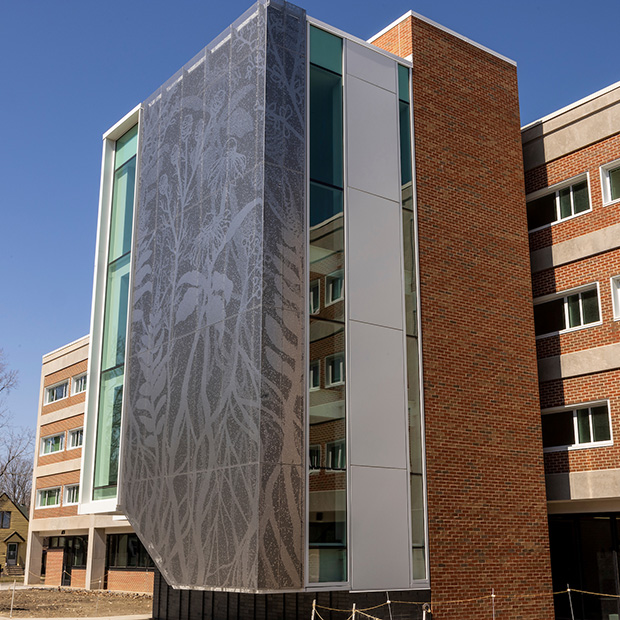
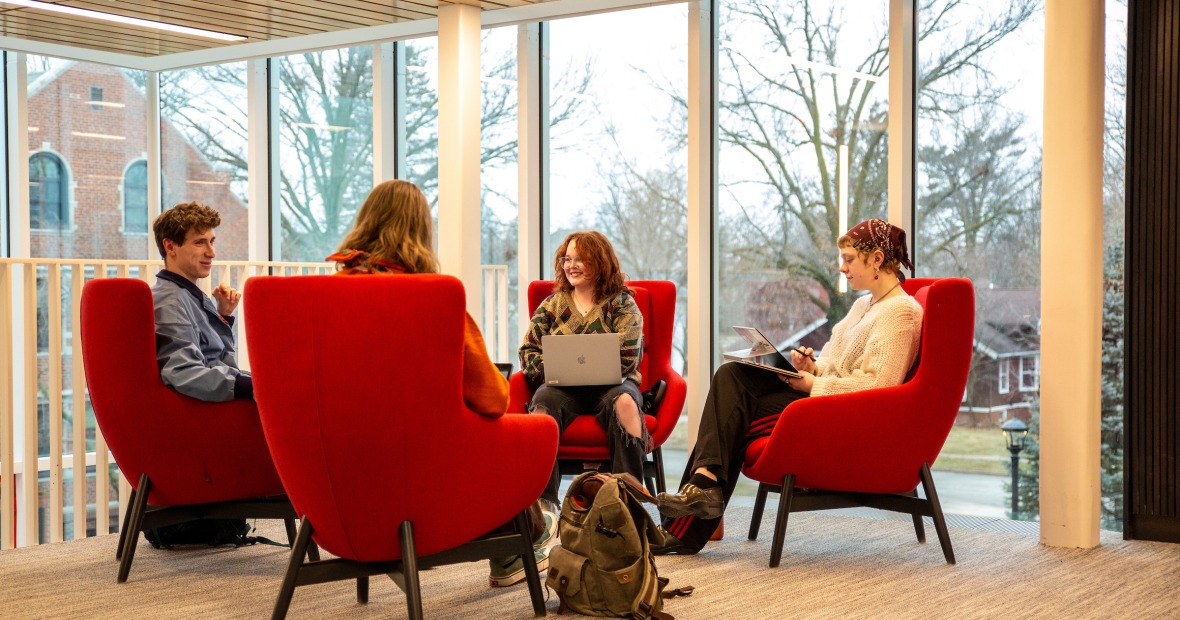
In 2022, the College completed an ambitious renovation project of Norris Hall, which won a “Masters Award” from the Master Builders of Iowa, not to mention wide applause from students.
Norris has always had its fair share of detractors, criticized for it’s sterile architecture and cramped space. In the 1970s, it was nicknamed the “Holiday Inn North” which led to the following spoof in the S&B:
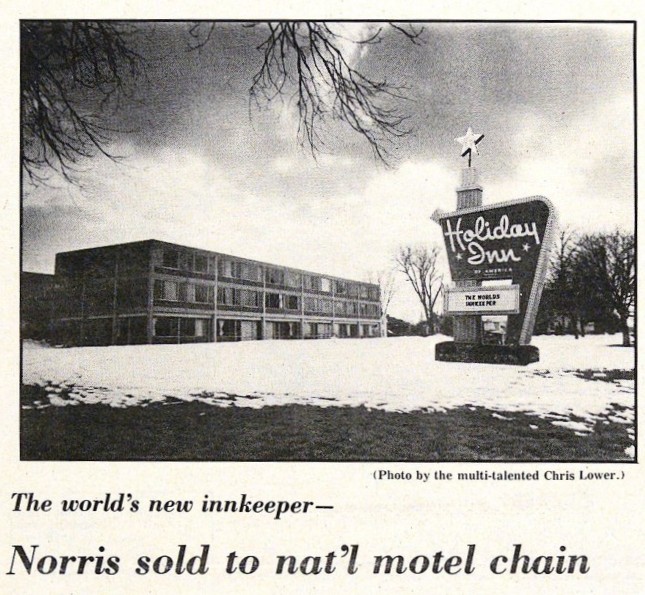
Perhaps the best part of the satirical article was its depiction of why the chain motel was so pleased with its purchase:
Holiday Inn was reportedly very pleased with their new purchase. A representative of that organization spoke with the S&B about the existing structure: “It fit all our needs perfectly. The walls are thin and we are impressed with the conspicuous use of Formica and the modular furniture. We’re also very happy that the hallways are so narrow . . . it makes them easier to clean. We couldn’t have done any better if we had designed, it ourselves,” he said
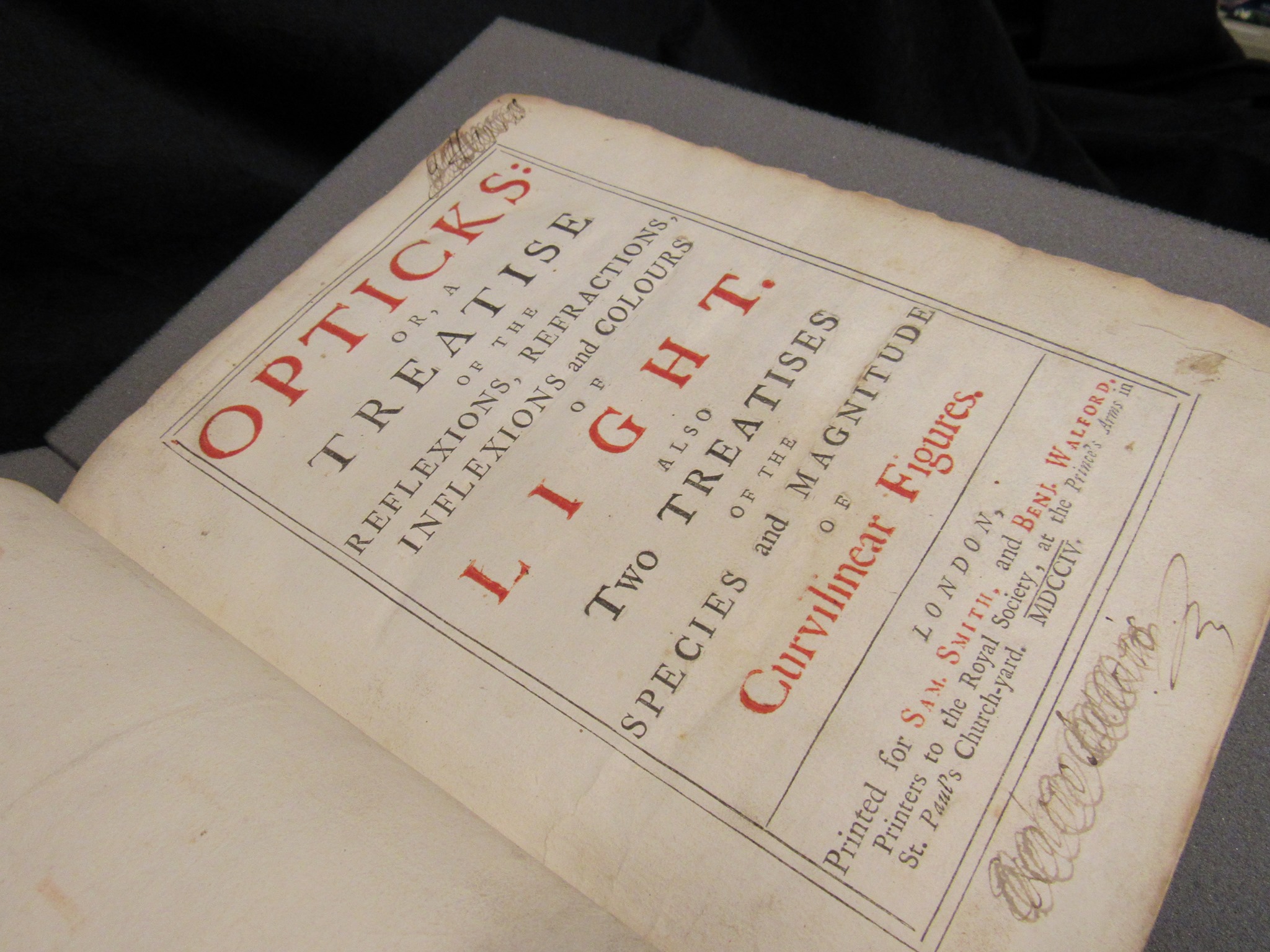
In 2019, Grinnell acquired the impressive collection of rare books and documents that had been assembled by Carl Weeks and housed at his residence, Salisbury House, in Des Moines. Visitors to special collections, in Burling Library, can now peruse the more than 5000 items in the collection–a virtual treasure trove of historic texts, ranging from medieval manuscripts to a limited edition of James Joyce’s Ulysses (illustrated by Henri Matisse).
One of these gems is a first edition of Isaac Newton’s Opticks, a work that was filled with experimental reports and musings about a wide range of topics surrounding the nature of light, its transmission and absorption, the nature of color, and the hidden structure of matter. While contemporaries praised Newton’s Principia, few people could understand its complicated mathematics, whereas the Opticks was a widely popular book that inspired many people to take up experimental science. And, in fact, Grinnell’s copy of the Opticks contains a number of annotations and comments (i.e. marginalia) that were inscribed by one its enthusiastic readers.
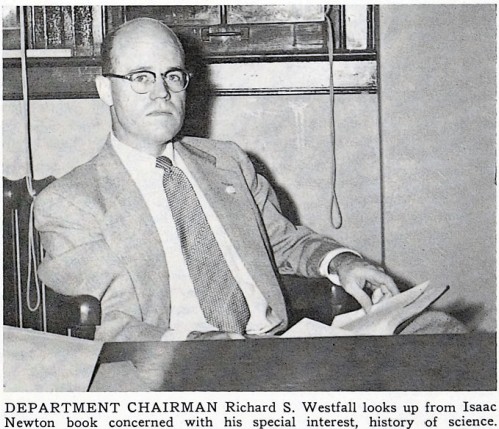 This book would have been particularly appreciated by one of Grinnell’s former History professors–Richard S. Westfall–who was a world renowned scholar of Newton and the scientific revolution. Prof. Westfall taught at Grinnell in the 1950s and 1960s, winning a National Science Foundation grant in 1961 that allowed him to spend a year or archival work in Cambridge, among Newton’s papers. One of the last pieces he published at Grinnell, before leaving to head the Department of History and Philosophy of Science at the University of Indiana, in 1963, was a scholarly article, “The Development of Newton’s Theory of Color” that put forward a new interpretation of the Opticks. In 1980, Westfall would publish what is still considered the definitive biography of Newton: Never at Rest: A Biography of Isaac Newton, that he started while teaching at Grinnell College. Eventually, Westfall was awarded the George Sarton Medal, the highest honor in this field, in recognition of his lifetime contributions to the history of science.
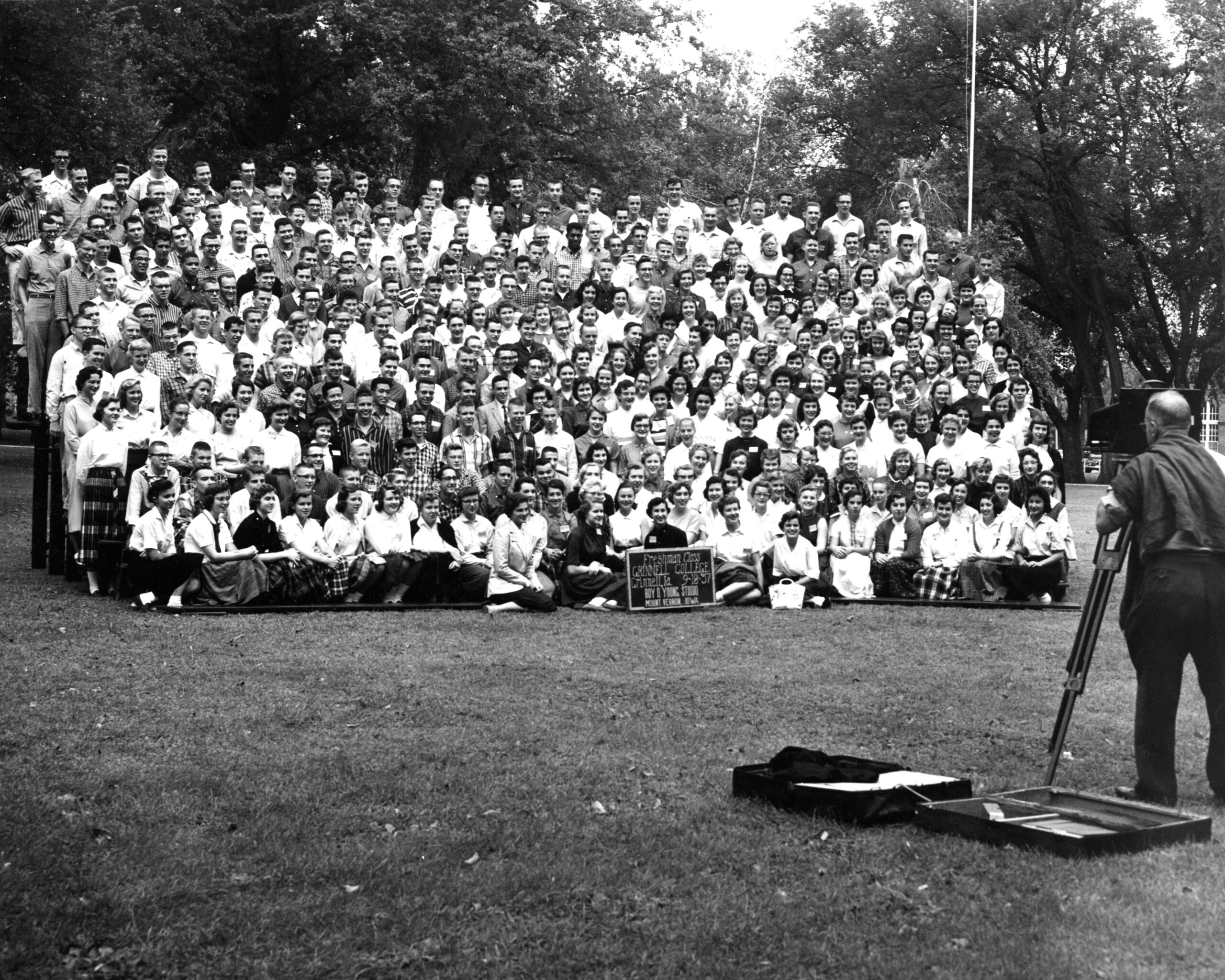
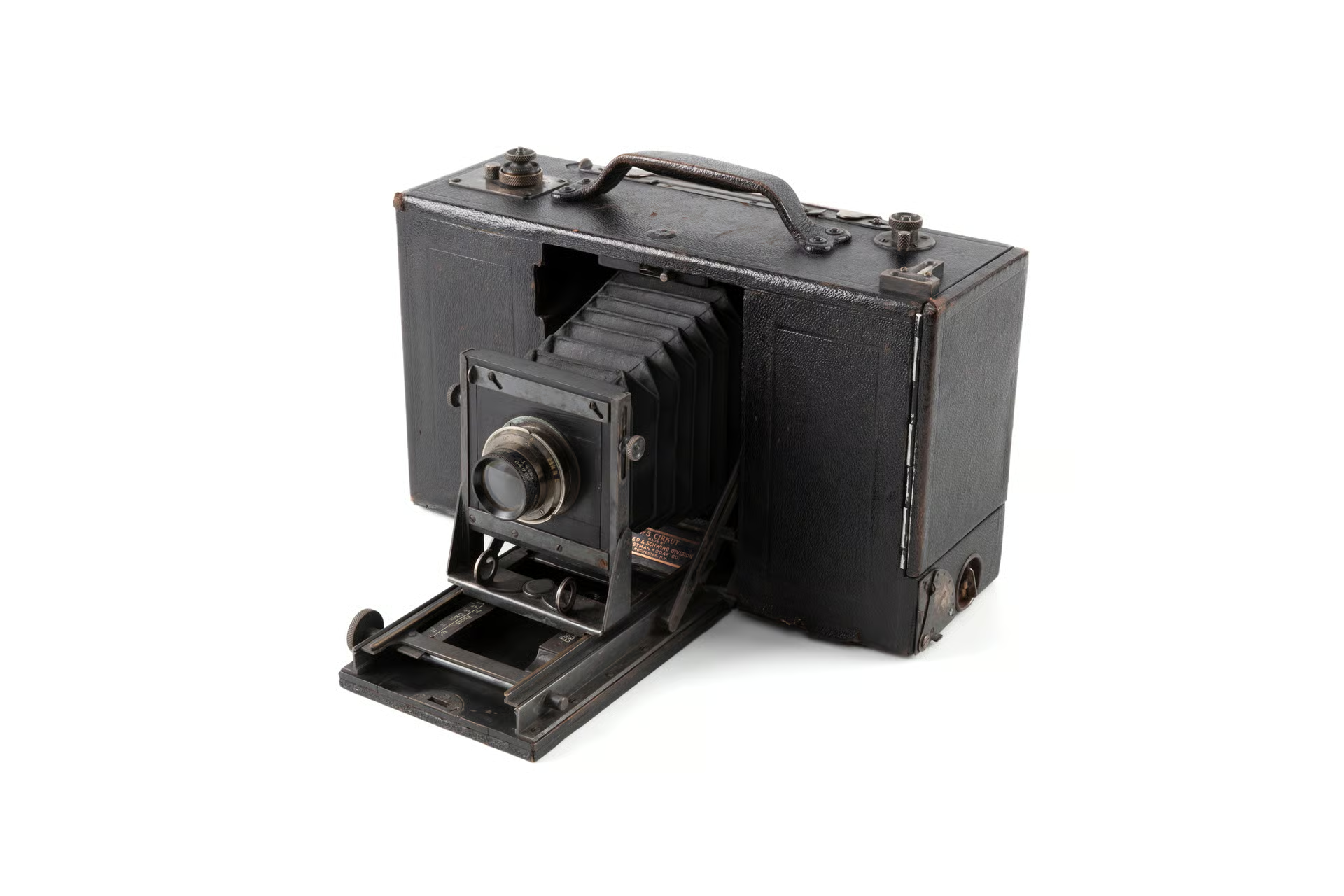
 One of the older traditions on campus involved taking a group photo of the entering class during new students week. Here the class of 1961 poses for a photo in mid-September of 1957. Interestingly, the photographer, Roy Young, was not chosen simply because his studio was nearby in Mt. Vernon, Iowa. Rather, Young was a highly sought after “specialist in large group photography” who photographed at colleges and military installations around the country–as far afield as Georgia and Florida. Young used a variety of large-format cameras, such as “view” cameras, “banquet” cameras, and “Cirkut” cameras (shown below) that could revolve and pivot for panoramic, group photographs. It took a fair amount of skill and technical equipment to capture hundreds of faces in clear focus.

One of the delights of summer, in Grinnell, is seeing Tilly Woodward’s amazing “sparkle truck” around town. The 1989 Ford Ranger, is encrusted with layer-upon-layer of Elmer’s glue and glitter, put there by countless Grinnell children who have participated in the summer art programs sponsored by the Grinnell College Museum of Art and the Drake Community Library (Tilly is the museum’s curator of academic and community outreach).
Enjoy your summer! And don’t forget to make time for some wonder and sparkle while you’re at it.
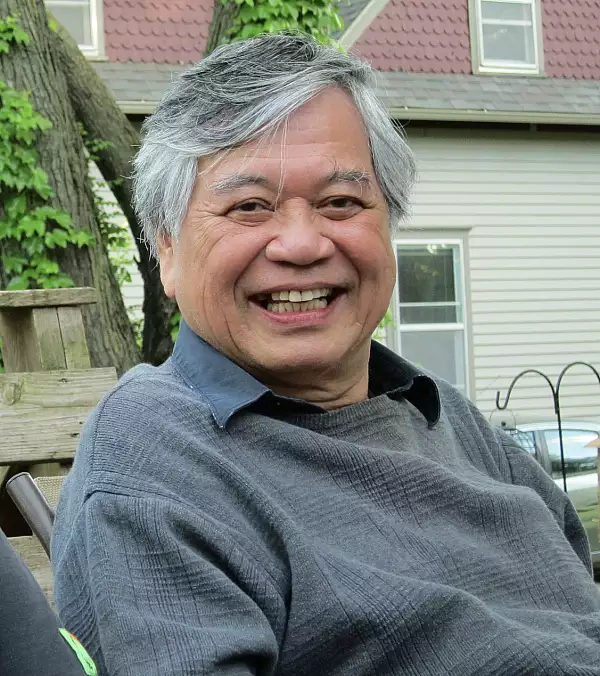
This winter, we learned that Andrew Hsieh, Professor Emeritus in the History department, passed away at his home in California. There will be a special memorial gathering at reunion, this weekend, for his friends, colleagues, and former students.
Andrew Hsieh began teaching at Grinnell in the Fall of 1978, having completed a Ph.D in history at Yale University, where he wrote a dissertation about the intellectual world of Tseng Kuo-fan, an important figure who struggled to reconcile Confucianism and the demands of officialdom in the wake of the Taiping Rebellion. Over the years, Prof. Hsieh taught a series of survey courses on Chinese and Japanese History, and played a key role in developing East Asian Studies at the college. In 1985, Prof. Hsieh helped secure a Cowles-Kruidenier grant that financed new coursework, programming, and educational opportunities centered around Chinese Studies. Hsieh organized a five-day conference in 1987, for example, that helped launch this new programming. The conference revolved around questions of reunification between Taiwan and the People’s Republic of China. Hsieh invited speakers from Hong Kong, China, and Taiwan, alongside academics and policy-makers from the U.S., creating a “list of participants that reads like a Who’s Who in the world of Chinese Studies” (according to the S&B coverage at the time). In addition to a long list of speakers and conferences, Hsieh used the grant to fund embedded course travel to China, such as the study tour in 1993:
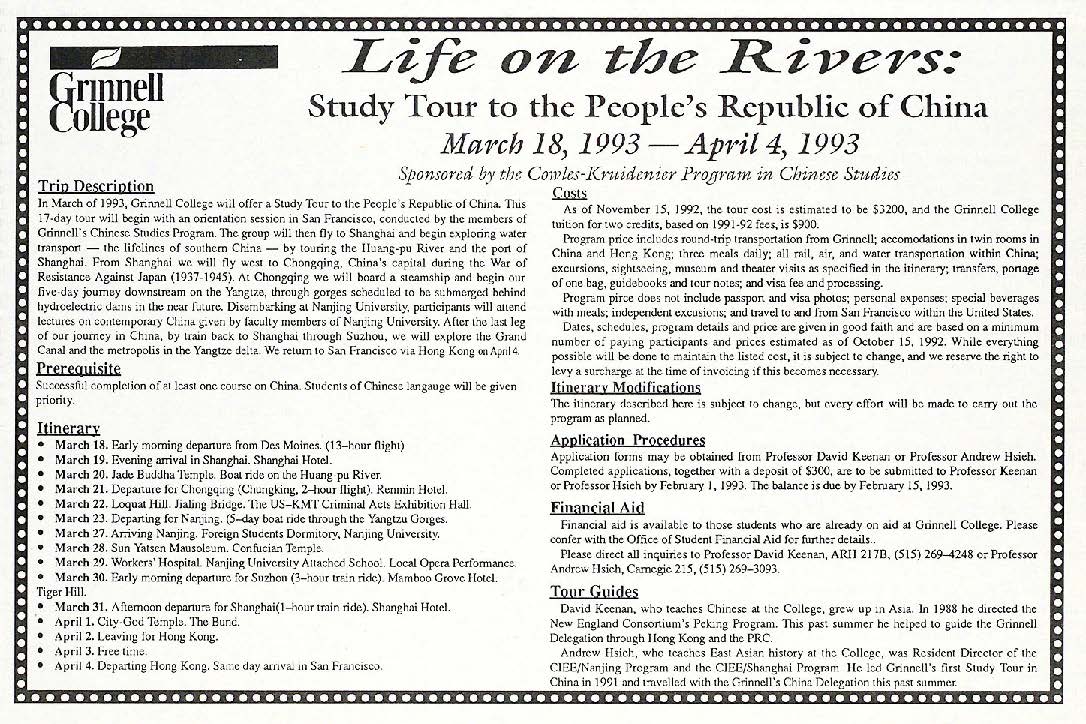
Hsieh’s management of the grant also led to more sustained curricular changes, such as the hiring of faculty to teach east Asian languages, the creation of a new department of Classical and East Asian Languages (housing these new faculty and courses in the Classics department), and above all, the creation of an exchange program and partnership between Grinnell and Nanjing University, that began in 1987. That program facilitated not only the exchange of faculty members, but also supported Grinnell students teaching English in the high schools in Nanjing (which would become one element of the “GrinnellCorps” program). Hseih would frequently point to Grinnell’s deep historic ties to China, encouraging students and others to do historical work on the earlier “Grinnell-in-China” program of the 1920s and 1930s.
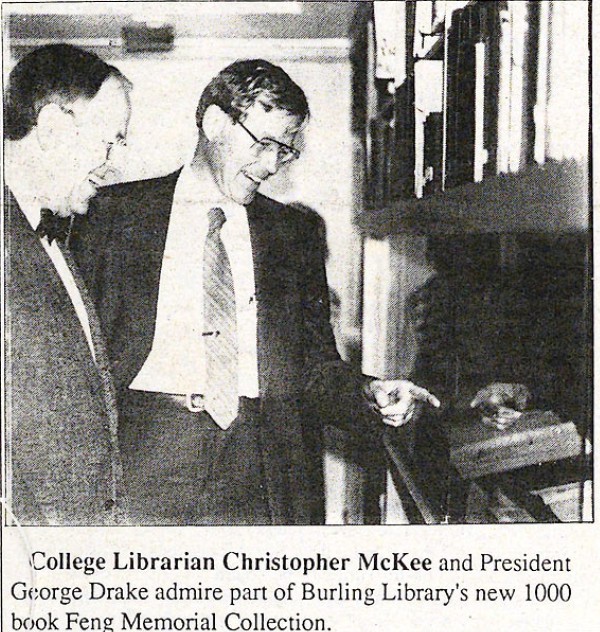
Prof. Hsieh also made a lasting contribution to the college through the Feng Memorial Collection–which contained over a 1,000 carefully chosen Chinese books that Hsieh acquired from collectors throughout China and Hong Kong to serve as a foundation for students studying Chinese language, history, culture and literature. The collection was named after Hsieh’s mother, Yu-Kuei Feng, who came from a long line of scholars going back to the 18th century, and loved books.
Hsieh’s own love of books came through in one of his last major projects, helping to develop a Faulconer Gallery exhibit–“From the Book Forest”–on Chinese print culture that drew from the collections of Nanjing University, the Yangzhou Block Printing Museum, and the C.V. Starr East Asian Library (at UC Berkeley) in 2011.
In his retirement, Prof. Hsieh finished a book The Lius of Shanghai, that explores how this influential family navigated the challenges of war and upheaval over the course of the twentieth century to establish a business dynasty. The book was co-authored with fellow historian Sherman Cochran (of Cornell University) and was published by Harvard University Press.
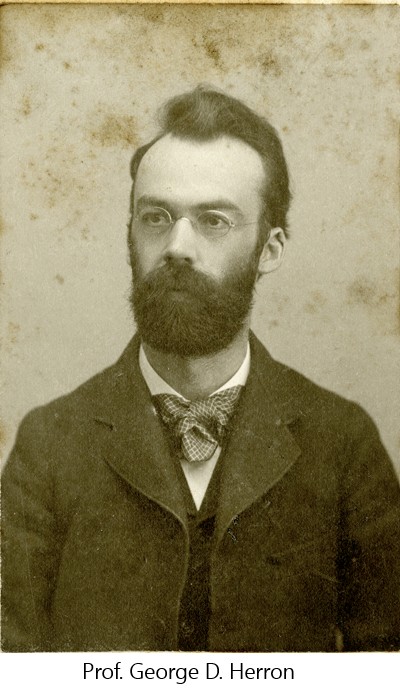 “The usual quiet of the summer vacation was broken this year,” the Scarlet & Black explained in 1894, “by the Summer School…for the systematic study of Christian sociology.” Organized by Prof. George Herron and his department of Applied Christianity, this summer school was meant to help launch the new American Institute of Christian Sociology, that was trying to blend the Social Gospel movement with the emerging fields of Sociology and social work. Intended to be an annual affair, the summer school brought together professors, students and reformers from around the country to participate in a series of courses, supplemented by free standing lectures. Some of the topics included:
Dr. Coyle: Christ as a Socializer
Dr. Thomas Hall: The Four Laws of the Kingdom
Edward Neally: The Ethics of Jesus in the Legal Profession
Prof. John R. Commons: The Distribution of Wealth
Prof. Richard T. Ely, Private Property: A Social Trust
Josiah Strong: Methods of the New Era
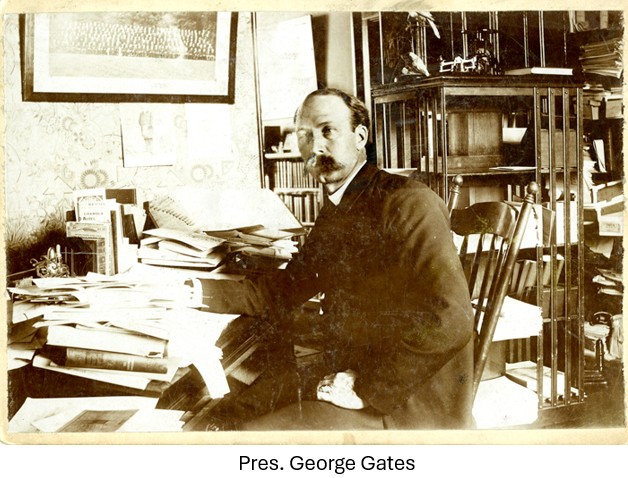
There were also lectures given by Grinnellians: President George Gates, Prof. James Macy, and Prof. Herron.
Powered by WordPress & Theme by Anders Norén