
 In the early 1900s, the Y.M.C.A. lecture series was an important institution in the shared intellectual life of Grinnell, bridging town and gown. Each year, a local committee of the Y.M.C.A. lined up a program of nationally renowned politicians, writers, musicians, orators, theologians, or performers who would appear monthly at the Congregational Church, or the Colonial Theatre (the two largest venues in town).
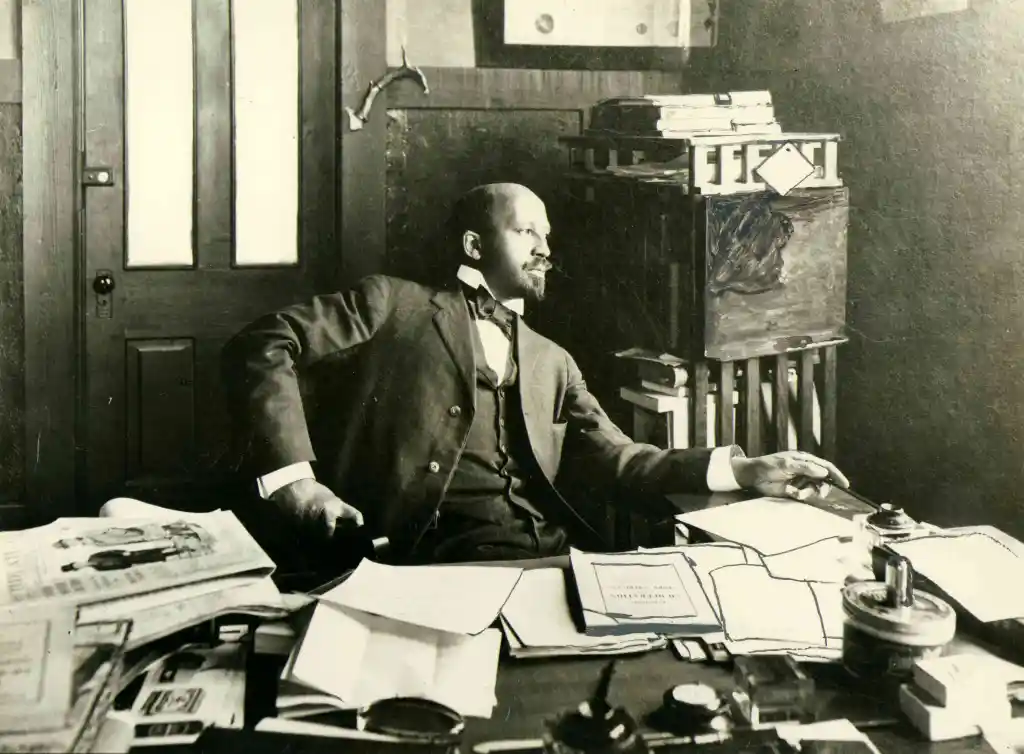
In February 1905, Grinnellians were looking forward to the next scheduled speaker in the “Y” series, the famed historian, sociologist, and intellectual, W.E.B. Du Bois. In fact, the prior speaker, Senator Robert LaFollete (a lion of progressive politics) had reportedly told the assembled crowd “Miss anything else this winter, but do not miss hearing Professor Du Bois.” Unfortunately, a Valentine’s Day snowstorm cancelled Du Bois’ train (even back then, winter weather made scheduling visits and speakers a fraught endeavor). But the committee coordinated with Du Bois to reschedule his lecture for Thursday, March 2nd, when he spoke before “one of the largest audiences of the season.”
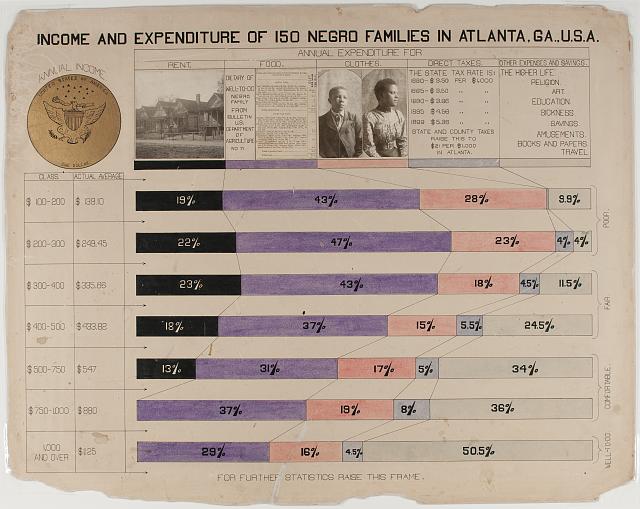
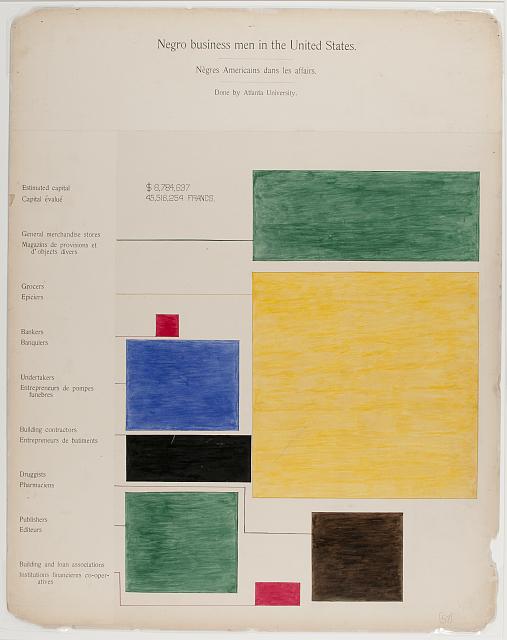 His address, entitled “The South and Its Problems,” focused on the systematic discrimination that African Americans faced in the Jim Crow South, and Du Bois illustrated these systematic consequences through a series of novel “charts…which greatly assisted the audience to a clear understanding of the importance of the problems and the direction recent developments have taken.” These colorful “charts” had been carefully created by Du Bois and his students at his Sociological Laboratory, at Atlanta University, where they creatively experimented with new kinds of data visualizing strategies that turned census data into evocative infographics. Each year, Du Bois and his students focused on a particular theme: in 1905, they were working on the issues surrounding health and medicine; the previous year had focused on crime; and other recent topics included Churches & Religious Life (1903), Work & Labor (1902), Education (1901), Business (1899), and Urban Life (1897).
Just a few years before his Grinnell lecture, Du Bois had showcased 63 of these prints—what he called at the time “data portraits”—at the Paris Exposition. Some of those items, pictured here, were likely featured in his Grinnell lecture at the Colonial Theater.
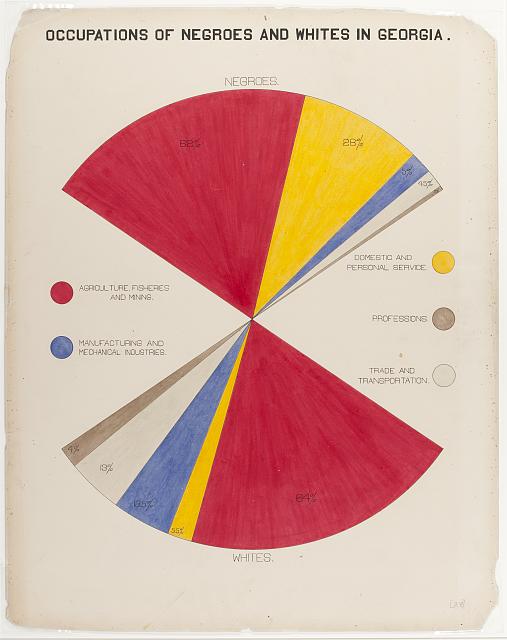
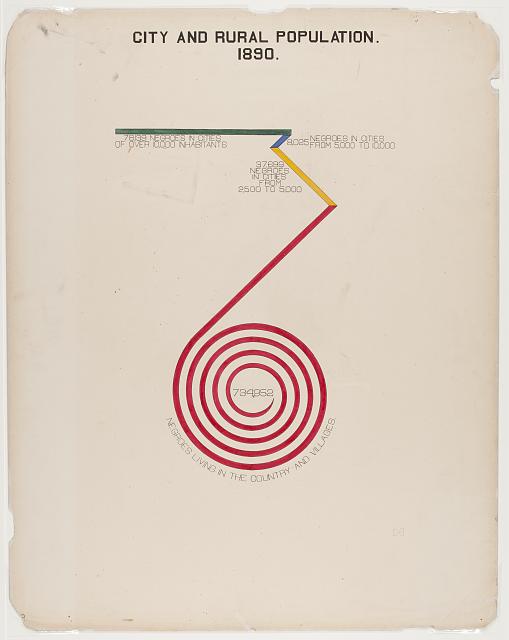
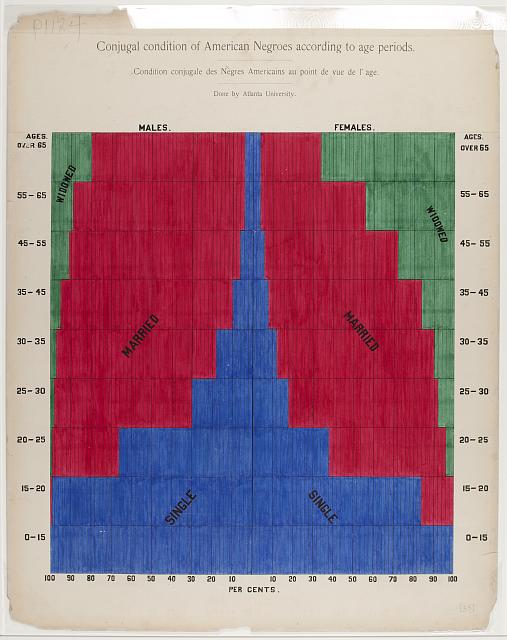
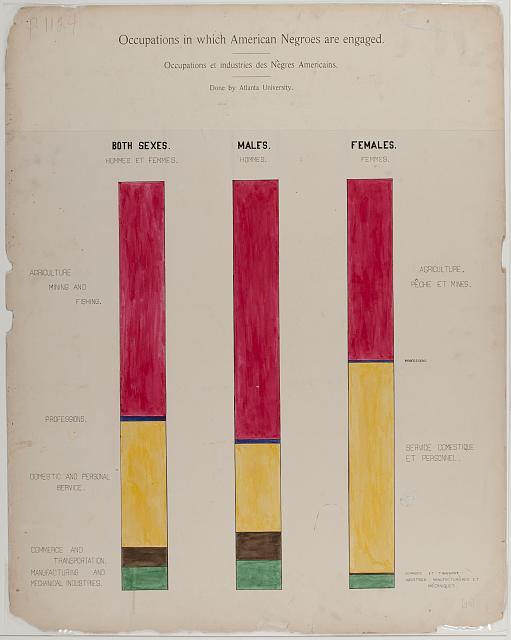
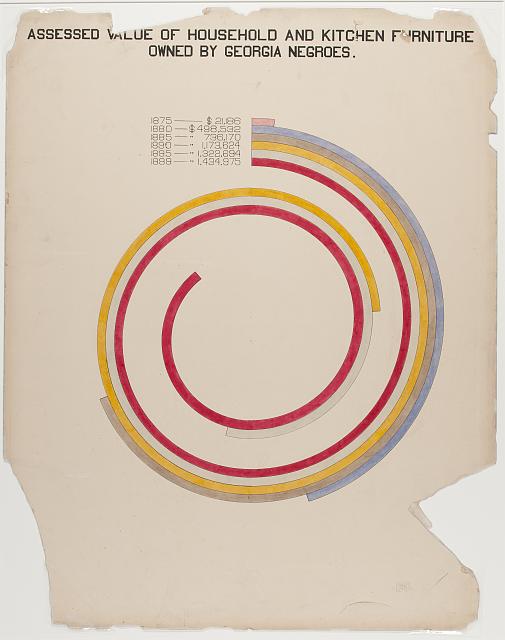
Today, Du Bois’s work in the field of data visualization has begun to receive much greater attention and recognition from scholars interested in reclaiming these pioneering forms of quantitative advocacy and graphic design. Those interested in seeing more examples can explore the full collection at the library of Congress; the 2023 exhibit at the Cooper Hewitt museum, Deconstructing Power: W.E.B. Du Bois at the World’s Fair; and the interactive website, The Du Boisian Visualization Toolkit.
Leave a Reply